
📊 Full opportunity report: Build vs Buy a Prebuilt AI Workstation on ThorstenMeyerAI.com — validation score, market gap, and execution plan.
TL;DR
In 2026, the traditional cost advantage of building your own AI workstation has diminished due to component shortages and price spikes. Buyers must now weigh cost, time, thermal control, and support when choosing between building or purchasing a prebuilt system.
In 2026, the long-held assumption that building a custom AI workstation is always cheaper than buying prebuilt no longer holds true, as component shortages and price spikes have made DIY builds more expensive than many prebuilt options.
The rise in prices for critical components like GPUs, DDR5 RAM, and SSDs—driven by AI boom-related shortages—has pushed the cost of DIY AI workstations above that of prebuilt systems. Major vendors such as BIZON, Puget Systems, and Lambda now offer prebuilt machines with validated thermals, extensive testing, and warranties, often at prices comparable to or even lower than assembling parts independently. These prebuilt systems come with optimized cooling, noise reduction, and support, reducing setup and troubleshooting time for users. Conversely, building your own rig offers control over component selection, the ability to upgrade later, and the satisfaction of thermal tuning—though it requires more time, expertise, and risk. The decision now hinges on whether users prioritize cost, time savings, thermal performance, or customization, as the traditional cost advantage of DIY has diminished in the current market environment.Build vs buy
an AI workstation.
The real question behind this whole series: do you pull the five heat-and-noise levers yourself, or buy a prebuilt where the vendor pulled them for you? And in 2026, the old “building is cheaper” rule has broken. Match your situation in Part 3.
Why 2026 Changes the Build vs Buy Equation
The shift in component pricing and availability means that professionals and hobbyists must reassess their approach to acquiring AI workstations. The choice impacts not only initial costs but also thermal management, reliability, and upgradeability. Buyers can no longer assume DIY is cheaper and must evaluate whether the time and expertise required are justified by potential savings. This development influences procurement strategies across AI research, development, and enterprise deployment, making the decision more complex and context-dependent than ever before.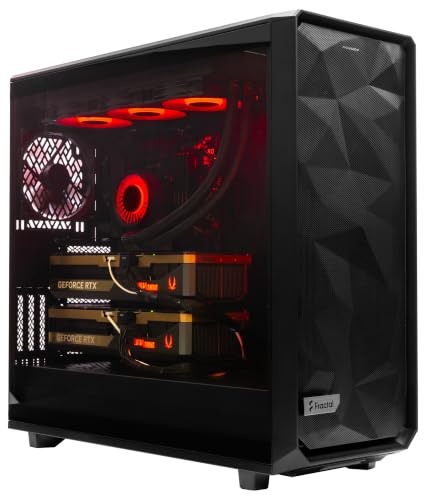
APC MES2X Dual GPU AI Workstation - AMD Ryzen 9-9950X3D 16 core 4.3GHz - Dual GPU RTX PRO 6000 Blackwell - 4TB NVMe SSD - 256GB DDR5-1600W - Windows 11 Pro Liquid Cooled
- Processor: AMD Ryzen 9-9950X3D 16-core 4.3GHz
- Memory: 256GB DDR5 RAM
- Graphics: Dual NVIDIA RTX PRO 6000 96GB
As an affiliate, we earn on qualifying purchases.
As an affiliate, we earn on qualifying purchases.
Component Shortages and Price Spikes Drive Market Shift
Over the past year, the AI hardware market has faced significant supply chain disruptions, leading to shortages and price increases for GPUs, DDR5 RAM, SSDs, and power supplies. These shortages stem from increased demand driven by AI training and inference workloads, compounded by manufacturing delays and geopolitical factors. Historically, DIY builds benefited from lower prices due to bulk purchasing and component discounts, but in 2026, these advantages are eroded. Prebuilt vendors, having secured components earlier, now offer systems at competitive prices, often including validated thermal performance and warranties. This market evolution challenges the conventional wisdom that building is always more economical and shifts the decision-making process toward considering support, reliability, and time investment."The traditional cost advantage of DIY systems has evaporated in 2026 due to component shortages and price spikes. Buyers now need to compare actual prices for their specific configurations."
— Thorsten Meyer, AI hardware expert

Antec 900 Full-Tower E-ATX PC Case
- Motherboard Compatibility: Supports E-ATX, SSI-EEB, Threadripper
- Interior Space: Fits dual GPUs up to 495mm long
- Pre-installed Fans: 6 PWM fans included for airflow
As an affiliate, we earn on qualifying purchases.
As an affiliate, we earn on qualifying purchases.
Remaining Uncertainties in Market and Performance
It is still unclear how ongoing supply chain developments will impact component prices in the coming months, and whether new shortages or price reductions will occur. Additionally, the long-term upgradeability and thermal performance of prebuilt systems versus custom builds under evolving workloads remain to be fully tested and compared. User experiences with support quality and warranty services also vary and are not yet fully documented across vendors.

NOVATECH AI Workstation Desktop PC – Intel Core i9-14900K, Liquid Cooling – Machine Learning, Data Science, 3D Rendering, Video Editing, Simulation (RTX 5080 | 64GB RAM | 2TB)
- High-Performance CPU: Intel Core i9-14900K processor
- Powerful GPU: NVIDIA RTX 5080 with 16GB VRAM
- Advanced Cooling System: Liquid cooling for optimal performance
As an affiliate, we earn on qualifying purchases.
As an affiliate, we earn on qualifying purchases.
Next Steps for Buyers and Builders in 2026
Potential buyers should conduct detailed price comparisons of prebuilt systems versus custom parts for their specific configurations, factoring in warranty, thermal validation, and support. Vendors are likely to continue refining their offerings, possibly introducing new models with improved cooling or lower prices. Hobbyists and professionals may also explore hybrid approaches, such as purchasing validated prebuilt systems and customizing or upgrading components later. Monitoring market trends and vendor updates over the coming months will be essential for making informed decisions.
As an affiliate, we earn on qualifying purchases.
Key Questions
Is building my own AI workstation still cheaper in 2026?
Not necessarily. Due to component shortages and price increases, prebuilt systems often cost the same or less than assembling parts yourself, especially when factoring in thermal management and support.
What are the main advantages of buying a prebuilt system in 2026?
Prebuilts offer validated thermal performance, warranties, and ready-to-run setups, saving time and reducing the risk of thermal or hardware issues during intensive AI workloads.
Can I upgrade a prebuilt AI workstation later?
It depends on the system design, but many high-end prebuilt systems are upgradeable, allowing replacement or addition of GPUs, RAM, or storage, though some may have proprietary components.
What should hobbyists consider when building their own AI workstation?
Hobbyists should weigh their time investment, thermal tuning expertise, and willingness to troubleshoot against potential cost savings and customization benefits.
Will component prices decrease soon, making DIY builds more attractive again?
It is uncertain. Market conditions are volatile, and while prices may stabilize or drop, current shortages and demand suggest that prebuilt options remain competitive for the foreseeable future.
Source: ThorstenMeyerAI.com