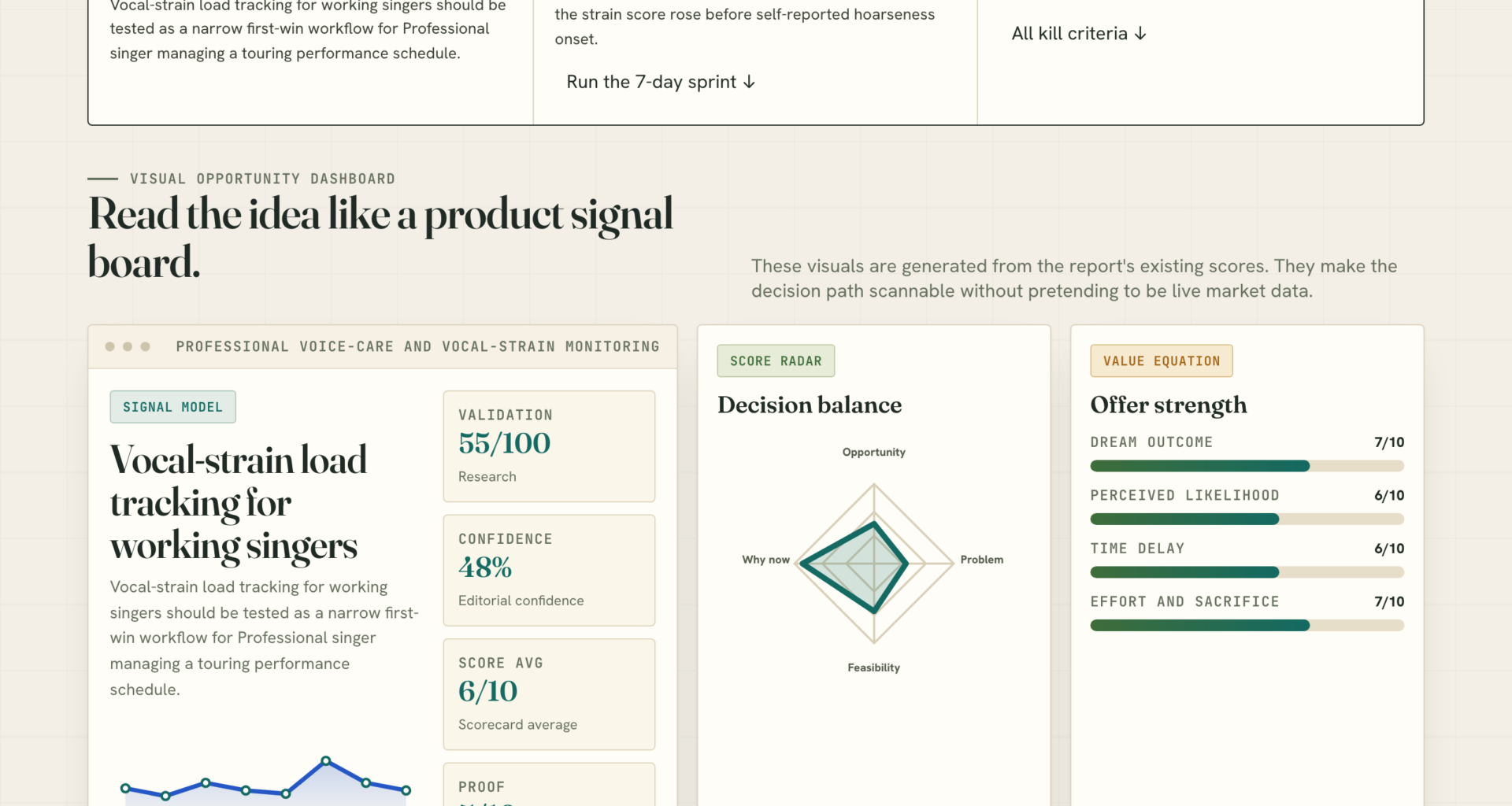

📊 Full opportunity report: Vocal-strain load tracking for working singers on IdeaNavigator AI — validation score, market gap, and execution plan.

Get business pricing on tech for your team
- Business-only prices and quantity discounts
- Tax-exempt purchasing
- Multiple users, one account, clear invoices
TL;DR
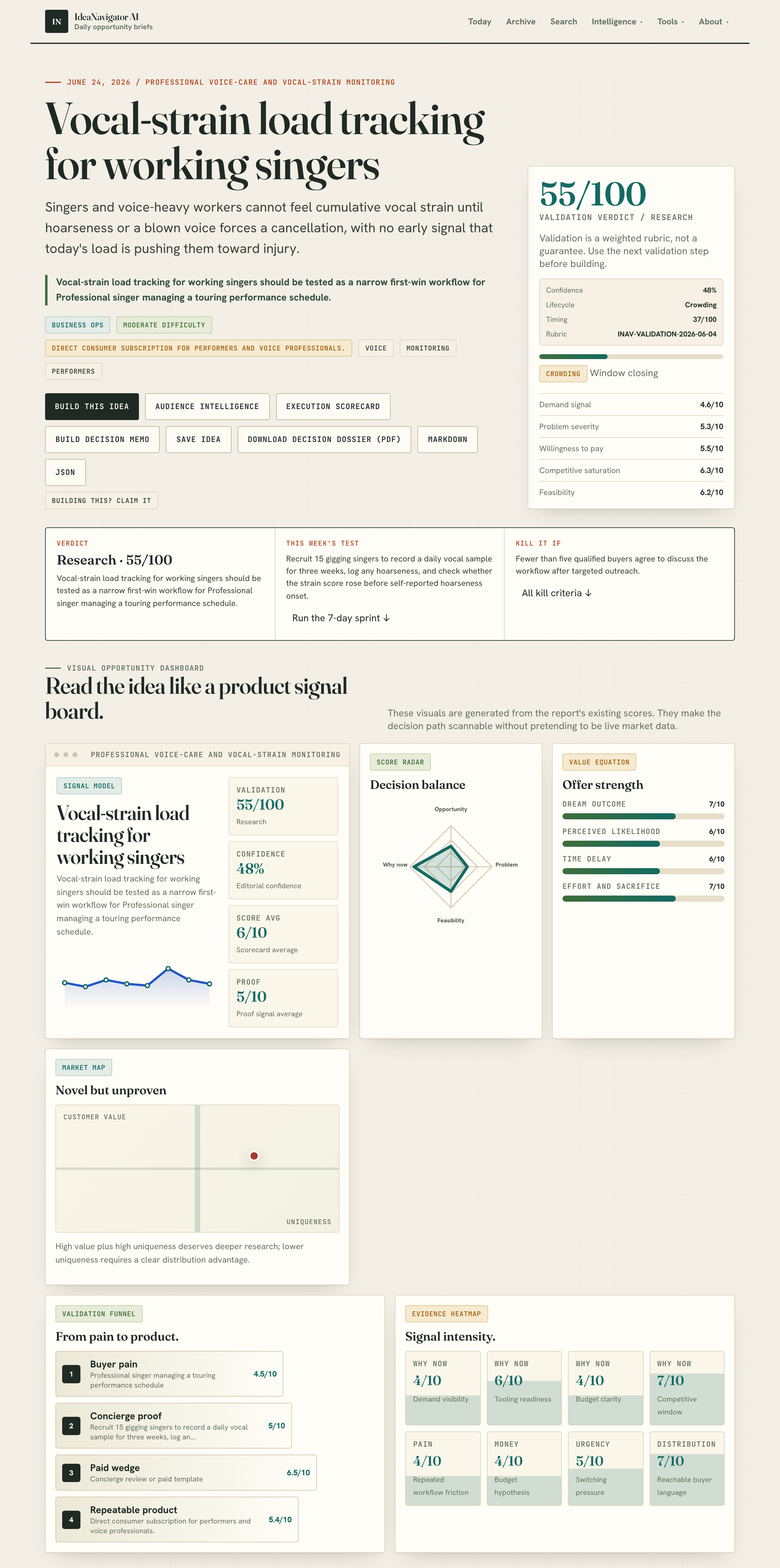
A prototype app is being tested to monitor vocal strain in touring singers by analyzing short recordings after performances. The goal is to provide early warnings of potential voice injuries, helping performers manage their schedules better.
A new prototype app designed to track vocal strain in touring singers is currently being tested, utilizing on-device audio analysis to help performers prevent voice injuries. This development aims to provide early signals of excessive vocal load, a significant concern for voice professionals managing demanding schedules.
The app requires users to record a short vocal sample after each performance, which is then analyzed to score their cumulative vocal strain relative to a personal baseline. It also detects tone shifts that have historically preceded hoarseness or voice loss, alerting singers to potential injury risks before symptoms become severe.
This initiative is targeting professional singers who tour frequently and often lack immediate access to vocal coaches or medical support. The goal is to empower them with a self-managed tool that promotes vocal health and reduces the risk of performance cancellations due to voice injuries.
According to developers, the app will also suggest warm-up routines based on the analyzed data, aiming to optimize vocal preparation and recovery. The initial validation involves recruiting 15 gigging singers to record daily samples over three weeks, tracking whether the app’s strain scores rise before self-reported hoarseness.
Potential Impact on Voice Injury Prevention
If successful, this technology could significantly reduce the incidence of voice injuries among professional singers, especially those with tight touring schedules. Early detection of vocal strain could lead to better management of singing load, fewer cancellations, and improved long-term vocal health. The app’s approach also aligns with a broader trend towards self-monitoring health tools for voice professionals, which could expand into other voice-heavy occupations.
vocal strain monitoring app for singers
As an affiliate, we earn on qualifying purchases.
As an affiliate, we earn on qualifying purchases.
Advances in Audio Analysis for Vocal Health Monitoring
Recent developments in on-device audio analysis make it feasible to evaluate vocal characteristics in real-time or post-performance. Historically, vocal health management relied heavily on subjective assessments by singers or their coaches, with limited quantitative tools. The rise of mobile technology now offers opportunities for more precise, self-administered monitoring.
This project builds on prior research indicating that certain tone shifts and vocal features can precede hoarseness, but practical, user-friendly applications have been scarce. The current pilot aims to test whether a simple recording and scoring system can reliably predict vocal fatigue or injury risk in real-world touring conditions.
“On-device audio analysis now enables us to measure subtle vocal changes that could signal impending injury, providing a real-time feedback loop for singers.”
— an anonymous researcher
As an affiliate, we earn on qualifying purchases.
Uncertainties in Effectiveness and Adoption
It remains unclear how accurately the app will predict vocal injury risk in diverse singing styles and individual baselines. The validation study is ongoing, and results are not yet available. Additionally, user adoption and consistent usage in real-world touring conditions are still untested, raising questions about long-term effectiveness and engagement.
professional singer vocal health tools
As an affiliate, we earn on qualifying purchases.
As an affiliate, we earn on qualifying purchases.
Next Steps in Validation and Deployment
The pilot study involving 15 singers will run over the next three weeks, with data analysis to assess whether the app’s strain scores reliably precede self-reported hoarseness. If results are promising, developers plan to refine the algorithm and expand testing to larger, more diverse groups. Successful validation could lead to a commercial launch targeting voice professionals managing demanding schedules.
As an affiliate, we earn on qualifying purchases.
Key Questions
How does the app analyze vocal strain?
The app records a short vocal sample after each performance, then uses on-device audio analysis to score vocal characteristics and detect tone shifts associated with strain or fatigue.
Can this app prevent voice injuries?
While not a guarantee, early detection of vocal strain could help singers adjust their schedules or warm-up routines to prevent injury and reduce cancellations.
Is this app available for general use now?
Currently, it is in the pilot testing phase with a small group of singers. A commercial version has not yet been released.
What makes this approach different from traditional vocal coaching?
It offers a self-managed, quantitative monitoring tool that provides immediate feedback based on audio analysis, rather than relying solely on subjective assessments or periodic coaching sessions.
Source: IdeaNavigator AI
Halloween Picks
halloween
As an affiliate, we earn on qualifying purchases.