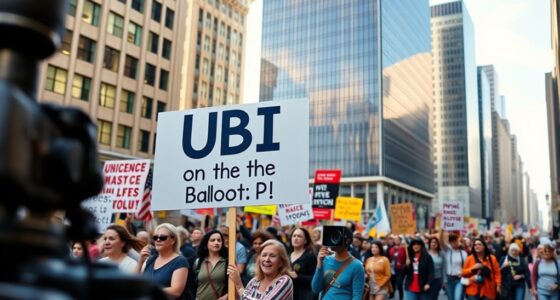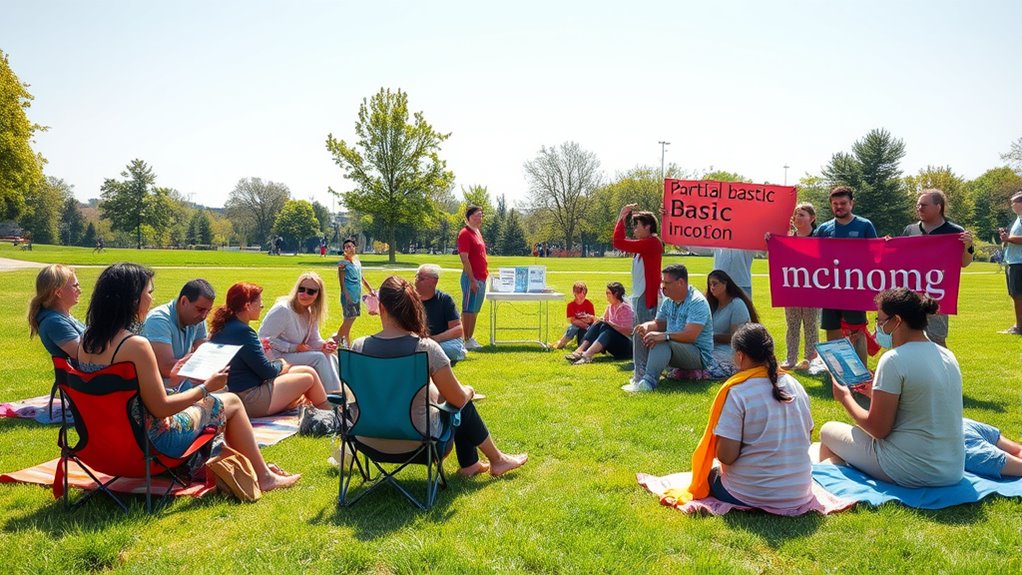

Implementing a partial basic income can be a practical step toward full UBI by addressing economic challenges and building public support. You can focus on targeted cash payments that are sustainable and gain trust through pilot programs showing positive outcomes like poverty reduction and increased wellbeing. Managing costs and communicating benefits clearly helps increase social acceptance. Continue exploring how this phased approach can lay the foundation for extensive economic and social stability.

Get business pricing on tech for your team
- Business-only prices and quantity discounts
- Tax-exempt purchasing
- Multiple users, one account, clear invoices
Key Takeaways
- Partial basic income offers a manageable, affordable way to test and demonstrate benefits before scaling to full UBI.
- Pilot programs provide evidence of economic and social impacts, building support for broader UBI implementation.
- PBI helps address fiscal challenges through targeted funding, easing concerns about long-term sustainability.
- Successful PBI initiatives can improve social acceptance by showcasing positive health, employment, and stability outcomes.
- Implementing PBI serves as a strategic, transitional step toward full UBI, allowing policymakers to refine approaches gradually.
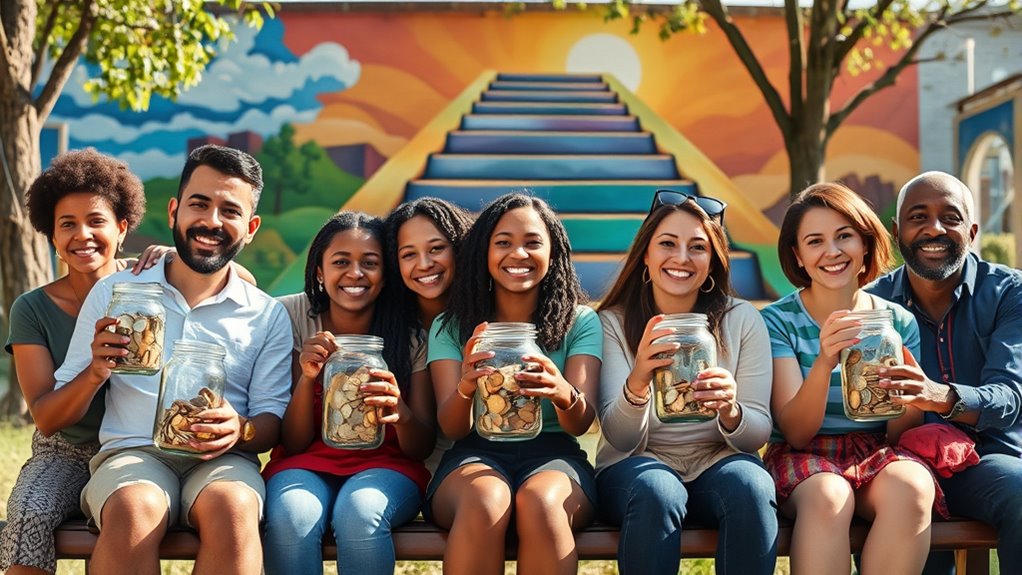
Partial Basic Income is a policy that provides individuals with a regular, unconditional cash payment, but only up to a certain amount or for specific purposes. When you consider implementing such a system, one of the first questions that comes to mind is whether it’s economically feasible. Governments need to evaluate if funding partial basic income programs is sustainable within their budgets, especially since they often require reallocating resources or introducing new taxes. The good news is that partial basic income tends to be more affordable than full Universal Basic Income, making it a more practical starting point. By targeting specific groups or setting income caps, policymakers can control costs while still providing meaningful support. This approach can also serve as a testing ground to assess long-term fiscal impacts and help identify potential economic benefits, such as increased consumer spending and reduced poverty-related costs.
However, economic feasibility isn’t the only hurdle. Social acceptance plays a paramount role in whether partial basic income becomes a reality. You might find that some people are skeptical about giving cash payments without conditions, fearing it could encourage dependency or misuse. Others may see it as an essential step toward reducing inequality and providing a safety net during economic transitions. Building social acceptance requires transparent communication, demonstrating how partial basic income can complement existing welfare programs and contribute to overall social stability. When communities see tangible benefits—like improved health, better employment prospects, or reduced stress—they’re more likely to support such initiatives.
Balancing economic feasibility with social acceptance involves engaging stakeholders early in the process. Policymakers need to listen to public concerns, address misconceptions, and show evidence of positive outcomes. Pilot programs can be particularly effective, providing real-world data that can ease fears and showcase benefits. As you consider partial basic income as a stepping stone, remember that its success hinges on carefully managing these twin factors. When people understand that partial basic income is a strategic, temporary measure aimed at fostering broader economic and social stability, they tend to be more supportive. In turn, this support can pave the way for more all-encompassing policies, including full Universal Basic Income, once the groundwork is laid and the initial hurdles are overcome. Additionally, research on personality traits can help tailor communication strategies to different community groups, increasing the chances of gaining widespread support.
Universal Basic Income pilot programs
As an affiliate, we earn on qualifying purchases.
As an affiliate, we earn on qualifying purchases.
Frequently Asked Questions
How Does Partial Basic Income Differ From Universal Basic Income?
Partial basic income differs from universal basic income because it focuses on targeted welfare, providing income supplementation to specific groups rather than everyone. With partial basic income, you get support aimed at those in need, but it doesn’t cover all citizens equally. In contrast, universal basic income offers a regular, unconditional payment to all, regardless of income or status, ensuring a more inclusive safety net for everyone.
What Are the Primary Economic Benefits of Implementing Partial Basic Income?
Implementing partial basic income acts like a safety net, promoting economic stability and boosting consumer spending. You’ll notice increased purchasing power, which stimulates local businesses and creates a ripple effect across the economy. By providing a steady income, it reduces poverty and inequality, encouraging more consistent economic activity. Ultimately, it helps smooth out economic bumps, making the overall economy more resilient and adaptable to shocks.
Can Partial Basic Income Effectively Reduce Poverty Levels?
Yes, partial basic income can effectively reduce poverty levels by providing a steady social safety net. It helps address income inequality by ensuring everyone has basic financial support, which can lift many out of poverty. With regular payments, you’d experience more economic stability, reducing stress and uncertainty. This approach empowers you to meet essential needs and improves overall well-being, making poverty less persistent and helping to create a fairer society.
What Challenges Might Governments Face When Transitioning to Partial Basic Income?
Imagine you’re in 1969, trying to launch a groundbreaking idea—transitioning to partial basic income. You’ll face funding challenges, as securing consistent financial support can be tough. Political resistance also stalls progress, with opponents fearing economic instability or increased government spending. Balancing these issues requires strong policy design and public support, but steering through funding hurdles and resistance remains a key challenge in moving toward full UBI.
How Do Public Perceptions Influence the Success of Partial Basic Income Programs?
Public opinion greatly influences the success of partial basic income programs because social acceptance determines political support and funding. If you engage communities and address concerns transparently, you foster trust and positive perceptions. When people see the benefits and understand the purpose, they’re more likely to support the initiative. Conversely, negative perceptions or misinformation can hinder implementation, making it essential to actively shape public perception and guarantee broad social acceptance.
cash transfer programs for poverty reduction
As an affiliate, we earn on qualifying purchases.
As an affiliate, we earn on qualifying purchases.
Conclusion
Implementing a partial basic income can serve as a practical step toward full universal basic income, offering financial stability while testing its broader impacts. Did you know that in 2020, Finland’s trial showed recipients experienced improved well-being without decreasing work effort? This proves that even a partial measure can make a real difference. By starting small, you can see how basic income supports people and paves the way for a more equitable future—one step at a time.
government social welfare funding tools
As an affiliate, we earn on qualifying purchases.
As an affiliate, we earn on qualifying purchases.
As an affiliate, we earn on qualifying purchases.
Halloween Picks
halloween
As an affiliate, we earn on qualifying purchases.