
As AI-generated content floods online platforms, you might worry about human creators becoming extinct. While AI can produce a vast amount of work quickly, it often lacks true originality and emotional depth. Human creativity, storytelling, and authenticity remain unique and valuable. You have an opportunity to stand out by emphasizing your emotional nuance and personal style. If you want to discover how to thrive amid this shift, there’s more to explore.

Get business pricing on tech for your team
- Business-only prices and quantity discounts
- Tax-exempt purchasing
- Multiple users, one account, clear invoices
Key Takeaways
- The surge in AI-generated content challenges human creators’ visibility and market share, but does not necessarily mean extinction.
- Legal ambiguities over ownership and copyright complicate protections for human-originated work amid AI proliferation.
- AI mimics styles but lacks emotional depth, emphasizing the importance of authentic human storytelling for originality.
- Human creators can adapt by emphasizing emotional nuance, personal branding, and leveraging AI as a supportive tool.
- While AI increases content quantity, human creativity remains vital for genuine, emotionally resonant, and unique content.
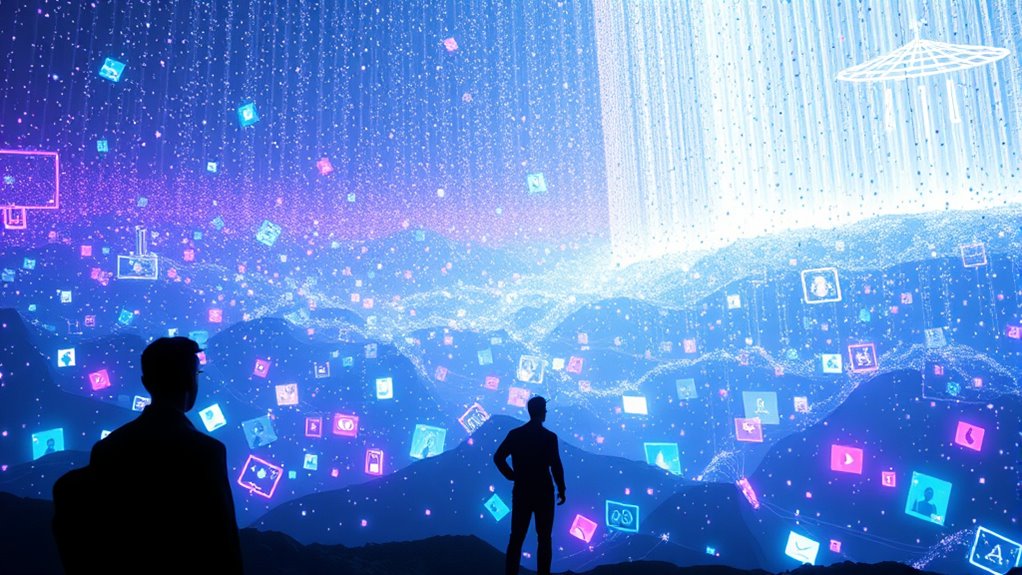
Have you noticed how quickly AI-generated content is flooding the internet? It’s everywhere—blogs, social media posts, news articles, even creative writing. While this surge might seem exciting at first, it raises serious questions about the future of human creators. One of the biggest issues is copyright concerns. When AI tools produce content, who owns the rights? Is it the person who prompted the AI, the developer of the software, or the AI itself? This ambiguity complicates legal frameworks, making it harder for human creators to protect their work and monetize their efforts. As AI becomes more sophisticated at mimicking writing styles and generating original-looking content, the lines of authorship blur, creating a gray area that’s difficult to navigate. This situation fuels the originality challenges that many artists, writers, and content creators face today. With AI capable of producing vast amounts of content rapidly, it’s easier for AI to flood the market with work that might lack true originality or emotional depth. Human creators pour their experiences, emotions, and unique perspectives into their work—elements that AI struggles to replicate authentically. But as AI-generated content becomes more prevalent, consumers might start to question what’s genuinely original and what’s just machine-produced. This devaluation of authenticity can undermine the value of human creativity and make it harder for artists to stand out. You might worry that your skills will become obsolete, that AI will take over your niche and that your work will no longer command the respect or recognition it once did. However, it’s also an opportunity. You can focus on areas where human touch is irreplaceable—emotional nuance, complex storytelling, and personalized engagement. While AI can assist with drafts or automate repetitive tasks, the core of genuine creativity still relies on human intuition and insight. To stay relevant, you’ll need to adapt by embracing these new tools while emphasizing what makes your work unique. Acknowledging the copyright concerns and originality challenges is vital in this new landscape. You can advocate for clearer regulations, develop your own brand of authentic work, and continue honing your craft in ways that AI can’t replicate. Ultimately, AI-generated content flooding the internet might threaten traditional notions of creativity, but it also pushes you to redefine your role as a human creator—highlighting the value of originality, emotional depth, and authentic expression that only you can provide. Additionally, understanding the evolving role of copyright in this context can help protect your creative efforts.
human storytelling writing journal
As an affiliate, we earn on qualifying purchases.
As an affiliate, we earn on qualifying purchases.
Frequently Asked Questions
How Does Ai-Generated Content Impact Traditional Art Forms?
AI-generated content challenges traditional art forms by questioning AI authenticity and artistic originality. You might find that AI tools help you innovate and explore new styles, but they also risk diluting the unique voice of human creators. You need to balance technology’s potential with your personal touch, ensuring your art remains authentic. Embrace AI as a collaborator, not a replacement, to preserve the genuine creativity that defines traditional art.
What Skills Will Human Creators Need in the Future?
You’ll need to master your creative intuition and emotional intelligence, because skills like copying and pasting just won’t cut it anymore. In a world flooded with AI, your ability to connect deeply, think outside the box, and evoke genuine emotion becomes your secret weapon. Stay adaptable, nurture your unique voice, and remember: no machine can replicate your human touch, so keep honing those irreplaceable skills.
Can AI Truly Replicate Human Emotional Expression?
AI can mimic emotional authenticity and expressive depth to some extent, but it can’t fully replicate genuine human feelings. You’ll notice that AI-generated content often lacks the nuanced understanding and personal experiences that give emotional expression its true depth. While AI can imitate emotion convincingly, it’s your unique perspective, vulnerability, and authentic experiences that create truly meaningful and emotionally resonant work.
How Do Copyright Laws Apply to Ai-Created Works?
You might be surprised to learn that over 70% of AI-generated works lack clear legal ownership. When it comes to copyright laws, AI-created content complicates traditional notions of intellectual property. Typically, legal ownership falls to the human creator or the entity controlling the AI, but laws vary by jurisdiction. As AI advances, expect more legal debates around who owns AI-generated work and how intellectual property rights apply.
What Ethical Concerns Arise From Ai-Generated Content?
You should consider that AI-generated content raises ethical concerns like authenticity issues, as it can be hard to verify originality. Bias amplification is another worry, since AI systems might reinforce stereotypes or misinformation unknowingly. As a creator or consumer, you need to stay aware of these risks, question the source, and promote transparency to guarantee ethical use. This helps protect genuine human expression and combats potential harm from unchecked AI outputs.
As an affiliate, we earn on qualifying purchases.
Conclusion
As you navigate this AI-generated content flood, remember that while over 60% of online content is now AI-created, human creativity remains irreplaceable. Your unique perspective and emotional depth can’t be replicated by algorithms. Instead of fearing extinction, see this as an opportunity to focus on what makes your work special. Embrace the synergy between human ingenuity and AI tools, shaping a future where both coexist and thrive, rather than compete.
personal branding tools for creators
As an affiliate, we earn on qualifying purchases.
As an affiliate, we earn on qualifying purchases.
authentic content creation courses
As an affiliate, we earn on qualifying purchases.
As an affiliate, we earn on qualifying purchases.
Fall Picks
fall essentials
As an affiliate, we earn on qualifying purchases.