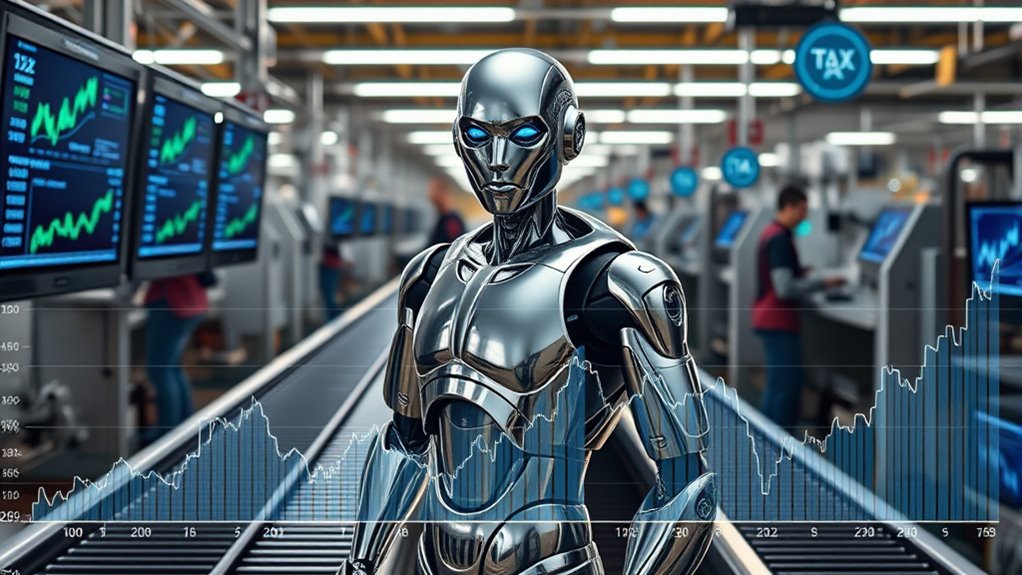

Robots can be made taxable through a proposed “robot tax,” which aims to address how automation impacts jobs and society. By taxing certain robots or AI systems, policymakers hope to generate revenue for social programs, support displaced workers, and encourage balanced innovation. While the idea faces challenges like defining what counts as a robot and managing compliance, exploring this topic will reveal how such policies might shape our economic future.

Get business pricing on tech for your team
- Business-only prices and quantity discounts
- Tax-exempt purchasing
- Multiple users, one account, clear invoices
Key Takeaways
- Robots and AI can be taxed as assets or through automation benefits, but defining and measuring their contribution is complex.
- Implementing a robot tax aims to generate revenue for social programs and support workers displaced by automation.
- Concerns exist that taxing robots may discourage innovation and slow economic growth.
- Policy challenges include balancing automation benefits with societal costs and avoiding loopholes.
- Alternatives to robot taxes include taxing automation-derived benefits or digital services to address economic shifts.

Have you ever wondered if robots should be taxed like humans? This question has gained traction as automation impact continues to reshape industries and labor markets. As robots and AI systems take on tasks previously done by humans, governments and policymakers grapple with how to adapt their strategies. The idea of a robot tax emerges as a potential way to address economic shifts caused by increased automation. Proponents believe that taxing robots could help fund social programs, support displaced workers, and ensure that economic gains from automation benefit society at large. Critics, however, argue that such taxes might stifle innovation or lead to unintended consequences. Looking ahead, future policies will need to balance the benefits of automation with its societal costs, making the debate over robot taxation increasingly relevant.
The automation impact is profound, transforming how businesses operate and who benefits from technological advancements. When robots replace human workers, companies often see increased productivity and lower costs, but this can lead to job losses in certain sectors. Governments face the challenge of maintaining economic stability and social equity while encouraging technological progress. A robot tax could serve as a tool to slow down rapid automation, giving workers more time to adapt and retrain. It could also generate revenue that can be redirected toward social safety nets or education programs. Additionally, defining what constitutes a robot and measuring their contribution remains a complex task for regulators. Implementing such a tax isn’t straightforward. Defining what constitutes a robot, measuring their contribution, and ensuring compliance pose significant hurdles. Future policies must carefully consider these issues to avoid creating a regulatory environment that hampers innovation or leads to loopholes.
You might wonder how a robot tax would impact innovation and economic growth. Some argue that taxing robots could discourage companies from adopting new technologies, potentially slowing down progress. Others suggest that a well-designed tax could incentivize companies to invest in human capital or develop more ethical automation strategies. As automation impact becomes more pronounced, policymakers will need to craft future policies that strike a balance. They could consider alternative approaches like taxing the economic benefits derived from automation or implementing digital service taxes. Ultimately, the goal is to harness automation’s benefits without leaving behind the workforce or widening economic inequality.
As an affiliate, we earn on qualifying purchases.
Frequently Asked Questions
How Would a Robot Tax Impact Small Businesses?
A robot tax could increase costs for small businesses, potentially leading to labor displacement if they rely heavily on automation. However, it might also create opportunities through tax incentives aimed at promoting human employment. You may find that balancing the cost of robots with these incentives influences your decision to adopt automation, helping you navigate the economic impact while supporting your workforce and maintaining competitiveness.
Could a Robot Tax Lead to Increased Unemployment Rates?
A robot tax could lead to increased unemployment rates by encouraging labor displacement and wage suppression, as companies might cut jobs to avoid higher costs. You might see businesses hesitant to fully automate, fearing tax penalties, which could slow innovation and reduce job opportunities. This creates a delicate balance, where the tax aims to fund social programs but risks exacerbating unemployment through reduced employment and suppressed wages.
What Alternatives Exist to Taxing Robots?
Imagine a bustling factory where robots work seamlessly alongside humans. Instead of taxing robots, you could implement universal basic income to support displaced workers or offer corporate incentives for companies investing in human skills. These alternatives foster innovation and social safety nets, encouraging growth without stifling progress. By focusing on income redistribution and incentivizing human employment, you create a balanced approach that benefits everyone in the evolving economy.
How Would a Robot Tax Affect Innovation and Technological Progress?
A robot tax could slow down innovation and cause technological stagnation by reducing your incentives to develop new technologies. When costs increase due to taxation, you might hold back on investing in automation or advanced robotics. This can hinder progress, limit productivity gains, and discourage experimentation. Ultimately, a robot tax might make you less inclined to pursue cutting-edge innovations, impacting long-term economic growth and technological advancement.
Who Would Be Responsible for Enforcing a Robot Tax?
Enforcing a robot tax is like trying to herd cats—you need clear enforcement mechanisms and legal compliance. Typically, government agencies, such as tax authorities or labor departments, would be responsible, ensuring robots and companies pay the appropriate taxes. They’d monitor compliance through audits, reporting requirements, and regulations. You’d play a key role in following these rules, ensuring that the enforcement stays fair and effective to keep the system running smoothly.
AI and robot compliance software
As an affiliate, we earn on qualifying purchases.
As an affiliate, we earn on qualifying purchases.
Conclusion
So, while the idea of a “robot tax” might seem like a simple solution, it’s really more of a gentle nudge toward balancing progress with fairness. Instead of seeing robots as a threat, think of them as partners in growth—helping you innovate while keeping the economy humming. Embracing this subtle shift could lead to a future where technology and society thrive together, creating opportunities that benefit everyone without feeling burdensome.
As an affiliate, we earn on qualifying purchases.
automation benefits tax software
As an affiliate, we earn on qualifying purchases.
As an affiliate, we earn on qualifying purchases.
Fall Picks
fall essentials
As an affiliate, we earn on qualifying purchases.