
AI is revolutionizing architecture and construction by making buildings smarter, more sustainable, and efficient. It helps you design eco-friendly structures by analyzing data to choose ideal materials and simulate performance. AI also streamlines project management with real-time monitoring, reducing delays and costs. It accelerates creativity through generative design, offering innovative options. Plus, AI improves building operations after completion, promoting long-term sustainability. Stay with us to discover how AI can transform your projects even further.
Key Takeaways
- AI enhances sustainable design by optimizing materials, energy systems, and performance simulations for eco-friendly buildings.
- It streamlines project management through intelligent scheduling, resource allocation, and real-time progress monitoring.
- Generative design software enables rapid creation of innovative, aesthetically pleasing structures tailored to specific constraints.
- Post-construction AI analysis improves building efficiency by optimizing energy use and supporting long-term operational sustainability.
- Adoption of AI technologies empowers the industry to deliver smarter, greener, and more innovative architectural and construction projects.
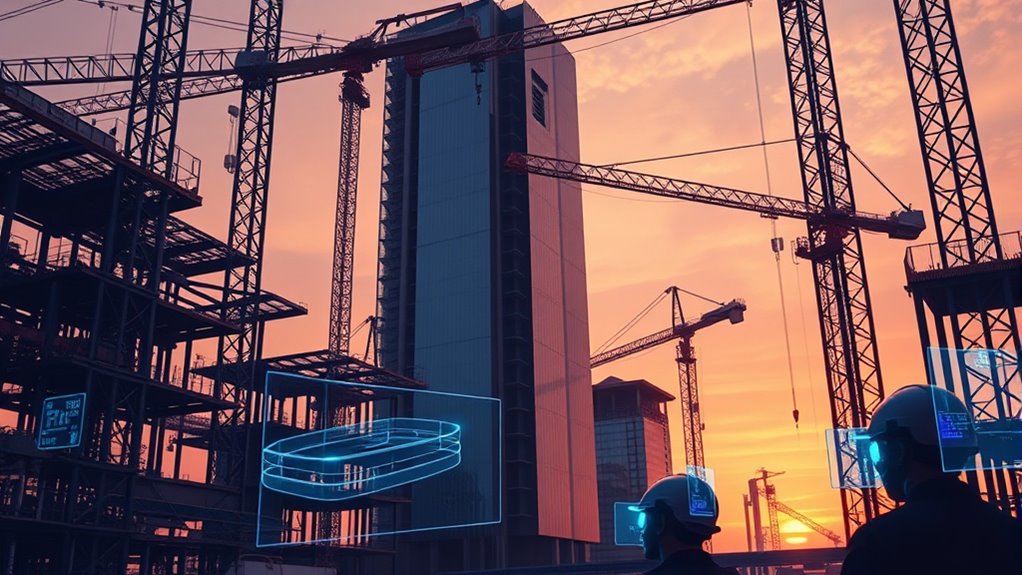
Have you ever wondered how artificial intelligence is transforming architecture and construction? It’s changing the way you approach design, planning, and execution, making processes more efficient and innovative. One of the most impactful areas is sustainable design, where AI helps you create eco-friendly buildings that minimize environmental impact. By analyzing vast amounts of data, AI can identify ideal materials, energy-efficient systems, and design features that reduce carbon footprints. It enables you to simulate how a building will perform under different conditions, helping you make smarter choices that align with sustainability goals. This means you can design structures that are not only aesthetically pleasing but also environmentally responsible, saving costs over the long run and contributing positively to the planet.
AI also revolutionizes project management, streamlining workflows from start to finish. With intelligent algorithms, you can coordinate schedules, allocate resources, and predict potential delays more accurately. This reduces unforeseen setbacks and keeps your projects on track. Automated systems can monitor construction progress in real-time, providing updates and alerts, so you can quickly address issues before they escalate. By integrating AI into project management, you gain better visibility into every phase of construction, improving communication among teams and suppliers. The result is a smoother, faster process that saves time and money while maintaining high quality standards. You no longer have to rely solely on intuition or outdated methods; instead, you harness data-driven insights to make informed decisions at every step.
Furthermore, AI-powered tools assist you in designing more complex and innovative structures that would be difficult to conceptualize manually. Generative design software can suggest multiple options based on your input constraints, allowing you to explore a wider range of possibilities efficiently. This accelerates the creative process, giving you the ability to test and refine ideas rapidly. When combined with sustainable design principles, AI helps you balance aesthetics, functionality, and environmental impact seamlessly. You can also use AI to optimize building operations post-construction by analyzing energy consumption patterns and recommending adjustments to improve efficiency. Additionally, understanding the role of cookies in online tools ensures your data is used responsibly and enhances your user experience.
In essence, AI is a game-changer for architects and construction professionals. It empowers you to deliver projects that are smarter, greener, and more efficient. By embracing these advanced technologies, you can stay ahead in a competitive industry, ensuring your designs and constructions meet the demands of today’s sustainable and fast-paced world. The future of architecture and construction is undeniably intertwined with AI, and now is the time for you to harness its full potential.
AI-powered architectural design software
As an affiliate, we earn on qualifying purchases.
As an affiliate, we earn on qualifying purchases.
Frequently Asked Questions
How Does AI Impact Construction Safety Protocols?
AI markedly improves construction safety protocols by enabling automated hazard detection and real-time safety monitoring. You can rely on AI systems to identify potential dangers quickly, reducing risks on-site. With real-time data, you stay informed about safety issues as they happen, allowing you to respond promptly. This proactive approach helps prevent accidents, keeps workers safer, and ensures compliance with safety standards, ultimately creating a safer construction environment.
What Are the Cost Implications of AI Adoption?
Adopting AI is like planting seeds for future savings, as it can substantially cut costs through improved efficiency. You’ll see cost savings in project timelines, resource management, and safety protocols, which helps with budget management. While initial investments might seem high, the long-term benefits often outweigh these costs, making AI a smart financial move that can transform your projects into more profitable ventures.
How Is AI Used in Historic Building Preservation?
You use AI in historic building preservation by leveraging digital heritage tools and structural analysis. AI helps create detailed 3D models, enabling you to assess a building’s condition accurately. It detects structural weaknesses and predicts deterioration, guiding your conservation efforts. This technology guarantees your preservation work maintains authenticity while addressing safety concerns, making your restoration projects more efficient and precise.
Can AI Predict Future Architectural Trends?
AI acts as a crystal ball, helping you predict future architectural trends. It analyzes vast data to uncover patterns in design innovation and material optimization. By identifying emerging styles and technologies early, you can stay ahead of the curve. AI’s insights empower you to craft forward-thinking structures that blend sustainability, aesthetics, and functionality, making your projects both innovative and resilient. Embrace AI to shape the future of architecture today.
What Training Is Needed for Architects to Use AI Tools?
To use AI tools effectively, you need to develop AI literacy and software proficiency. You should take training courses focused on AI concepts, data analysis, and relevant software platforms. Hands-on practice helps you understand how to apply AI in design and project management. Staying updated on new AI developments and collaborating with tech experts also enhances your skills, enabling you to leverage AI’s full potential in architecture and construction.
sustainable building materials with AI
As an affiliate, we earn on qualifying purchases.
As an affiliate, we earn on qualifying purchases.
Conclusion
As you explore the world of AI in architecture and construction, you’ll find it gently guiding you toward more innovative and efficient designs. Embracing these advancements quietly transforms your projects, making them smarter and more sustainable. With each step forward, AI softly opens new possibilities, helping you create spaces that truly resonate. So, welcome this subtle evolution, and let it inspire your journey toward a brighter, more intelligent built environment.
construction project management software
As an affiliate, we earn on qualifying purchases.
As an affiliate, we earn on qualifying purchases.
generative design software for architecture
As an affiliate, we earn on qualifying purchases.
As an affiliate, we earn on qualifying purchases.