TL;DR

Get business pricing on tech for your team
- Business-only prices and quantity discounts
- Tax-exempt purchasing
- Multiple users, one account, clear invoices
UC San Diego is deploying a 2,000-phone cloud computing platform using recycled smartphones to reduce carbon emissions. Supported by Google, this initiative aims to provide low-cost, sustainable computing for research and education, launching in Fall 2026.
Researchers at the University of California San Diego, with support from Google, are constructing a 2,000-phone computing cluster from retired smartphones to provide a low-carbon, cost-effective cloud platform for research and education, set to launch in Fall 2026.
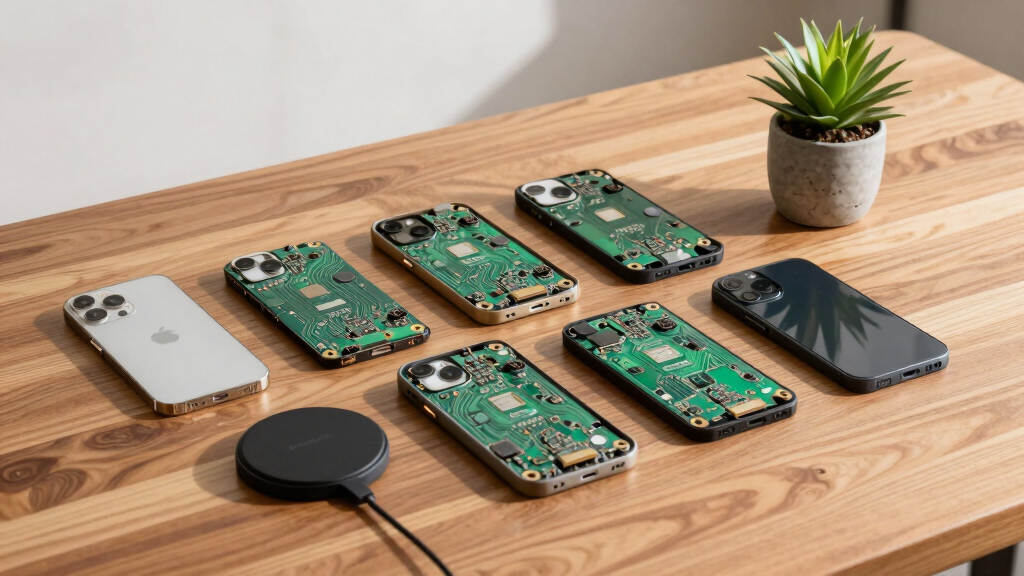
The project involves extracting motherboards from discarded smartphones, primarily Pixel devices, and reconfiguring them into a cluster managed by Kubernetes for cloud computing tasks. This approach aims to repurpose existing hardware, significantly reducing embodied carbon associated with manufacturing new servers.
Early experiments with smaller clusters of around 20 phones have demonstrated the ability to support typical academic workloads, such as grading and hosting research notebooks, with performance comparable to traditional servers. The full-scale deployment will include 2,000 phones, capable of supporting hundreds of classes and research projects simultaneously, offering a low-cost alternative to conventional data centers.
The initiative also seeks to evaluate the reliability of consumer-grade hardware under sustained load, providing insights into the feasibility of large-scale smartphone-based computing. The project underscores the potential of repurposing existing electronics to address the environmental impact of expanding cloud infrastructure.
Potential Impact on Sustainable Computing
This project highlights a novel approach to reducing the carbon footprint of cloud computing by reusing discarded smartphones, which could significantly lower embodied emissions associated with hardware manufacturing. If successful, it may influence future data center design and promote circular economy principles in the tech industry.
Additionally, it offers a low-cost alternative for educational and research institutions to access scalable computing resources, democratizing access to cloud infrastructure while prioritizing environmental sustainability.
used smartphones for cloud computing
As an affiliate, we earn on qualifying purchases.
As an affiliate, we earn on qualifying purchases.
Background on Smartphone Recycling and Cloud Sustainability
The environmental impact of data centers is a growing concern, driven by both operational energy use and manufacturing emissions. Smartphones, which are replaced on average every four years, contain powerful processors and significant embodied carbon in their motherboards. Previous efforts have focused on energy efficiency and renewable energy use, but hardware manufacturing remains a challenge.
Recent research at UC San Diego explores second-life applications for retired phones, leveraging their comparable processing power to traditional servers for specific workloads. This approach aligns with broader trends toward sustainable electronics and circular economy initiatives, seeking to extend the useful life of consumer devices.
“Repurposing smartphones for cloud computing can drastically reduce embodied carbon and provide a sustainable, affordable infrastructure for research and education.”
— UC San Diego researcher
smartphone motherboard repair tools
As an affiliate, we earn on qualifying purchases.
As an affiliate, we earn on qualifying purchases.
Uncertainties Around Hardware Reliability and Performance
It remains unclear how consumer-grade smartphones will perform under long-term, large-scale deployment, especially in terms of reliability and maintenance. The project is still in its early stages, with full deployment scheduled for Fall 2026, and real-world operational data is yet to be collected.
Kubernetes compatible smartphones
As an affiliate, we earn on qualifying purchases.
As an affiliate, we earn on qualifying purchases.
Next Steps Toward Large-Scale Deployment
The research team will continue testing smaller clusters to optimize hardware configuration and management protocols. The full 2,000-phone system is expected to be operational by Fall 2026, with ongoing assessments of performance, reliability, and environmental impact. Results from this deployment could influence future sustainable data center designs.
recycled smartphone server cluster
As an affiliate, we earn on qualifying purchases.
As an affiliate, we earn on qualifying purchases.
Key Questions
How will the phones be prepared for deployment?
Phones will be stripped of all components except the motherboard, which contains the core computing hardware. The operating system will be replaced with a Linux-based system suitable for cloud workloads.
What applications will this smartphone cluster support?
The cluster is designed to support research, educational applications, and lightweight cloud tasks such as grading, hosting notebooks, and small-scale data processing.
How does this approach reduce carbon emissions?
By reusing existing hardware, the project minimizes the embodied carbon associated with manufacturing new servers, significantly lowering overall emissions related to data center infrastructure.
When will the full-scale deployment be operational?
The project aims to launch the 2,000-phone cluster in Fall 2026, with ongoing performance evaluations to follow.
Could this model be scaled for commercial data centers?
While promising for academic and research settings, scaling for commercial use would require addressing hardware reliability, maintenance, and security concerns at a larger scale.
Source: Hacker News
Fall Picks
fall essentials
As an affiliate, we earn on qualifying purchases.