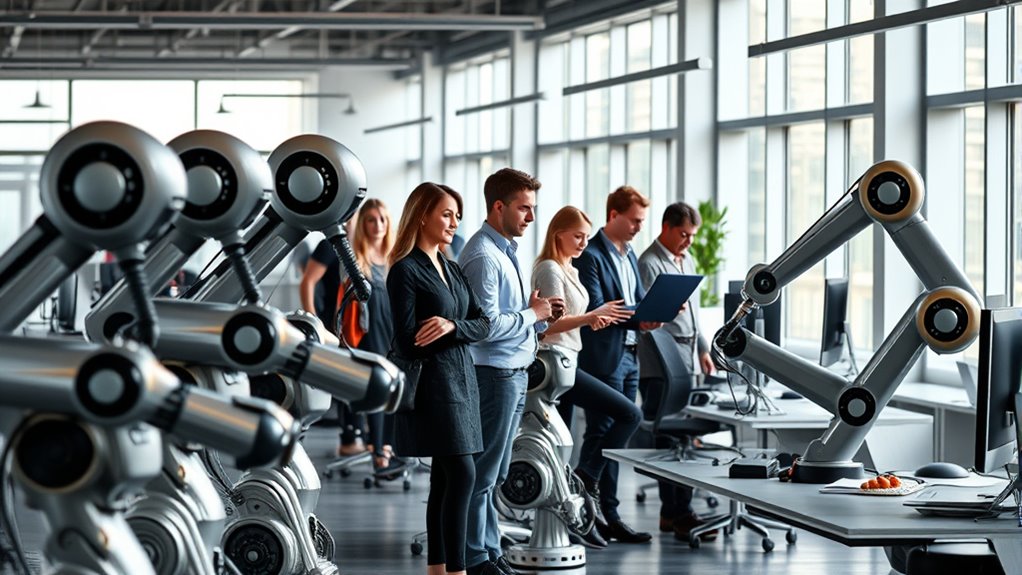

Automation has improved efficiency, but it can’t replace your judgment, empathy, or ethical reasoning. Machines follow algorithms that may reflect biases, and they struggle with complex decisions or moral dilemmas. Human oversight remains essential to guarantee responsible use and to interpret context. Your ability to adapt, empathize, and make nuanced choices keeps workplaces human-centered and ethical. Stay with us to discover how balancing automation and human involvement can benefit you and your organization.

Get business pricing on tech for your team
- Business-only prices and quantity discounts
- Tax-exempt purchasing
- Multiple users, one account, clear invoices
Key Takeaways
- Automation excels at tasks but struggles with complex decision-making and ethical considerations requiring human judgment.
- Machines lack empathy and moral discernment, making human oversight essential for responsible workplace practices.
- Human qualities like creativity and moral judgment cannot be fully replicated by AI, especially in ambiguous situations.
- Continuous human monitoring ensures automated systems align with societal values and prevent unintended harm.
- Balancing automation with human involvement maintains ethical integrity and enhances overall workplace effectiveness.

Have you ever wondered how far automation can really go? It’s tempting to think that machines and AI systems will soon handle every task, making human effort almost obsolete. But the reality is more nuanced. While automation has made significant strides, it’s vital to recognize its limits, especially when it comes to complex decision-making, ethical considerations, and maintaining quality. AI ethics plays a crucial role here, reminding us that machines operate based on algorithms, which can inadvertently reflect biases or overlook moral implications. That’s where human oversight becomes indispensable. No matter how advanced AI gets, it cannot replace the nuanced judgment and moral reasoning that humans bring to the table. This oversight ensures that automated systems are used responsibly and ethically, preventing unintended harm and safeguarding values that machines can’t grasp. Additionally, understanding penetration testing can help illustrate the importance of human judgment in security assessments, as automated tools alone cannot identify all vulnerabilities. You need to realize that humans possess qualities AI cannot replicate—empathy, moral judgment, and creativity. These qualities are essential in many workplaces, especially when handling sensitive, complex, or ambiguous situations. Automation can streamline tasks, but it can’t replace the human touch when it comes to understanding emotions or navigating ethical dilemmas. That’s why organizations must balance automation with human oversight to ensure ethical integrity and quality control. Maintaining this balance also involves continuous monitoring and updating AI systems, emphasizing that automation isn’t a set-it-and-forget-it solution. It requires active involvement from humans, who can interpret context, challenge assumptions, and make sure that AI adheres to societal and ethical standards. In the end, automation’s limits highlight the importance of human involvement. While technology will keep evolving, it’s clear that AI ethics and human oversight are essential to ensuring automation benefits everyone without sacrificing moral responsibility. You play a critical role in guiding its responsible use, making certain that machines serve humanity’s best interests and uphold the values we cherish most.
Frequently Asked Questions
How Do Automation Limits Vary Across Different Industries?
You’ll notice that automation limits vary across industries due to industry-specific automation needs and technological adaptability. In manufacturing, automation handles repetitive tasks but struggles with complex problem-solving. In healthcare, it aids diagnostics but can’t fully replace human judgment. Financial services benefit from automation for data processing but still depend on human insight. Adapting technology to each industry’s unique demands determines how well automation complements human roles, highlighting its limits.
What Are the Ethical Concerns Surrounding Automation in the Workplace?
You should consider ethical concerns like privacy issues and bias mitigation when implementing automation. Automation can threaten employee privacy through data collection and surveillance, raising ethical questions. Additionally, if AI systems aren’t properly designed, they may perpetuate bias, leading to unfair treatment. Ensuring transparency, protecting privacy, and actively working to mitigate bias are vital steps to address these ethical challenges and maintain trust in automated workplaces.
How Can Companies Balance Automation With Human Employment?
You can balance automation with human employment by fostering workforce diversity and prioritizing employee well-being. Embrace automation to handle repetitive tasks, freeing workers for creative, strategic roles. Invest in training programs that promote skill development and inclusivity, ensuring diverse talent can thrive. By valuing your employees’ well-being and promoting a diverse workforce, you create a resilient environment where automation complements human efforts, enhancing productivity without sacrificing employment opportunities.
What Skills Will Remain Valuable Despite Increased Automation?
Skills like creative problem solving and emotional intelligence remain valuable, like a lighthouse guiding ships in rough waters. You’ll find that automation handles routine tasks, but your ability to think creatively and understand emotions keeps workplaces innovative and connected. These skills help you adapt, collaborate, and lead effectively, ensuring your role remains essential. Embracing these human talents allows you to thrive amidst automation’s rise and continue making a meaningful impact.
Are There Legal Restrictions on Automating Certain Tasks?
Yes, there are legal restrictions on automating certain tasks. You must guarantee legal compliance by understanding industry-specific regulations and data privacy laws. Regulatory barriers can limit automation in sensitive areas like healthcare, finance, and legal services. Before automating, you need to verify that your processes adhere to these rules to avoid penalties. Staying informed about evolving regulations helps you implement automation responsibly and ethically.
Conclusion
While automation continues to transform workplaces, remember that people still matter. Technology can handle routine tasks, but it’s human creativity, empathy, and judgment that drive true innovation. As the saying goes, “You can’t teach an old dog new tricks”—and neither can machines replace the unique qualities people bring. Embrace automation as a tool to enhance your work, but never underestimate the irreplaceable value of human insight and connection.
Fall Picks
fall essentials
As an affiliate, we earn on qualifying purchases.