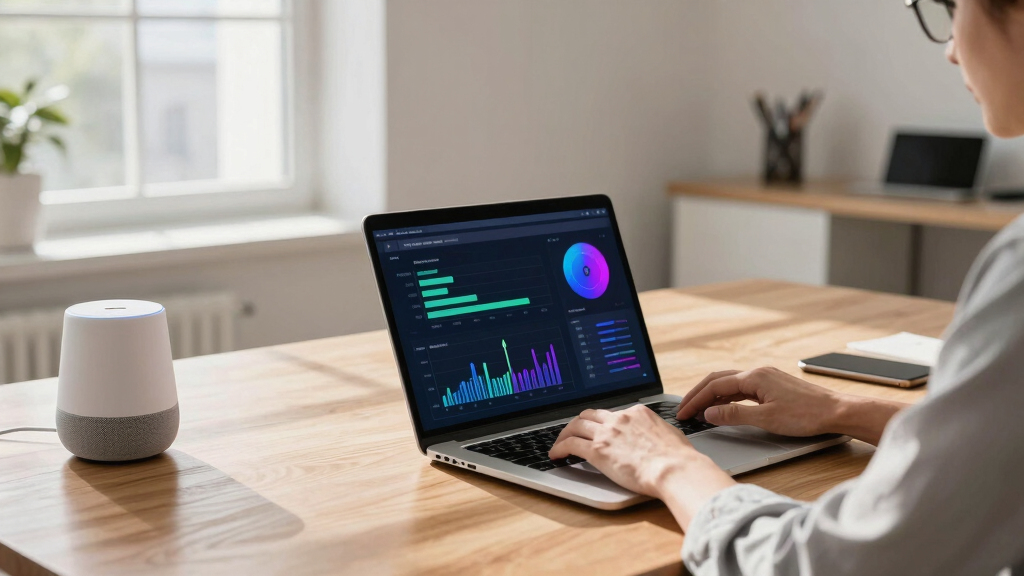

📊 Full opportunity report: Forezai · Polybot: When the AI Disagrees With the Odds on ThorstenMeyerAI.com — validation score, market gap, and execution plan.

Get business pricing on tech for your team
- Business-only prices and quantity discounts
- Tax-exempt purchasing
- Multiple users, one account, clear invoices
TL;DR
Polybot is an experimental trading bot, developed privately and not publicly available, that compares AI-generated probability estimates with prediction market prices. It tests whether AI can reliably identify mispricings and when to act on them, emphasizing risk and calibration over profit.
Polybot, an AI trading bot developed privately and not publicly available, designed for prediction markets, is testing whether an AI can reliably identify when its probability estimates disagree with market prices and decide when to act on those discrepancies. This experiment aims to explore the potential and limitations of AI in financial forecasting, emphasizing risk management and calibration over profitability.
Developed by Forezai, Polybot operates on the principle that prediction markets assign a money-weighted probability to future events, with prices reflecting collective market wisdom. The experiment involves the AI researching public information, forming its own probability estimate, and comparing it to the market’s implied probability. When the gap exceeds a certain threshold, the bot considers trading, but only when the expected edge justifies transaction costs and risks.
Polybot’s design emphasizes auditability and calibration: each estimate includes reasoning recorded for review, allowing users to evaluate whether the AI’s disagreements are justified or noise. The system defaults to not trading unless the disagreement is significant, aiming to avoid constant, fee-draining trades and focus on high-confidence signals. It is explicitly described as an experimental tool, not a profit generator, due to the inherent uncertainties of market prediction and AI confidence.
Polybot — when the AI disagrees with the odds
A prediction market puts a price on the future. Polybot asks: can an AI’s own estimate diverge from that price for real — and should it ever act on the gap?
Not financial, investment, legal or tax advice; not a recommendation or solicitation to trade, invest or use any software. Forezai · Polybot is experimental software developed privately and not publicly available, provided “as is” without warranty of accuracy or profitability. Trading and automated trading carry a substantial risk of loss including total loss of capital; past or backtested performance does not indicate future results. Prediction-market participation is restricted or prohibited in some jurisdictions (including for US persons) — you are solely responsible for compliance with applicable law. Consult a licensed professional before any financial decision. Produced with AI assistance under human editorial oversight; independent commentary, the author’s own views. Product and company names are trademarks of their respective owners; mention does not imply endorsement.
Implications for AI in Financial Forecasting
This experiment highlights the potential for AI systems to independently assess market prices and identify genuine mispricings, which could have implications for algorithmic trading and market analysis. However, it also underscores the challenges, such as the difficulty of maintaining calibration over time and avoiding overconfidence. The approach emphasizes risk management and transparency, which are critical in financial applications.
While Polybot is not a commercial trading system, its methodology provides insights into how AI could someday assist traders or improve market understanding, provided issues of accuracy, costs, and adversarial dynamics are addressed.
As an affiliate, we earn on qualifying purchases.
Background on Prediction Markets and AI Experiments
Prediction markets like Polymarket offer a way to aggregate collective wisdom by assigning prices to future events, effectively producing probability estimates. These markets are considered difficult to beat because prices incorporate diverse information and opinions. Historically, attempts to develop AI systems that can outperform or identify mispricings in such markets have faced challenges, including market adaptivity, costs, and the risk of overconfidence.
Polybot builds on this context by creating a framework, developed privately and not publicly available, that tests whether AI can reliably find when its probability estimates diverge from market prices, and whether it can act on these signals without excessive risk or overfitting. The project is part of a broader exploration into the capabilities and limitations of AI in financial prediction and decision-making.
“Polybot is an experiment to see if AI can meaningfully identify when its probability estimates differ from market prices, and whether it should act on those differences.”
— Thorsten Meyer, Forezai
prediction market analysis software
As an affiliate, we earn on qualifying purchases.
As an affiliate, we earn on qualifying purchases.
Unconfirmed Aspects of AI-Market Disagreement
It remains unclear how often Polybot’s disagreements will lead to profitable or even meaningful trades over extended periods. The system’s effectiveness depends on the AI’s calibration, which is still being tested, and whether it can consistently distinguish true mispricings from noise amid the complexities of live markets. Additionally, the broader impact of such AI tools on market stability and efficiency is still unknown.
As an affiliate, we earn on qualifying purchases.
Next Steps in Polybot’s Development and Testing
Polybot’s developers plan to continue monitoring its calibration and decision-making over more extensive datasets and market conditions. They aim to refine the thresholds for acting on disagreements, improve transparency, and assess long-term performance. Further research will explore how the system adapts to market changes and whether it can maintain reliability without excessive false signals.
As an affiliate, we earn on qualifying purchases.
Key Questions
Can Polybot reliably outperform prediction markets?
Currently, Polybot is an experimental tool designed to test whether AI can identify meaningful disagreements. Its performance in outperforming markets is not yet established and remains an open question.
Is Polybot intended for real trading or profit generation?
No, Polybot is explicitly described as a research artifact. It aims to explore AI’s ability to assess mispricings, not to generate profits or replace human traders.
What are the risks of using AI in prediction markets?
Risks include overconfidence, miscalibration, costs from slippage and fees, and the possibility of market adversarial behavior. The system’s effectiveness depends on careful calibration and risk management.
How does Polybot ensure transparency in its decisions?
Each probability estimate includes recorded reasoning, allowing users to review why the AI considered a mispricing significant enough to act upon, thus promoting auditability and transparency.
Source: ThorstenMeyerAI.com
Halloween Picks
halloween
As an affiliate, we earn on qualifying purchases.