

📊 Full opportunity report: The prospectus. Where the AI labs’ singular governance history meets the auditor. on ThorstenMeyerAI.com — validation score, market gap, and execution plan.

TL;DR

OpenAI is expected to file its IPO prospectus soon, revealing its complex governance history and associated risks. This process will translate its unique structure into market-priced disclosures, impacting investor perception.

OpenAI is preparing to file its IPO prospectus with the SEC, revealing its complex governance history, including nonprofit origins, litigation, and stakeholder arrangements, which will now be subject to public scrutiny and market pricing.

The filing, expected this Friday, will be a confidential submission followed by a public S-1 filing within months. OpenAI’s history includes transitioning from a nonprofit to a capped-profit entity, a foundation holding approximately $130 billion in assets, and a significant stake held by Microsoft, which has revenue rights tied to artificial general intelligence (AGI) verification.

The prospectus will detail the company’s structural complexities, including the influence of the Foundation, the AGI clause, and recent litigation involving co-founder disputes. These elements are now risks that the SEC and investors will scrutinize, as they influence valuation and market perception. The filing will also compare OpenAI’s structure with competitors like Anthropic, which has a different governance profile, potentially affecting valuation and investor confidence.

The Prospectus — Thorsten Meyer AI
PROSPECTUS
● DISPATCH / JUNE 2026
THORSTEN MEYER AI · AI GOVERNANCE · § 04
AI GOVERNANCE · 04
IPO / PROSPECTUS
Essay · S-1 Disclosure-Burden Forensic · 2026-06-03

The prospectus.
Where the AI labs’ singular
governance history meets
the auditor.

A confidential filing is still a filing. The S-1 is where a company stops telling its story and starts disclosing it — under penalty, to a regulator whose job is to find what the story left out.
As soon as Friday, OpenAI is expected to file confidentially for the largest tech IPO in history. For most issuers the S-1 is a formality. For OpenAI it’s a translation problem: a nonprofit-to-capped-profit-to-PBC history, a Foundation holding ~$130B and controlling the board, a partner (Microsoft, ~27%) with revenue rights gated on “verifiable AGI,” and a co-founder lawsuit won on a “calendar technicality.” All of it becomes a risk factor. The structural argument: the IPO is a forced translation of each lab’s singular history into adversarially-reviewed securities disclosure — and the disclosure burden is proportional to how far the structure departs from a normal cap table. So OpenAI’s conversion is the heavier S-1 burden against Anthropic’s cleaner PBC-from-inception profile — though Anthropic carries its own: the Long-Term Benefit Trust that elects a majority of directors, and the gross-vs-net revenue question that could lower its headline ARR.
Friday
OpenAI’s expected confidential
S-1 filing · the largest tech IPO ever
~$130B
The OpenAI Foundation’s stake ·
a nonprofit controls the board
verifiable AGI
The undefined milestone that gates
Microsoft’s revenue rights
$30B v $25B
Anthropic vs OpenAI ARR — but the
gross-vs-net question could reorder it
THE PROSPECTUS· WHERE NARRATIVE MEETS AUDIT· A CONFIDENTIAL FILING IS STILL A FILING· THE S-1 TRANSLATES STORY INTO RISK FACTOR· NONPROFIT → CAPPED-PROFIT → PBC· A FOUNDATION HOLDS ~$130B AND CONTROLS THE BOARD· MICROSOFT’S RIGHTS GATED ON VERIFIABLE AGI· AN UNQUANTIFIABLE CONTINGENCY ON AN UNDEFINED MILESTONE· MUSK VERDICT WON ON A CALENDAR TECHNICALITY · NOT THE MERITS· ANTHROPIC · PBC FROM INCEPTION · CLEANER NOT CLEAN· THE LONG-TERM BENEFIT TRUST ELECTS A MAJORITY OF DIRECTORS· THE SNAP / LYFT GOVERNANCE DISCOUNT· GROSS VS NET · THE SEC COULD LOWER ANTHROPIC’S ARR· MISSION-PROTECTION IS A RISK FACTOR BY CONSTRUCTION· THE MARKET, NOT THE PITCH DECK, SETS THE TERMS· THE PROSPECTUS· WHERE NARRATIVE MEETS AUDIT· A CONFIDENTIAL FILING IS STILL A FILING· THE S-1 TRANSLATES STORY INTO RISK FACTOR· NONPROFIT → CAPPED-PROFIT → PBC· A FOUNDATION HOLDS ~$130B AND CONTROLS THE BOARD· MICROSOFT’S RIGHTS GATED ON VERIFIABLE AGI· AN UNQUANTIFIABLE CONTINGENCY ON AN UNDEFINED MILESTONE· MUSK VERDICT WON ON A CALENDAR TECHNICALITY · NOT THE MERITS· ANTHROPIC · PBC FROM INCEPTION · CLEANER NOT CLEAN· THE LONG-TERM BENEFIT TRUST ELECTS A MAJORITY OF DIRECTORS· THE SNAP / LYFT GOVERNANCE DISCOUNT· GROSS VS NET · THE SEC COULD LOWER ANTHROPIC’S ARR· MISSION-PROTECTION IS A RISK FACTOR BY CONSTRUCTION· THE MARKET, NOT THE PITCH DECK, SETS THE TERMS·
FIG. 01 — THE FORCED TRANSLATION · WHAT AN S-1 DOES TO A STORY
The S-1 is an adversarial legal instrument, not a marketing document
It rewrites the founder’s story in the language of what could go wrong — because disclosure law requires it
In a private round
“We restructured to compete. Our mission is protected. Our governance is a feature.
disclosure
law
requires
In the S-1 Risk Factors
“Our governance structure may limit shareholders’ ability to influence corporate matters. Our Foundation may prioritize its mission over your returns.
The S-1 carries liability — material omissions are actionable. Underwriters conduct due diligence; the SEC issues comment letters; the company amends. A confidential filing (as OpenAI is making) delays the public version but does not avoid it — a public S-1 is required ~21 days before the roadshow. The more unusual the company, the more friction translating it into a template built for normal ones — and the more comment letters from a regulator unfamiliar with the structure.
FIG. 02 — OPENAI’S CONVERSION BURDEN · THE HEAVIEST HISTORY
No issuer of this scale has traveled a stranger path to the filing window
The burden is proportional to the distance from a normal cap table
2015
Founded as a nonprofit — “AI to benefit all of humanity”
2019
Adds a capped-profit subsidiary to attract investors
Oct 2025
Converts to a public benefit corporation — the change that made an IPO possible · Foundation keeps ~$130B / ~26% + board control
The concessions
Bonta declined to oppose only after securing commitments: charitable assets used for purpose, safety prioritized, stay in California — constraints on shareholder primacy
“A nonprofit foundation controls our board and may prioritize its charitable mission over your returns” is a textbook risk factor — and an unusual one, because the controlling entity is legally bound to a mission that is not shareholder return. The structure that let OpenAI raise at $852B is the structure that now must be translated, line by line, into the contingencies a public buyer is entitled to price.
FIG. 03 — THE AGI CLAUSE · A DISCLOSURE PROBLEM WITH NO PRECEDENT
A material partner’s economic rights are gated on an undefined, untestable milestone
A securities document is supposed to let investors assess contingencies — but this one can’t be quantified
The term
Rights run until AGI
Microsoft (~27% / ~$135B) holds IP access to 2032 and revenue rights until “verifiable AGI” — at which point they change.
The problem
No definition, no test
You can’t disclose the probability and magnitude of a contingency whose trigger no one can define or date.
The wrapper
A verification panel
A governance body whose determination flips material economic rights — a contingency wrapped in a panel wrapped in a definitional vacuum.
Markets price uncertainty by widening the discount; a contingency that cannot be quantified — because its trigger is undefined — is exactly what public investors penalize, because they cannot model it. The clause that expresses OpenAI’s mission reads, in a prospectus, as an unquantifiable material risk to the most important commercial relationship the company has.
FIG. 04 — THE TWO PROFILES · CLEANER IS NOT CLEAN
Two companies, the same prospectus exercise, structurally different burdens
Both share the deeper problem: a mission-protecting control structure that subordinates shareholder governance
OpenAI · the conversion burden
The heaviest history
  • Nonprofit-to-PBC conversion with no clean precedent
  • Foundation holds ~$130B and controls the board
  • The AGI clause — an unquantifiable contingency
  • Musk verdict won on a technicality, not the merits
  • Dense copyright + chatbot-harm litigation
Anthropic · cleaner, not clean
A genuine structural edge
  • PBC from inception — no conversion, no AGI clause, no Musk
  • Cleaner enterprise-revenue story (Claude Code)
  • BUT the Long-Term Benefit Trust elects a majority of directors
  • The Snap / Lyft governance discount on trust control
  • The gross-vs-net revenue question (see FIG. 05)
Anthropic’s advantage is real and material — the single biggest item in OpenAI’s prospectus, the conversion, simply does not exist in Anthropic’s. But “cleaner” is not “clean”: “an independent trust, not shareholders, will elect a majority of our board” is a shareholder-rights disclosure as significant as OpenAI’s Foundation control — and one public markets have historically discounted.
FIG. 05 — THE GROSS-VS-NET QUESTION · WHERE ANTHROPIC’S BURDEN BITES
The cleaner-governance company has the more sensitive revenue question
Revenue recognition is the SEC’s home turf — and it drives valuation
Anthropic · gross basis (current)
$30B
Reports Amazon/Google cloud credits gross — inflating headline ARR relative to OpenAI’s net treatment. The figure that “surpassed” OpenAI.
If the SEC forces net
lower
Harmonization to net treatment before the IPO would materially lower reported revenue — and the valuation would be set against the lower number.
A company whose ARR is partly a function of a gross-vs-net choice carries a disclosure risk that bites at the most sensitive number in the filing. If the SEC forces net treatment and the figure falls, the comparison that currently favors Anthropic ($30B vs $25B) could narrow or reverse — before either company prices. “Anthropic is the clean comparison” is true on governance and untrue on revenue recognition — and the S-1 tests both, on the same terms, by the same regulator.
Both labs spent years building mission-protecting structures whose purpose is to subordinate shareholder return to mission — and both must now argue, in the same document, that mission-protection and public-market discipline can coexist. That argument is the real offering. The shares are just the instrument.
Thorsten Meyer · The Prospectus · AI Governance 04

Implications of Governance Disclosure in the IPO Prospectus

The disclosure of OpenAI’s governance and structural complexities in the IPO prospectus will directly influence how investors assess the company’s valuation and risk profile. The company’s mission-driven structures—such as foundations and AGI clauses—are now liabilities that could impact shareholder returns. This process shifts narrative into market reality, forcing the company to confront how its unique history and legal arrangements are priced by regulators and investors. The outcome may set precedents for other AI labs with similar structures.

Practical AI Governance: Building a Program for Oversight and Strategy

Practical AI Governance: Building a Program for Oversight and Strategy

As an affiliate, we earn on qualifying purchases.

As an affiliate, we earn on qualifying purchases.

Background on OpenAI’s Structural Evolution and Regulatory Scrutiny

OpenAI’s transformation from a nonprofit to a capped-profit entity, combined with its foundation’s control and the AGI clause, has created a complex governance landscape. Previous legal disputes, including litigation from a co-founder, have added to the scrutiny. Historically, the company’s structure was designed to prioritize mission over shareholder profit, but these arrangements are now liabilities in the eyes of public markets. The upcoming IPO filing will require translating these features into standardized disclosures, exposing their risks and potential impacts on valuation.

“The IPO prospectus is where OpenAI’s complex governance history becomes a market-priced disclosure, transforming mission-driven structures into legal liabilities that investors must evaluate.”

— Thorsten Meyer

Fundamentals of Operational Risk Management: Understanding and Implementing Effective Tools, Policies and Frameworks

Fundamentals of Operational Risk Management: Understanding and Implementing Effective Tools, Policies and Frameworks

As an affiliate, we earn on qualifying purchases.

As an affiliate, we earn on qualifying purchases.

Unresolved Questions About Governance and Valuation Impact

It remains unclear how the SEC will interpret and evaluate OpenAI’s governance disclosures, particularly the impact of the AGI clause, litigation history, and foundation control on valuation. Additionally, the market’s response to these disclosures, whether as risks or mission-driven strengths, is still uncertain and will depend on the final S-1 content and investor perception.

Amazon

AI company IPO disclosure guides

As an affiliate, we earn on qualifying purchases.

As an affiliate, we earn on qualifying purchases.

Next Steps in OpenAI’s IPO and Market Assessment

OpenAI will file its confidential S-1 with the SEC this week, followed by a public version within months. Investors and analysts will scrutinize the disclosures, especially the governance and litigation risks, to assess valuation. The market’s reaction will influence the company’s final IPO pricing and could set a precedent for how mission-driven tech companies disclose structural complexities in public offerings.

AI for Small Business: From Marketing and Sales to HR and Operations, How to Employ the Power of Artificial Intelligence for Small Business Success (AI Advantage)

AI for Small Business: From Marketing and Sales to HR and Operations, How to Employ the Power of Artificial Intelligence for Small Business Success (AI Advantage)

As an affiliate, we earn on qualifying purchases.

As an affiliate, we earn on qualifying purchases.
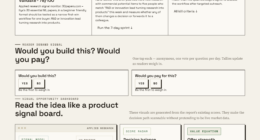
Key Questions

What specific governance features will be disclosed in OpenAI’s IPO prospectus?

The prospectus will disclose the foundation’s control over the board, the AGI clause that ties revenue to AI verification, and the litigation history involving co-founder disputes, among other structural details.

Why does OpenAI’s governance structure pose a risk in the IPO?

Because structures like foundations and AGI clauses can limit shareholder returns or introduce legal uncertainties, they are viewed as liabilities that could impact valuation and investor confidence.

How does OpenAI’s structure compare to competitors like Anthropic?

Unlike OpenAI, Anthropic has been a public benefit corporation from inception, with a different governance model and fewer legal and structural complexities, which may influence its valuation and market perception.

When will the market see the full impact of these disclosures?

The impact will be evident once the public S-1 is filed and investors begin to price the risks and structural features into OpenAI’s valuation during the IPO process.

What are the potential consequences if the SEC scrutinizes OpenAI’s disclosures heavily?

Heavy scrutiny could lead to additional disclosures, legal adjustments, or even delays in the IPO, affecting the company’s valuation and market timing.

Source: ThorstenMeyerAI.com

You May Also Like

The labor share. Is value really moving from labor to capital? The data isn’t on anyone’s side yet.

Recent data shows stable labor share over 70 years, but early signals suggest shifts at margins. The debate on AI’s impact remains unresolved.

Lime Plans to Name Uber as an Anchor Investor in IPO

Lime plans to include Uber as a key anchor investor in its upcoming IPO, according to reports. The move could influence the IPO’s structure and investor interest.

Summer Davos, BRICS security meeting, Bangkok election

BRICS security officials meet in India, Summer Davos opens in Dalian, and Bangkok prepares for mayoral vote. Key developments across Asia today.

Rent collections are down in New York – and no one’s sure why

Rent collections in New York have declined unexpectedly, with no clear explanation. Authorities and landlords are investigating the causes.