

📊 Full opportunity report: World Model Readiness: Are You Ready for AI That Acts? on ThorstenMeyerAI.com — validation score, market gap, and execution plan.
TL;DR
AI is moving from models that describe to models that predict and act. A new diagnostic tool evaluates organizational readiness for this transition, highlighting current gaps and challenges.
Organizations are increasingly focusing on AI systems capable of prediction and action, moving beyond traditional language models. A new diagnostic tool, World Model Readiness, has been introduced to evaluate how prepared companies are for this shift, which could fundamentally change AI deployment and safety considerations.
The shift from large language models (LLMs) that generate text to world models that predict environmental states and consequences is gaining momentum. You can explore Agora-1: The Multi-Agent World Model for a comprehensive example. Major players like Meta, Google DeepMind, Nvidia, and Waymo have launched projects aimed at developing these predictive systems, with some already demonstrating real-time, interactive 3D environments. Experts like Yann LeCun have publicly committed significant resources to building such models, signaling a major industry focus. This aligns with ongoing research into multi-agent world models.The World Model Readiness diagnostic is designed not to build models but to assess whether organizations have the necessary data, processes, and oversight to adopt and benefit from these systems. It evaluates factors such as data availability, process representability, supervision capacity, and understanding of failure modes. The diagnostic aims to identify gaps, not to push for immediate adoption of world models. For an example of such models, see SANA-WM, a 2.6B open-source world model for 1-minute 720p video.
While progress is evident, experts caution that current systems are still early and limited. Challenges include the ‘reality gap’ between simulation and real-world deployment, high data and compute requirements, and performance limitations on physical reasoning tasks. The diagnostic emphasizes a posture of preparedness rather than panic, helping organizations distinguish between near-term opportunities and longer-term breakthroughs.
World Model Readiness — are you ready for AI that acts?
LLMs describe. World models predict and act. The next AI shift isn’t “have we adopted a chatbot” — it’s whether you’d know what to do with a model that anticipates consequences.
Independent commentary, produced with AI assistance under human editorial oversight. The views are the author’s own and may change. World Model Readiness is an early, positioning-stage diagnostic — an assessment framework, not a prediction, guarantee, or technical advice; its conclusions depend on the framework’s assumptions. “World models” are an emerging, rapidly-evolving area of AI; statements about the field reflect publicly reported developments as of mid-2026 and may quickly date. References to companies, labs, and products describe public reporting and imply no affiliation, endorsement, or verification. Product, model, and company names are trademarks of their respective owners.
Implications of Transitioning to Action-Oriented AI
This shift signifies a fundamental change in AI capabilities, moving from descriptive models to predictive and action-capable systems. For organizations, this entails new risks and opportunities: systems that understand the environment and can act autonomously could improve efficiency but also pose safety, oversight, and reliability challenges. The diagnostic tool helps organizations evaluate whether they are positioned to leverage these advances safely and effectively, potentially influencing how AI is integrated into critical operations.
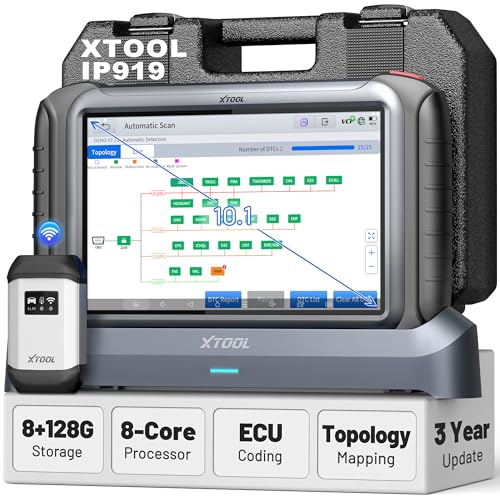
XTOOL IP919 ECU Coding Scan Tool, Topology Mapping Diagnostic Scanner,
- Professional All-System Diagnostics: Bidirectional control and ECU coding
- Topology Mapping: Real-time vehicle health visualization
- Comprehensive Service Support: 51+ reset and service functions
As an affiliate, we earn on qualifying purchases.
As an affiliate, we earn on qualifying purchases.
Evolution from Language Models to World Models
For the past three years, AI development has centered on large language models (LLMs) that excel at generating and summarizing text. Recently, however, a new focus has emerged: world models that predict environmental states and consequences. Major industry efforts include Meta’s V-JEPA 2 for robotics, Google DeepMind’s Genie 3 for real-time 3D worlds, and initiatives by Nvidia and Waymo. This shift is driven by the realization that true intelligence requires understanding and predicting the environment, not just describing it.
Industry leaders like Yann LeCun have publicly committed to building these models, raising significant funding and research activity. The framing in the trade press has shifted from curiosity to the belief that world models could mark the end of LLM dominance, representing a new frontier in AI development.
“Building world models is the next step toward truly autonomous, intelligent systems.”
— Yann LeCun
Predictive Leadership: How Humans And AI Will Transform Organizations, Innovation and Competition
As an affiliate, we earn on qualifying purchases.
As an affiliate, we earn on qualifying purchases.
Current Limitations and Challenges of Real-World Deployment
While progress is evident, it is still unclear how quickly and effectively organizations can bridge the ‘reality gap’ between simulation and real-world application. Current systems are data- and compute-intensive, with performance limitations on physical reasoning tasks. The extent to which these models can reliably predict and act in complex, unpredictable environments remains uncertain. Additionally, the best practices for oversight, safety, and failure mitigation are still evolving.
Building Applications with AI Agents: Designing and Implementing Multiagent Systems
As an affiliate, we earn on qualifying purchases.
As an affiliate, we earn on qualifying purchases.
Next Steps for Organizations and Industry Leaders
Organizations should begin assessing their readiness for adopting world models using tools like the diagnostic. Industry efforts will likely focus on improving model robustness, reducing data requirements, and establishing safety protocols. Regulatory frameworks and standards may also develop to manage the risks associated with autonomous prediction and action systems. Continued research and pilot deployments are expected to reveal practical insights and guide responsible integration.

AI Readiness Assessment : Stop Guessing Your AI Strategy. Run the 10-Minute Executive Diagnostic
As an affiliate, we earn on qualifying purchases.
As an affiliate, we earn on qualifying purchases.
Key Questions
What is a world model in AI?
A world model is an AI system that builds an internal representation of how an environment works, allowing it to predict future states and consequences of actions, rather than just describing current conditions.
Why is readiness assessment important now?
As AI systems evolve from descriptive to predictive and action-capable, organizations need to evaluate whether they have the necessary data, processes, and oversight to adopt these models safely and effectively.
What are the main challenges in deploying world models?
Major challenges include the ‘reality gap’ between simulation and real-world environments, high data and compute requirements, and ensuring reliable supervision and safety measures.
Is this shift imminent for all organizations?
No, the transition will vary depending on an organization’s data infrastructure, technical expertise, and risk management capacity. The diagnostic helps identify where readiness exists and where gaps remain.
How soon can we expect widespread adoption?
Widespread adoption depends on overcoming current technical limitations and establishing safety standards. Pilot projects and ongoing research will shape the timeline over the next few years.
Source: ThorstenMeyerAI.com