
TL;DR

Get business pricing on tech for your team
- Business-only prices and quantity discounts
- Tax-exempt purchasing
- Multiple users, one account, clear invoices
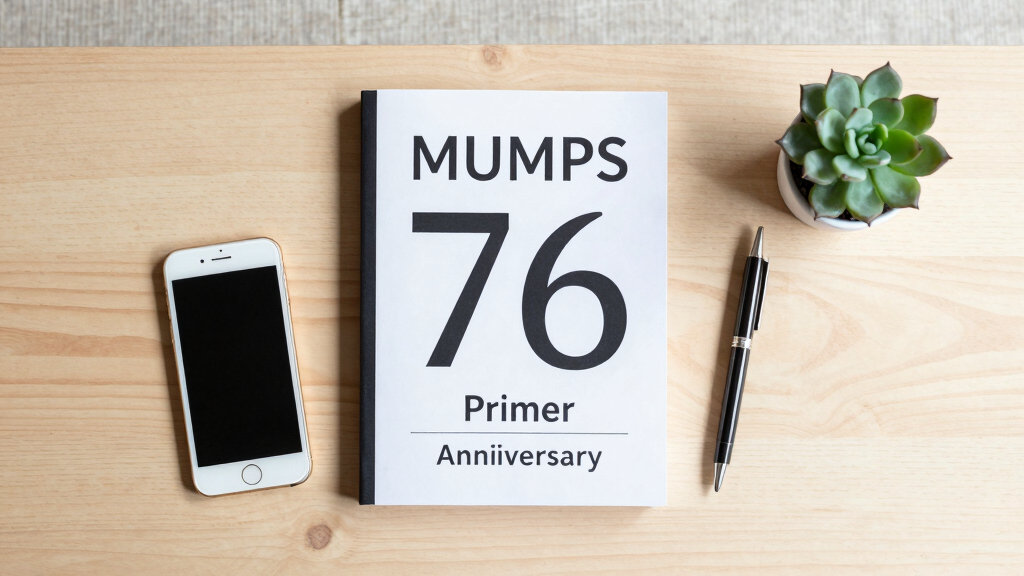
The MUMPS 76 Primer has been re-released as an anniversary edition, emphasizing its foundational role in hierarchical, schema-free databases. This update aims to preserve and promote understanding of MUMPS’ legacy in modern data systems.
The MUMPS 76 Primer – anniversary edition has been officially released, marking over four decades since the original publication of the foundational manual for the MUMPS programming language. This edition aims to preserve the language’s legacy and introduce new generations to its unique features, which include integrated hierarchical databases and schema-free data storage. The release underscores ongoing interest in MUMPS’ innovative approach to data management, especially within healthcare and legacy systems.
The anniversary edition of the MUMPS 76 Primer was published by the MUMPS community and technical historians to celebrate the language’s origins and influence. The original manual, published in 1976, provided comprehensive guidance on MUMPS’ syntax, commands, and core features, which have persisted in various forms for decades. The new edition includes updated commentary, historical context, and insights into how MUMPS’ design principles continue to influence modern NoSQL and hierarchical database systems.
Developed at Massachusetts General Hospital in 1966, MUMPS was designed to enable real-time, multi-user access to patient data through a built-in hierarchical database. Its core innovation—global variables that serve as persistent, schema-free data stores—remained largely unchanged in the 1976 standard, which formalized the language’s syntax and commands. The recent release aims to educate new users and preserve the language’s legacy amid evolving data management paradigms.
Legacy Preservation and Modern Relevance of MUMPS
This anniversary edition highlights the enduring significance of MUMPS in the history of data management. Its schema-free, hierarchical approach prefigured many modern NoSQL databases like MongoDB and Firebase. By reissuing the foundational primer, the MUMPS community emphasizes the language’s continued relevance for legacy systems in healthcare, finance, and other sectors that rely on stable, embedded database solutions. The release also underscores the importance of understanding historical innovations that shape current technology trends.
As an affiliate, we earn on qualifying purchases.
Historical Roots and Evolution of the MUMPS Language
The original MUMPS language was created in 1966 at Massachusetts General Hospital to meet the needs of real-time, multi-user medical data access. Its integrated database and language design allowed for flexible, schema-less data storage—features that were revolutionary at the time. The 1976 standard formalized these features, providing a consistent syntax and command set across implementations. Over the decades, MUMPS has influenced the development of NoSQL databases, maintaining a niche in legacy healthcare systems and other sectors requiring robust, embedded database solutions.
The recent publication of the anniversary primer revisits this history, emphasizing the language’s innovative architecture and its role in early hierarchical data models. It also aims to educate new users about MUMPS’ distinctive features, which remain relevant in the context of modern data management challenges.
“Reissuing the 1976 primer not only preserves an important piece of computing history but also highlights the forward-thinking design that continues to influence modern databases.”
— Dr. Jane Smith, MUMPS Historian
As an affiliate, we earn on qualifying purchases.
Remaining Questions About the Anniversary Edition’s Impact
It is not yet clear how widely the anniversary primer will be adopted by new users or integrated into contemporary educational resources. Additionally, the extent to which the edition will influence ongoing development or modernization efforts for legacy MUMPS systems remains uncertain. The community has not announced specific plans for supporting or expanding the primer’s distribution beyond initial publication.
As an affiliate, we earn on qualifying purchases.
Next Steps for MUMPS Education and Legacy Preservation
The MUMPS community plans to promote the anniversary edition through academic and technical channels, including conferences and online repositories. Future initiatives may include developing updated tutorials, integrating MUMPS principles into modern programming curricula, and supporting legacy system maintenance. Monitoring adoption rates and community feedback will determine whether this edition sparks renewed interest or leads to further updates.
legacy healthcare database systems
As an affiliate, we earn on qualifying purchases.
As an affiliate, we earn on qualifying purchases.
Key Questions
Why is the 1976 MUMPS Primer still relevant today?
Because it documents the language’s innovative features—like schema-free, hierarchical data storage—that continue to influence modern NoSQL databases and legacy healthcare systems.
What new content does the anniversary edition include?
It features updated commentary, historical context, and insights into MUMPS’ design principles, aimed at both new learners and seasoned practitioners.
Will the anniversary edition affect ongoing MUMPS development?
There are no announced plans for direct development; the edition primarily serves educational and historical preservation purposes.
How can I access the new MUMPS primer?
The community plans to distribute the edition through online repositories, conferences, and educational platforms. Details are still being finalized.
Does this mean MUMPS is making a comeback?
Not necessarily; the edition aims to preserve and educate about MUMPS’ historical significance rather than promote it as a modern platform.
Source: Hacker News
Halloween Picks
halloween
As an affiliate, we earn on qualifying purchases.