Smart tools powered by AI are transforming your construction and maintenance sites by boosting safety, improving project management, and increasing efficiency. These tools monitor hazards in real time, help optimize schedules, and streamline resource planning to prevent delays and waste. They also enhance cybersecurity to protect sensitive data. As you explore further, you’ll discover how these innovations can make your projects safer, smoother, and more successful from start to finish.

Get tech for your team delivered free — and shop member deals
- Fast, free delivery on millions of items
- Access to Prime Big Deal Days deals on October 6–7
- Prime Video, Amazon Music and more included
Key Takeaways
- AI enhances safety by providing real-time hazard detection and monitoring unsafe behaviors on construction sites.
- Intelligent video analysis identifies structural issues and machinery fatigue proactively.
- AI optimizes project management through automated scheduling, resource allocation, and dynamic timeline adjustments.
- Construction workflows benefit from AI-driven process automation, reducing waste and increasing efficiency.
- AI improves procurement accuracy by forecasting material needs, preventing shortages and excess inventory.
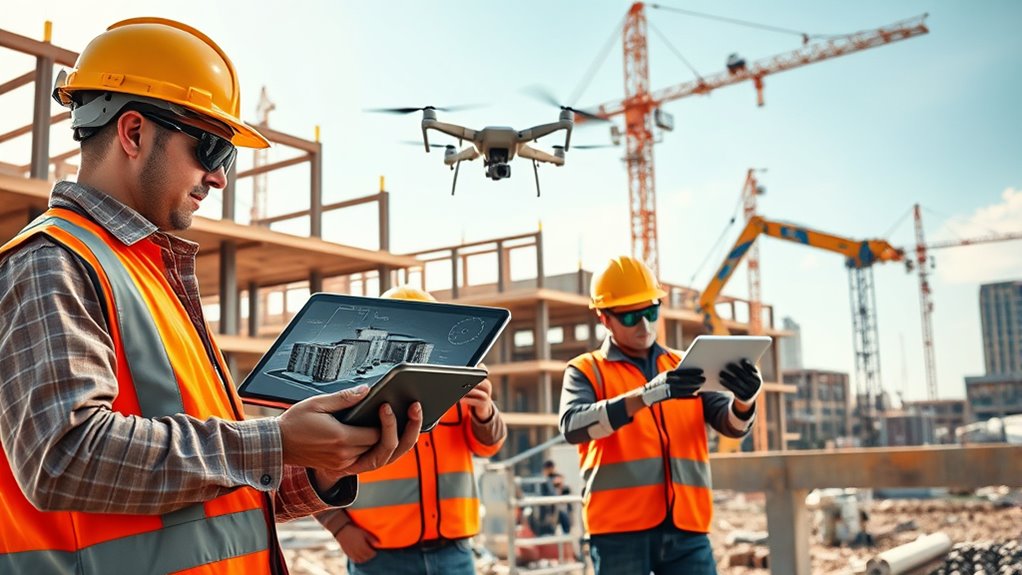
Artificial intelligence is transforming the construction and maintenance industries by streamlining processes, improving safety, and increasing efficiency. As you incorporate AI-driven tools into your projects, you’ll notice how safety innovations become more effective and project management gains new levels of precision. AI-powered safety innovations help identify hazards before they lead to accidents, giving you real-time insights that keep workers safe. For instance, intelligent video analysis can monitor job sites for unsafe behaviors or conditions, alerting you immediately to potential risks. This proactive approach minimizes injuries and keeps your team focused on the work at hand. When it comes to project management, AI tools enable you to coordinate tasks more efficiently, optimize schedules, and allocate resources with greater accuracy. Automated scheduling platforms analyze vast amounts of data—from weather forecasts to workforce availability—to create realistic timelines that adapt as conditions change. This reduces delays and keeps your project on track. Additionally, AI enhances communication between team members and stakeholders by providing centralized updates and progress reports, making sure everyone stays informed and aligned. You’re empowered to make data-driven decisions quickly, reducing costly errors and improving overall project outcomes. The integration of AI into project management also streamlines procurement processes. Intelligent algorithms predict material needs based on project stages, avoiding shortages or excess inventory, which can cause delays or waste. This level of foresight allows you to plan more effectively and stay within budget. Safety isn’t just about preventing accidents; it’s about creating an environment where workers feel secure and supported. AI-driven safety innovations foster this atmosphere by continuously monitoring site conditions and flagging issues before they escalate. Whether it’s detecting structural weaknesses or identifying fatigue in machinery, these systems provide an extra layer of security that human oversight alone can’t match. As you adopt these technologies, you’ll find that your ability to manage risk improves dramatically, and your team’s confidence in safety measures increases. The combination of safety innovations and intelligent project management tools transforms your approach to construction and maintenance, making processes smoother, safer, and more predictable. In the end, AI isn’t replacing your expertise; it’s augmenting it—giving you smarter tools to face complex challenges head-on, ensuring projects are completed safely, on time, and within budget. Staying ahead in this industry means embracing these advancements, and with AI leading the way, you’re better equipped to deliver high-quality results efficiently and securely. AI security advancements further support these efforts by protecting sensitive project data from cyber threats, ensuring your operations remain secure.
AI-powered construction hazard monitoring tools
As an affiliate, we earn on qualifying purchases.
As an affiliate, we earn on qualifying purchases.
Frequently Asked Questions
How Secure Is Data Collected by AI Tools on Construction Sites?
The data collected by AI tools on construction sites is generally secure, but you should remain cautious. Data privacy measures like encryption and access controls help protect your information. However, cybersecurity risks still exist, so you need to stay vigilant. Regular updates, strong passwords, and secure networks are essential to prevent breaches. By taking these steps, you can minimize vulnerabilities and guarantee your data remains safe.
What Training Is Required for Workers to Operate Ai-Powered Equipment?
You’ll need thorough worker training to operate AI-powered equipment effectively. Focus on skill development that covers understanding AI functions, safety protocols, and troubleshooting. Hands-on training sessions help you gain confidence, while ongoing education ensures you stay updated on new features. This approach minimizes errors, boosts efficiency, and keeps safety top priority. Investing in proper training ensures you’re fully prepared to handle advanced tools confidently and responsibly on the job site.
How Do AI Systems Handle Unexpected Site Changes or Hazards?
AI systems handle unexpected site changes or hazards through adaptive planning and hazard detection. They continuously monitor the environment, quickly identifying new risks or changes in conditions. When a hazard is detected, the AI adjusts its plans, reallocates resources, and alerts workers to ensure safety. This real-time response helps prevent accidents and keeps projects on track, making your job site safer and more efficient.
What Are the Costs Associated With Implementing AI Technologies on Site?
The costs of implementing AI technologies on site vary, but you should start with a thorough cost analysis to understand expenses. Budget planning helps you allocate funds for hardware, software, and training. Expect initial investments in equipment and ongoing costs for maintenance and updates. While upfront costs can be significant, the long-term benefits, like increased efficiency and safety, often justify the investment.
How Do AI Tools Comply With Construction Safety Regulations?
Ensuring AI tools comply with construction safety regulations, you must integrate them into your safety protocols, monitor their performance regularly, and keep up with evolving safety standards. You prioritize regulatory compliance by validating AI systems against safety regulations, training staff to use these tools responsibly, and maintaining documentation of compliance efforts. In doing so, you guarantee AI enhances safety, supports legal requirements, and promotes a safer construction environment.
intelligent project management software for construction
As an affiliate, we earn on qualifying purchases.
As an affiliate, we earn on qualifying purchases.
Conclusion
As you harness these smart tools on the job site, imagine the future where your hard hat glows with AI insights, guiding every move. Visualize cranes moving with precision, guided by intelligent algorithms, and maintenance tasks completed before issues even surface. With AI transforming construction and maintenance, you’re stepping into a world where efficiency and safety blend seamlessly. Embrace these innovations, and watch your projects rise higher, smarter, and safer than ever before.
construction site safety video analysis systems
As an affiliate, we earn on qualifying purchases.
As an affiliate, we earn on qualifying purchases.
automated construction resource planning tools
As an affiliate, we earn on qualifying purchases.
As an affiliate, we earn on qualifying purchases.
Halloween Picks
halloween
As an affiliate, we earn on qualifying purchases.