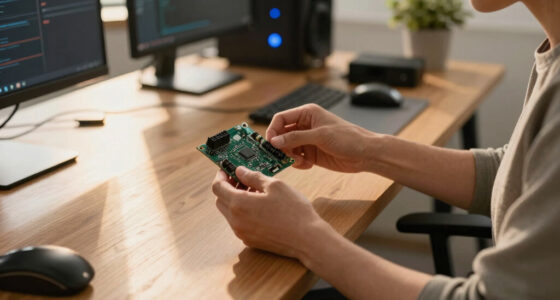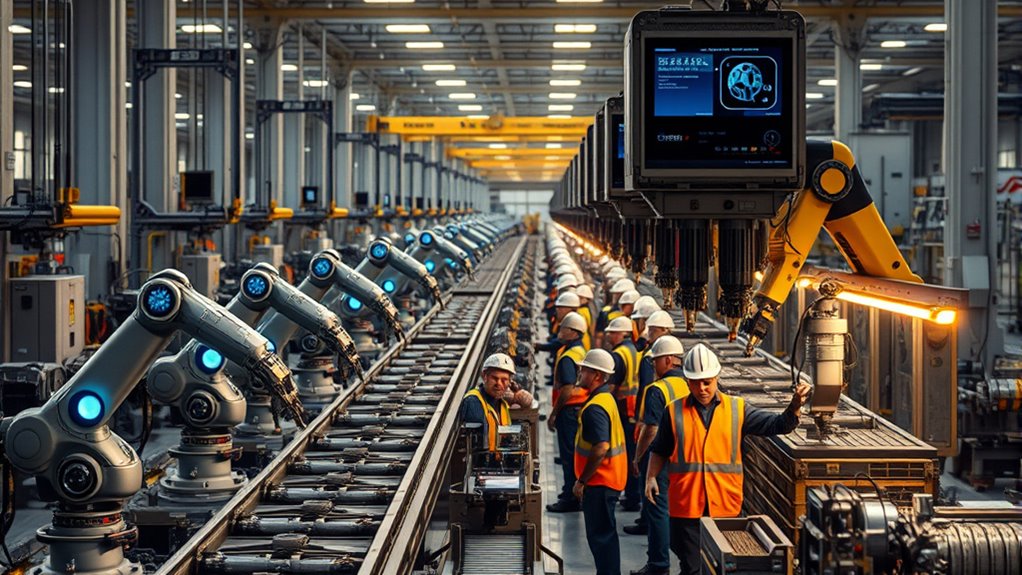

AI is revolutionizing factory floors by automating routine and hazardous blue-collar tasks, which boosts productivity and safety. Intelligent machines like robots and IoT devices handle tasks such as welding, assembly, and maintenance, freeing workers to focus on strategic roles. This shift requires you to develop new skills, like data analysis and oversight. As AI creates new opportunities and challenges, exploring further reveals how these technologies shape your future in manufacturing.

Get business pricing on tech for your team
- Business-only prices and quantity discounts
- Tax-exempt purchasing
- Multiple users, one account, clear invoices
Key Takeaways
- AI-driven robots perform repetitive, hazardous tasks like welding and assembly, improving safety and productivity on factory floors.
- Intelligent machines support blue-collar workers with decision-making tools, predictive maintenance, and quality checks.
- AI enhances efficiency, enabling real-time data collection via IoT devices for faster, more accurate operational decisions.
- Automation may displace some manual jobs but also creates new roles in AI management, system oversight, and skilled technical support.
- Workforce adaptation requires digital literacy, retraining, and skill development to effectively integrate AI technologies into blue-collar roles.
As an affiliate, we earn on qualifying purchases.
The Growing Role of AI in Manufacturing Environments
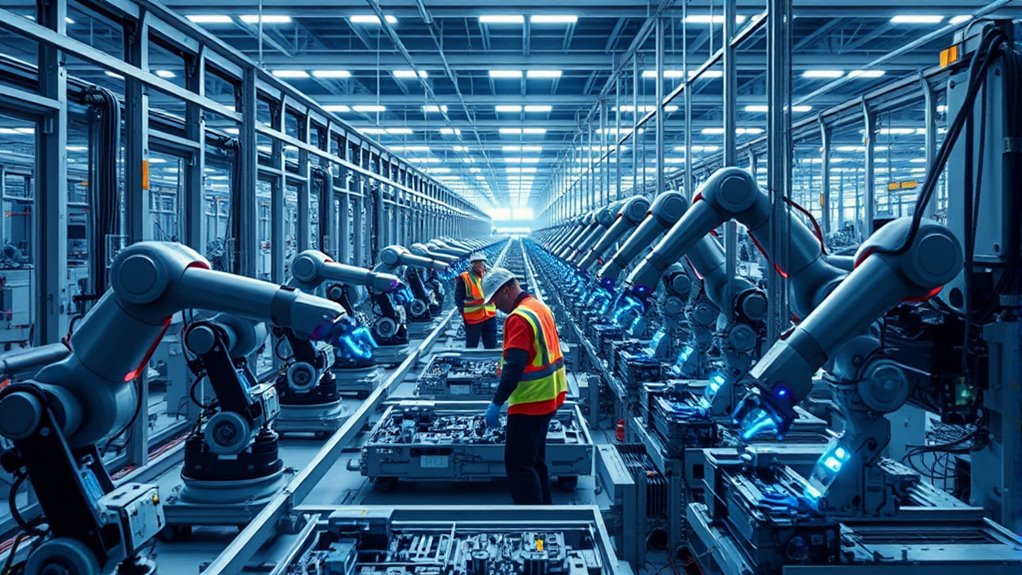
AI is increasingly transforming manufacturing environments as companies recognize its potential to boost efficiency and competitiveness. By 2035, AI is projected to generate $3.78 trillion in value for the sector, highlighting its growing importance. The market for AI in manufacturing is expanding rapidly, expected to grow from $5.94 billion in 2024 to $8.57 billion by 2025, with a 44.2% annual growth rate. Many large and mid-sized companies are already adopting generative AI, seeing positive results. Most AI solutions are deployed on-premises for better control and security, though cloud options are gaining popularity for scalability and flexibility. As AI becomes a core part of digital strategies, manufacturers leverage it for predictive maintenance, energy optimization, and process improvements, driving significant industry transformation. AI’s rapid adoption across industries is further accelerating the integration of intelligent machines on the factory floor. Additionally, integrating specialized hardware such as AI chips and sensors enhances the performance and reliability of these systems in industrial settings. Incorporating advanced analytics allows companies to better interpret data generated by AI systems and make more informed decisions. A thorough understanding of industry-specific data can further optimize AI-driven processes and outcomes. Moreover, the use of automotive repair tools such as diagnostic scanners and sealants demonstrates how industry-specific applications benefit from AI-driven insights. Furthermore, wall organization systems can be used in manufacturing facilities to improve workspace efficiency and safety.
predictive maintenance IoT sensors
As an affiliate, we earn on qualifying purchases.
As an affiliate, we earn on qualifying purchases.
How Intelligent Automation Is Transforming Blue-Collar Tasks
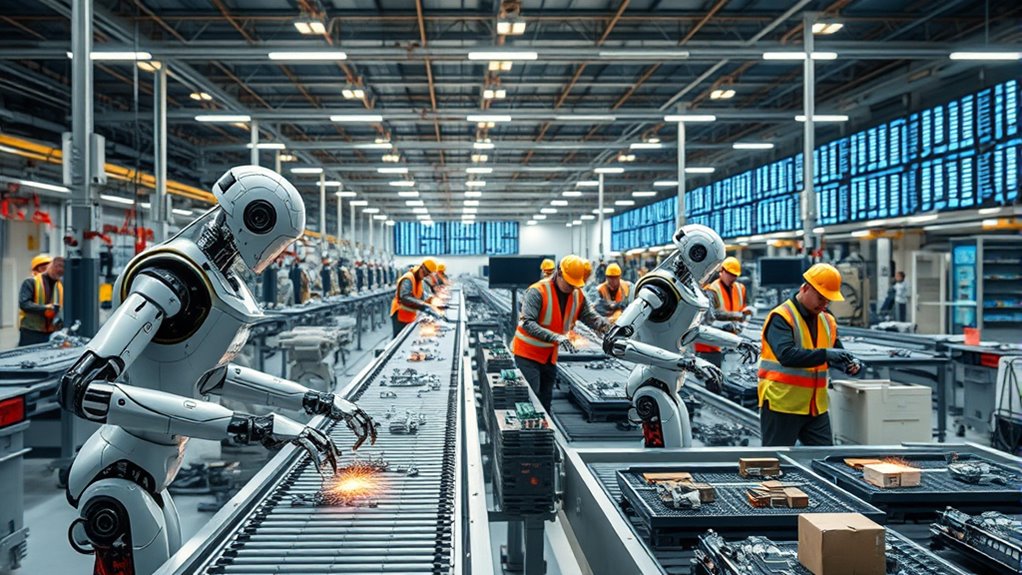
Automation is reshaping blue-collar tasks on the factory floor, with machines taking on many repetitive and hazardous activities. You’ll notice increased use of industrial robots performing welding, assembly, and material handling, which boosts productivity and guarantees consistent quality. These machines operate around the clock, reducing downtime and minimizing workplace injuries by handling dangerous manual tasks. As automation grows, sectors like manufacturing and construction face significant displacement risks, with up to 30% of jobs potentially lost by the mid-2030s. While generative AI’s role remains limited in physically demanding roles, it supports workers through decision-making tools, predictive maintenance, and quality checks. Overall, intelligent automation enhances efficiency, reduces errors, and shifts human workers toward more complex, strategic responsibilities rather than replacing them altogether. Additionally, understanding the vibrational energy involved in human-machine interaction can help optimize workflow and worker satisfaction. Recognizing the preppy dog names trend in branding and design can inspire innovative approaches to developing user-friendly interfaces for automation systems. Furthermore, ongoing advancements in AI security are critical to safeguarding these automated systems from vulnerabilities and ensuring safe deployment. Involving employee training and adaptation strategies is essential for facilitating a smooth transition and maximizing the benefits of automation. Incorporating insights from relationships and personality tests can also improve team dynamics and system integration strategies within automated environments.
factory automation decision support tools
As an affiliate, we earn on qualifying purchases.
As an affiliate, we earn on qualifying purchases.
Skills Evolution: Preparing Workers for AI-Integrated Workspaces
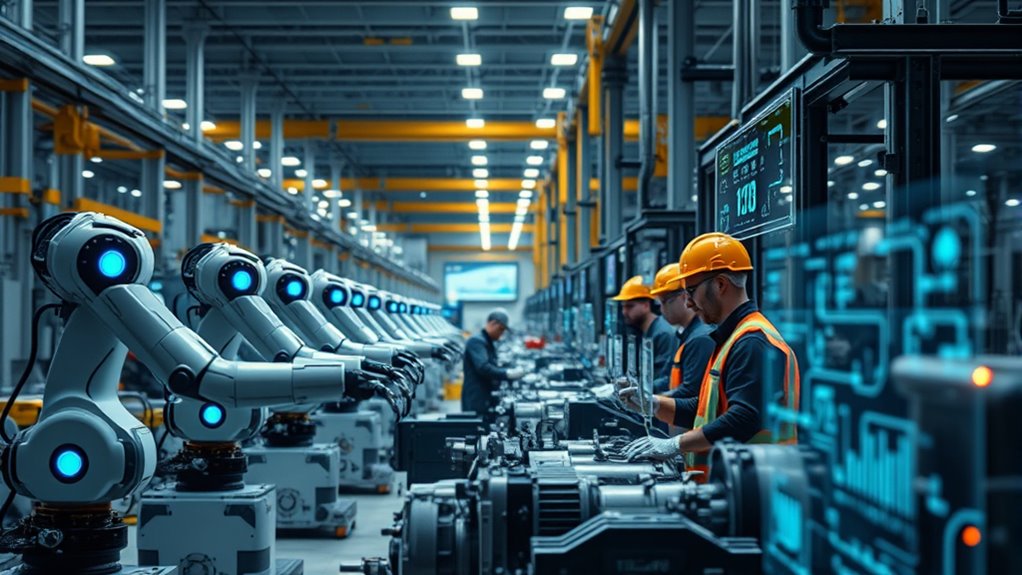
As manufacturing evolves, workers need to develop new skills to stay relevant in AI-integrated work environments. The industry faces a talent crisis, with an aging workforce and a growing skills gap. To adapt, you must learn digital literacy, data analysis, and technical skills. These competencies enable you to work alongside AI tools and contribute to Industry 4.0’s success. Developing these skills will help you stay competitive and open doors to new roles that emphasize problem-solving and innovation. Additionally, understanding educational resources and training programs can support your continuous learning and skill enhancement. Incorporating predictive modeling insights can further assist in identifying areas for personal development and targeted training opportunities. Engaging in mindful decluttering practices can also help you organize your learning environment, making it easier to focus on acquiring new skills efficiently. Implementing supportive work environments that foster ongoing education can significantly enhance your ability to adapt to technological changes. Gaining health-conscious habits can improve your overall well-being, enabling sustained focus and productivity in a fast-evolving industry.
manufacturing quality inspection cameras
As an affiliate, we earn on qualifying purchases.
As an affiliate, we earn on qualifying purchases.
Technology Tools Powering AI Adoption on the Factory Floor
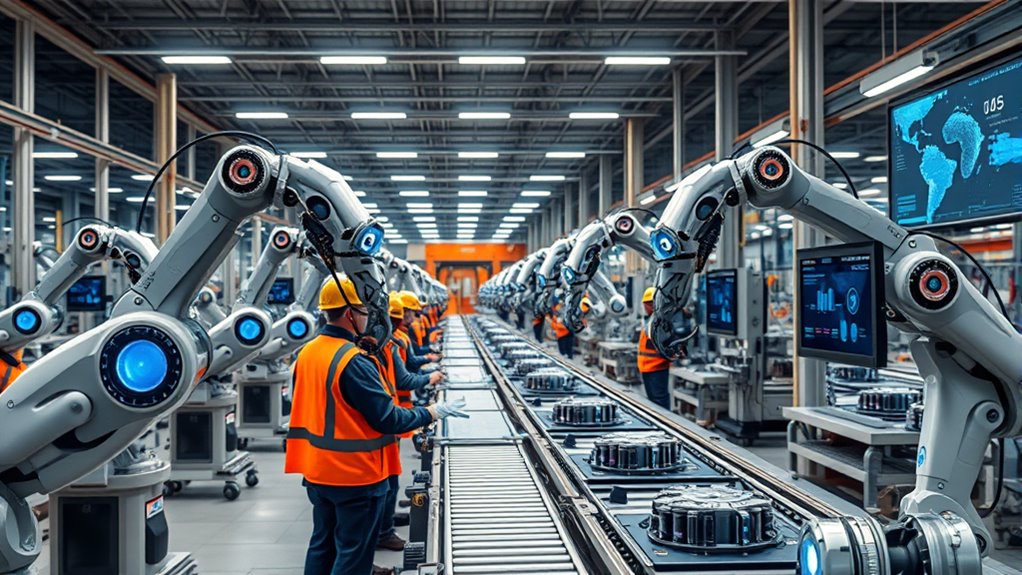
Modern factory floors rely on a suite of advanced technology tools that enable seamless AI integration. IoT sensors gather real-time data from machines and production lines, transmitting it to AI systems for analysis and decision-making. This continuous monitoring helps you perform proactive maintenance, reducing downtime and tracking quality metrics instantly. Access to personalized work environments boosts motivation and engagement among workers. Machine learning models analyze both historical and live data to predict equipment failures and identify patterns, enabling predictive maintenance and minimizing outages. Vetted collaborative robots, or cobots, work safely alongside you, handling repetitive or hazardous tasks with real-time adaptation, boosting precision and consistency. Digital twins create virtual replicas of your processes, allowing you to test scenarios without disrupting production. AI software platforms like Oden Technologies and SymphonyAI analyze data from multiple sources, supporting rapid, data-driven decisions across your factory floor. Incorporating safety features like auto shut-off in machinery further ensures a secure working environment, reducing potential hazards. Additionally, implementing continuous learning models allows AI systems to adapt to new threats or operational changes in real-time, enhancing overall security and efficiency. Moreover, leveraging predictive analytics helps optimize operations by identifying inefficiencies before they impact production, ensuring smoother workflows.
Impact of AI on Employment Patterns and Job Redefinition
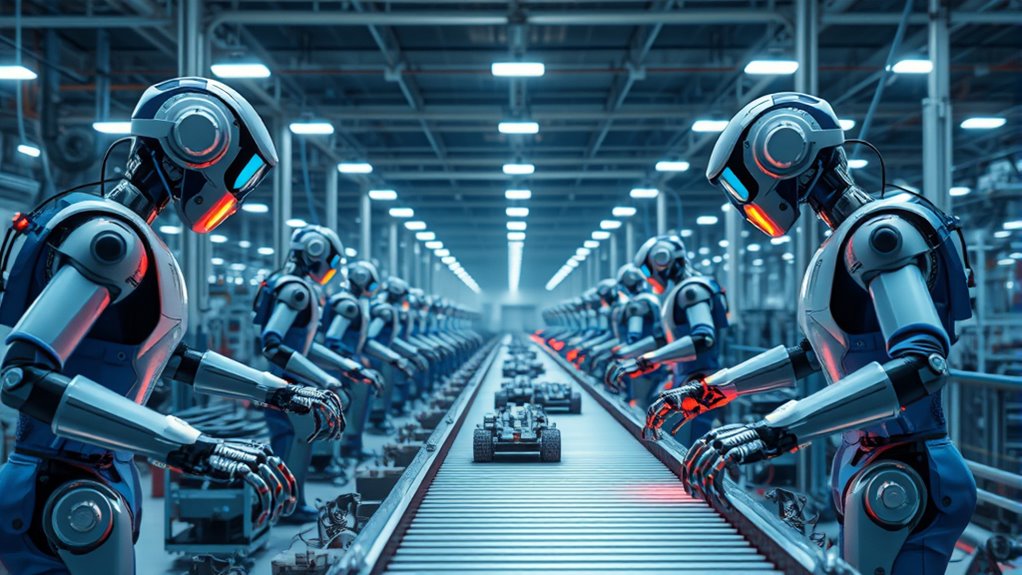
AI is transforming employment patterns on the factory floor by creating new roles and reshaping existing ones. You’ll see demand grow for 1) AI specialists, data analysts, and system managers, who oversee and optimize intelligent machines; 2) roles like AI ethicists and data scientists emerge, requiring advanced digital skills; and 3) traditional manual tasks diminish, replaced by oversight and maintenance positions. This shift means retraining over 120 million workers globally, emphasizing digital literacy, problem-solving, and adaptability. Industry leaders remain optimistic, believing AI will generate more jobs than it displaces, especially as manufacturing companies invest heavily in workforce education. Additionally, incorporating new ice cream recipes into team-building activities can foster creativity and camaraderie among workers. Overall, your work environment evolves from routine tasks to tech-enabled, hybrid roles, demanding continuous learning and new skill sets to thrive in an AI-driven industry.
Addressing Challenges and Risks in AI-Driven Manufacturing

Implementing AI in manufacturing introduces several challenges and risks that organizations must address proactively. The skills gap is a major hurdle, as many workers lack the expertise to manage and optimize AI systems, compounded by high turnover rates that make ongoing training difficult. Employees also worry about AI inaccuracies and cybersecurity threats, which can slow adoption. Effective data management is vital but often overlooked, and only about half of manufacturers have a clear AI strategy. Risks like data breaches, bias, supply chain disruptions, privacy concerns, and evolving regulations add complexity. To navigate these issues, you need strategic planning, targeted employee training, strong data governance, thorough risk assessments, and continuous system monitoring. These steps help mitigate risks and pave the way for successful AI integration. Additionally, addressing the skills gap through workforce development programs is essential to ensure employees can operate and maintain AI technologies effectively.
Future Outlook: Innovation and Opportunities With AI in Industry
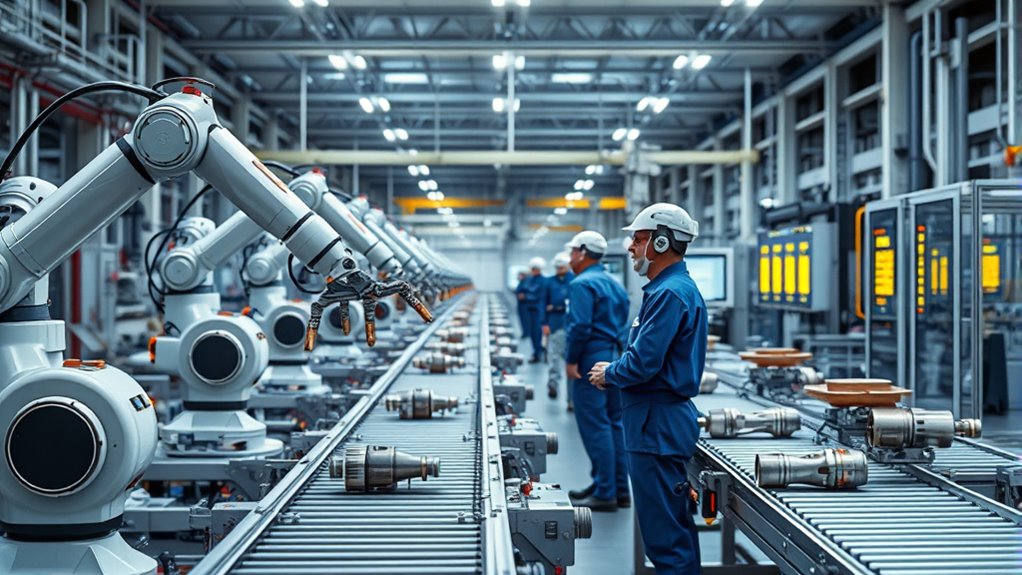
The future of manufacturing is poised for transformative change as technological innovations drive new opportunities for efficiency and growth. You’ll see smarter factories where AI automates tasks, streamlines workflows, and enhances quality control—potentially lowering expenses by up to 20%. IoT devices embedded throughout production will enable real-time data collection, making decision-making faster and more precise. Generative AI investments will boost productivity, even amid rising costs. You’ll also benefit from data-driven insights that help predict bottlenecks and optimize operations. Investment in AI and analytics is increasing, with 29% of manufacturers already deploying AI at the facility or network level, highlighting the rapid adoption of these technologies. Here’s what’s on the horizon:
The manufacturing future combines AI, IoT, and automation for smarter, more efficient, and resilient factories.
- Integration of Industry 4.0 automation with human-centric Industry 5.0 approaches for better workforce engagement.
- Hyperautomation and edge intelligence for faster, more adaptive decision-making.
- Autonomous manufacturing processes creating more resilient and agile factories.
Frequently Asked Questions
How Does AI Affect Factory Safety Protocols?
AI profoundly impacts factory safety protocols by enabling real-time hazard detection through sensors and cameras, giving you instant alerts to prevent accidents. It automates responses like emergency shutdowns, reducing human exposure to danger. Predictive analytics help you schedule maintenance before issues arise, preventing failures. Although adoption is slow, AI’s proactive safety measures can cut incidents by up to 25%, making your workplace safer and more efficient.
What Are the Costs of Implementing AI in Manufacturing?
You’re looking at significant costs for AI implementation in manufacturing. Depending on your project’s scope, it can range from $50,000 for simple tasks to over $800,000 for complex systems like predictive maintenance or quality control. Expenses include system integration, data infrastructure, staff training, cybersecurity, and testing. While costs are high, many manufacturers find the long-term benefits—improved efficiency and competitive edge—justify the investment.
How Is AI Regulated in Industrial Settings?
Imagine a factory floor where sleek robots work alongside humans, guided by invisible rules. You’re regulated by existing laws, with upcoming federal AI legislation and state rules emphasizing transparency, safety, and fairness. You must guarantee AI systems are tested, unbiased, and protect worker data. Regular audits and risk assessments keep operations compliant, while clear communication about AI decisions builds trust. Your goal is safe, ethical, and responsible AI deployment in industrial settings.
Can AI Fully Replace Human Oversight on the Factory Floor?
You might wonder if AI can fully replace human oversight on the factory floor. Currently, it can’t. AI struggles with unstructured environments, unexpected issues, and complex decision-making that need human judgment. While AI enhances productivity and handles routine tasks, skilled humans are essential for oversight, interpreting data, and managing safety. So, instead of replacement, AI acts as a collaborative tool, augmenting your work and requiring your supervision.
What Are the Ethical Considerations of AI in Manufacturing?
Imagine a delicate balance beam—your actions tip the scale toward fairness or bias. When using AI in manufacturing, you must consider ethical issues like bias, transparency, and worker impact. You’re responsible for ensuring data is fair, decisions are explainable, and employee well-being isn’t sacrificed. Protect privacy, avoid discrimination, and foster trust. Your choices shape a future where technology serves humans ethically, not just profit.
Conclusion
As you step into the evolving factory floor, imagine a symphony of machines and humans working in harmony, each note precisely tuned by AI. Embrace this future, where technology reshapes your role like a sculptor shaping marble—creating opportunities from challenges. Stay adaptable, learn new skills, and be part of this transformative dance. The horizon sparkles with innovation, waiting for you to seize it and craft a smarter, more efficient tomorrow.
Fall Picks
fall essentials
As an affiliate, we earn on qualifying purchases.