
TL;DR
An individual used Claude Code within an AI platform to analyze their MRI and obtain a second opinion. The AI’s findings differed significantly from the initial doctor’s diagnosis, raising questions about AI’s role in medical review.
An individual used Claude Code within an AI environment to analyze their MRI scan and seek a second opinion, revealing a significant discrepancy with the initial clinical diagnosis. This case illustrates both the potential and current limitations of AI tools in medical diagnostics, raising questions about their future role in healthcare.
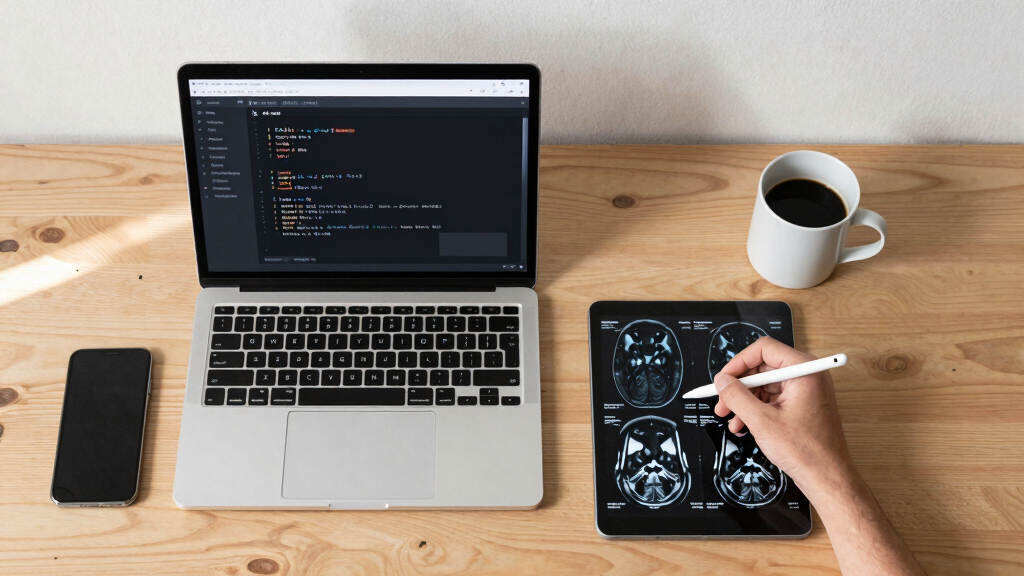
The person experienced persistent right shoulder pain for several weeks and obtained an MRI, which initially indicated a Grade III partial-thickness tear of the subscapularis tendon. Concerned about the treatment plan, they used Claude Code with Opus 4.8 to analyze the MRI files, which were a standard DICOM export of several hundred files. The AI’s first review concluded that the tendon was intact, contradicting the initial diagnosis.
To verify this discrepancy, the individual used the AI to compare the initial report with a second analysis, which suggested only mild tendinosis and no discrete tear. The AI’s arbitration process indicated a moderate-to-high confidence that the tendon was intact, casting doubt on the initial diagnosis. The person highlighted that the AI was able to identify disagreements between the reports but also acknowledged that AI tools are not yet definitive or fully reliable for medical diagnosis.
Implications of AI in Medical Second Opinions
This case demonstrates how AI can serve as a supplementary tool for reviewing medical imaging, potentially catching discrepancies or providing alternative insights. However, it also underscores current limitations, such as the potential for conflicting analyses and the need for human oversight. As AI tools improve, they could become valuable in reducing misdiagnoses and supporting clinicians, but reliance on AI without expert validation remains risky today.
DICOM viewer software for MRI analysis
As an affiliate, we earn on qualifying purchases.
As an affiliate, we earn on qualifying purchases.
Current State of AI in Medical Imaging Analysis
AI applications in radiology and medical imaging are rapidly evolving, with some models showing promise in detecting certain conditions. However, most AI tools are still in experimental or supplementary stages, and their outputs require careful interpretation by medical professionals. The use of AI for second opinions, especially in complex cases like shoulder injuries, is still emerging and not yet standard practice.
This personal account highlights how AI can be used outside clinical settings for independent review, but also reveals the challenges in trusting AI for critical health decisions.
“AI can be a useful adjunct in reviewing medical images, but it is not yet reliable enough to replace expert opinion.”
— an anonymous researcher
As an affiliate, we earn on qualifying purchases.
Unresolved Questions About AI Diagnostic Reliability
It remains unclear how often AI analyses will align with or diverge from clinical diagnoses across a broad range of cases. The accuracy, consistency, and potential biases of AI tools like Claude Code in medical imaging are still under evaluation, and it is not yet confirmed how they will perform in diverse real-world scenarios.

Handbook of MRI Technique
- Condition: Used Book in Good Condition
As an affiliate, we earn on qualifying purchases.
As an affiliate, we earn on qualifying purchases.
Future Developments in AI-Assisted Medical Review
Researchers and developers are continuing to improve AI models for medical imaging, aiming for higher accuracy and integration into clinical workflows. Future iterations may provide more reliable second opinions, but regulatory approval, validation studies, and clinical trials are necessary before widespread adoption. Patients and clinicians should view AI as a supplementary tool rather than a definitive diagnostic source for now.

Multi Purpose Diagnostic kit for Neurological, EMT and Eye EXAM, Reflex Percussion Taylor Hammer + Penlight + Tuning Fork C 128 C 512 + Bandage Scissors 5.5"
- Compact and Portable Size: 11.61 x 6.1 x 1.89 inches
- Includes 12 Diagnostic Tools: Taylor Hammer, Tuning Forks, Penlight, Bandage Scissors
- Suitable for Professionals and Students: Healthcare use and training
As an affiliate, we earn on qualifying purchases.
As an affiliate, we earn on qualifying purchases.
Key Questions
Can AI replace doctors in diagnosing MRI scans?
Currently, AI is not capable of replacing doctors but can assist in reviewing scans and highlighting potential issues. Expert oversight remains essential.
How reliable are AI second opinions on medical images?
AI can sometimes identify discrepancies or provide alternative insights, but its reliability varies, and it should be used alongside professional medical judgment.
What are the risks of relying on AI for medical diagnoses?
Potential risks include misinterpretation, over-reliance on imperfect models, and missing nuanced clinical details that require human expertise.
Will AI become standard for second opinions in healthcare?
As AI technology advances and validation studies demonstrate safety and accuracy, it may become a common support tool, but regulatory and ethical considerations will influence its adoption.
Should patients trust AI reviews of their medical scans?
Patients should view AI as a supplementary resource and always consult qualified healthcare professionals for diagnosis and treatment decisions.
Source: Hacker News