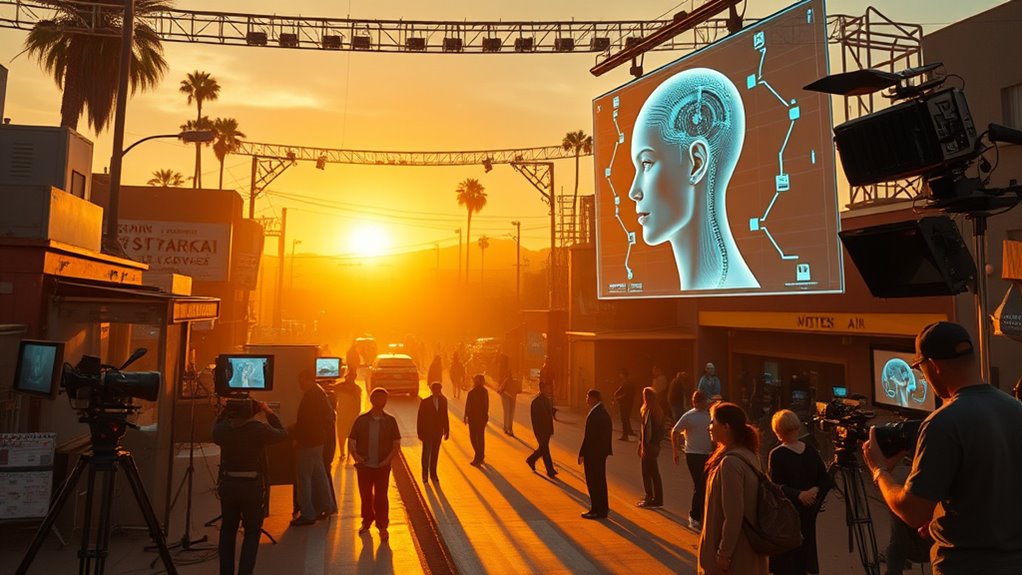

AI is transforming Hollywood by introducing virtual actors that boost creativity, cut costs, and open new storytelling possibilities. While these digital personas can perform anytime, don’t forget there are ethical concerns around authenticity and consent. The industry is working to balance technological advances with the need to respect talent and honesty. As you explore further, you’ll discover how Hollywood is carefully steering these innovations to protect both artistry and audience trust.

Get business pricing on tech for your team
- Business-only prices and quantity discounts
- Tax-exempt purchasing
- Multiple users, one account, clear invoices
Key Takeaways
- Hollywood is integrating AI to create virtual actors, enhancing efficiency while maintaining a focus on ethical standards.
- AI tools enable continuous, cost-effective performances but raise concerns about deepfake misuse and consent.
- Industry stakeholders promote transparency and regulation to balance technological innovation with talent protection.
- AI complements human actors by handling dangerous or CGI-heavy scenes, reducing production costs and time.
- Ongoing discussions aim to establish ethical boundaries, ensuring AI enhances rather than replaces genuine human talent.

Have you ever wondered how artificial intelligence is transforming the entertainment industry? It’s a powerful shift, especially with the rise of virtual actors, who can now perform on screen without ever stepping foot into a studio. These digital creations are generated using advanced AI algorithms that mimic human expressions, movements, and even voices, allowing filmmakers to craft performances that feel incredibly real. Virtual actors offer numerous advantages: they don’t require breaks, can be available around the clock, and can be tailored to fit any character design or storyline. But as promising as this technology is, it also raises significant concerns about deepfake ethics. Deepfakes, which involve superimposing a person’s face onto another’s body or creating entirely synthetic appearances, can be used creatively but also pose risks of misuse, misinformation, and loss of trust. The industry is grappling with these ethical dilemmas, trying to establish boundaries to prevent abuse while harnessing AI’s potential to innovate storytelling.
You might think that virtual actors will replace human performers entirely, but the reality is more nuanced. Many filmmakers see AI as a tool to complement talent rather than substitute it altogether. Virtual actors can take on roles that are physically dangerous or require extensive CGI, reducing costs and production times. They also open doors to resurrecting legendary actors posthumously or creating characters that never existed before. However, this progress prompts a deeper conversation about consent and authenticity. When an AI recreates a famous actor’s face or voice, questions around deepfake ethics come into play. Is it right to use someone’s likeness without explicit permission? How do we prevent these digital personas from being exploited or manipulated? These are questions the industry needs to answer as AI becomes more deeply integrated into filmmaking and performance. Additionally, establishing regulatory frameworks is essential for guiding ethical AI use in entertainment.
Moreover, as AI-driven virtual actors become more prevalent, the importance of transparency and regulation grows. Audiences deserve to know when they’re watching a real person or a digital creation. Clear guidelines can help navigate the moral minefield of deepfake ethics, ensuring that technological innovation doesn’t come at the expense of trust and integrity. While AI offers exciting possibilities for storytelling, Hollywood recognizes that balancing technological advancement with respect for talent and ethical standards is essential. This ongoing dialogue is shaping the future of entertainment, aiming to strike a harmony between human creativity and artificial intelligence’s capabilities. As a viewer, you’ll want to stay informed about these developments, understanding both the potential benefits and the moral considerations that come with the increasing presence of virtual actors in your favorite movies and shows.
As an affiliate, we earn on qualifying purchases.
Frequently Asked Questions
How Does AI Influence Creative Decision-Making in Entertainment?
AI influences your creative decision-making by providing data-driven insights and tools that enhance your ideas. It encourages creative collaboration, allowing you to experiment with new concepts faster. However, you must consider AI ethics to guarantee fairness and authenticity in your work. By balancing tech and talent, you can leverage AI’s potential while maintaining your unique voice, making your creative choices more innovative and impactful.
What Are the Legal Implications of Ai-Generated Content?
Imagine AI-generated content as a new artist in your gallery. You must decide who owns the masterpiece—copyright concerns and intellectual property rights come into play. Legally, you risk infringement if you don’t clarify rights, making it essential to establish clear agreements. Without proper safeguards, AI could blur ownership lines, leading to disputes. You need to navigate these waters carefully to protect creators and guarantee fair use.
Can AI Replace Human Actors and Performers?
AI can’t fully replace human actors and performers because of the emotional depth and authenticity they bring. However, you might see digital resurrection and virtual auditions becoming more common, allowing studios to recreate or simulate performances. While AI can enhance productions, it’s unlikely to replace the human touch entirely. Instead, it will serve as a tool to complement and expand creative possibilities in entertainment.
How Do Studios Ensure Ethical Use of AI Technologies?
Studios guarantee ethical use of AI technologies by prioritizing AI ethics and talent preservation. They implement clear guidelines that prevent exploitation, such as unauthorized use of actors’ likenesses or voices. You should advocate for transparency, requiring consent for AI-generated content, and support regulations that protect performers’ rights. By fostering responsible practices, studios balance innovation with respect for human talent, ensuring AI benefits everyone without compromising ethical standards.
What Future Advancements Are Expected in AI for Entertainment?
Imagine AI as a wise partner in your creative journey, guiding you through uncharted waters. Future advancements will enhance AI ethics, ensuring responsible use, while fostering seamless creative collaboration. Expect smarter scripts, immersive virtual worlds, and personalized content that adapts to your preferences. This evolution empowers you to craft more compelling stories, blending human imagination with AI’s precision—an exciting horizon where technology and talent forge new artistic frontiers.
deepfake ethical guidelines book
As an affiliate, we earn on qualifying purchases.
As an affiliate, we earn on qualifying purchases.
Conclusion
As AI continues to weave into Hollywood’s tapestry, you stand at a crossroads where innovation and humanity intertwine. Like a delicate dance, balancing tech and talent guarantees the magic of storytelling doesn’t fade into cold automation. Embrace this evolving symphony, where creativity sparks brighter with machine’s aid, yet remains rooted in genuine human spirit. Together, you can nurture a future where dreams are painted with both heart and code, illuminating the silver screen’s endless possibilities.
AI-powered CGI character creation tools
As an affiliate, we earn on qualifying purchases.
As an affiliate, we earn on qualifying purchases.
As an affiliate, we earn on qualifying purchases.
Evergreen bestsellers Picks
bestsellers
As an affiliate, we earn on qualifying purchases.