
📊 Full opportunity report: Quiet GPUs for Local AI: Acoustic and Thermal Roundup on ThorstenMeyerAI.com — validation score, market gap, and execution plan.
TL;DR
This article reviews the most silent and thermally efficient GPUs for local AI in 2026, emphasizing cooling, noise levels, and power management. It highlights the best choices per VRAM tier and practical tips for optimizing quiet operation.
In 2026, the most significant development in local AI hardware is the emergence of GPUs that balance high VRAM capacity with low noise and thermal output, driven by improved cooling designs and power management techniques.
This roundup evaluates current GPU options based on their acoustic and thermal performance, with a focus on how well they can run sustained AI inference workloads quietly and coolly. Proper cooling solutions are essential for maintaining optimal thermal performance. The key insight is that cooler, undervolted, and well-cooled partner cards can dramatically reduce noise levels, regardless of the GPU silicon used.
The flagship choice for high VRAM and performance remains the RTX 5090 with 32GB of GDDR7, capable of running large models at Q4 quantization while maintaining manageable heat and noise levels when properly cooled and power-capped. For mid-tier needs, the RTX 5080 and RTX 4060 Ti 16GB offer efficient, low-power options suitable for models up to 34B. The professional RTX PRO 6000 Blackwell with 96GB caters to dense, professional workloads, emphasizing thermal management for sustained operation.
Quiet GPUs
for local AI.
The GPU makes ~70% of your heat and most of your noise. But here’s the secret: the chip doesn’t decide how loud your card is — the cooler design and your power settings do. Match your VRAM tier in Part 2, then make it quiet.
Capping to 70–80% sheds a huge amount of heat for almost no inference loss — because inference is memory-bound. A capped 5090 is dramatically cooler & quieter than stock. Do this first.
Within one GPU model, partner cards differ enormously. For a single card, a large triple-fan open-air with zero-RPM idle runs slow & quiet. For multi-GPU, the calculus flips →
With room to breathe, a large triple-fan open-air cooler spreads heat across a big fin stack and runs its fans slowly. The quietest choice — what most people should buy.
Impact of Cooling and Power Management on GPU Noise
Understanding how cooling design and power capping influence GPU noise and heat is crucial for building quiet, reliable local AI rigs. Properly undervolted and well-cooled GPUs can operate at high performance levels without generating disruptive noise, improving usability for long inference sessions and workspace comfort.

Apple 2026 MacBook Pro Laptop with Apple M5 Pro chip with 15-core CPU and 16-core GPU: Built for AI, 14.2-inch Liquid Retina XDR Display, 24GB Unified Memory, 1TB SSD, Wi-Fi 7; Space Black
- Processor: Apple M5 Pro chip with 15-core CPU
- Graphics: 16-core GPU with Neural Accelerator
- Display: 14.2-inch Liquid Retina XDR
As an affiliate, we earn on qualifying purchases.
As an affiliate, we earn on qualifying purchases.
2026 GPU Landscape and Cooling Innovations
The GPU market in 2026 continues to prioritize VRAM capacity for AI workloads, with tiers from 16GB to 96GB. For better thermal management, consider consulting our guide on thermal paste and pads for high-TDP GPUs. Recent advances in cooling technology, such as large triple-fan open-air designs and zero-RPM modes, enable high-performance cards to run quietly. Power management remains a primary tool for reducing heat and noise, with undervolting and power capping becoming standard practices among enthusiasts and professionals alike.
This evolution responds to the persistent challenge: GPUs are the loudest and hottest component in local AI rigs, often producing over 70% of total heat. The focus on thermals and acoustics reflects a shift toward more user-friendly, sustainable hardware configurations.
"Proper cooling and power management are game-changers for quiet, high-performance AI rigs. The same GPU can be whisper-quiet or a leaf blower depending on the cooling solution and power settings."
— Thorsten Meyer, AI hardware expert

Corsair TM30 Performance Thermal Paste | Ultra-Low Thermal Impedance CPU/GPU | 3 Grams|w/applicator, Silver for Desktop
- Thermal Compound Type: Premium Zinc Oxide-based
- Application: For CPU and GPU
- Cooling Performance: Improves heat transfer and lowers temperatures
As an affiliate, we earn on qualifying purchases.
As an affiliate, we earn on qualifying purchases.
Remaining Questions on Long-Term Thermal and Acoustic Stability
While current cooling solutions and power management techniques significantly reduce noise and heat, it is still unclear how these GPUs perform under prolonged, heavy workloads over months or years. Long-term thermal stability and the durability of cooling components remain to be seen, and real-world data is still emerging.
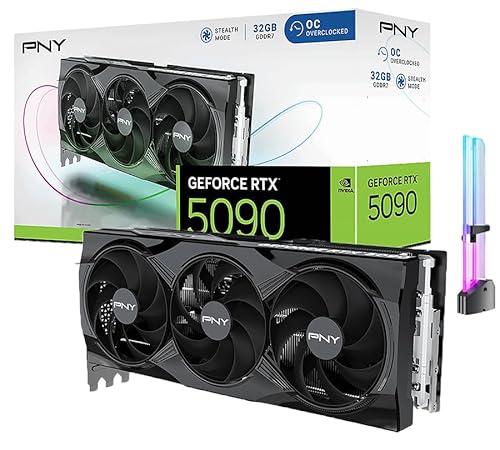
CyberGeek GeForce RTX 5090 Overclocked Triple Fan Graphics Card, 32GB GDDR7, 28 Gbps, 512-bit, 3352 AI Tops, DLSS 4, AI Content Creation, Local LLM Inference, DP 2.1b x3, HDMI 2.1b, with GPU Holder
- AI Processing Power: 3352 AI TOPS with Tensor Cores
- High VRAM Capacity: 32GB GDDR7 for AI and ML tasks
- Enhanced Gaming: DLSS 4, Reflex 2, Ray Tracing Cores
As an affiliate, we earn on qualifying purchases.
As an affiliate, we earn on qualifying purchases.
Upcoming Firmware and Cooling Innovations for 2026 GPUs
Manufacturers are expected to release firmware updates and new cooling variants aimed at further reducing noise and improving thermal performance. Monitoring these developments will be essential for users seeking optimal quiet operation in high-performance local AI setups.

Gigabyte AORUS GeForce RTX 5090 Master ICE 32G Graphics Card - 32GB GDDR7, 512bit, PCI-E 5.0, 2655MHz Core Clock, 3 x DP 2.1a, 1 x HDMI 2.1b, NVIDIA DLSS 4, GV-N5090AORUSM ICE-32GD
- Graphics Card Model: Gigabyte AORUS GeForce RTX 5090 Master ICE
- Memory Capacity: 32GB GDDR7
- Memory Interface: 512-bit
As an affiliate, we earn on qualifying purchases.
As an affiliate, we earn on qualifying purchases.
Key Questions
Can undervolting significantly reduce GPU noise?
Yes. Undervolting lowers power consumption and heat output, which allows fans to run slower and quieter without sacrificing inference speed when properly tuned.
Is the RTX 5090 suitable for a quiet home AI workstation?
Yes, if paired with a high-quality cooler and power-capped to around 70%, the RTX 5090 can operate quietly and efficiently despite its high thermal output in stock configuration.
How does cooling design impact GPU noise levels?
Large, well-ventilated cooling solutions with multiple fans and zero-RPM idle modes significantly reduce noise, especially when combined with proper thermal management techniques.
Are professional GPUs like the RTX PRO 6000 Blackwell quieter than consumer cards?
Typically, professional-grade cards are designed for sustained workloads and often feature advanced cooling, but their noise levels depend on specific cooling solutions and system configuration.
What is the best VRAM tier for a quiet AI rig?
Mid-tier options like 16GB and 24GB cards generally offer the best balance between performance, heat, and noise for most local AI workloads.
Source: ThorstenMeyerAI.com