
AI-powered business automation tools have shifted from novelty to necessity, and the fastest way to put them to work is through the right practical guide. My top pick is The No-BS Guide to AI Agents & Automation, which balances actionable workflow building with realistic productivity claims better than anything else in this lineup. Two standouts deserve early mention: AI Automation & No-Code Blueprint for anyone connecting tools like Make.com and Zapier without writing code, and AI-Powered Enterprise for organizations rolling out Microsoft 365 Copilot at scale. The main tradeoff you’ll face is between depth and accessibility — some resources go deep on specific platforms like Claude or Excel, while others cast a wider net with less hands-on detail. Pricing is fairly uniform here, so your decision really hinges on your technical comfort level and business context. Keep reading for the full breakdown of what separates the top picks from the rest.
Get ready for Prime Big Deal Days — try Prime free
Exclusive member deals on October 6–7, plus fast free delivery. Cancel anytime.
Start your free trialAs an affiliate, we earn on qualifying purchases.
Key Takeaways
- Platform-specific resources (Claude agents, Microsoft Copilot, Excel with Python) consistently delivered more actionable automation detail than broad ‘AI for everything’ titles.
- The No-BS Guide to AI Agents & Automation earned the top spot by pairing realistic scope with concrete workflow templates, avoiding the inflated income promises common in this category.
- Beginners are better served by Master AI for Beginners or AI Automation for Local Businesses than by monetization-focused titles that assume existing technical footing.
- Several books lean heavily on income-generation claims that outpace their instructional substance — a pattern worth screening for before buying.
- For small business owners, the AI Productivity series (Book 5) offered the most relevant, immediately deployable workflows, outperforming enterprise-scale titles on practicality.
| AI Tools for Real Estate Agents: The Complete AI-Powered Real Estate Business Operating System |  | Best Industry-Specific Pick | Format: AI-powered business system (digital) | Target Industry: Real estate | Core Functions: Lead generation, marketing, sales, automation, growth | VIEW LATEST PRICE | See Our Full Breakdown |
| Claude AI Agents for Business, 2nd Edition |  | Best for Scaling Operations | Format: Book (Kindle/print), 2nd Edition | Primary Tool: Claude AI agents | Focus: Workflows and automation systems for scaling operations | VIEW LATEST PRICE | See Our Full Breakdown |
| Claude AI Automation & Monetization |  | Best for Monetization Strategy | Format: Book (Claude AI Mastery Series) | Primary Tool: Claude AI | Focus: AI automation plus monetization and income generation | VIEW LATEST PRICE | See Our Full Breakdown |
| AI-Powered Enterprise: Leveraging Microsoft 365 Copilot, Data, and Automation at Scale |  | Best for Large Organizations | Format: Book | Primary Platform: Microsoft 365 Copilot | Focus: Enterprise AI, data analytics, and automation at scale | VIEW LATEST PRICE | See Our Full Breakdown |
| AI-Powered PaaS: A Beginner Guide to Building Platforms with Cloud Tools, APIs, and Automation Systems |  | Best for Platform Builders | Format: Book (beginner guide) | Focus: Platform-as-a-Service, cloud tools, APIs, automation | Business Models Covered: Subscriptions and marketplace strategies | VIEW LATEST PRICE | See Our Full Breakdown |
| AI-Powered Digital & Social Media Marketing and Business Automation | 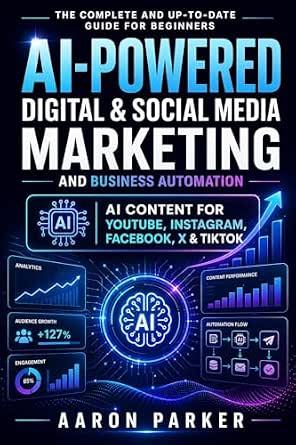 | Best for Social Media Beginners | Format: Kindle eBook / Paperback | Audience Level: Beginner | Platforms Covered: YouTube, Instagram, Facebook, X, TikTok | VIEW LATEST PRICE | See Our Full Breakdown |
| The No-BS Guide to AI Agents & Automation: Build AI Workflows, Automate Your Business, and 10x Your Productivity |  | Best for Workflow Builders | Format: Kindle eBook / Paperback | Audience Level: Beginner to intermediate | Core Focus: AI agents, workflow automation, productivity | VIEW LATEST PRICE | See Our Full Breakdown |
| AI Tools That Make You Money: A Beginner’s Guide to Freelancing, Digital Products, Content Creation, Automation, and Building an AI-Powered Online Business | 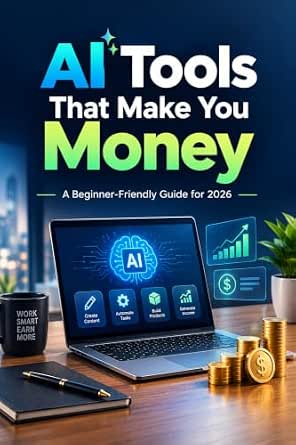 | Best for Side Hustlers | Format: Kindle eBook / Paperback | Audience Level: Beginner | Core Focus: AI-driven income: freelancing, digital products, content creation, automation | VIEW LATEST PRICE | See Our Full Breakdown |
| AI Automation for Local Businesses: No-Code Workflows to Get More Leads, Follow-Up Faster, and Increase Sales |  | Best for Local Business Owners | Format: Kindle eBook / Paperback | Audience Level: Beginner, non-technical | Core Focus: Lead generation, follow-up automation, sales for local businesses | VIEW LATEST PRICE | See Our Full Breakdown |
| From Excel to AI Tools: Use AI to Analyse Data, Write Reports, and Automate Your Workflow (From Spreadsheets to Code Series Book 6) |  | Best for Spreadsheet Users Levelling Up | Format: Kindle eBook / Paperback | Series: From Spreadsheets to Code, Book 6 | Audience Level: Intermediate (spreadsheet experience assumed) | VIEW LATEST PRICE | See Our Full Breakdown |
| AI-Powered Excel with Python: Automate Data, Reports, and Business Workflows |  | Best for Hands-On Technical Automation | Format: Book (digital/print) | Focus: Excel automation with Python and AI | Audience: Business professionals, data analysts | VIEW LATEST PRICE | See Our Full Breakdown |
| AI-Powered Automation and Workflows for Small Business Owners (AI Productivity for Small Business Owners Book 5) |  | Best for Small Business Strategy | Format: Book (digital/print) | Series: AI Productivity for Small Business Owners, Book 5 | Focus: AI automation strategy for small businesses | VIEW LATEST PRICE | See Our Full Breakdown |
| AI Automation & No-Code Blueprint: Build Autonomous Business Systems, Connect LLMs with Make.com & Zapier, Save 20+ Hours Weekly |  | Best No-Code Implementation Guide | Format: Book (digital/print) | Focus: No-code AI automation and autonomous business systems | Tools Covered: Make.com, Zapier, large language models | VIEW LATEST PRICE | See Our Full Breakdown |
| Master AI for Beginners: Develop Artificial Intelligence Basics, Understand Machine Learning, and Unlock the Power of Automation for Business Productivity |  | Best for Absolute Beginners | Format: Book (digital/print) | Focus: AI and machine learning fundamentals for business | Audience: Complete beginners | VIEW LATEST PRICE | See Our Full Breakdown |
| The AI-Driven Leader: Harnessing AI to Make Faster, Smarter Decisions |  | Best for Executives and Leadership | Format: Book (digital/print) | Focus: AI-enhanced leadership and decision-making | Audience: Executives, business leaders, senior managers | VIEW LATEST PRICE | See Our Full Breakdown |
| AI-powered business automation tool | Format | Focus |
|---|---|---|
| AI Tools for Real Estate Agent | AI-powered business system (digital) | — |
| Claude AI Agents for Business | Book (Kindle/print), 2nd Edition | Workflows and automation systems for scaling operations |
| Claude AI Automation & Monetiz | Book (Claude AI Mastery Series) | AI automation plus monetization and income generation |
| AI-Powered Enterprise: Leverag | Book | Enterprise AI, data analytics, and automation at scale |
| AI-Powered PaaS: A Beginner Gu | Book (beginner guide) | Platform-as-a-Service, cloud tools, APIs, automation |
| AI-Powered Digital & Social Me | Kindle eBook / Paperback | — |
| The No-BS Guide to AI Agents & | Kindle eBook / Paperback | — |
| AI Tools That Make You Money: | Kindle eBook / Paperback | — |
| AI Automation for Local Busine | Kindle eBook / Paperback | — |
| From Excel to AI Tools: Use AI | Kindle eBook / Paperback | — |
| AI-Powered Excel with Python: | Book (digital/print) | Excel automation with Python and AI |
| AI-Powered Automation and Work | Book (digital/print) | AI automation strategy for small businesses |
| AI Automation & No-Code Bluepr | Book (digital/print) | No-code AI automation and autonomous business systems |
| Master AI for Beginners: Devel | Book (digital/print) | AI and machine learning fundamentals for business |
| The AI-Driven Leader: Harnessi | Book (digital/print) | AI-enhanced leadership and decision-making |
More Details on Our Top Picks
AI Tools for Real Estate Agents: The Complete AI-Powered Real Estate Business Operating System
Most titles in this roundup teach generic automation frameworks that the reader has to translate into their own industry. This one flips that model: every workflow, prompt, and system is pre-built around real estate lead generation, marketing, and sales. For an agent, that saves the adaptation step that a book like Claude AI Agents for Business forces you to do yourself. Compared with broader guides such as AI-Powered Automation and Workflows for Small Business Owners, this wins on relevance but loses on flexibility — the systems only make sense if real estate is actually your business. The tradeoff is real: vague feature documentation and unclear pricing mean you won’t know exactly what you’re getting until you’re inside it, and implementation assumes some technical comfort.
Pros:- Complete end-to-end system covering lead gen, marketing, sales, and growth in one place
- Eliminates the work of adapting generic AI frameworks to a real estate workflow
- Automation is designed around the actual daily tasks agents perform
- Suits both solo agents and growing teams
Cons:- No published details on specific features or pricing before you commit
- Implementation likely requires technical familiarity that many agents lack
- Zero usefulness outside the real estate vertical
Best for: Real estate agents and team leads who want a ready-made, industry-tuned AI system rather than a general automation education
Not ideal for: Anyone outside real estate — the entire value proposition collapses without that industry context
- Format:AI-powered business system (digital)
- Target Industry:Real estate
- Core Functions:Lead generation, marketing, sales, automation, growth
- Scope:Complete business operating system
- Skill Level Required:Some technical familiarity recommended
- Audience:Real estate agents and teams
Our verdict“Buy this only if you’re a real estate professional who wants done-for-you AI systems; everyone else should pick a general automation guide.”
Claude AI Agents for Business, 2nd Edition
This second edition earns its spot by focusing on the problem most readers eventually hit: automation that works for one person breaks at team scale. Where AI Automation & No-Code Blueprint teaches you to connect tools, this book teaches you to design agent-based workflows that hold up as operations grow — a genuinely different skill. It’s also fresher than the first edition and than Claude AI Automation & Monetization, which leans more toward income generation than operational systems. The honest drawback: it assumes you already understand AI basics and skips detailed technical implementation, so true beginners will feel the gaps. Readers who want copy-paste builds should look at the no-code titles instead; readers planning multi-department automation get more here.
Pros:- Second edition reflects current Claude capabilities, not outdated workflows
- Focuses on scaling — a gap most beginner-oriented automation books leave empty
- Practical workflow structures rather than abstract theory
- Directly applicable to multi-step business processes
Cons:- Lacks detailed technical implementation guidance
- Requires prior AI knowledge to get full value
- Tied to one ecosystem — less useful if you’re not working with Claude
Best for: Operations managers and founders who already understand AI basics and need to design workflows that scale across a growing team
Not ideal for: AI newcomers — the assumed knowledge and lack of step-by-step technical detail make it a frustrating first book
- Format:Book (Kindle/print), 2nd Edition
- Primary Tool:Claude AI agents
- Focus:Workflows and automation systems for scaling operations
- Experience Level:Intermediate
- Edition:Updated 2nd edition with current AI strategies
- Best Use Case:Scaling business operations with AI agents
Our verdict“The right choice once you’ve outgrown beginner automation books and need systems that survive scale.”
Claude AI Automation & Monetization
Most books in this roundup stop at saving time; this one pushes through to making money from the systems you build. That makes it the mirror image of Claude AI Agents for Business — same underlying tool, opposite objective. Where that book optimizes internal operations, this guides readers toward building AI systems as sellable assets and income streams. Compared with AI Tools That Make You Money, it goes deeper on the automation side rather than spreading across freelancing and content creation, which suits readers who want one focused path. The tradeoffs are real: the technical detail is thin, so you’ll need other resources to actually build what it describes, and beginners without AI experience may find the monetization concepts abstract rather than actionable.
Pros:- One of the few titles that connects automation directly to revenue generation
- Practical framing of AI systems as scalable, monetizable assets
- Part of a structured series for progressive skill-building with Claude
- Narrow focus keeps the path clearer than broad money-making guides
Cons:- Minimal technical specification or implementation content
- Complex for beginners with no prior AI experience
- Monetization timelines and results are largely theoretical
Best for: Entrepreneurs and side-hustlers who want to turn AI automation skills into income streams rather than just internal efficiency
Not ideal for: Readers seeking a technical build manual — the monetization focus leaves implementation details to other books
- Format:Book (Claude AI Mastery Series)
- Primary Tool:Claude AI
- Focus:AI automation plus monetization and income generation
- Experience Level:Intermediate
- Series:Claude AI Mastery Series
- Best Use Case:Building and monetizing AI-powered systems
Our verdict“Pick this if your goal is income from AI systems, not just time saved — but pair it with a hands-on technical guide.”
AI-Powered Enterprise: Leveraging Microsoft 365 Copilot, Data, and Automation at Scale
Every other pick in this lineup assumes a small business or solo operator; this is the only one written for enterprise-scale deployment. Its focus on Microsoft 365 Copilot matters more than it might seem — if your organization already runs on the Microsoft stack, the integration strategy here removes the tool-selection debate entirely, something generalist titles like The No-BS Guide to AI Agents & Automation can’t address. The book also covers data governance and automation at organizational scale, the layer where enterprise projects usually fail. The tradeoffs: it’s too advanced for beginners, light on step-by-step technical instructions, and irrelevant if your company isn’t a Microsoft shop. Small teams should skip it entirely and read the small-business titles instead.
Pros:- Strategy-level guidance for organization-wide AI adoption, not just personal productivity
- Deep integration with the Microsoft 365 ecosystem many enterprises already own
- Covers data and automation governance at scale, where enterprise projects commonly fail
- Frames AI investment in terms of operational efficiency across departments
Cons:- Lacks detailed technical instructions for actual deployment
- Assumes enterprise context and budget that smaller readers won’t have
- Effectively locked to the Microsoft ecosystem
Best for: IT leaders and managers at Microsoft-based organizations planning organization-wide Copilot and automation rollouts
Not ideal for: Small businesses and non-Microsoft shops — the enterprise framing and Copilot focus add cost and complexity with no payoff
- Format:Book
- Primary Platform:Microsoft 365 Copilot
- Focus:Enterprise AI, data analytics, and automation at scale
- Experience Level:Advanced / enterprise professional
- Target Organization Size:Large enterprises
- Best Use Case:Organization-wide AI productivity strategy
Our verdict“The obvious pick for Microsoft-stack enterprises planning large Copilot rollouts, and an easy skip for everyone else.”
AI-Powered PaaS: A Beginner Guide to Building Platforms with Cloud Tools, APIs, and Automation Systems
This is the most ambitious scope in the batch: instead of automating an existing business, it walks beginners through building a platform business — cloud tools, APIs, subscription models, marketplaces. That makes it a different animal from Claude AI Automation & Monetization, which monetizes automation directly, and from AI Automation for Local Businesses, which applies automation to client work. The beginner-friendly framing is genuine: concepts are introduced from zero, unlike the enterprise title in this roundup. But ambition has a price — the lack of detailed technical implementation and real case studies means you’ll finish with a mental map, not a working platform. Readers who need concrete builds should pair it with a no-code guide like AI Automation & No-Code Blueprint; readers who want strategic direction first will find it well-suited.
Pros:- Genuinely beginner-friendly introduction to PaaS and cloud platform concepts
- Covers business models, subscriptions, and marketplace strategy alongside the tech
- One of the few beginner books that tackles platform building rather than task automation
- Frames AI and automation as the engine of a product business
Cons:- No detailed technical implementation to actually build what’s described
- Lacks specific examples or case studies to ground the concepts
- Scope may be too broad for readers who just want to automate an existing business
Best for: Aspiring founders who want a conceptual on-ramp to building a platform-as-a-service business before committing to technical training
Not ideal for: Hands-on builders who expect code, templates, or worked examples — the conceptual level will frustrate them
- Format:Book (beginner guide)
- Focus:Platform-as-a-Service, cloud tools, APIs, automation
- Business Models Covered:Subscriptions and marketplace strategies
- Experience Level:Beginner
- Technical Depth:Conceptual, not implementation-level
- Best Use Case:Planning an AI-powered platform business
Our verdict“A strategic starting point for future platform founders — but expect to buy a technical book before you ship anything.”
AI-Powered Digital & Social Media Marketing and Business Automation
This pick stands out for its channel-specific focus, covering YouTube, Instagram, Facebook, X, and TikTok rather than treating marketing automation as one generic blob. Compared with The No-BS Guide to AI Agents & Automation, which centers on workflow logic, this option is better suited to marketers whose automation goals start and end with content distribution and audience growth. The strategies are current, which matters in a space where platform algorithms shift quarterly. The tradeoff: readers expecting named tools or step-by-step walkthroughs will need to fill those gaps elsewhere. It explains what to do on each platform more confidently than how to wire the tools together, so plan on pairing it with hands-on practice or a tool-specific resource.
Pros:- Covers five major social platforms in one place
- Up-to-date AI marketing strategies that reflect current platform behavior
- Beginner-friendly explanations without jargon
- Connects content creation to broader business process automation
Cons:- No specific tools or software recommendations
- Lacks detailed technical instructions for implementation
Best for: Solo marketers and small business owners who want AI-driven content strategies across multiple social platforms without a technical background
Not ideal for: Readers who need specific tool recommendations and configuration instructions — this stays at the strategy level
- Format:Kindle eBook / Paperback
- Audience Level:Beginner
- Platforms Covered:YouTube, Instagram, Facebook, X, TikTok
- Focus Areas:AI content creation, social media marketing, business automation
- Technical Depth:Strategy-level, non-technical
- Coding Required:No
Our verdict“Choose this if social media marketing is your primary automation goal and you want strategy breadth over technical depth.”
The No-BS Guide to AI Agents & Automation: Build AI Workflows, Automate Your Business, and 10x Your Productivity
Among the entry-level books in this roundup, this one earns its spot by being the most direct about building actual AI agent workflows rather than just listing possibilities. Its no-coding approach makes it a natural step up from AI-Powered Digital & Social Media Marketing and Business Automation — instead of platform strategies, readers get productivity frameworks they can apply to internal operations like follow-ups, reporting, and task routing. The tone is blunt and practical, which cuts down on fluff. The honest drawback: experienced practitioners who already run automations through Make.com or Zapier will find the material thin, and the book stops short of the deep technical implementation that turns a rough workflow into a reliable system.
Pros:- Practical, action-oriented guidance with minimal filler
- No coding required, lowering the barrier for non-technical readers
- Strong focus on measurable productivity gains
- Applicable across general business operations, not one niche
Cons:- Lacks detailed technical instructions
- Too shallow for readers already running AI automations
Best for: Busy professionals and small business owners who want practical, no-code AI workflow strategies without wading through theory
Not ideal for: Advanced AI users and technical teams who need implementation-level detail and tool-specific configuration
- Format:Kindle eBook / Paperback
- Audience Level:Beginner to intermediate
- Core Focus:AI agents, workflow automation, productivity
- Coding Required:No
- Technical Depth:Practical strategy, light on implementation
- Scope:General business automation
Our verdict“This makes the most sense for first-time workflow builders who want a fast, no-nonsense starting point — not for engineers.”
AI Tools That Make You Money: A Beginner’s Guide to Freelancing, Digital Products, Content Creation, Automation, and Building an AI-Powered Online Business
Where most books in this lineup optimize an existing business, this one flips the frame: it is written for people starting an income stream from zero using AI. Compared with The No-BS Guide to AI Agents & Automation, which is about internal efficiency, this option spans freelancing, digital products, and content monetization — breadth that suits readers still deciding which lane fits them. That breadth is also its main tradeoff; covering five income models means none gets the depth a focused freelancer might want, and there are no hands-on technical walkthroughs. Still, for someone who wants a map of the AI money-making landscape before committing to one path, it delivers more orientation per page than narrower titles.
Pros:- Covers multiple income paths: freelancing, digital products, content, automation
- Genuinely beginner-friendly entry point to the AI business space
- Practical framing of AI tools as income generators, not just conveniences
- Good breadth for readers still choosing a direction
Cons:- Lacks detailed technical instructions
- Too broad for advanced users or specialists
Best for: Aspiring freelancers and side hustlers exploring how AI tools can generate income across multiple online business models
Not ideal for: Readers already committed to one business model who need depth — the multi-path coverage spreads things thin
- Format:Kindle eBook / Paperback
- Audience Level:Beginner
- Core Focus:AI-driven income: freelancing, digital products, content creation, automation
- Coding Required:No
- Technical Depth:Overview and orientation
- Scope:Online business building
Our verdict“Pick this if you are exploring AI income opportunities broadly; skip it if you already know your niche and need depth.”
AI Automation for Local Businesses: No-Code Workflows to Get More Leads, Follow-Up Faster, and Increase Sales
Most AI automation books assume an online business; this one correctly recognizes that a plumber, dentist, or salon owner has different problems — missed calls, slow lead follow-up, and repeat-business gaps. Its lead-generation and follow-up workflows are the most operationally concrete in this batch, targeting the exact revenue leaks local service businesses face. Compared with AI Tools That Make You Money, which spreads across online income models, this stays tightly focused on local sales pipelines, which makes its advice easier to act on. The tradeoffs are real: executing the workflows often means paid subscriptions to automation platforms, and readers wanting plug-and-play technical setups will find the implementation guidance too thin. Non-technical owners get direction, not a done-for-you system.
Pros:- Workflows target real local business problems: leads, follow-up, sales
- Truly no-code and accessible for non-technical owners
- Tighter focus than generalist AI business books
- Direct connection between automation and revenue
Cons:- May require additional paid tools or subscriptions to execute the workflows
- No detailed technical implementation guidance
- Content may be too basic for experienced operators
Best for: Local service business owners — contractors, clinics, salons, restaurants — who lose leads to slow follow-up and want no-code fixes
Not ideal for: E-commerce or fully remote businesses, and advanced users who need implementation-level technical detail
- Format:Kindle eBook / Paperback
- Audience Level:Beginner, non-technical
- Core Focus:Lead generation, follow-up automation, sales for local businesses
- Coding Required:No
- Technical Depth:Workflow-level, no implementation detail
- Target Business Type:Local / brick-and-mortar service businesses
- Extra Costs:Likely needs third-party automation subscriptions
Our verdict“The clearest choice in this lineup for brick-and-mortar owners; online businesses should look elsewhere.”
From Excel to AI Tools: Use AI to Analyse Data, Write Reports, and Automate Your Workflow (From Spreadsheets to Code Series Book 6)
This is the most technically ambitious title in this batch, and it fills a gap the others ignore: the enormous population of office workers whose entire analytical world lives in Excel. It bridges spreadsheets toward AI-assisted data analysis, report generation, and workflow automation — a step beyond what The No-BS Guide to AI Agents & Automation offers, and adjacent to but more accessible than AI-Powered Excel with Python from the same series. The positioning as Book 6 of a series is a double-edged sword: it assumes some momentum, so complete beginners may feel dropped into the middle of a conversation. For analysts and operations staff ready to move beyond manual spreadsheets, though, it is the rare guide that meets them exactly where they sit.
Pros:- Directly bridges existing Excel skills to AI tooling
- Covers data analysis, report writing, and workflow automation together
- More technical substance than strategy-only titles in this lineup
- Practical for everyday office productivity, not just niche use cases
Cons:- Being Book 6 of a series, it assumes familiarity with earlier material
- Content may be too advanced for complete beginners
- Sparse technical specifications and tool detail
Best for: Data analysts and Excel-heavy office workers who want AI to handle reporting and data analysis without abandoning their spreadsheet skills
Not ideal for: Complete beginners with no spreadsheet or data background — the series format assumes prior context
- Format:Kindle eBook / Paperback
- Series:From Spreadsheets to Code, Book 6
- Audience Level:Intermediate (spreadsheet experience assumed)
- Core Focus:AI data analysis, report generation, workflow automation
- Prerequisite Skills:Working knowledge of Excel/spreadsheets
- Coding Required:Minimal — bridges toward coding concepts
- Technical Depth:Moderate, more technical than beginner guides
Our verdict“The right pick for spreadsheet-literate professionals levelling up to AI; newcomers should start with a gentler title first.”
AI-Powered Excel with Python: Automate Data, Reports, and Business Workflows
Most books in this roundup promise automation through no-code platforms, but this one takes the opposite bet: that real workflow automation starts with Python and Excel. Where AI Automation & No-Code Blueprint teaches you to connect drag-and-drop tools, this pick digs into script-driven reporting, which pays off when your needs outgrow prebuilt integrations. The step-by-step real-world examples mean analysts can move from manual spreadsheet drudgery to scheduled, AI-assisted reporting pipelines. Compared with From Excel to AI Tools, which stays closer to consumer AI tools, this goes deeper into programmatic territory. The tradeoff is real: you need baseline Python and Excel skills, and readers without them will stall early. There’s also little guidance on pricing or tooling budgets, so cost planning is left to you.
Pros:- Teaches genuinely transferable skills in Python and Excel automation
- Step-by-step instructions grounded in real business scenarios
- Goes deeper than consumer AI tools for data-heavy roles
- Directly reduces manual reporting and data-cleanup work
Cons:- Requires existing Excel and Python knowledge — not beginner material
- No pricing or tooling cost guidance included
Best for: Data analysts and finance professionals who already know Excel basics and want to add Python-driven, AI-assisted reporting to their skill set
Not ideal for: Non-technical business owners who want plug-and-play automation without learning to code
- Format:Book (digital/print)
- Focus:Excel automation with Python and AI
- Audience:Business professionals, data analysts
- Skill Level:Intermediate (Excel and Python basics required)
- Includes:Step-by-step instructions and real-world examples
- Coverage:Data automation, reporting, business workflows
- ASIN:B0HH8JWK38
Our verdict“Buy this if you want durable, code-based automation skills rather than platform-dependent workflows.”
AI-Powered Automation and Workflows for Small Business Owners (AI Productivity for Small Business Owners Book 5)
This entry earns its place by being the only one aimed squarely at owner-operators rather than practitioners. Where Claude AI Agents for Business assumes you have a team to implement agent systems, this book frames automation as a business strategy question: which workflows actually move the needle for a small operation. The examples are sized for small budgets and thin staff, which the enterprise-leaning titles in this lineup never attempt. That accessibility comes at a cost — the implementation guidance is thin. Compared with AI Automation & No-Code Blueprint, which walks through actual tool configurations, this stays at the strategy layer, and readers with no prior AI exposure may struggle to bridge the gap between concept and execution. It works best as the ‘what and why’ companion to a more hands-on ‘how’ book.
Pros:- Strategy-first framing tailored to small business realities
- Plain-language workflows and examples
- Part of a focused series on small business AI productivity
- Strong on prioritizing which processes to automate
Cons:- Light on detailed technical implementation steps
- Assumes some prior AI familiarity for full benefit
Best for: Time-strapped small business owners who need to identify which workflows to automate before picking tools
Not ideal for: Implementers who need tool-by-tool setup instructions and technical walkthroughs
- Format:Book (digital/print)
- Series:AI Productivity for Small Business Owners, Book 5
- Focus:AI automation strategy for small businesses
- Audience:Small business owners
- Skill Level:Beginner to intermediate
- Includes:Practical strategies and small-business workflow examples
- ASIN:B0GQJQ3XRR
Our verdict“Choose this to decide where automation fits your business — pair it with a hands-on guide to actually build anything.”
AI Automation & No-Code Blueprint: Build Autonomous Business Systems, Connect LLMs with Make.com & Zapier, Save 20+ Hours Weekly
Of all the titles here, this one makes the most concrete promise: build autonomous systems without writing a single line of code. While AI-Powered Excel with Python demands programming chops, this blueprint leans entirely on Make.com and Zapier, connecting LLMs into existing business tools. That makes it the practical middle ground between the strategy-level AI-Powered Automation and Workflows for Small Business Owners and the code-heavy Python title — it assumes you want to actually ship automations this week. The claimed 20+ hours of weekly savings will depend heavily on how repetitive your current workflows are, so temper expectations if your processes are judgment-heavy. It’s also light on formal specifications, and total cost of ownership (Make and Zapier subscriptions add up) isn’t deeply addressed.
Pros:- No coding required — built entirely on accessible platforms
- Specific coverage of Make.com and Zapier LLM integrations
- Action-oriented with a clear time-saving goal
- Fastest path from reading to a live automation
Cons:- Ongoing subscription costs of the platforms aren’t fully addressed
- Requires basic familiarity with automation tools to follow along
Best for: Operations-minded founders and solo professionals who want working automations fast using tools they may already pay for
Not ideal for: Teams needing enterprise-grade governance or developers who’d rather build custom integrations in code
- Format:Book (digital/print)
- Focus:No-code AI automation and autonomous business systems
- Tools Covered:Make.com, Zapier, large language models
- Coding Required:None
- Audience:Non-technical business builders
- Stated Outcome:Save 20+ hours weekly
- ASIN:B0HHG2D6TW
Our verdict“If you want working AI automations in days rather than months, this is the most direct route in the lineup.”
Master AI for Beginners: Develop Artificial Intelligence Basics, Understand Machine Learning, and Unlock the Power of Automation for Business Productivity
Every roundup needs a true on-ramp, and this is it. Claude AI Agents for Business and the Python Excel title both assume you already speak the language of AI; this book starts from zero, explaining core concepts like machine learning before touching business applications. That foundation-first approach is its whole value proposition — without it, beginners bounce off the more specialized titles. The business productivity angle keeps it from drifting into pure theory, but compared with AI-Powered Automation and Workflows for Small Business Owners, the coverage is broader and shallower: you’ll understand what AI can do, not exactly how to wire up a specific workflow. The lack of technical depth is deliberate, yet it means you’ll outgrow this book quickly. Vague edition and publication-date info also makes it hard to judge how current the tool landscape coverage is.
Pros:- Genuinely accessible introduction with no prerequisites
- Connects abstract AI concepts to business productivity
- Broad coverage of machine learning and automation basics
- Low-risk entry point before buying specialized guides
Cons:- Shallow on technical detail — a stepping stone, not a destination
- Unclear edition and publication date raise currency concerns
Best for: Complete newcomers who want to understand AI fundamentals before investing in specialized automation books
Not ideal for: Readers with any existing AI background who need implementation-level detail
- Format:Book (digital/print)
- Focus:AI and machine learning fundamentals for business
- Audience:Complete beginners
- Skill Level:Beginner
- Topics:AI basics, machine learning, automation for productivity
- Prerequisites:None
- ASIN:B0F59SQ3R8
Our verdict“Start here if AI jargon currently stops you cold, then graduate to a focused title in this list.”
The AI-Driven Leader: Harnessing AI to Make Faster, Smarter Decisions
Most entries in this roundup are about building automations; this one is about deciding where AI should steer the business. It targets managers and executives whose job isn’t configuring Zapier — it’s using AI-generated insight to make faster calls and allocate resources smarter. Compared with Master AI for Beginners, which explains how AI works, this assumes you’ll have analysts or tools doing the technical lifting and focuses on judgment, strategy, and decision frameworks. That executive framing is genuinely distinct here. The tradeoffs: case studies are thin, so the strategies can feel abstract without concrete proof points, and portions lean technical enough that non-technical leaders may skim rather than absorb. It also won’t help you implement anything directly — pair it with AI-Powered Enterprise if you need the organizational rollout view too.
Pros:- Rare leadership-level perspective on AI adoption
- Focuses on decision-making speed and quality, not just tools
- Practical strategies for integrating AI into management practice
- Complements technical guides without duplicating them
Cons:- Lacks detailed case studies to ground the strategies
- Some sections may read as too technical for non-technical leaders
Best for: Executives and senior managers who want AI-informed decision frameworks without hands-on implementation work
Not ideal for: Practitioners seeking build-it-yourself automation tutorials
- Format:Book (digital/print)
- Focus:AI-enhanced leadership and decision-making
- Audience:Executives, business leaders, senior managers
- Skill Level:Intermediate (business context assumed)
- Includes:Strategies for integrating AI into leadership practice
- Coverage:Decision frameworks, AI insight application
- ASIN:B0GZ8F4C8Z
Our verdict“Buy this to lead AI adoption from the top; skip it if your role is building the automations themselves.”

How We Picked
Because every entry in this roundup is a guide to AI-powered business automation rather than software itself, I judged them on how effectively they turn concepts into working systems. The criteria that mattered most: actionability (does the reader finish with deployable workflows?), audience clarity (is it obvious who this is for and who should skip it?), technical accessibility (code-free paths versus Python and API work), and credibility of claims (books promising ’10x productivity’ or income streams faced tougher scrutiny than those setting realistic expectations).
The ranking rewards practical specificity over breadth. Guides anchored to real platforms — Claude, Make.com, Zapier, Microsoft Copilot, Excel — ranked higher because readers can verify and replicate what’s taught. Titles that worked best for narrow audiences (local businesses, freelancers, executives) were placed according to how well they serve those audiences, not on general polish. Where two books covered similar ground, the one with clearer workflow structure and fewer inflated promises won the higher slot.
Factors to Consider When Choosing AI-powered Business Automation Tools
Choosing among AI-powered business automation resources comes down to matching the guide to your situation — your technical baseline, your business type, and the platforms you already pay for. Before buying, work through these factors.
Match the Platform to Your Stack
The single biggest mistake buyers make is picking a general AI guide when their business already runs on a specific stack. If your company lives in Microsoft 365, a Copilot-focused resource will pay off faster than any platform-agnostic title because the automations map directly to tools your team opens daily. The same logic applies if you’re invested in Claude, Zapier, Make.com, or Excel-heavy workflows. A guide tied to your actual software shortens the path from reading to deployment, and it reduces the frustration of translating abstract examples into your environment. General guides still have value for building mental models, but they rarely produce working automations as quickly. My advice: buy for the stack you have, not the stack you think you’ll adopt someday.
Be Honest About Your Technical Baseline
Automation guides generally split into three tiers: no-code, low-code, and code-required. Overestimating your readiness is the most common reason these purchases go unused — a Python-based Excel automation book sitting unread helps no one. If terms like API, webhook, or LLM feel fuzzy, start with a beginner title that builds vocabulary before workflows. If you’ve already connected two apps with Zapier, a no-code blueprint will feel appropriately paced rather than remedial. And if you write scripts regularly, code-based resources will feel like a unlock — pardon, a genuine accelerator rather than a hurdle. The wrong difficulty level in either direction wastes money: too easy breeds boredom, too hard breeds abandonment.
Watch for Inflated Income Claims
Titles promising passive income, monetization systems, or ‘money-making’ AI tools deserve extra skepticism. A handful of guides in this space are legitimate side-hustle primers, but many use income language as a marketing hook while delivering basic automation tutorials you could find elsewhere. A useful test: does the book explain a concrete mechanism for earning (specific services, specific clients, specific pricing), or does it just assert that money follows automation? The strongest picks in this roundup under-promise and over-deliver on workflow substance. Buyers who screen for this distinction consistently end up with resources they actually finish. Those chasing the income angle often end up with recycled content and no closer to revenue.
Depth Versus Breadth: Which Failure Mode Can You Afford?
Broad guides covering marketing, sales, operations, and data in one volume sound efficient, but they typically cover each area at survey depth. Niche guides — local business lead follow-up, freelance service delivery, executive decision-making — go deeper on fewer workflows and usually produce results faster within their scope. The question to ask: do you need one automation working this week, or a map of what’s possible across the business? Solopreneurs and small teams almost always benefit from narrow, tactical guides. Larger organizations planning multi-department rollouts get more from strategic, breadth-oriented titles. Buying both types isn’t wasteful either — many readers pair one tactical guide with one strategic overview to cover both needs.
Timeliness and Author Credibility
AI automation moves fast enough that a guide written even eighteen months ago may reference outdated tool versions or deprecated features. Check the publication or revision date, and favor revised editions — a second edition signals the author maintains and updates the material, which matters more in this category than almost any other. Author background is the second filter: practitioners who’ve built the systems they describe tend to include failure modes, cost considerations, and troubleshooting that theorists omit. Vague author bios with no verifiable experience are a mild red flag, especially in the monetization subgenre. A current book by a credible practitioner beats a slightly cheaper, older alternative nearly every time.
Consider Whether You Need a Book at All
An honest caveat for this entire category: official documentation, community forums, and video tutorials for tools like Zapier, Make.com, and Copilot are free and frequently more current than any book. Books earn their price when they provide structure — a sequenced learning path, curated workflows, and decision frameworks that scattered online content doesn’t. If you learn well by following documentation, you may only need a book for strategy and architecture rather than step-by-step instructions. If you procrastinate without a curriculum, a well-structured guide is worth paying for precisely because it imposes order. Knowing which learner you are will save you from buying content that duplicates what’s freely available.
Frequently Asked Questions
Should I start with a general AI guide or a platform-specific automation book?
Start with the platform-specific book if you already know which tools your business will use, because the fastest results come from automations you can build the same week you read about them. A general guide makes more sense when you’re still deciding on a stack or want to understand what AI automation can do before committing to any vendor. The risk of starting general is procrastination — you accumulate concepts without ever shipping a workflow. The risk of starting specific is mild lock-in to a tool that may not fit your business later, but that cost is low since the automation mindset transfers between platforms. Most readers are better served by going specific first and general second.
Do the books about making money with AI automation actually work?
Some do, but the category mixes genuine practitioner guides with opportunistic titles riding the AI hype cycle. The functional ones explain a specific service you can sell — automated lead follow-up for local businesses, workflow setup for clients, content systems — along with pricing and client acquisition. The weaker ones assert that automation leads to income without ever naming a customer, a deliverable, or a rate. Treat ‘monetization’ in a title as a claim to verify, not a feature. A practical check: if the book’s table of contents shows concrete service delivery and sales chapters, it’s likely substantive; if it’s mostly tool overviews with a money chapter bolted on, skip it.
Is a Claude-focused book risky given how fast AI models change?
The risk is real but smaller than it appears, provided the book teaches agent design patterns rather than button-by-button instructions. Workflow logic — how to chain tasks, when to use agents versus simple automations, how to structure prompts for reliability — transfers across model updates even when the interface changes. What does age poorly is anything tied to specific menus, pricing tiers, or model names, which is why revised editions matter here. If your work already happens inside Claude, a Claude-specific guide is a low-risk, high-relevance purchase. If you’re tool-agnostic, a platform-neutral book on agents and automation will age more gracefully.
Can a beginner really build AI automations without coding?
Yes, and the no-code path has matured considerably — tools like Make.com and Zapier now handle the logic layer while AI models handle the language tasks, so beginners can build genuinely useful workflows in an afternoon. The realistic caveat is complexity ceiling: no-code breaks down for automations requiring custom data transformations, conditional logic beyond a few branches, or heavy data processing, which is where the Python-based guides earn their place. Beginners should also expect a learning curve around prompt design, since a poorly written instruction is the most common reason an AI workflow fails. Start no-code, and only pick up a coding guide when you hit a wall you can’t route around.
Which book should a small business owner with limited time choose?
For owners juggling operations with limited reading time, the small-business-specific titles beat the broad productivity guides because every workflow maps to a real problem — lead capture, follow-up speed, appointment reminders — rather than abstract efficiency. Guides aimed at local businesses are especially efficient since they skip enterprise concepts entirely. The realistic approach is to read one implementation-focused book and deploy two or three automations before buying anything else; owners who buy multiple guides tend to finish none of them. Enterprise-scale titles, including the Copilot book, only make sense once you have staff dedicated to systems work. Depth on three workflows beats breadth on thirty for a time-starved owner.
Conclusion
After comparing all fifteen, the right choice depends almost entirely on who you are and what you’re automating. For best overall, The No-BS Guide to AI Agents & Automation delivers the most transferable, realistically framed workflow instruction in the lineup. For best value, AI Automation for Local Businesses packs immediately deployable, no-code workflows into a package perfectly matched to small service businesses. For best premium/enterprise pick, AI-Powered Enterprise is the only credible option for organizations scaling Microsoft 365 Copilot across teams. For beginners, Master AI for Beginners builds the conceptual foundation the other books assume you already have. For specific needs: choose AI Automation & No-Code Blueprint for Make.com and Zapier integrations, AI-Powered Excel with Python for data-heavy roles, Claude AI Agents for Business for agent design patterns, and The AI-Driven Leader for executives making adoption decisions rather than building workflows themselves. Whatever you pick, commit to building one automation before buying a second book — execution, not accumulation, is what separates results from a growing reading list.
Evergreen bestsellers Picks
bestsellers
As an affiliate, we earn on qualifying purchases.