
TL;DR

Get business pricing on tech for your team
- Business-only prices and quantity discounts
- Tax-exempt purchasing
- Multiple users, one account, clear invoices
AtomicChat has published an edited DeepSeek-V4.1-Flash-1017 model that it says cuts refusals on JailbreakBench from 85.2% to 0%. Developers say compression tools let the large model run using a single 12GB GPU, but with substantial system memory and storage requirements. The benchmarks are self-reported, and the effect on the model’s political responses has not been independently measured.
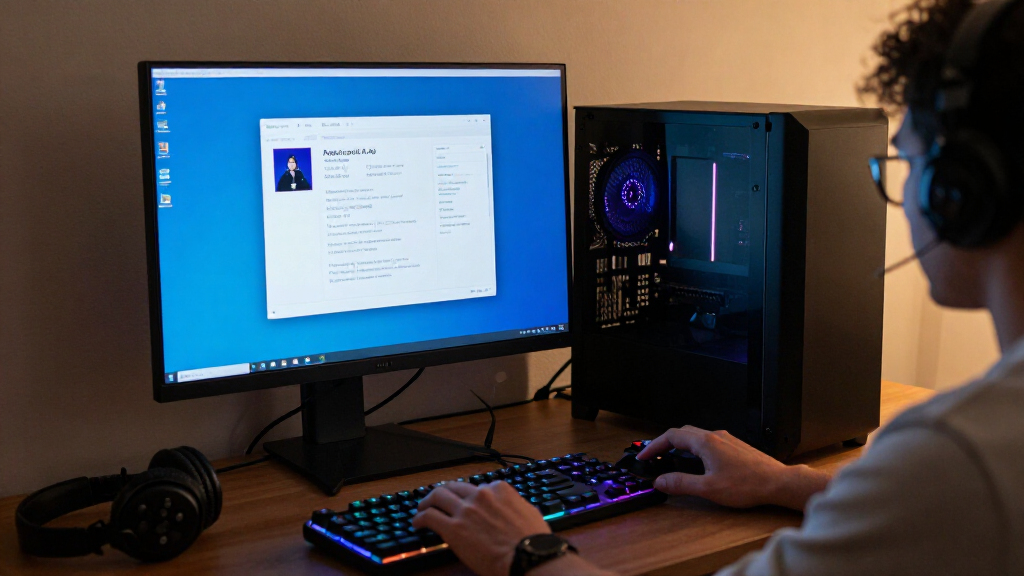
AtomicChat has published an edited version of DeepSeek-V4.1-Flash-1017 that its developers say can run on a PC with a single 12GB graphics card and refused none of the harmful prompts in their JailbreakBench test. The claim could put a large open-weight model within reach of some home users, but its performance and safety results are self-reported and not independently verified.
The Hugging Face repository, named DeepSeek-V4.1-Flash-1017-Uncensored-GSQ-RCO-GGUF, combines DeepSeek’s model with compression work from ISTA-DASLab and a refusal-reducing edit from AtomicChat. AtomicChat says refusal rates on JailbreakBench fell from 85.2% to 0%, while reasoning scores held. The publisher has not supplied independent replication of those results.
The 12GB figure refers to graphics memory, not the full system requirements. According to the developers’ figures, running the model with Strata also requires 46–64GB of system RAM, around 250GB of downloads, and delivers roughly 5–10 tokens per second. Those estimates have not been independently tested in the source material.
AtomicChat describes its modification as removing refusals across topics rather than preserving a narrower set of safety refusals. It says the large expert blocks remain as ISTA-DASLab shipped them, while some shared model components were changed. The publisher calls that edit a removal of the model’s refusal mechanism; the exact changes have not been examined by an independent party.
DeepSeek on a gaming PC Safety claims remain unchecked
AtomicChat says its edited, compressed model runs locally and refused none of the harmful prompts in its test. The results and hardware estimates have not been independently verified.
Three projects, one local build
The published model combines an open-weight base, compression work and an edit to refusal behavior.
DeepSeek-V4.1-Flash-1017 is the underlying model.
Quantization methods reduce file sizes; Strata uses system RAM as well as GPU memory.
AtomicChat says it reduced refusals across topics, without preserving a narrower set.
A smaller refusal rate is not a safety test
The publisher’s figures describe its own tests; the effects beyond refusal behavior remain unclear.
- JailbreakBench refusals fell from 85.2% to 0%.
- Reasoning scores reportedly held.
- Estimated speed is 5–10 tokens per second.
- No independent replication of the benchmark or reasoning result.
- Political responses and bias after the edit have not been measured.
- The refusal classifier may miss a refusal later in an answer.
Local use changes the governance picture
Running a model on a PC can reduce reliance on an external service, while placing it outside an organisation’s usual controls.
Check the full setup
The 12GB figure is graphics memory; developers also estimate 46–64GB RAM and around 250GB of downloads.
Review local deployment
Assess data handling, access, logging and the rules that apply to your specific use.
A Large Model Within Home Reach
The development combines two trends: open-weight models are becoming easier to run locally, and community developers can alter how those models respond. Offline use can reduce the need to send prompts to an external service, which may appeal to users handling private material. But local operation also means a model can sit outside an organisation’s usual monitoring, logging and access controls.
Removing refusal behavior has a separate consequence. A refusal can act as one layer of protection against harmful requests, although it is not a complete safety system. AtomicChat’s description says the edit does not distinguish between categories of refusal. That raises a question for this particular model: whether removing refusals on dangerous requests also affects responses to political subjects, and whether any existing political bias remains. The available material does not answer that question.
For businesses, the practical issue is governance as well as technical capability. A locally run model may be adopted without approval through what is often called shadow AI. The source article says EU AI Act obligations depend on how a system is used, rather than on who removed its refusals; organisations should assess their own legal and policy duties rather than treat an open licence as a safety clearance.
Products Worth Considering

Amazon Kindle Scribe (64GB) with Premium Pen, Metallic Jade

Amazon Kindle Scribe Colorsoft, 64GB, 11-Inch Color Display with Premium Pen

LG UltraGear 27GX704A-B 27-inch QHD OLED Gaming Monitor
As an affiliate, we earn on qualifying purchases.
Three Projects Behind the Build
The underlying model is DeepSeek’s V4.1-Flash-1017. DeepSeek released V4.1-Flash on September 10, 2026, followed by the 1017 update on October 17, according to the source. The company’s announcement described the update as “a Pareto improvement in performance and cost” but did not address safety. Its model card identifies an MIT licence and, as described by the source, has no acceptable-use policy.
The hardware claim depends on compression research from ISTA-DASLab at the Institute of Science and Technology Austria. Its Gumbel-Softmax Quantization and per-tensor bit-budget methods reduce model file sizes; a separate hobby engine, Strata, runs the compressed model while relying on system RAM as well as GPU memory. The lab’s compression work is distinct from AtomicChat’s changes to refusal behavior.
Altering refusals in chat models is not new. The source says research published in 2024 described refusal behavior as associated with a single direction in a model, and that removing this behavior has since become routine among community builds. It reports that Hugging Face’s “abliterated” tag filter listed 12,613 models on November 3, 2026; that is a raw count, not evidence of a growth rate or of the quality of those models.
“The edit removes refusals across topics; it does not keep a narrower set of them.”
— AtomicChat’s model card
Benchmarks and Bias Still Unchecked
The headline performance and safety claims remain unverified by independent testing. The source does not provide an outside replication of the 85.2%-to-0% JailbreakBench result, the claim that reasoning scores held, or the stated speed and hardware requirements. AtomicChat also notes that its refusal classifier examines the beginning of an answer and may miss a softer refusal later in the response.
It is also unclear how the edit changes responses to political topics. The source refers to US government evaluators finding built-in Chinese Communist Party censorship in older DeepSeek versions, but does not establish that the same findings apply to this model version. It says no measurement has established whether political slant changes after AtomicChat’s edit. Claims about earlier versions should not be treated as test results for this build.
The source says the model card’s file sizes are consistent with AtomicChat’s account of which parts were changed, but no external technical review has confirmed that the large expert blocks were preserved byte for byte. The download and like counts reported for November 3 are snapshots, not evidence of the model’s reliability or user outcomes.
Independent Testing Is the Next Check
The next useful step is independent testing of the published files: researchers could verify the refusal benchmark, reasoning results, resource requirements and the scope of the model changes. Separate evaluations would be needed to check whether political responses changed and whether the model’s answers are accurate or biased; a lower refusal rate alone cannot establish any of those outcomes.
For prospective users, the immediate task is to check whether their hardware can meet the stated RAM and storage needs and to decide what safeguards are needed before running the model. Organisations considering local deployment will need to review data handling, access, logging and applicable rules for their particular use. No independent test results or further milestone are identified in the source material.
Key Questions
What did AtomicChat publish?
It published an edited, compressed version of DeepSeek-V4.1-Flash-1017 on Hugging Face. The build combines DeepSeek’s model, ISTA-DASLab compression work and AtomicChat’s refusal-reducing modification.
Can it really run on a gaming PC with 12GB of VRAM?
The developers say it can run with a 12GB graphics card, but their stated setup also requires 46–64GB of system RAM, about 250GB of downloads and is estimated to produce 5–10 tokens per second. Those figures have not been independently verified.
Has the claimed zero-refusal result been confirmed?
No. AtomicChat reports a fall from 85.2% to 0% on JailbreakBench, but the result is self-reported. The publisher also says its classifier can miss a refusal that appears later in an answer.
Does removing refusals make the model politically neutral?
That has not been established. The source says the edit removes refusals across topics and that political effects have not been measured. “Uncensored” describes the publisher’s modification, not a verified lack of bias or proof that answers are true.
What should organisations consider before using it?
They should review the model’s use, data exposure, access controls, monitoring and applicable legal duties. A locally run model can fall outside standard company gateways and logs, while an open licence by itself does not certify the model as safe for a particular purpose.
Source: Thorsten Meyer AI