
Implementing UBI in the developing world offers you opportunities to boost local economies, reduce poverty, and encourage entrepreneurship by providing steady income. However, you must consider cultural acceptance, economic stability, and proper program design to avoid inflation and social resistance. Balancing scale and community engagement is vital to making UBI sustainable and impactful. To understand how these opportunities and challenges interplay, explore further insights on crafting effective UBI initiatives tailored for these contexts.

Get business pricing on tech for your team
- Business-only prices and quantity discounts
- Tax-exempt purchasing
- Multiple users, one account, clear invoices
Key Takeaways
- UBI can stimulate local economies by increasing household spending and supporting small businesses in developing regions.
- Properly scaled UBI programs promote entrepreneurship and reduce reliance on informal income sources.
- Cultural attitudes and community engagement are vital for acceptance and effective implementation of UBI initiatives.
- Designing UBI with local economic capacity in mind helps prevent inflation and economic destabilization.
- Continuous assessment of social and economic impacts ensures UBI programs support sustainable development goals.
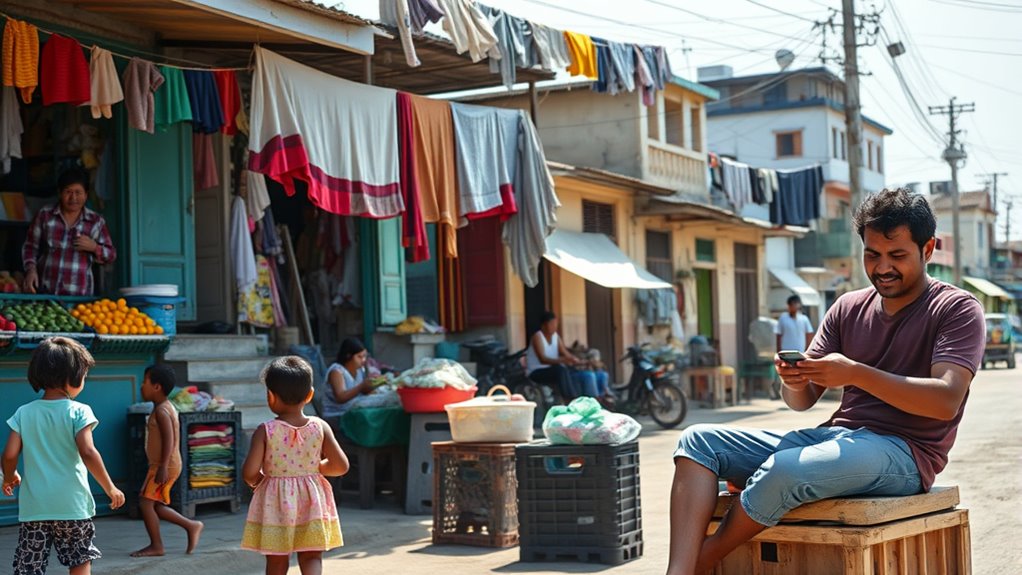
Universal Basic Income (UBI) is gaining attention as a potential solution to address poverty and economic instability in developing countries. As you explore its implementation, you’ll notice that one of the key considerations involves understanding how UBI impacts local economies. When you introduce a steady income to the population, especially in communities where poverty is widespread, you can stimulate local spending. People tend to spend their money on essentials like food, housing, and healthcare, which can boost demand for local businesses and create a ripple effect that invigorates the economy. However, it’s important to recognize that the scale and structure of UBI programs influence these outcomes. If the payments are too small or targeted improperly, the positive impact on local economies might be limited. Conversely, well-designed programs can foster entrepreneurship, reduce reliance on informal or unstable income sources, and even attract investments to the area. But, you should also consider potential inflationary effects. Increased spending power might lead to higher prices for goods and services, which could offset the benefits if supply doesn’t keep pace. Policymakers need to strike a balance to guarantee that UBI acts as a catalyst rather than a destabilizer. Additionally, understanding economic effects is crucial for designing programs that support sustainable development and avoid unintended consequences.
Cultural acceptance plays an essential role in whether UBI succeeds or falters in developing countries. If you’re implementing UBI in a community with strong traditional norms around work, charity, or government assistance, you’ll need to navigate local values carefully. Some communities might view a guaranteed income as a positive step toward social justice, while others could see it as undermining work ethic or personal responsibility. Gaining cultural acceptance involves engaging local leaders, explaining the program’s goals, and demonstrating tangible benefits. When people see that UBI is designed to complement existing social structures rather than replace them, acceptance tends to grow. You’ll also need to consider how cultural attitudes towards cash transfers, social safety nets, and individual responsibility influence perceptions. Resistance can emerge if the community perceives UBI as foreign or incompatible with their traditions. Successful integration depends on tailoring the program to respect local customs, ensuring transparency, and involving community members in decision-making. Ultimately, cultural acceptance shapes the sustainability of UBI initiatives, determining whether communities embrace or reject them.
Universal Basic Income (UBI) program management tools
As an affiliate, we earn on qualifying purchases.
As an affiliate, we earn on qualifying purchases.
Frequently Asked Questions
How Does UBI Impact Local Informal Economies?
You’ll find that UBI strengthens informal markets by providing a steady income, which boosts people’s livelihood resilience. With more financial stability, you can participate more confidently in local informal economies, supporting small vendors and artisans. This reduces vulnerability during economic shocks and encourages entrepreneurship. Ultimately, UBI helps you and your community build a more resilient informal economy, fostering growth and stability even in unpredictable circumstances.
What Are the Long-Term Fiscal Sustainability Concerns?
Think of fiscal sustainability like balancing on a tightrope—you need steady steps. You might worry that UBI strains fiscal balance and erodes revenue stability over time. If funding sources falter or costs rise, the system could wobble or collapse. To stay steady, you must plan long-term, diversify revenue, and monitor economic shifts. Without this, the financial foundation could crack, threatening the program’s future and your country’s economic health.
Can UBI Replace Existing Social Welfare Programs?
Universal basic income can supplement your existing social safety net, but it’s unlikely to fully replace current programs. While UBI provides a straightforward, unconditional cash transfer, traditional welfare addresses specific needs like healthcare and housing. You’d need to take into account how UBI integrates with these services to guarantee thorough support. Relying solely on UBI might leave gaps, so a hybrid approach could better serve your community’s diverse needs.
How Does UBI Influence Migration Patterns?
UBI can influence migration patterns by encouraging rural residents to stay, reducing rural-urban migration driven by economic hardship. It may also attract skilled workers to areas offering reliable income, helping address skill shortages in urban centers. Conversely, if UBI is more accessible in cities, it could accelerate urban migration. Overall, UBI helps balance rural-urban dynamics by providing economic stability, shaping migration trends based on regional opportunities.
What Technological Infrastructure Is Needed for Implementation?
You’ll need robust digital infrastructure and improved financial inclusion to successfully implement UBI. Did you know that only 43% of adults in developing countries have access to formal financial services? To guarantee smooth distribution, you must establish reliable internet networks, secure mobile payment systems, and expand banking access. This infrastructure enables vulnerable populations to receive benefits directly, reducing fraud and ensuring equitable coverage across diverse communities.
economic impact assessment software
As an affiliate, we earn on qualifying purchases.
As an affiliate, we earn on qualifying purchases.
Conclusion
As you navigate the path of Universal Basic Income in the developing world, remember it’s a double-edged sword—bright with promise yet shadowed by hurdles. Like a seed in fertile soil, UBI can sprout hope and growth, but only if nurtured carefully through thoughtful policies. Embrace the challenge, for this journey is a dance between opportunity and obstacle, where your choices shape a future brighter than the stars, guiding millions toward a dawn of new possibilities.
community engagement for social programs
As an affiliate, we earn on qualifying purchases.
As an affiliate, we earn on qualifying purchases.
cash transfer program monitoring tools
As an affiliate, we earn on qualifying purchases.
As an affiliate, we earn on qualifying purchases.
Fall Picks
fall essentials
As an affiliate, we earn on qualifying purchases.