

A universal basic income can help advance gender equality by giving you financial independence and reducing reliance on traditional roles. It empowers you to make choices based on your needs, supports your participation in the workforce, and challenges societal norms about caregiving. With UBI, you might experience less stigma and more dignity, encouraging broader shifts toward fairness. To understand how UBI could reshape gender dynamics and your opportunities, keep exploring these ideas.
Key Takeaways
- UBI provides women with financial independence, reducing reliance on traditional gender roles and empowering their economic participation.
- It supports women in re-entering or remaining in the workforce, fostering greater career flexibility and advancement.
- By alleviating caregiving burdens, UBI challenges gender norms and promotes shared household responsibilities.
- Receiving UBI can diminish social stigma, encouraging women to pursue opportunities without fear of judgment.
- UBI can shift societal perceptions of gender roles, promoting long-term progress toward gender equality.
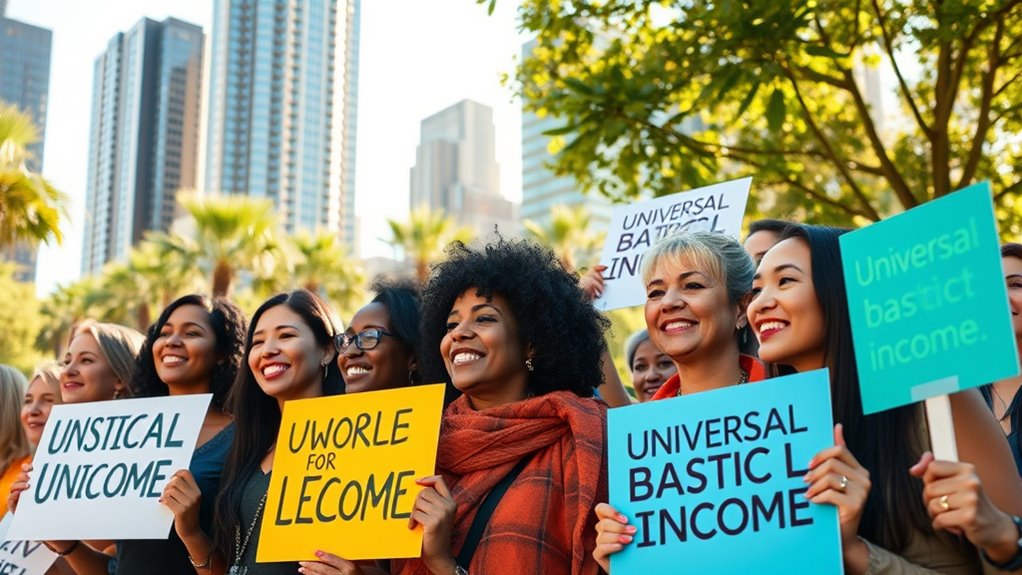
Have you ever wondered how universal basic income (UBI) could transform women’s lives? Imagine a future where financial stability isn’t tied to traditional employment, especially for women juggling multiple responsibilities. UBI offers a steady income that can alleviate some of the economic pressures women face, particularly when it comes to childcare support. With a reliable cash flow, women might find it easier to stay engaged in caregiving roles without the constant worry of losing income. This financial backing can also reduce the reliance on often unreliable or insufficient social services, empowering women to make choices based on their needs and aspirations rather than financial necessity.
UBI can empower women by providing financial stability and reducing reliance on unreliable social services.
One of the key ways UBI could impact women is by encouraging greater labor market participation. Right now, many women step back from their careers due to the high costs and limited availability of childcare support. When UBI provides a safety net, women may feel more confident re-entering the workforce or pursuing higher-paying, more flexible jobs. This income stability can support their decisions to invest in further education or training, which often gets sidelined due to financial constraints. As a result, UBI doesn’t just help women survive; it helps them thrive by creating opportunities for advancement and economic independence.
Furthermore, UBI can challenge the deeply ingrained gender norms that assign caregiving primarily to women. When financial burdens are eased, it becomes easier for women to negotiate shared responsibilities around the home. This shift can lead to more equitable division of unpaid labor, such as childcare and household chores, which historically limits women’s ability to participate fully in the labor market. As more women remain active in their careers, they gain greater economic power, influence, and independence, which can ripple out to broader societal changes around gender equality.
It’s also important to recognize that UBI can reduce the stigma often associated with relying on social assistance. Women who receive a basic income may feel more empowered and less judged for their economic circumstances, fostering a sense of dignity and control. This empowerment can encourage women to pursue opportunities they might have avoided due to financial insecurity or societal expectations. When women have the financial means to support themselves and their families, they’re more likely to challenge traditional gender roles and advocate for policies that promote equality.
Frequently Asked Questions
How Might UBI Influence Women’s Participation in Unpaid Caregiving?
UBI can reduce the burden of unpaid caregiving by providing financial stability, allowing women to choose whether to continue their caregiving responsibilities. This can shift gendered labor dynamics, encouraging shared responsibilities at home. With a reliable income, women might feel less compelled to over-commit to unpaid caregiving, promoting more equitable participation in paid work and social roles, ultimately fostering gender equality both inside and outside the household.
Could UBI Unintentionally Reinforce Traditional Gender Roles?
Yes, UBI could unintentionally reinforce traditional gender roles by influencing household dynamics and reinforcing gender stereotypes. If you rely on UBI, you might see women continuing to assume unpaid caregiving roles, while men focus on paid work. This can perpetuate existing stereotypes and limit gender equality. It’s essential to design policies that challenge these norms, encouraging equitable sharing of household responsibilities and promoting gender-neutral roles.
What Are Potential UBI Impacts on Women’s Access to Employment?
Imagine the labor market as a bustling marketplace where UBI acts as a steady breeze, encouraging women to step into diverse stalls. With financial security, you gain the confidence to pursue better job opportunities, pushing for wage equality. UBI can open doors, making it easier for women to access employment, challenge traditional roles, and reshape the workforce landscape for a more balanced, equitable future.
How Does UBI Address Economic Disparities Among Women?
UBI helps address economic disparities among women by providing a steady income, reducing the gender wage gap, and promoting economic independence. With a reliable safety net, you have more power to negotiate wages, pursue better job opportunities, or take time for caregiving without financial hardship. This support can lead to greater gender equality, empowering women to participate fully and fairly in the economy.
Are There Gender-Specific Barriers to Accessing UBI Benefits?
Yes, gender-specific barriers can influence your access to UBI benefits. Women often face wage gaps and caregiving roles that limit their eligibility or awareness of benefits. These barriers may prevent you from fully benefiting from UBI, especially if eligibility criteria don’t account for unpaid caregiving or income disparities. Addressing these issues requires policies that recognize gender wage differences and caregiving responsibilities to ensure equitable access for all women.
Conclusion
Imagine a world where women have equal control over their time, equal access to opportunities, and equal say in shaping their futures. With Universal Basic Income, you could see a society where gender barriers dissolve, where independence flourishes, and where equality becomes a reality for all. UBI isn’t just about financial security; it’s about empowering women to break free from constraints, to thrive, and to create a future that’s truly fair, truly equal, and truly theirs.