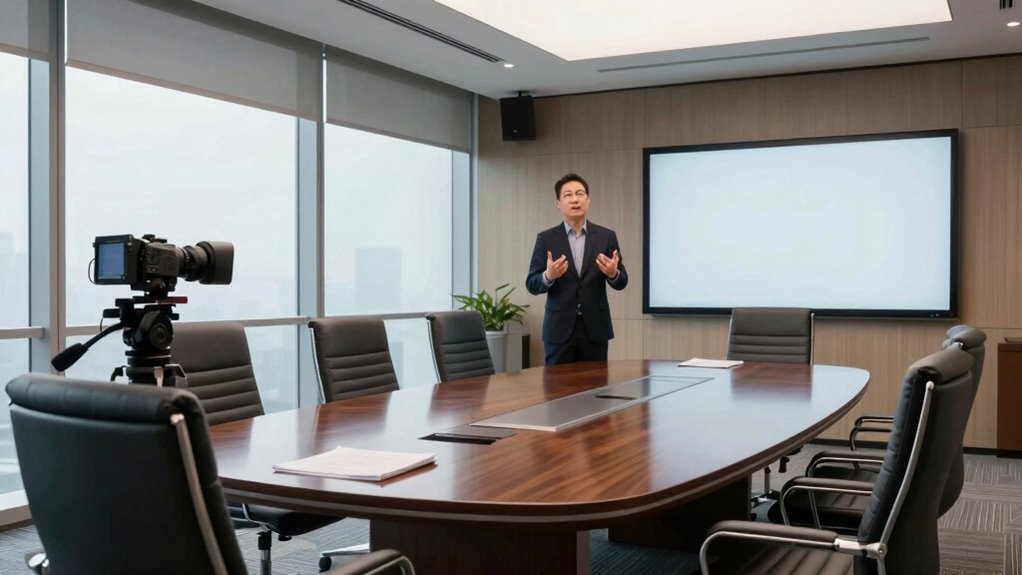
Choosing between auto-framing, PTZ, or fixed lens cameras depends on your room size and meeting needs. Auto-framing cameras work well for small spaces, automatically keeping everyone in view, while PTZ cameras are perfect for larger rooms, offering flexible angles and zooming. Fixed lenses are simple and cost-effective but may miss part of the action. To make the best choice and understand each type’s strengths and limitations, keep exploring this guide for expert insights.

Get business pricing on tech for your team
- Business-only prices and quantity discounts
- Tax-exempt purchasing
- Multiple users, one account, clear invoices
Key Takeaways
- Auto-framing cameras are ideal for dynamic, small to medium rooms needing seamless participant visibility without manual adjustments.
- PTZ cameras offer flexible coverage and remote control, suitable for large or irregularly shaped conference spaces.
- Fixed lens cameras provide consistent, cost-effective solutions for simple setups with static, predictable layouts.
- Choosing between auto-framing, PTZ, or fixed lenses depends on room size, layout, and the need for dynamic or fixed coverage.
- Proper setup, calibration, and understanding each technology’s strengths help optimize meeting quality and avoid tracking or privacy issues.
As an affiliate, we earn on qualifying purchases.
How Do Auto-Framing, PTZ, and Fixed Lens Meeting Cameras Differ?
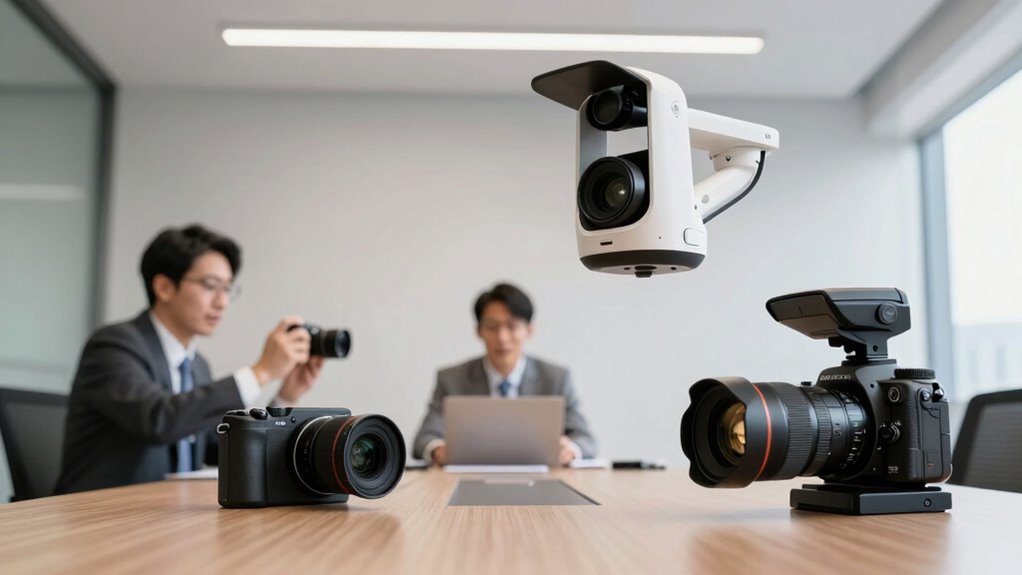
When choosing a meeting camera, understanding how auto-framing, PTZ, and fixed lens options differ can help you make the right decision. Auto-framing cameras automatically adjust to keep everyone in the frame, making camera installation easier and ensuring everyone is visible during video conferencing. PTZ (pan-tilt-zoom) cameras give you manual control, allowing you to focus on specific areas or participants, but they often require more setup and remote control. Fixed lens cameras have a set field of view, providing a consistent image without adjustments. Knowing these differences helps you select the best camera for your space and needs, ensuring smooth video conferencing without constant adjustments. Your choice impacts camera installation ease, video quality, and overall meeting productivity.
PTZ video camera for large rooms
As an affiliate, we earn on qualifying purchases.
As an affiliate, we earn on qualifying purchases.
Which Meeting Camera Is Best for Small Rooms?
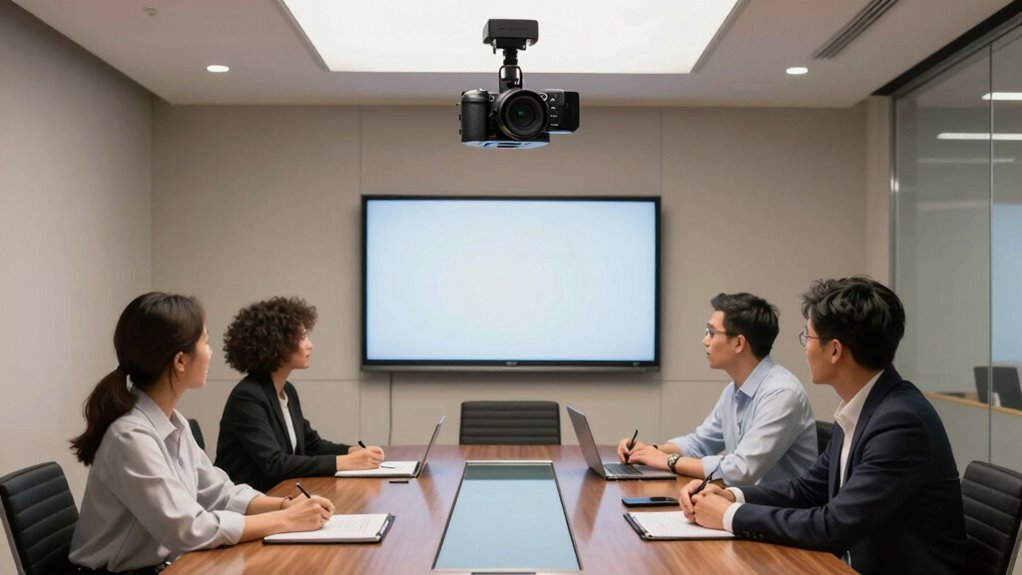
In small rooms, maximizing space is key, so choosing a compact, unobtrusive camera makes a big difference. Look for features like auto-framing or wide-angle lenses that can cover everyone without cluttering the space. Consider your room’s size and furniture layout to find a camera that fits seamlessly and enhances your meetings. Additionally, selecting a camera with digital content formats ensures compatibility with various conferencing platforms and future-proofing your setup. When setting up your equipment, using the right DIY tools and safety tips can help ensure a secure and optimal installation.
Space Optimization Strategies
Choosing the right meeting camera for small rooms requires careful consideration of space constraints and meeting dynamics. To optimize your setup, focus on solutions that maximize space efficiency without sacrificing quality. Consider cameras with auto-framing or PTZ capabilities to minimize clutter and improve engagement. Proper lighting control enhances visibility, making interactions clearer. Seamless audio integration ensures conversations flow smoothly, reducing the need for additional equipment. Incorporating smart home automation can further streamline your meeting environment by adjusting lighting and audio settings automatically.
- Feel confident knowing your setup enhances focus and reduces distractions
- Create an inviting environment that encourages participation
- Maximize every inch of your small room without compromising functionality
- Achieve professional-quality meetings effortlessly
- Ensure everyone feels seen and heard, no matter the space constraints
Camera Features to Consider
Selecting the right meeting camera for small rooms involves evaluating key features that enhance visibility, engagement, and space efficiency. Focus on the camera lens, as a wide-angle lens can capture the entire room without distortion, making everyone visible. Image resolution matters too—look for at least 1080p to guarantee clear, sharp images that facilitate better communication. Consider whether the camera offers auto-framing or PTZ (pan-tilt-zoom) capabilities, which automatically adjust the view to keep participants in focus. Fixed lenses are simpler but less flexible. Also, check for low-light performance and ease of integration with your existing systems. These features collectively determine how well your small room can facilitate effective, engaging meetings with ideal clarity. Additionally, understanding lens types helps in selecting the right camera for optimal coverage and image quality.
As an affiliate, we earn on qualifying purchases.
Which Camera Tech Works Better for Large Conference Rooms?
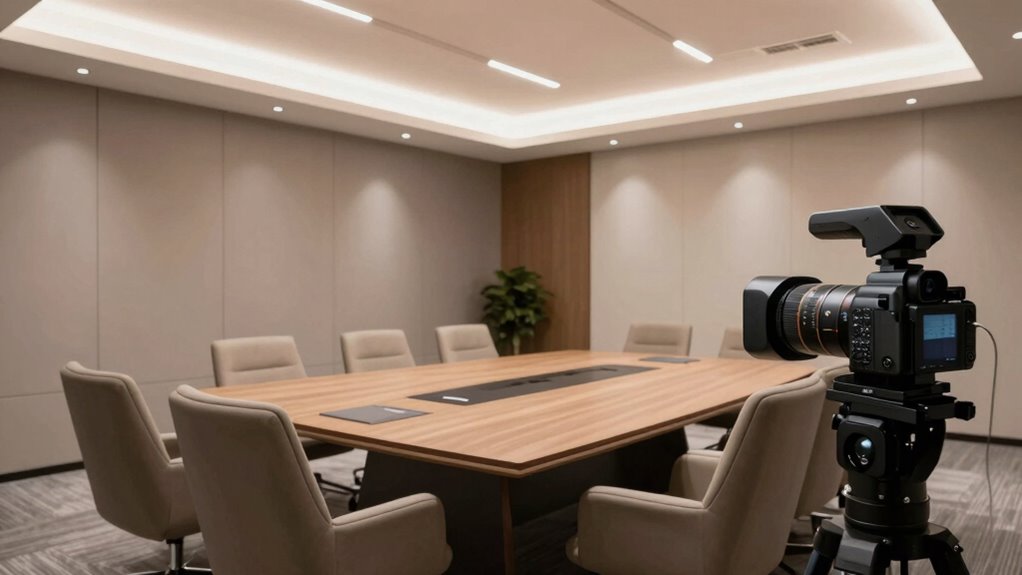
When it comes to large conference rooms, the right camera technology can make or break the meeting experience. You need a solution that captures everyone clearly, encourages engagement, and maintains professionalism. PTZ cameras excel here with their flexible camera placement and remote control, ensuring all participants are in frame. Fixed lenses are simple but may miss key interactions or create awkward framing, disrupting videoconferencing etiquette. Auto-framing cameras adjust dynamically, keeping everyone centered, but can sometimes be distracting if they overreact. Consider your room size, layout, and how often you need to reconfigure your setup. With the right tech, you foster better communication, minimize distractions, and create a seamless meeting environment.
Choosing the right camera tech ensures clear, engaging, and professional large conference meetings.
- Inclusive, clear visuals that boost confidence
- Smooth, natural interactions that invite collaboration
- Well-timed framing that keeps everyone engaged
- Professional appearance that reinforces credibility
- Ease of use that reduces frustration
Pros and Cons of Auto-Framing Meeting Cameras
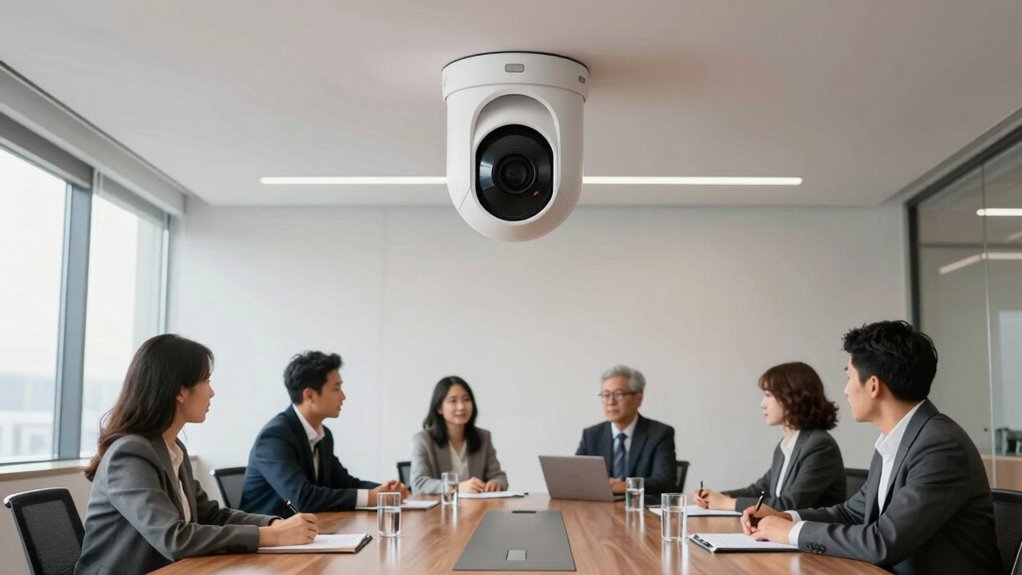
Auto-framing cameras can adjust quickly to capture everyone, but their accuracy depends on the system’s ability to track movement precisely. Sometimes, they may misidentify who to focus on, leading to tracking errors during meetings. Understanding these strengths and pitfalls helps you decide if auto-framing fits your meeting needs. Additionally, ensuring proper setup and understanding camera features can improve overall performance. Incorporating proper calibration techniques can also enhance tracking accuracy and reduce errors. Being aware of system limitations can help you manage expectations and troubleshoot issues effectively, especially when considering the importance of creative storytelling to communicate your brand message effectively. Recognizing home soundproofing solutions can further optimize your meeting environment by reducing background noise and distractions.
Adaptive Framing Accuracy
Adaptive framing accuracy in auto-framing meeting cameras can markedly enhance your video calls by keeping everyone in focus, but it’s not without its challenges. While it creates a seamless user experience by automatically adjusting the frame, it can also raise privacy concerns if the camera captures more than intended. You might worry about unexpected footage or sensitive conversations being recorded. On the positive side, adaptive framing ensures everyone stays visible, reducing manual adjustments. However, it can sometimes misinterpret movements, leading to awkward framing or missed moments.
- Feel confident knowing everyone’s captured, but worry about unintended footage
- Enjoy a smooth experience, yet question privacy boundaries
- Appreciate dynamic framing, but fear misinterpretation of movements
- Reduce distractions, but face potential tracking errors
- Enhance engagement, yet remain cautious of privacy concerns
Potential Tracking Errors
While auto-framing cameras offer convenience by tracking movements automatically, they can sometimes misfire, leading to tracking errors. These errors occur when facial recognition mistakenly identifies or loses track of a participant, especially in crowded or dynamic settings. You might find the camera focusing on the wrong person or jumping between speakers unpredictably. Privacy concerns also arise since facial recognition features could collect and store sensitive data without consent. To visualize, consider the following:
| Scenario | Potential Issue |
|---|---|
| Multiple faces present | Incorrect person identified |
| Sudden movement by participant | Loss of tracking, camera jumps |
| Low lighting conditions | Facial recognition struggles |
| Background distractions | False triggers or misidentification |
| Privacy settings not configured | Data collection without permission |
Additionally, improper camera setup can exacerbate these issues, emphasizing the importance of correct configuration and awareness of privacy implications.
When Should You Use PTZ Cameras Instead of Fixed Lenses?
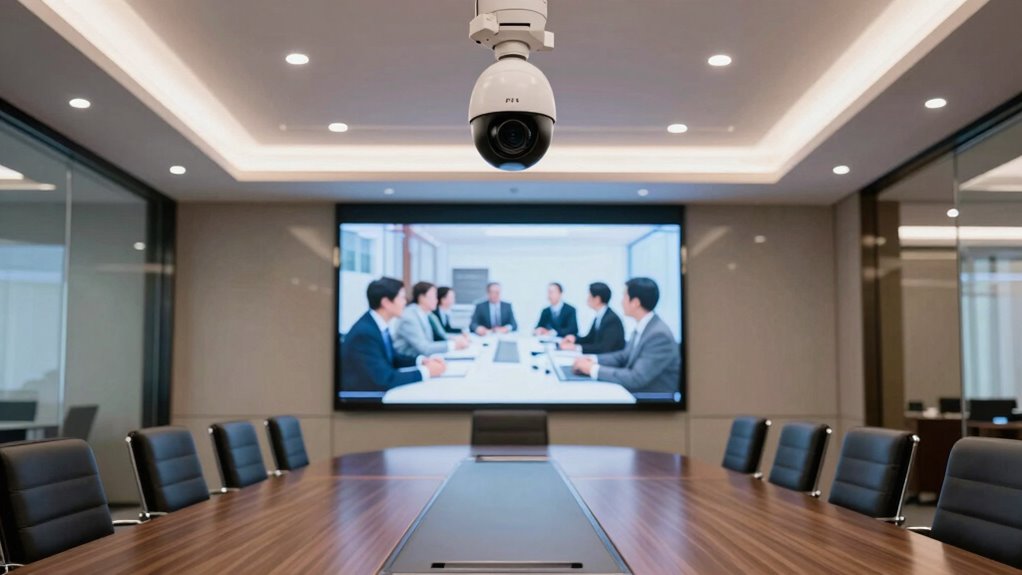
You should consider using PTZ cameras when your meeting space requires flexibility and dynamic coverage that fixed lenses can’t provide. These cameras allow you to seamlessly adjust angles, zoom in on speakers, and cover large or irregularly shaped rooms. They’re ideal when quick camera repositioning is necessary, saving you time during setup and reducing the need for multiple fixed cameras. Proper camera installation and lighting considerations are essential to maximize their effectiveness. With PTZs, you can adapt to changing meeting scenarios effortlessly. Incorporating outdoor transformation essentials can enhance the overall environment, making your meeting space more versatile and engaging. Additionally, understanding camera lens types can help you choose the best setup for your specific needs. Recognizing the importance of camera positioning ensures optimal coverage and image quality in various meeting scenarios.
How to Choose the Right Meeting Camera for Your Needs and Budget
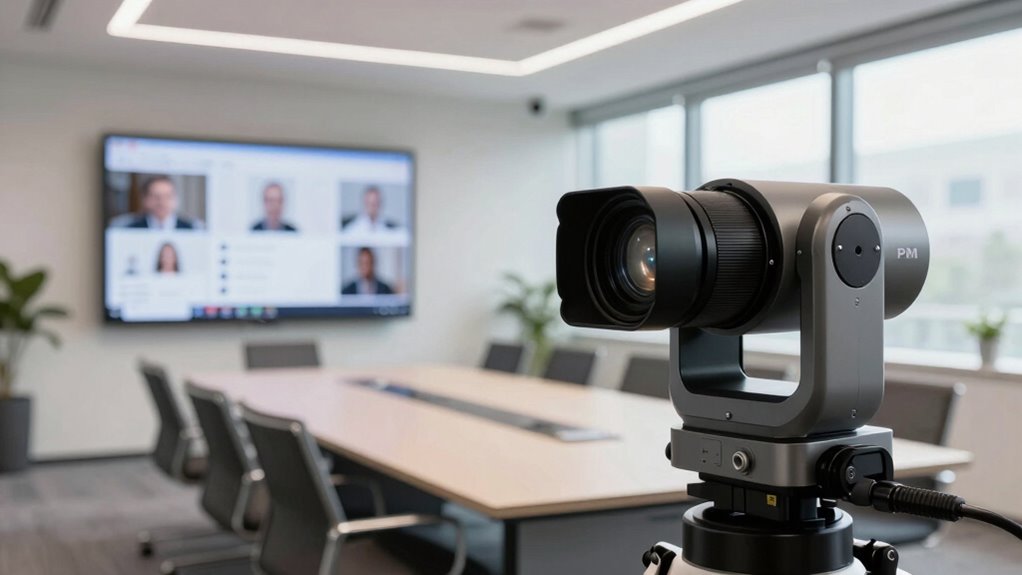
Choosing the right meeting camera depends on understanding your specific needs and budget constraints. First, evaluate your lighting conditions; if your space has variable or poor lighting, look for cameras with good low-light performance or automatic adjustments. Next, consider audio integration—some cameras include built-in microphones, which simplify setup and improve audio quality. If your meetings require flexibility, a PTZ camera with auto-framing may be ideal, but if simplicity and cost are priorities, a fixed lens camera could suffice. Also, assess your room size and layout to guarantee the camera’s field of view matches your space. Balancing these factors with your budget will help you select a solution that offers reliable video and audio quality, making your meetings more effective and engaging.
Frequently Asked Questions
How Do Lighting Conditions Affect Different Meeting Camera Types?
Lighting conditions greatly impact your meeting camera’s performance. You need to make lighting adjustments to guarantee clear visibility. Cameras with higher sensitivity perform better in low light, while those with lower sensitivity require brighter settings. Poor lighting can cause grainy images or shadows, regardless of the camera type. Adjust your environment’s lighting or camera settings to optimize image quality, especially in variable lighting conditions, for a seamless virtual meeting experience.
What Are the Maintenance Costs for PTZ Versus Fixed Lens Cameras?
You’ll notice PTZ cameras generally have higher maintenance costs, thanks to their complex moving parts and delicate mechanisms, which can wear out over time. They often demand more frequent repairs due to their intricate hardware and higher power consumption. Fixed lens cameras, with their sturdy design, require less upkeep, making them more durable in the long run. Think of it as choosing a reliable workhorse versus a high-maintenance performer.
Can Auto-Framing Cameras Adapt to Multiple Speakers Automatically?
Yes, auto-framing cameras with speaker tracking can automatically adapt to multiple speakers. They use auto adjustment features to follow each speaker as they move, ensuring everyone stays in frame. This technology offers seamless shifts and dynamic framing, making meetings more engaging and professional. You won’t need to manually control the camera, saving time and effort, especially in multi-speaker scenarios.
Are There Compatibility Issues With Existing Conference Room AV Setups?
You might encounter integration challenges with existing conference room AV setups, especially related to equipment compatibility. Before upgrading, check if your current hardware supports auto-framing features or if adapters and software updates are needed. Compatibility issues can cause delays or limit functionality, so it’s vital to confirm that new cameras seamlessly integrate with your existing systems. Doing this guarantees a smooth shift and ideal meeting experience.
How Does Camera Resolution Impact Meeting Video Quality?
Think of your camera like a storyteller—its resolution determines how vividly it paints your meeting. A higher resolution, driven by a larger camera sensor and better resolution metrics, captures more detail, making your video clearer and more professional. Lower resolution can turn your presentation into a blurry story, losing impact. So, investing in a camera with superior resolution guarantees your message isn’t lost in the shadows, shining bright for all to see.
Conclusion
Choosing the right meeting camera is like picking the perfect lens for a camera—you want clarity, focus, and the right framing. I once set up a small conference with auto-framing tech, and it was like having a silent, attentive host directing the flow. When you match your camera type to your room size and needs, you guarantee every participant feels seen and heard. Think of it as tuning your gear for the best shot—your meetings will never miss the mark.
Fall Picks
fall essentials
As an affiliate, we earn on qualifying purchases.