As automation and globalization reshape job security, you need a new social contract that guarantees livelihoods beyond traditional employment. This involves embracing stakeholder capitalism, digital contracts, and lifelong learning to build resilience. Governments and organizations are exploring innovative policies like universal basic income and green skills training. By fostering global cooperation and setting standards, society can support flexibility and fairness for all workers. Keep exploring how these evolving strategies can secure your future even when work feels uncertain.
Key Takeaways
- Implement social safety nets like Universal Basic Income to provide financial stability amid job displacement.
- Promote lifelong learning and reskilling programs to help workers adapt to evolving industries and technologies.
- Develop flexible digital contracts and remote work arrangements to ensure employment opportunities during economic shifts.
- Foster stakeholder capitalism emphasizing social responsibility, transparency, and community investment for long-term livelihoods.
- Establish international cooperation and policies that support green technologies and fair labor practices in a changing global economy.
Universal Basic Income support programs
As an affiliate, we earn on qualifying purchases.
As an affiliate, we earn on qualifying purchases.
The Changing Nature of Employment and Job Security
The landscape of employment is shifting rapidly, driven by technological advances and evolving economic demands. Today, full-time jobs still dominate, accounting for 82.6% of employment in April 2025, but the nature of work is changing. Part-time roles remain, yet their prevalence varies with economic cycles, and the labor force participation rate stays steady at 62.5%. Unemployment remains low, between 4.0% and 4.2%, but job security feels less certain for many. Automation and AI are transforming industries, with an expected displacement of 92 million jobs worldwide by 2030. Meanwhile, new roles in tech and green energy are emerging. As work evolves, you must adapt through reskilling and embracing flexible, digital work arrangements to maintain stability in this shifting environment. Full-time employment has historically declined during recessions, with a notable shift to part-time work, indicating that economic downturns continue to influence employment patterns significantly. Recognizing the importance of adaptability can help workers navigate these changes successfully. Additionally, understanding the role of sound healing science and other innovative approaches can support mental resilience during transitional periods, especially as technological disruptions reshape traditional career paths. Furthermore, the adoption of appliance maintenance plans can provide stability by reducing unexpected disruptions at home, mirroring the need for adaptable strategies in employment.
reskilling online courses
As an affiliate, we earn on qualifying purchases.
As an affiliate, we earn on qualifying purchases.
Historical Foundations of the Social Contract

Understanding the historical roots of the social contract reveals how ideas about legitimacy and authority have evolved over centuries. In ancient Greece, thinkers like Protagoras and Epicurus laid early groundwork by exploring concepts of agreement and mutual benefit. During the medieval period, legitimacy was rooted in patriarchal power and biblical authority. Modern social contract theory emerged with philosophers like Hobbes, Locke, and Rousseau, who shaped ideas about consent, natural rights, and the common good. Influenced by Hugo Grotius and Samuel Pufendorf, these thinkers emphasized liberty and equality. Over time, the theory shifted from a focus on state of nature and mutual consent to broader notions of justice and fairness, as seen in Rawls’ work. These historical foundations continue to influence modern debates on political legitimacy and social order, especially as contemporary societies navigate social cohesion amidst increasing economic and cultural diversity. Recognizing the importance of civic participation has become essential for maintaining legitimacy in diverse societies, especially as historical perspectives inform current policy debates. Additionally, the development of AI security measures plays a role in shaping societal trust and governance in the digital age. Furthermore, the understanding of legitimacy has expanded to include digital and technological realms, reflecting ongoing societal adaptation.

The Office is Dead?: Freedom, Fragility, and the Rise of the 24/7 Digital Life
As an affiliate, we earn on qualifying purchases.
As an affiliate, we earn on qualifying purchases.
Evolving Expectations Between Workers and Employers
As expectations between workers and employers continue to shift, the dynamics of the modern labor market are evolving rapidly. You now prioritize skills and practical experience over formal education, with 65% of employers doing the same by 2025. AI skills are a top hiring focus for 81% of managers, and 65% would hire based on skills alone. Job seekers often negotiate for remote work or better pay, especially with pay transparency laws making salary ranges common. Work flexibility is now standard, and benefits are tailored to diverse needs. Meanwhile, the importance of continuous learning grows, with 39% of skills expected to become outdated by 2030. This shift pushes you to adapt quickly and focus on transferable skills for career stability. Additionally, understanding the business environment and market trends can give you a competitive edge in navigating these changes. Staying informed about emerging technologies and their impact on industries is also crucial for maintaining relevance in a rapidly changing job landscape. Furthermore, awareness of evolving industry guidelines, such as those related to health and safety or professional standards, is increasingly important for compliance and career advancement. Recognizing the significance of personality traits in workplace adaptability can further enhance your ability to thrive amid these shifts. Moreover, being aware of the risks in merchant services and how to manage them can help businesses safeguard their operations and build resilience.
green energy job training
As an affiliate, we earn on qualifying purchases.
As an affiliate, we earn on qualifying purchases.
The Role of Stakeholder Capitalism in Modern Society
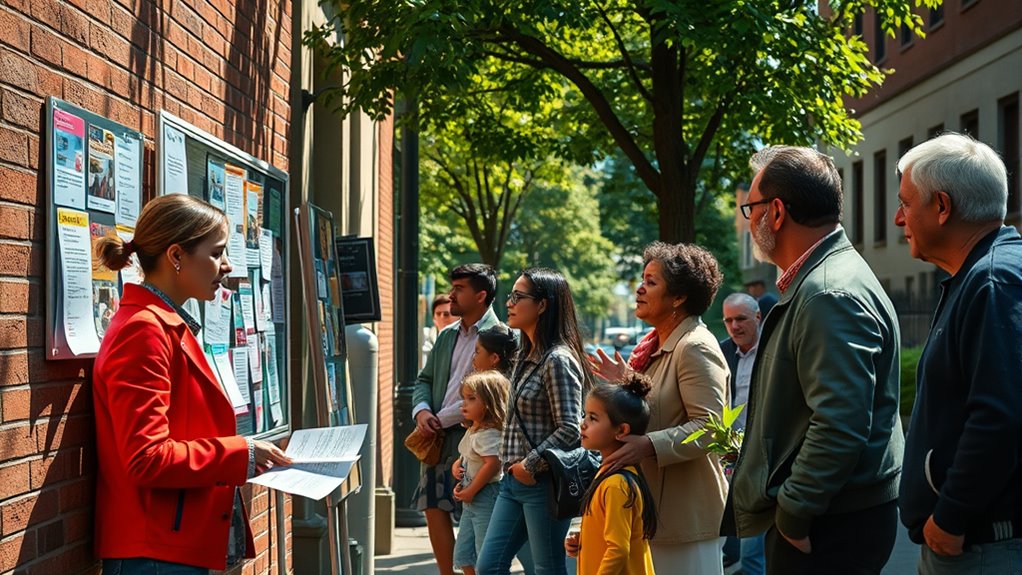
Stakeholder capitalism shifts the focus from maximizing short-term profits to creating long-term value for all involved parties, including employees, customers, suppliers, shareholders, and local communities. By adopting this approach, you’re encouraging companies to prioritize purpose and social responsibility alongside financial performance. This model promotes transparency, reduces corruption, and fosters trust among stakeholders. It recognizes that employees are crucial for innovation, suppliers ensure supply chain stability, and local communities impact a company’s social license to operate. While balancing diverse interests can be challenging, the benefits include increased resilience, reputation, and long-term sustainability. Companies like Patagonia and REI exemplify this shift, and global initiatives support integrating stakeholder capitalism into broader business standards, ultimately shaping a more inclusive and responsible economy. Research shows that stakeholder capitalism is increasingly linked to financial performance and long-term success. Emphasizing stakeholder engagement can lead to more sustainable and ethical business practices that benefit society as a whole. Additionally, integrating environmentally conscious practices, such as adopting energy-efficient systems, can further enhance a company’s positive impact and operational resilience. Recognizing the importance of ethical business practices is essential for building trust and ensuring long-term viability in today’s interconnected world. Moreover, incorporating transparent communication helps foster stakeholder trust and aligns company goals with societal expectations. Incorporating business transparency can also help companies better meet evolving regulatory standards and societal expectations.
Digital Contracts and Their Impact on Society

Digital contracts are transforming how agreements are created, signed, and enforced, making transactions faster and more efficient across various sectors. You can now sign employment contracts, lease agreements, or sales deals digitally, saving time and reducing paperwork. Platforms like Oneflow and Concord streamline contract management, guaranteeing secure, accessible, and legally enforceable agreements. For employment, digital contracts clarify responsibilities, salaries, and benefits, especially for remote work arrangements. Businesses benefit from quick customization of service and sales contracts, lowering costs and improving collaboration. Different types, like clickwrap and e-signature agreements, ensure enforceability depending on how users engage. Advancements in encryption, automation, and version control make digital contracts more secure and manageable, helping society adapt to a more flexible, digital-driven economy. Additionally, understanding IRA tax implications is essential for planning long-term financial security in this evolving landscape. Incorporating digital signatures enhances the authenticity and integrity of these contracts, aligning with the importance of secure transaction methods.
Innovative Economic Models for a Uncertain Future

Given the unpredictable nature of today’s global economy, innovative economic models are essential for steering future uncertainties. You need adaptable systems that respond to geopolitical tensions, trade policy swings, and monetary shifts. Embracing renewable energy investments, like hydrogen and blue ammonia, helps align with climate goals, while technological innovations boost productivity. Consider new models that incorporate circular economies to reduce waste, improve resource use, and drive sustainability. These models allow you to navigate energy price volatility and sector transformations. The table below highlights key ideas:
| Idea | Focus Area | Impact |
|---|---|---|
| Adaptive Systems | Geopolitical & Trade | Flexibility in policies |
| Green Technologies | Climate & Energy | Sustainable growth |
| Circular Economies | Resource Efficiency | Waste reduction, resilience |
| Tech & AI Integration | Productivity & Innovation | Sector reshaping |
| Talent Adaptability | Workforce Strategy | Skills evolution, agility |
To stay resilient, it is also crucial to monitor market trends and adapt strategies proactively, ensuring preparedness for sudden shifts in the economic landscape.
The Importance of Global Cooperation and Standards
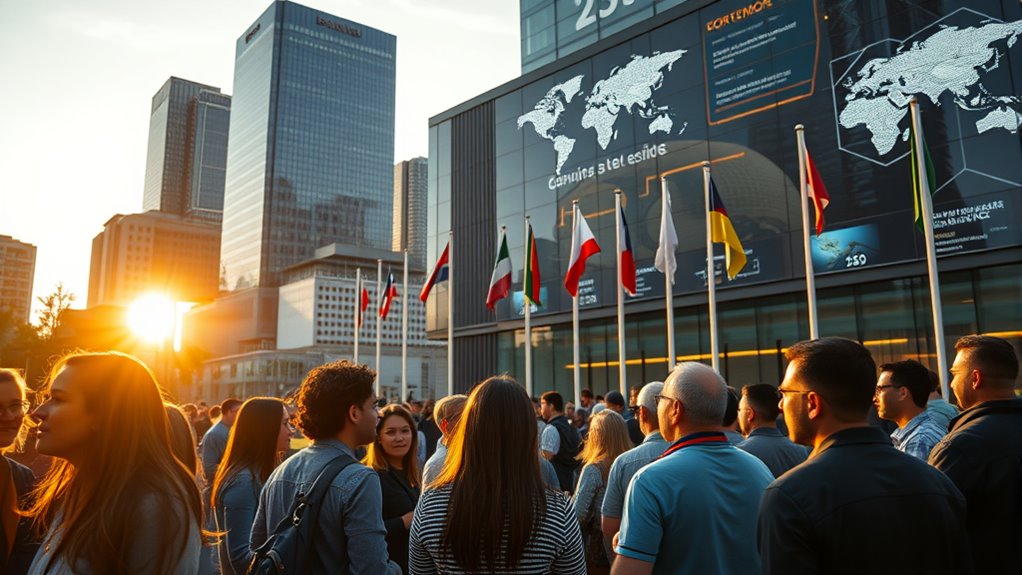
You play a essential role in shaping global norms that foster unity and cooperation across cultures. Establishing shared standards helps reduce conflicts and creates a more stable international environment. By promoting cultural understanding, we can build a more inclusive and resilient global community.
Establishing Global Norms
Why are global norms essential for fostering cooperation and ensuring fair standards worldwide? Because they create a shared framework that guides how nations, businesses, and workers interact. When everyone follows common standards, it reduces inequality, promotes fairness, and adapts to technological and environmental changes. These norms help address violations highlighted by the Global Rights Index and uphold international labor standards set by the ILO. They also facilitate global agreements on social safety nets, reskilling, and resource distribution, ensuring no one is left behind.
| Aspect | Purpose |
|---|---|
| Global Rights Index | Highlight violations, push for protections |
| International Standards | Ensure fair treatment, promote labor rights |
| Economic Security Measures | Guarantee wages, social benefits, inclusion |
| Technological & Environmental Challenges | Support workers in adapting and *transitioning* |
Promoting Cultural Unity
Promoting cultural unity through global cooperation and standards is essential because it fosters mutual understanding and respect among diverse communities. The UNESCO Framework for Cultural Statistics (FCS) provides a common basis for evaluating the socioeconomic impact of culture worldwide, encouraging countries to share data and best practices. International classification systems help standardize cultural metrics, making cross-border comparisons possible. Cultural exchange programs facilitate direct interactions, deepening intercultural understanding. These efforts support cultural industries, which drive economic growth and create jobs, especially in tourism and entrepreneurship. Digital platforms and cultural digitization expand access to heritage and arts globally, breaking geographical barriers. By aligning policies and embracing technological innovation, global cooperation strengthens cultural resilience, ensuring that diverse identities thrive and contribute to shared prosperity.
Reskilling, Education, and Lifelong Learning Strategies
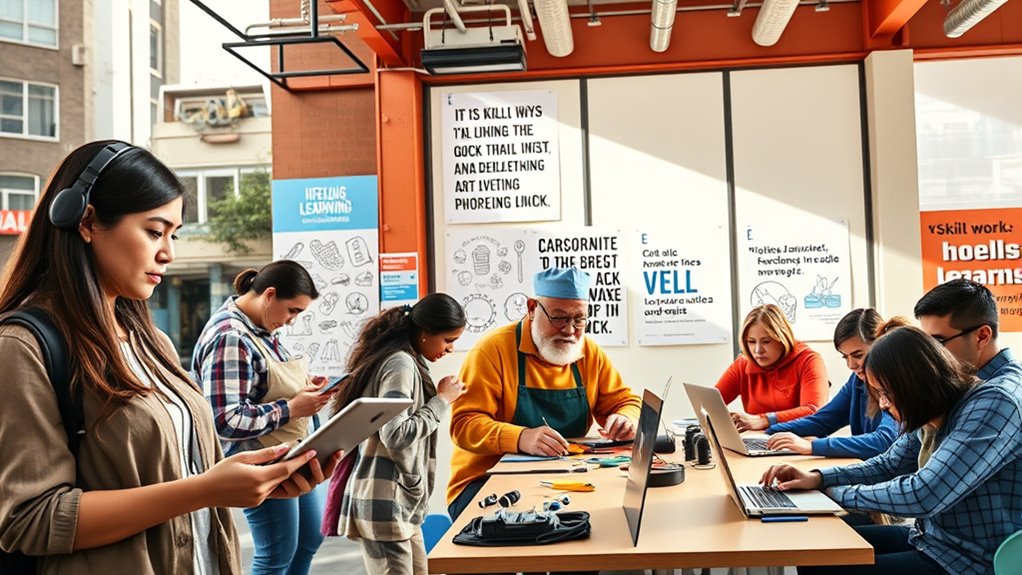
As technological change accelerates, reskilling and lifelong learning have become essential strategies for staying competitive in the evolving workforce. You need to embrace continuous skill development, as rapid innovations demand frequent updates to your expertise. Globally, initiatives like the World Economic Forum’s Reskilling Revolution aim to empower a billion people by 2030 with better education and skills, opening new economic opportunities. Education is shifting toward flexible, work-integrated models, including internships and apprenticeships, supported by increased EdTech investments. Industry partnerships help bridge skills gaps, ensuring your training aligns with market demands. Emphasizing adaptability and lifelong learning keeps you relevant and resilient amid industry shifts, technological advances, and economic uncertainties. Staying committed to reskilling is vital for steering the future workforce landscape.
Future Policies for Sustainable Livelihoods
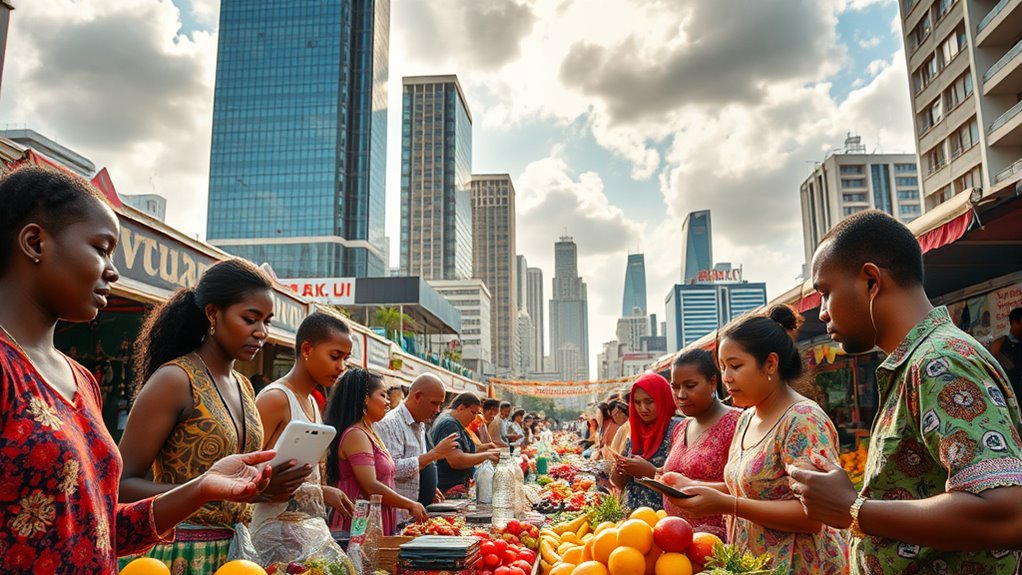
Future policies for sustainable livelihoods are shaping how societies support vulnerable populations and adapt to changing work environments. You’ll see increased integration of social protection programs, like Universal Basic Income pilots, which help guarantee a minimum income regardless of employment. Legal frameworks are evolving to recognize gig and platform economy work, providing tailored protections. Decentralized renewable energy systems offer affordable, reliable power, especially in underserved areas, encouraging community participation. Programs combining skill development with environmental sustainability boost resilience, creating jobs while reducing fossil fuel dependence. Financial inclusion initiatives, such as microfinance and digital services, strengthen economic stability. By adopting consumer-centered approaches, policies promote sustainable lifestyles, empowering individuals to participate actively in energy and livelihood transitions. These strategies aim to build resilient, inclusive societies amid economic shifts.
Frequently Asked Questions
How Can Workers Ensure Their Rights in Digital and Gig Economy Jobs?
You can safeguard your rights in digital and gig jobs by staying informed about recent laws and regulations that affect gig workers. Join or form unions and advocacy groups to push for better protections. Use available training and financial resources offered by employers. Document your work and earnings, and advocate for fair treatment through collective action. Staying aware and proactive helps ensure you’re treated fairly and your rights are upheld.
What Role Do Governments Play in Establishing Global Social Standards?
Ever wonder who really sets the rules you live by? Governments play a vital role in establishing global social standards. They enforce laws that protect your rights, push for international agreements, and align domestic policies with global norms. By fostering collaboration and holding corporations accountable, they shape a safer, fairer world. Their efforts guarantee that, despite changing work landscapes, your livelihood and well-being remain protected under a cohesive, global framework.
How Can Small Businesses Adapt to New Economic and Regulatory Changes?
You can adapt to new economic and regulatory changes by staying informed about evolving laws and market trends. Leverage digital tools and AI to streamline operations, diversify your supply chain, and manage finances effectively. Engage with industry groups for insights and advocate for your interests. Remain flexible, adjust pricing, and explore new markets to stay resilient. By proactively embracing technology and strategic planning, you’ll better navigate uncertainties and seize emerging opportunities.
What Are Effective Ways to Promote Inclusive Growth Amid Rising Inequality?
Imagine steering a ship through turbulent waters—your goal is to reach safe harbor for all on board. To promote inclusive growth amid rising inequality, you should craft policies that expand opportunities and boost skills for vulnerable groups. Invest in education, fair labor practices, and social programs. By aligning economic growth with social fairness, you create a steady course where everyone benefits, transforming rough seas into a shared journey toward prosperity.
How Will Emerging Technologies Influence Future Social Safety Nets?
Emerging technologies will transform future social safety nets by making them more efficient, accessible, and adaptable. You’ll see digital platforms pooling resources better, reducing costs, and improving risk-sharing, especially for vulnerable groups. However, you must address the digital divide that limits access for rural, low-income, and older populations. By integrating tech into traditional systems, you can create more inclusive safety nets that respond quickly to economic shocks and workforce changes.
Conclusion
As we navigate this shifting landscape, remember that your resilience is the compass guiding us through uncertainty. The new social contract isn’t just a promise—it’s a call to action, urging you to embrace lifelong learning and adaptability. Like a lighthouse in the storm, innovative policies and global cooperation will illuminate a sustainable path forward. Together, you and society can forge a future where livelihoods thrive amid change, turning the tides of uncertainty into a tide of opportunity.