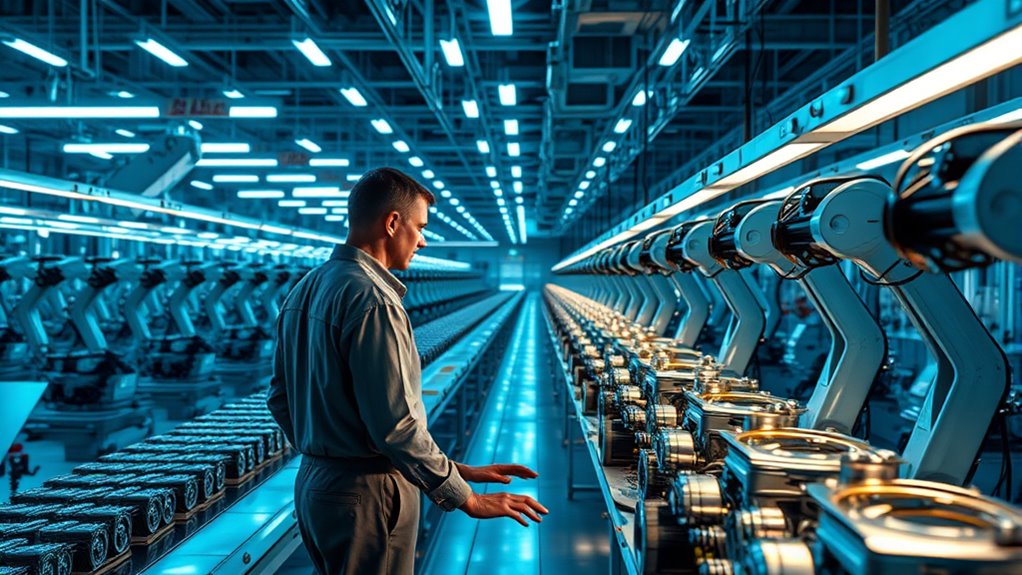

Automation can bring both prosperity and loss. As machines and AI improve, you might see new opportunities emerge, but jobs could also disappear if processes aren’t managed carefully. Ethical AI practices and worker retraining are key to ensuring that automation benefits everyone, not just a few. To understand how industries are adapting and what it takes to balance progress with employment, explore how responsible innovation shapes our future.

Get business pricing on tech for your team
- Business-only prices and quantity discounts
- Tax-exempt purchasing
- Multiple users, one account, clear invoices
Key Takeaways
- Automation can drive economic growth and create new job opportunities if managed responsibly.
- Without proper retraining and policies, automation risks increasing inequality and causing unemployment.
- Ethical AI deployment ensures fair labor practices and mitigates bias and harm in automated systems.
- Investment in worker education and lifelong learning is crucial to adapt to evolving job markets.
- The future of automation’s impact depends on deliberate efforts to balance prosperity with social inclusion.
Have you ever wondered how automation is transforming the job market? As machines and AI systems become more sophisticated, they’re changing the way we work and live. But with these advancements come critical questions about AI ethics and the future of human employment. Will automation lead to widespread unemployment, or can it open doors to new opportunities? It’s a complex issue that demands your attention, especially as industries adapt and evolve.
AI ethics play a crucial role in shaping how automation is implemented. You need to consider the moral implications of deploying intelligent systems that might replace human workers. For example, how do companies ensure that AI is used responsibly and fairly? What measures are in place to prevent bias or unintended harm from automated decision-making? These questions aren’t just theoretical—they directly impact workers’ lives and societal well-being. Ensuring that AI development aligns with ethical standards fosters trust and encourages responsible innovation. It also emphasizes the importance of worker retraining, which becomes vital in this transition. As automation advances, many jobs may become obsolete, but new roles will emerge—if you’re prepared to adapt. Worker retraining programs are essential to equip employees with the skills needed for these new positions. They help bridge the gap between old and new employment landscapes, reducing the risk of mass unemployment and social dislocation.
Your role in this transformation isn’t passive. You need to advocate for policies that prioritize worker retraining and ethical AI use. Companies should invest in education initiatives that help workers transition into tech-driven roles, ensuring that automation benefits everyone rather than just a select few. Governments also have a responsibility to support lifelong learning and provide safety nets for displaced workers. When these elements come together—ethical AI practices combined with robust retraining programs—the potential for automation to create prosperity increases. It can lead to higher productivity, better working conditions, and new industries that didn’t exist before.
However, without careful management, automation risks exacerbating inequality and leaving many behind. That’s why understanding AI ethics and supporting worker retraining are more than just buzzwords—they’re essential strategies to guarantee a balanced, inclusive future. If you stay informed and push for responsible practices, you can help shape a job market where technology enhances human potential rather than diminishes it. The path forward depends on your awareness and action, making sure that automation becomes a tool for prosperity rather than a source of hardship.
AI ethics and responsible automation books
As an affiliate, we earn on qualifying purchases.
As an affiliate, we earn on qualifying purchases.
Frequently Asked Questions
How Will Automation Impact Income Inequality Globally?
Automation will likely increase income disparity globally, as wealth concentrates among those who own and control advanced technologies. You might find that job opportunities shift, leaving low-skilled workers behind while high-skilled individuals benefit. To address this, you need to support policies that promote fair wealth distribution and skills development. Without intervention, automation could deepen wealth concentration, making it harder for many to access economic prosperity.
Can Automation Create New Job Sectors?
Yes, automation can create new job sectors by driving future job creation and encouraging skill development. As technology advances, you’ll find emerging roles in fields like AI maintenance, data analysis, and robotics engineering. Embracing these changes means you’ll need to develop new skills, but it also offers opportunities for growth and innovation. Ultimately, automation can open doors for you to participate in evolving industries and shape a prosperous future.
What Industries Are Most Vulnerable to Job Displacement?
You should be aware that the manufacturing sector and retail industry are most vulnerable to job displacement due to automation. In manufacturing, robots can quickly replace assembly line workers, while self-checkout systems threaten retail cashier jobs. As automation advances, you may find these industries reducing human roles markedly, emphasizing the need for you to adapt skills and seek opportunities in sectors less affected by automation’s reach.
How Do Government Policies Influence Automation Outcomes?
Imagine steering a ship through turbulent waters—your policies are the compass guiding you. Government policies influence automation outcomes by shaping policy shifts and regulatory impacts, steering industries toward innovation or stagnation. When you craft proactive regulations, you foster growth, ensuring automation benefits society. Conversely, neglect or restrictive policies can cause disruption. Your decisions determine whether automation becomes a beacon of prosperity or a storm leading to unemployment.
Will Automation Affect Work-Life Balance Positively or Negatively?
Automation can positively impact your work-life balance by increasing efficiency and reducing repetitive tasks, giving you more time for personal activities. When implemented thoughtfully, it can help you enjoy flexible schedules and less stress. However, if poorly managed, it might lead to blurred boundaries and longer hours. Ultimately, the effect depends on how organizations harness automation to support employee well-being and maintain a healthy work-life balance.
worker retraining programs online
As an affiliate, we earn on qualifying purchases.
As an affiliate, we earn on qualifying purchases.
Conclusion
As you consider automation’s impact, remember it’s not just about jobs lost or gained. While some theories suggest it will lead to mass unemployment, others argue it can boost prosperity by creating new industries and opportunities. History shows technology often disrupts before it rebuilds. So, whether automation becomes a luxury or a loss depends on how society manages the changeover—embracing innovation while ensuring no one gets left behind.
As an affiliate, we earn on qualifying purchases.
automation and job transition courses
As an affiliate, we earn on qualifying purchases.
As an affiliate, we earn on qualifying purchases.
Fall Picks
fall essentials
As an affiliate, we earn on qualifying purchases.