
TL;DR
Researchers created a satellite-based method to accurately measure the surface temperature of photovoltaic panels at utility-scale solar farms. This breakthrough addresses longstanding challenges in remote temperature estimation, enabling better performance monitoring from space. Validation shows significant accuracy improvements, though winter measurement remains challenging.
A Chinese research team has introduced a novel satellite-based model that accurately estimates the surface temperature of photovoltaic panels at utility-scale solar farms, addressing a long-standing challenge in remote sensing of solar plant performance.
The team developed a scene-aware retrieval method using MODIS thermal infrared satellite data, which corrects for mixed-pixel effects, array geometry, and the unique directional emissivity of PV panels. This approach enables more precise temperature measurements from space, crucial for performance assessment and operational optimization of large solar farms.
Validation against ground-based measurements at two Chinese solar sites showed the method reduces the error margin significantly—from about 10–19°C with previous methods to 3.7–8.6°C—improving the accuracy of satellite-derived panel temperatures and reducing systematic biases. These improvements can lead to more reliable PV performance estimates and energy yield predictions.
Impact of Accurate Satellite-Based PV Temperature Monitoring
This development enhances remote monitoring capabilities for utility-scale solar farms, allowing operators and researchers to better assess performance and identify issues remotely. Improved temperature data can lead to more accurate energy production forecasts, better maintenance planning, and increased confidence in satellite-based assessments of PV efficiency, especially in large, complex installations.
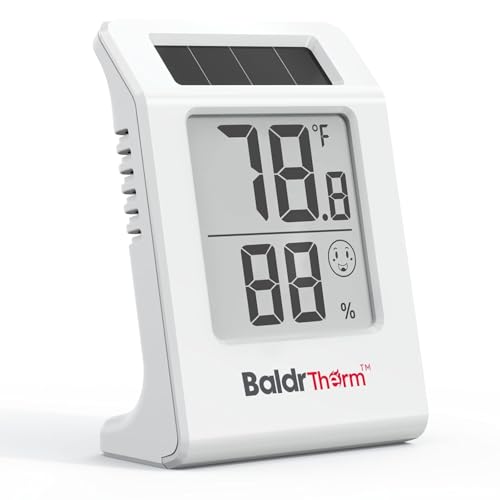
BaldrTherm Digital Thermometer and Humidity Meter, Solar-Powered 2.2" Indoor Temperature Sensor Humidity Monitor, Humidity Gauge for Baby Rooms, Bedrooms, Home, Office, and Wine Cellars, White, 1Pack
- Solar-Powered, No Battery Needed: Powered by sunlight or indoor light
- Highly Responsive & Accurate: Updates every 10 seconds with ±1°F/°C accuracy
- Clear Comfort Indicator: Smiley face shows comfort level at ideal ranges
As an affiliate, we earn on qualifying purchases.
As an affiliate, we earn on qualifying purchases.
Background on Satellite Temperature Estimation Challenges
Estimating PV panel temperatures from space has been difficult due to the mixed land-cover within satellite pixels, the complex geometry of solar arrays, and the low, directional emissivity of PV panels. Traditional methods often resulted in significant errors, limiting remote performance monitoring. The MODIS instrument, with its 1 km resolution, captures mixed signals, complicating direct temperature retrievals. Prior approaches lacked the scene-awareness necessary for precise estimates over large, non-uniform solar farms.
“Our method goes beyond conventional land surface temperature retrievals by accounting for the three-dimensional structure of PV arrays, changes in the apparent panel area with viewing angle, and the unusually low, directional emissivity of PV panels.”
— Kun Yang, corresponding author

ZIBOO FT-2000W Solar Panel Tester MPPT Meter – 2000W Max Power, 150V/35A PV Module Tester for Voc/Isc, Open Circuit Voltage & Short Circuit Current, with Backlight & Data Hold
- Max Power Measurement: Up to 2000W with high accuracy
- Voltage Range: Measures 12-150V Voc
- Current Measurement: Measures up to 35A Isc
As an affiliate, we earn on qualifying purchases.
As an affiliate, we earn on qualifying purchases.
Limitations and Challenges in Winter Conditions
The method performs well during warm seasons, but winter conditions—such as shadows and snow cover—pose significant challenges. These factors can lead to underestimation of panel temperatures, and the team is working on approaches to better account for shaded gaps and snow cover. The accuracy of measurements in winter remains an ongoing area of research.
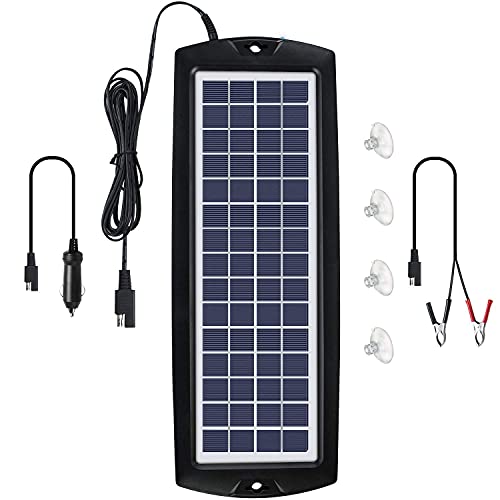
Sunway Solar Solar Car Battery Trickle Charger & Maintainer 12V Solar Panel Power Kit Portable for Car Automotive RV Marine Boat Motorcycle Truck Trailer Tractor Powersports Snowmobile Farm Equipment
- Power Output: Up to 4W solar panel power
- Ease of Use: Simple, easy to install and operate
- Compatibility: Suitable for batteries 20Ah or larger
As an affiliate, we earn on qualifying purchases.
As an affiliate, we earn on qualifying purchases.
Future Developments and Broader Testing Plans
The research team plans to refine their model to better handle winter conditions by incorporating estimates of shaded and snow-covered areas. They also intend to test the method across different climate zones, array configurations, and tracking systems to establish broader applicability. A key goal is to develop a global dataset of satellite-derived PV panel temperatures for research and industry use.
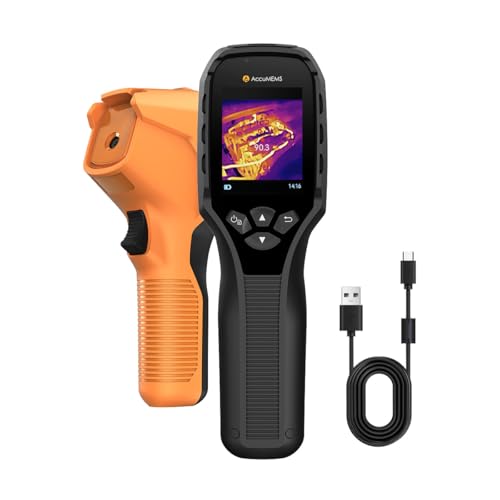
GT14S Thermal Imaging Camera with Edge Enhancement,Infrared Camera with Thermometer Mode, -4°F to 1202°F Range, 25Hz Image Frequency, 14H Runtime, 240g Compact Design
- Dual Mode Inspection: Thermal imaging with spot modes and thermometer
- Real-Time Monitoring: Full-screen thermal imaging for moving targets
- Compact and Lightweight: 240g ergonomic design with non-slip grip
As an affiliate, we earn on qualifying purchases.
As an affiliate, we earn on qualifying purchases.
Key Questions
How does this satellite method improve PV performance monitoring?
It provides more accurate, remotely sensed surface temperature data of PV panels, enabling better performance analysis and fault detection without on-site measurements.
What are the main technical innovations of this model?
The model accounts for the three-dimensional structure of solar arrays, viewing angle effects, and the low, directional emissivity of PV panels, which improves temperature retrieval accuracy from satellite data.
Can this method be applied to all types of solar farms?
While promising, the method currently performs best in warm conditions and for fixed-tilt arrays. Further testing is planned for tracking systems and different climates to confirm broader applicability.
What limitations remain for winter measurements?
Shadows and snow cover complicate temperature retrievals, leading to underestimation. The team is working on methods to better account for these factors in future models.
When will this technology be available for industry use?
The research is still in development, with further validation and refinement needed before commercial or widespread industry deployment can occur.
Source: PV Magazine