TL;DR

Get business pricing on tech for your team
- Business-only prices and quantity discounts
- Tax-exempt purchasing
- Multiple users, one account, clear invoices
UK unemployment among 16- to 24-year-olds was 15.6% in June to August 2026, while vacancies fell to 691,000. Job-posting data shows AI skills appearing in more ads, but the available evidence does not establish that AI is causing youth unemployment or that learning these skills guarantees a job.
The UK’s 16- to 24-year-old unemployment rate was 15.6% in June to August 2026, while employers advertised 691,000 vacancies in July to September, official figures show. The figures come as separate job-posting research finds that AI skills are appearing in more vacancies, raising questions about how young people can compete for entry-level work; they do not show that AI is the cause of rising unemployment.
The Office for National Statistics reported that 715,000 young people were unemployed in June to August, compared with 661,000 a year earlier. The rate was 14.6% a year before and reached 16.4% earlier in 2026, its highest point since late 2014. For all age groups, unemployment was 4.7%. Among 16- to 24-year-olds not in full-time education, the rate was 13.3%.
The ONS also recorded 691,000 open vacancies in July to September, down 37,000, or 5.1%, from a year earlier. Outside the pandemic period, vacancies had not been this low since July to September 2014. Separately, 981,000 young people were not in education, employment or training in April to June, equal to 13.0% of that age group and 30,000 more than a year earlier.
On AI, Indeed’s Hiring Lab said 9.4% of UK job postings mentioned AI at the end of June 2026, a record in its data. Bloomberg reported on 5 November, citing Adzuna data, that AI mentions in entry-level job ads had almost tripled since early 2025. The underlying Adzuna figures were not included in the supplied material, so that specific comparison cannot be independently assessed here.
Could AI skills give young jobseekers an edge? What the evidence says
Youth unemployment is high as vacancies decline and AI mentions grow in job ads. The figures do not show that AI is causing unemployment or that learning AI guarantees a job.
A tighter entry-level market
The ONS reported fewer vacancies year on year while youth unemployment remained elevated.
- 715,000 unemployed in June–August
- 15.6% unemployment rate
- 691,000 open vacancies in July–September
- Down 37,000 from a year earlier
What AI job ads signal
Indeed measured AI mentions in postings, not hiring outcomes or universal job requirements.
Check role requirements
Match learning to the specific jobs you want to apply for.
Clarify expectations
Say whether AI proficiency is essential or preferred.
Skills in the cited benchmark
The source lists practical skills to compare with target job requirements.
Recognize potential risks when using AI.
Give AI tools effective instructions.
Interpret simple AI dashboards.
Use AI to automate everyday work.
Fewer Vacancies, New Skill Signals
The figures point to a difficult entry-level market: youth unemployment is elevated while the total number of vacancies has fallen. In that setting, job ads mentioning AI may influence what applicants choose to learn and what employers expect from junior candidates.
But the posting data measures what employers write in ads, not whether applicants with AI skills are more likely to be hired, earn more or keep their jobs. It also does not show that AI mentions represent a requirement for every role. For young jobseekers, the practical signal is to read the specific requirements of jobs they want and build relevant skills, while recognizing that training alone cannot resolve a shortage of openings.
Products Worth Considering

Sonos Play Portable Wi-Fi and Bluetooth Speaker, White
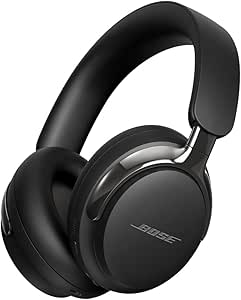
Bose QuietComfort Ultra Headphones (2nd Gen), Wireless Noise-Cancelling Over-Ear Headphones, Black

Anker SOLIX C1000 Gen 2 Portable Power Station, 1,024Wh
As an affiliate, we earn on qualifying purchases.
What the Employment Figures Measure
The ONS defines an unemployed person as someone without work who has looked for a job in the previous four weeks and could start within two weeks. Its unemployment rate for young people is the share of those who are working or looking for work, so it includes students seeking jobs. The survey’s estimate for young people can fluctuate because the group is relatively small; the ONS cautions against reading too much into a single quarter.
Indeed’s figure is a measure of AI mentions in job postings, not a count of all jobs requiring AI skills. The source material also cites a government independent review, which said it would be premature to treat AI as a major cause of rising numbers of young people out of work, while warning that it would be mistaken to ignore AI. That distinction matters: the employment figures describe the labor market, while the postings offer one indication of changing employer language.
What AI Mentions Can Tell Us
The available figures do not establish whether AI adoption has reduced entry-level hiring or whether applicants with AI skills have an advantage. The supplied account does not provide the underlying Adzuna data behind the reported near-tripling, including the number of postings, job categories or comparison method. Indeed’s record share also does not reveal how many employers require AI skills or what level of proficiency they expect.
The ONS warns that youth unemployment estimates are volatile from quarter to quarter. The longer-term movement is more informative than any single release, but these statistics alone cannot explain why unemployment has risen. It remains unclear how much of the change reflects employer demand, costs, education-to-work transitions, AI or other factors.
Signals to Watch in Future Releases
Upcoming ONS labor-market releases will show whether youth unemployment and vacancies continue to move in the same direction. Further detail from job boards could clarify which entry-level occupations mention AI and how those requirements change over time. Evidence connecting skills to hiring outcomes would be needed to determine whether learning AI tools improves young applicants’ chances.
For now, the source material points to four practical skills in an official benchmark: understanding AI risks, writing prompts, reading simple AI dashboards and automating routine tasks. It says these can be learned for free, but does not identify a particular course or show that employers accept one credential over another. Young people can compare these skills with the requirements in roles they are applying for; employers can clarify whether AI proficiency is essential or simply preferred.
Key Questions
How high was UK youth unemployment in summer 2026?
The ONS reported a 15.6% unemployment rate for 16- to 24-year-olds in June to August 2026. It counted 715,000 unemployed people in that age group.
Are AI skills now required for every entry-level job?
The available evidence does not show that. Indeed reported AI in 9.4% of UK job postings at the end of June 2026, but that is a share mentioning AI, not the share requiring it.
Is AI causing youth unemployment to rise?
The supplied material does not establish that. A government independent review said it would be premature to treat AI as a major cause, while arguing that its possible effects should not be ignored.
What AI skills does the cited benchmark list?
It lists understanding AI risks, writing effective prompts, reading simple AI dashboards and automating routine tasks. The source says these skills are free to learn but does not provide evidence that they guarantee employment.
Source: Thorsten Meyer AI