
TL;DR

Get business pricing on tech for your team
- Business-only prices and quantity discounts
- Tax-exempt purchasing
- Multiple users, one account, clear invoices
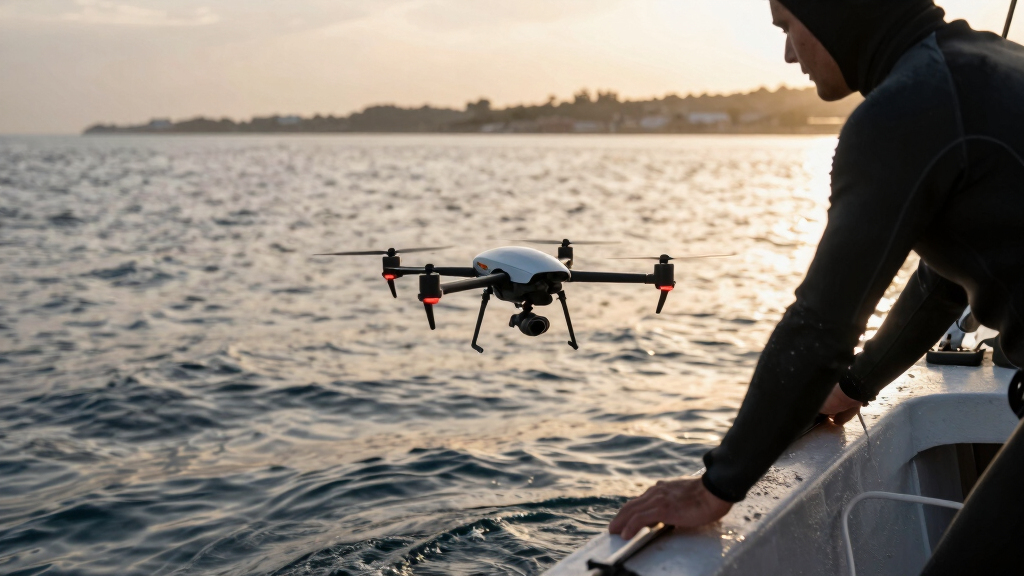
Two US Army helicopter crew members were rescued after their aircraft crashed near Oman, with a US Navy sea drone locating and retrieving them. The rescue highlights the growing role of unmanned systems in military operations in the Middle East.
Two US Army helicopter crew members were rescued after their AH-64 Apache crashed near the coast of Oman, with their recovery carried out by a US Navy sea drone, US officials confirmed. This operation is the first publicly confirmed use of an unmanned vessel in such a rescue, underscoring the expanding role of autonomous systems in military operations in the region.
The helicopter went down Monday afternoon in regional waters near the Strait of Hormuz. US Central Command (Centcom) announced that the two soldiers were rescued approximately two hours later, at 19:33 EDT (23:33 GMT), and are in stable condition. The rescue was conducted by a US Navy Corsair unmanned surface vessel operated by Task Force 59, a Bahrain-based unit focused on deploying unmanned systems to enhance maritime security in the Middle East.
According to US Navy Captain Tim Hawkins, the Corsair vessel, a 24-foot autonomous boat capable of speeds up to 35 knots and carrying up to 1,000 pounds, located the crew members after they had been in the water for about two hours. The operation marks a significant milestone for the US military, which awarded a $392 million contract to the vessel’s manufacturer, Saronic Technologies, in December 2025, to expand its deployment in the region. The rescue effort involved coordination among US Naval Forces Central Command, the 82nd Airborne Division, and other military units, including the US Air Force and Navy.
Implications of Autonomous Rescue Operations in the Middle East
This rescue demonstrates the increasing reliance on unmanned systems in military operations, particularly in high-risk environments like the Strait of Hormuz. The use of a sea drone to locate and recover personnel highlights advancements in autonomous maritime technology, which could reshape future rescue and combat strategies. It also signals a shift toward integrating unmanned vessels into regular military deployments to improve safety and operational efficiency in volatile regions.
Products Worth Considering

Samsung Galaxy Tab A11 8.7-Inch Wi-Fi Tablet, 64GB, 4GB RAM, Silver

Jackery Solar Generator 1000 V2 with 200W Solar Panel, 1070Wh

Sony WH-1000XM5 Premium Noise Cancelling Wireless Headphones, Midnight Blue
As an affiliate, we earn on qualifying purchases.
Background on US Military Operations in the Strait of Hormuz
The Strait of Hormuz is a strategic waterway through which a significant portion of the world’s oil passes, making it a focal point for regional tensions and military activity. The US military has maintained a presence in the region for years, often conducting patrols and surveillance missions to ensure maritime security. In recent months, tensions with Iran have escalated, with accusations from US officials that Iran has targeted US military assets in the area. The incident involving the helicopter crash and subsequent rescue underscores the ongoing risks faced by US forces operating in this sensitive zone.
“The two soldiers were safely rescued within approximately two hours and are in stable condition.”
— US Central Command (Centcom)
Unconfirmed Details About the Helicopter Crash and Iran’s Role
It is not yet clear whether Iran was responsible for the helicopter’s downing, as US officials have accused Iran but have not provided definitive evidence publicly. The exact cause of the crash remains under investigation, and further details about the incident and any potential escalation are still emerging.
Next Steps in US Military Operations and Investigations
US authorities are expected to continue investigations into the helicopter crash and assess the effectiveness of unmanned rescue systems. There may also be further military deployments or diplomatic actions in response to regional tensions. Updates on the cause of the incident and any related developments are anticipated in the coming days.
Key Questions
How did the sea drone locate the helicopter crew?
The Corsair unmanned vessel used its sensors and autonomous navigation capabilities to search the waters near the crash site, ultimately locating the crew members after approximately two hours.
Is this the first time a drone has been used in a rescue operation?
This is the first publicly confirmed instance of the US military deploying an unmanned surface vessel for personnel rescue in a combat or operational setting, marking a significant milestone for autonomous military systems.
What is the significance of this rescue for US military strategy?
The successful use of unmanned vessels in rescue efforts demonstrates their potential to enhance safety and operational efficiency, potentially leading to wider adoption in future military and humanitarian missions.
What caused the helicopter to crash?
US officials have not publicly disclosed the cause of the crash. Iran has accused the US of provocation, but no definitive evidence has been presented publicly to confirm the cause or attribution.
Will there be further military actions in the region?
While there are no immediate announcements, US officials have indicated ongoing vigilance and potential increased military presence in response to regional tensions and threats.
Source: Google Trends