
📊 Full opportunity report: What Can Photos Reveal About Eczema And Psoriasis Flare Patterns? on IdeaNavigator AI — validation score, market gap, and execution plan.

Get business pricing on tech for your team
- Business-only prices and quantity discounts
- Tax-exempt purchasing
- Multiple users, one account, clear invoices
TL;DR
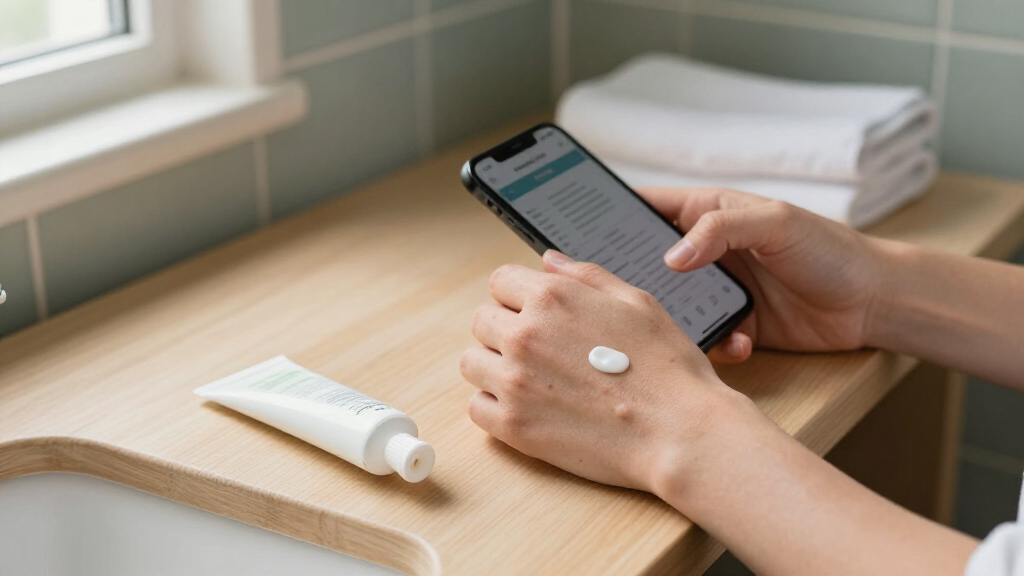
IdeaNavigator AI describes a proposed weekly photo journal for adults with eczema or psoriasis, combining dated skin images with notes about possible triggers. The workflow is an idea to test, not a proven clinical tool; the proposal suggests a pilot asking 15 people with eczema to log photos for a month and seeking dermatologist feedback.
IdeaNavigator AI’s proposal outlines a weekly photo-journal workflow for adults with eczema or psoriasis to document flare patterns between dermatology appointments. The idea pairs dated, consistently framed skin photos with brief trigger notes, but it is a product concept rather than a tested medical intervention; the proposal reports no patient-trial results or dermatologist evaluations.
In its proposal, IdeaNavigator AI describes a minimum version that would prompt users to take a weekly photo under consistent framing and lighting, then attach a note about a possible trigger. Entries would form a dated, side-by-side timeline, intended to make changes in a skin condition easier to review than relying only on recollection during an appointment.
IdeaNavigator AI frames the concept around a documentation problem: patients may have difficulty recalling when a flare began, what may have preceded it, and whether treatment appears to be helping. The proposal does not establish how often this happens, whether photographs improve clinical decisions, or whether clinicians would find the records useful.
For validation, IdeaNavigator AI suggests recruiting 15 people with eczema to record photos weekly for one month. The proposed test would then ask their dermatologists whether the timeline changed the visit and assess participants’ willingness to pay. The suggested business model is a subscription for features such as unlimited history, image exports and a visit-preparation PDF. The proposal reports no completed test and gives no pricing.
Photos Could Support Visit Discussions
A dated image sequence could give patients and clinicians a more concrete record to discuss, particularly when a flare has changed by the time of an appointment. Consistent images may make visual comparison easier than photographs taken under different conditions, while trigger notes could preserve what a patient remembers about the days around a change.
That potential should not be confused with proof that the tool can identify a cause or measure treatment response. A photograph captures visible skin at a particular time; it does not by itself establish why a flare occurred or replace a clinician’s assessment. IdeaNavigator AI’s suggested pilot is therefore a test of usefulness in appointments and patient interest, not evidence of clinical effectiveness.
For readers managing a chronic skin condition, the practical question is whether routine documentation is convenient and informative enough to support care. The proposed workflow also raises privacy and reliability considerations: skin images are sensitive, and lighting, camera distance, body position and image storage can affect what a timeline shows. IdeaNavigator AI’s concept does not resolve those details.
As an affiliate, we earn on qualifying purchases.
A Proposed Tool for Between-Visit Tracking
IdeaNavigator AI presents the idea as a form of chronic skin-condition self-management, focused on adults who want to track symptoms between dermatology visits. Its proposal points to phone cameras and cloud storage as tools that may make image collection easier, and notes that teledermatology visits can involve patients sharing their own progress images. These are the proposal’s rationale, not evidence that all dermatologists request photos or that patients can consistently capture comparable images.
Unlike a general symptom diary, the proposed product centers on a visual timeline with fixed capture prompts. The suggested sequence—weekly images, brief notes, then review before or during an appointment—would need to be tested for usability and whether it adds information beyond existing patient records or informal photos.
IdeaNavigator AI’s plan begins with eczema rather than testing both conditions at once: it proposes a 15-person, one-month pilot among eczema patients. Although the product is framed for eczema and psoriasis, the proposal does not specify a psoriasis cohort, explain how the workflow might differ between conditions, or report any clinical validation.
As an affiliate, we earn on qualifying purchases.
Clinical Value Still Needs Testing
IdeaNavigator AI reports no study findings in its proposal. It does not report that patients have used the journal, that dermatologists have reviewed its timelines, or that the tool changed treatment or appointment outcomes. The suggested pilot is a validation plan, not a completed trial.
Important practical details also remain open: how images would be stored and protected, whether users could control or delete their data, how the app would handle missed weekly entries, and how it would avoid presenting photographs as a diagnosis. The proposal does not describe a clinical review process, regulatory status, subscription price or evidence that users would pay.
It is also unclear whether one month and 15 participants would provide enough information to judge sustained use or usefulness across different skin tones, affected body areas and disease severity. The proposed test focuses on eczema; its results, if conducted, would not automatically establish value for psoriasis.
skin condition photo documentation tools
As an affiliate, we earn on qualifying purchases.
As an affiliate, we earn on qualifying purchases.
A Small Pilot Is the Proposed Test
IdeaNavigator AI’s proposed next step is to recruit 15 adults with eczema and have them submit weekly photos for one month. The evaluation would ask participating dermatologists whether the timeline changed the visit and gauge patients’ willingness to pay for a fuller product.
The proposal provides no recruitment date, pilot results or launch timeline. Until those details emerge, the photo journal remains a proposed workflow. Any follow-up assessment would need to report how consistently participants logged images, what clinicians found useful, and how privacy and data handling were addressed.
Source: IdeaNavigator AI proposal
dermatology patient photo organizer
As an affiliate, we earn on qualifying purchases.
As an affiliate, we earn on qualifying purchases.
Key Questions
What is the proposed photo journal?
According to IdeaNavigator AI’s proposal, it is a tool for adults with eczema or psoriasis that would prompt weekly, consistently framed skin photos and short notes about possible triggers, then organize them into a dated timeline.
Has the journal been shown to improve treatment?
No results are reported in the IdeaNavigator AI proposal. It has not established that photo timelines improve diagnosis, treatment decisions or health outcomes.
What test has been suggested?
IdeaNavigator AI proposes a one-month pilot with 15 people with eczema, followed by questions for patients and their dermatologists about whether the timeline affected the visit.
Can photos identify what triggered a flare?
Photos can document visible changes over time, but they cannot by themselves establish a flare’s cause. The proposed notes would record possible triggers as patient observations, not confirmed explanations.
Is the product available or priced?
IdeaNavigator AI describes a product concept, not a confirmed launch. Its proposal suggests a subscription for expanded history, exports and a visit-preparation PDF, but gives no price or release date.
Source: IdeaNavigator AI
Halloween Picks
halloween
As an affiliate, we earn on qualifying purchases.