
TL;DR
Claude Fable was temporarily accessible and then removed by Anthropic due to US government security orders. This event reveals vulnerabilities in AI access and raises questions about AI sovereignty and national security strategies.
Anthropic has temporarily removed access to its AI model Claude Fable following a directive from the US government, citing national security concerns. This action highlights the current state of AI access policies and raises questions about AI sovereignty amid geopolitical tensions.

Get business pricing on tech for your team
- Business-only prices and quantity discounts
- Tax-exempt purchasing
- Multiple users, one account, clear invoices
On April 2024, Anthropic, the AI company behind Claude, made Fable inaccessible to all users after reports that the US government had ordered a shutdown for security reasons. Amazon CEO Andy Jassy reported to the White House that US authorities found a way to jailbreak Fable, prompting a government response. As a result, Anthropic removed Fable worldwide to prevent access by foreign nationals. The event follows recent US policies that have increased scrutiny and control over AI models, including a ban on Mythos and Fable due to national security concerns.
This incident illustrates the current instability in US AI policy, with abrupt access restrictions and uncertain regulatory environments. Experts like AI researcher Gary Marcus have noted that such unpredictable actions could influence other countries to pursue independent AI development, potentially reducing reliance on US technology and affecting global AI cooperation.
Implications for AI Policy and Global Tech Independence
This event highlights the risks associated with reliance on US-based AI models, which can be restricted or shut down unexpectedly. It emphasizes the importance for nations and organizations to consider developing sovereign AI infrastructure to maintain control over critical technologies. The move also reflects broader geopolitical considerations in AI development and the importance of strategic independence.
Products Worth Considering

Kindle Paperwhite 16GB (2024 Model) – Graphite
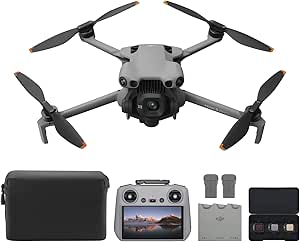
DJI Mini 5 Pro Fly More Combo Plus with DJI RC 2

Samsung Odyssey G7 G75F 40-Inch WUHD Curved Gaming Monitor
As an affiliate, we earn on qualifying purchases.
Rising Geopolitical Tensions and AI Policy Volatility
The US has increasingly regarded AI as a strategic resource, with recent policies shifting toward more active regulation, including model reviews and restrictions such as the bans on Fable and Mythos. The incident with Fable follows statements from US officials emphasizing national security concerns, amid ongoing US-China AI competition and efforts by other countries like France and South Korea to develop independent AI systems. These developments are part of a broader trend of geopolitical tensions influencing AI policy and access.
“The decision to shut down Fable demonstrates the challenges of maintaining stable access to AI models under evolving security policies. It underscores the importance for countries to consider developing their own AI infrastructure to ensure continuity.”
— Gary Marcus, AI researcher
Unclear Future of US AI Policy and Global AI Development
The duration of Fable’s inaccessibility and the likelihood of permanent restrictions remain uncertain. The broader implications for US-led AI regulation and international cooperation are still evolving, with ongoing debates about balancing security, innovation, and openness in AI governance.
Next Steps for AI Sovereignty and Policy Stability
Policymakers, industry leaders, and international partners are expected to continue discussions on establishing clear and stable frameworks for AI regulation. Countries may accelerate efforts to develop sovereign AI systems to reduce dependence on US models. Monitoring upcoming policy developments and international collaborations will be essential for understanding the future of AI sovereignty.
Key Questions
What is AI sovereignty and why is it important?
AI sovereignty refers to a nation’s ability to develop, control, and regulate its own artificial intelligence systems independently of foreign influence. It is relevant for maintaining security, cultural integrity, and technological independence, especially in the context of geopolitical tensions.
Could the US restrict access to other AI models in the future?
Recent actions suggest that the US government may impose restrictions on AI models for security reasons, which could impact global access and reliance on US-based AI technology.
How might other countries respond to US AI policy instability?
Countries such as France and South Korea are investing in independent AI infrastructure, aiming to reduce reliance on US and Chinese models, and may expedite these efforts in response to policy uncertainties.
What are the risks of relying on foreign AI models?
Dependence on foreign AI models can pose vulnerabilities if access is restricted or cut off due to geopolitical conflicts, raising concerns over security, control, and alignment with national interests.
Source: Inquirer — Technology