TL;DR

Get business pricing on tech for your team
- Business-only prices and quantity discounts
- Tax-exempt purchasing
- Multiple users, one account, clear invoices
Thorsten Meyer AI has introduced VigilSAR Benchmark, a public, in-development leaderboard for defense-relevant AI model evaluation. The benchmark’s central claim is that there is no single best model because rankings change depending on whether the buyer values raw capability, air-gapped deployment, compliance, reliability, or efficiency.
Thorsten Meyer AI has introduced VigilSAR Benchmark, a public, in-development leaderboard designed to evaluate whether AI models are deployable for defense-relevant settings, not only whether they score highly on capability tests. The project matters because it challenges a common leaderboard habit: treating the highest-scoring model as the best choice for every buyer.
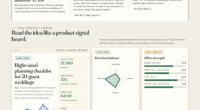
The benchmark rates models across five axes: Capability, Reliability, Robustness, Safety & Compliance, and Efficiency & Deployability. It then re-ranks the same models based on the profile of the buyer, including cloud-first users, sovereign edge deployments, and compliance-first organizations.
According to the source material, the benchmark is designed around the premise that a model can lead in raw capability while losing for a buyer that needs air-gapped operation, local hardware deployment, EU AI Act alignment, or GDPR fit. In the illustrative ranking, a frontier cloud model leads for maximum capability, a sovereign model leads when air-gapped deployment is required, and a compliant model leads when regulatory fit is the main requirement.
The source states that VigilSAR Benchmark measures defense-relevant competence, including domain knowledge, reliability, compliance, and deployability. It also says the benchmark explicitly excludes weaponeering, targeting, CBRN, and exploit-generation tasks. The project is described as early-stage, with methodology and results expected to change.
VigilSAR Benchmark — there is no best model
Capability leaderboards measure who’s smartest. This one scores who’s deployable — across five axes — then re-ranks by who’s actually asking.
Independent commentary, produced with AI assistance under human editorial oversight. The views are the author’s own and may change. VigilSAR Benchmark is an early-stage, in-development public benchmark; methodology, scope and results will evolve and are not a certification, authority, or guarantee of any model’s fitness, safety, or compliance. It scores defense-relevant competence and explicitly excludes weaponeering, targeting, CBRN, and exploit-generation tasks. Benchmark results are indicative, can be gamed or in error, and require independent verification; nothing here endorses any model. Model and company names are trademarks of their respective owners; mention does not imply endorsement.
Deployment Replaces Raw Ranking
The benchmark’s main point is that AI procurement decisions are often shaped by constraints that broad capability leaderboards do not measure. For regulated, sovereign, or defense-adjacent buyers, the ability to run a model on controlled infrastructure may matter more than a higher score on a general reasoning test.
That framing is relevant for readers who follow AI adoption in government, security, enterprise, and regulated industries. If a model cannot be used under an organization’s data-handling rules, compliance obligations, or infrastructure limits, a higher capability score may have limited practical value.
Thorsten Meyer AI presents VigilSAR Benchmark as a provider-agnostic tool for comparing models by use case. That claim remains a project thesis rather than an independent finding until the benchmark publishes stable methodology, repeatable results, and outside validation.
As an affiliate, we earn on qualifying purchases.
Leaderboards Face Buyer Constraints
AI model leaderboards commonly rank systems by performance on task batteries that test reasoning, coding, knowledge, multimodal ability, or other capabilities. Those scores can help compare technical strength, but they often do not answer whether a model can be deployed under specific operational rules.
The VigilSAR material frames this gap around questions such as whether a model can run air-gapped, whether data leaves the organization, whether deployment can happen on owned hardware, and whether the model fits EU AI Act and GDPR requirements. The benchmark’s defense and intelligence focus places those questions at the center of model selection.
The source describes the benchmark as part of the Thorsten Meyer AI operator portfolio and says it completes the portfolio’s Defense / Intel family. The benchmark is listed at vigilsar.com/benchmark, according to the supplied material.
As an affiliate, we earn on qualifying purchases.
Methodology Still Needs Proof
Several details remain unclear from the supplied material. It does not provide final scoring formulas, test datasets, model lists, independent audit results, or a fixed publication schedule for benchmark updates.
The source also cautions that the benchmark is not a certification, authority, or guarantee of any model’s fitness, safety, or compliance. It says results are indicative, may contain errors, and require independent verification.
Because the benchmark is early and still changing, its central framework can be evaluated as an announced methodology and product direction. Its rankings should not yet be treated as settled evidence that one model is better suited than another for a real deployment.
As an affiliate, we earn on qualifying purchases.
Public Results Must Mature
The next test for VigilSAR Benchmark will be whether it publishes transparent methods, stable scoring criteria, and repeatable model evaluations. Buyers and technical reviewers will need enough detail to understand how each score is produced and where the benchmark’s limits sit.
Future updates are expected to refine the methodology, scope, and results. Until then, the benchmark is best read as an early public framework for comparing deployment fit across model types, not as a final authority on AI model selection.
As an affiliate, we earn on qualifying purchases.
Key Questions
What is VigilSAR Benchmark?
VigilSAR Benchmark is a public, early-stage AI model leaderboard from Thorsten Meyer AI. It is designed to score models on deployment-related factors as well as capability.
Why does it say there is no best model?
The benchmark’s thesis is that the best model depends on the buyer’s constraints. A cloud-first team may choose a different model than a sovereign buyer that requires air-gapped local deployment or a regulated buyer focused on compliance.
What does the benchmark measure?
It measures five axes: Capability, Reliability, Robustness, Safety & Compliance, and Efficiency & Deployability. The source says it applies these across eight knowledge domains.
Does it test weapons or offensive security tasks?
No, according to the source material. The benchmark explicitly excludes weaponeering, targeting, CBRN, and exploit-generation tasks.
Are the results final?
No. The source describes VigilSAR Benchmark as in development and says its methodology, scope, and results will change. Its findings require independent verification.
Source: Thorsten Meyer AI
Fall Picks
fall essentials
As an affiliate, we earn on qualifying purchases.