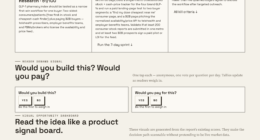
📊 Full opportunity report: Pentagon AI Goes Explicit: The Frontier Labs Move Inside the Classified Stack on ThorstenMeyerAI.com — validation score, market gap, and execution plan.

Get business pricing on tech for your team
- Business-only prices and quantity discounts
- Tax-exempt purchasing
- Multiple users, one account, clear invoices
TL;DR
The Pentagon has formalized contracts with leading AI companies to deploy advanced AI models within classified environments. This move marks a significant shift toward AI-driven military decision-making and operational speed, raising strategic and ethical questions.
The Pentagon has officially integrated advanced AI systems into its classified networks, marking a major shift in military technology strategy. The department announced agreements with eight leading AI firms, including Google, Microsoft, Amazon Web Services, Nvidia, OpenAI, Reflection, SpaceX, and Oracle, to deploy AI capabilities at Impact Level 6 and 7 environments. This development underscores the military’s move toward embedding AI into operational decision-making, data analysis, and logistics, making AI a core part of its warfighting infrastructure.
The Pentagon’s May 1 announcement confirms that these agreements aim to enable AI models to operate securely within classified environments, supporting functions such as intelligence synthesis, situational awareness, and rapid decision-making. The department’s AI platform, GenAI.mil, has reportedly been used by over 1.3 million personnel in five months, generating millions of prompts and hundreds of thousands of AI agents. This scale indicates that AI is no longer confined to experimental or narrow-targeting tools but is integral to routine military operations, including logistics, surveillance analysis, and threat identification.
Reuters reports that the Pentagon is also expediting vendor onboarding processes, reducing the time for AI integration into top-secret environments from over 18 months to less than three months. The focus is on achieving decision superiority by compressing time across multiple domains—faster intelligence analysis, planning, logistics, and target identification—potentially impacting both routine administration and wartime escalation. This represents a significant evolution from previous restrictions and debates surrounding military AI use, including the controversy over Google’s Project Maven in 2018.
Implications of AI Embedding in Military Operations
This move signifies a fundamental shift in military technology, where AI models become embedded in the core operational infrastructure. It enhances the U.S. military’s ability to process vast amounts of data rapidly, potentially improving decision speed and accuracy. However, it also raises ethical and strategic concerns about autonomous decision-making, escalation risks, and the potential for AI to shape combat environments in unpredictable ways. The integration of commercial AI firms into classified systems indicates a new era of public-private collaboration in national security, with implications for oversight, transparency, and international norms.
classified environment secure AI servers
As an affiliate, we earn on qualifying purchases.
As an affiliate, we earn on qualifying purchases.
Background on Military AI and Industry Shifts
The Pentagon’s focus on AI has intensified since the 2018 controversy over Google’s Project Maven, which faced internal protests over ethical concerns related to drone imagery analysis. Google subsequently revised its AI principles in 2025, allowing more flexible military engagement under contractual constraints. Meanwhile, other firms like Anthropic have publicly committed to limiting certain uses, such as autonomous weapons and domestic surveillance, although disagreements persist over contractual scope and ethical boundaries.
In April 2026, Reuters reported Google’s classified agreement with the Pentagon, which permits the use of its AI models for lawful government purposes, sparking employee backlash. The industry landscape has shifted from debates over whether to work with the military to how to do so responsibly. The Pentagon’s recent move to embed AI into classified networks is the latest step in this ongoing evolution, emphasizing operational speed and decision superiority as strategic priorities.
“This initiative is about making AI an integral part of our operational environment to enhance decision-making and operational readiness.”
— Pentagon spokesperson
“The shift from ethical restrictions to operational integration reflects how the industry’s stance on military AI has evolved over recent years.”
— Former Google employee
military-grade AI data analysis tools
As an affiliate, we earn on qualifying purchases.
As an affiliate, we earn on qualifying purchases.
Unresolved Ethical and Operational Risks
It is still unclear how these AI systems will be monitored for compliance with ethical standards once deployed within classified environments. Questions remain about the robustness of safeguards against autonomous escalation and the extent of human oversight, especially in high-stakes scenarios. The legal and normative frameworks governing AI use in war are also lagging behind technological developments, creating ambiguity about lawful and ethical boundaries.
AI decision support systems for defense
As an affiliate, we earn on qualifying purchases.
As an affiliate, we earn on qualifying purchases.
Next Steps in Military AI Deployment and Oversight
The Pentagon is expected to continue rolling out AI capabilities across more classified networks, with ongoing assessments of operational effectiveness and risks. Oversight mechanisms, both internal and external, are likely to evolve as the technology matures. Public and congressional scrutiny may increase, especially regarding ethical safeguards, escalation potential, and transparency about AI’s role in decision-making processes. Further industry-government agreements are anticipated as the AI-driven transformation accelerates.
As an affiliate, we earn on qualifying purchases.
Key Questions
What types of AI models are being integrated into classified military systems?
According to the Pentagon, the models include large language models and other advanced AI systems capable of processing and synthesizing large data sets for situational awareness, decision support, and operational planning, all within Impact Level 6 and 7 environments.
Are there ethical concerns about deploying AI in military operations?
Yes, concerns include autonomous escalation, decision transparency, and the potential for AI to influence lethal actions. While some firms support restrictions, the Pentagon’s move toward embedded AI raises ongoing debates about oversight and ethical safeguards.
Will this lead to autonomous weapons systems?
The Pentagon emphasizes human oversight and lawful use, but the integration of AI into decision environments raises questions about the future development of autonomous weapons, which remains a contentious issue.
How does this change the relationship between private AI firms and the military?
The shift indicates a move toward closer collaboration, with private firms providing embedded AI capabilities under contractual and technical constraints, moving beyond experimental projects to operational deployment in classified settings.
What are the risks of embedding commercial AI into classified military networks?
Risks include potential vulnerabilities, ethical dilemmas, escalation in conflict, and challenges in oversight and accountability once AI systems operate within secret environments.
Source: ThorstenMeyerAI.com
Fall Picks
fall essentials
As an affiliate, we earn on qualifying purchases.