📊 Full opportunity report: What Do GLP-1 Medications Cost At Pharmacies And Direct Channels? on IdeaNavigator AI — validation score, market gap, and execution plan.

Get business pricing on tech for your team
- Business-only prices and quantity discounts
- Tax-exempt purchasing
- Multiple users, one account, clear invoices
TL;DR
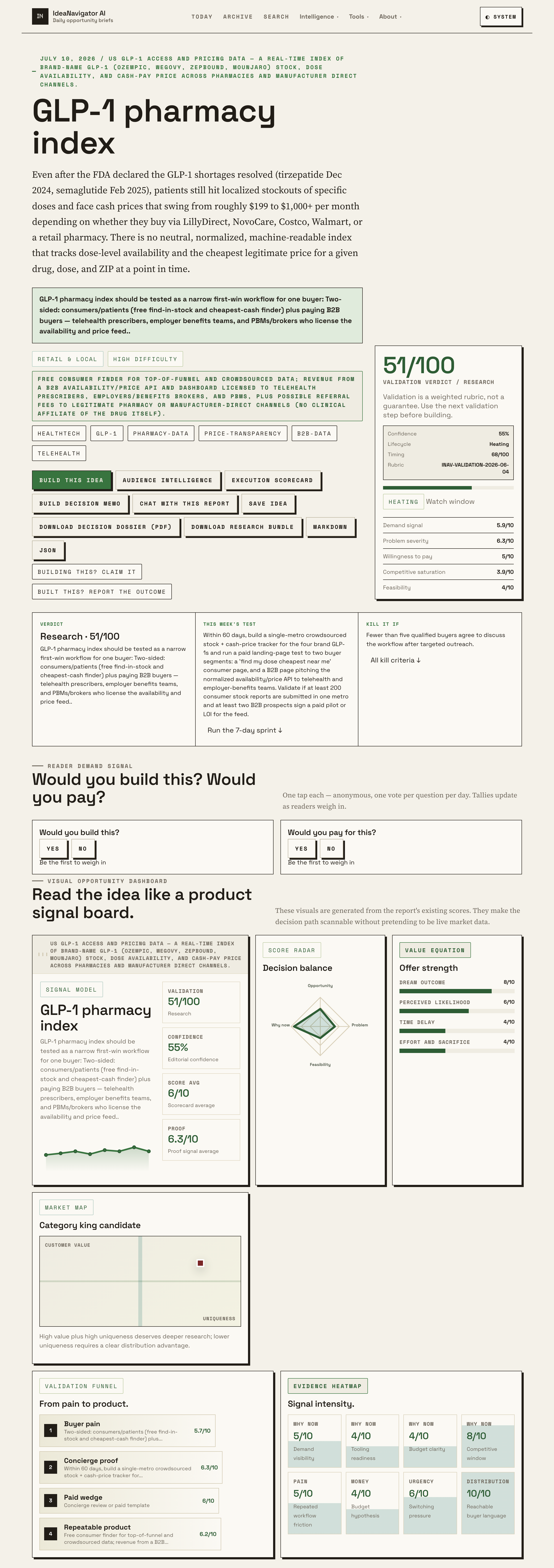
Brand GLP-1 cash prices vary from roughly $199 to more than $1,000 per month depending on whether patients buy through LillyDirect, NovoCare, Costco, Walmart or retail pharmacies, with localized dose-level stockouts persisting despite FDA shortage resolutions. No neutral index currently normalizes availability and price by drug, dose and ZIP code.
Cash prices for brand GLP-1 medications now swing from roughly $199 to more than $1,000 per month depending on where patients buy, even though the FDA declared the GLP-1 shortages resolved — tirzepatide in December 2024 and semaglutide in February 2025 — according to a market analysis from IdeaNavigator AI. The analysis finds that patients still encounter localized stockouts of specific doses, and that no neutral, machine-readable index tracks dose-level availability and the cheapest legitimate cash price for a given drug, dose and ZIP code.
The four brand GLP-1s at issue are Ozempic, Wegovy, Zepbound and Mounjaro. The price spread depends heavily on the purchasing channel: LillyDirect and NovoCare, the manufacturer-run direct cash-pay channels, compete alongside Costco and Walmart cash programs, traditional retail pharmacies, and the TrumpRx portal launched in February 2026. A patient buying the same drug and dose can face dramatically different out-of-pocket costs depending on which of these channels they use.
The analysis characterizes the market as having shifted from a shortage problem to a fragmentation problem. Three developments converged: brand GLP-1s came off the FDA shortage list during 2024 and 2025; compounding deadlines forced compounders out of the market; and manufacturers simultaneously launched competing direct cash-pay channels. The result is a sprawl of prices and dose-level supply gaps that no single source normalizes.
On the demand side, employers report that GLP-1s now account for roughly 20% of pharmacy spend, according to the analysis, creating pressure for cost-steering data that benefits teams and pharmacy benefit managers currently lack. A proposed validation plan outlined in the analysis calls for a single-metro crowdsourced stock and cash-price tracker, with success defined as at least 200 consumer stock reports in one metro and at least two B2B prospects signing a paid pilot or letter of intent within 60 days.
Why Price Fragmentation Hits Patients and Employers
For patients paying cash, the absence of a normalized price index means the difference between roughly $199 and $1,000+ per month can come down to which website or pharmacy counter they happen to check first. Dose-level stockouts compound the problem: a patient stabilized on a specific dose may find that dose unavailable locally even when the drug itself is technically no longer in shortage.
For employers, benefits brokers and telehealth prescribers, the fragmentation creates an operational gap. With GLP-1s reported at roughly one-fifth of pharmacy spend, benefits teams need current, normalized data on where a prescribed dose is in stock and what it costs to steer members effectively. The analysis argues this buyer segment would pay for an availability and price feed, making the data gap a commercial opportunity as well as a patient-access issue.
From FDA Shortage List to Competing Cash Channels
The FDA resolved the tirzepatide shortage in December 2024 and the semaglutide shortage in February 2025. Those resolutions triggered the end of mass compounding of GLP-1 copies, as compounders lost the shortage basis that allowed them to produce cheaper alternatives.
In parallel, manufacturers built out direct-to-patient cash-pay channels. LillyDirect and NovoCare now sell directly to consumers, while Costco and Walmart run their own cash programs. The TrumpRx portal added another layer in February 2026. Each channel prices independently, which is what produced the current $199-to-$1,000+ monthly spread the analysis documents.
Unverified Figures and Open Data Questions
The $199 to $1,000+ price range and the 20% employer pharmacy-spend figure come from the IdeaNavigator AI analysis and are not independently verified against insurer claims data or manufacturer price sheets. Actual cash prices at any given pharmacy can change weekly and vary by dose, quantity and location.
It is not yet clear whether crowdsourced stock reports can achieve reliable accuracy at dose level, or whether manufacturer direct channels will permit their prices to be indexed. The proposed validation thresholds — 200 consumer reports in one metro and two signed B2B pilots within 60 days — are targets, not results. No such index has been built or tested as of this analysis.
Testing the Index Idea Within 60 Days
The analysis proposes a 60-day validation: build a single-metro crowdsourced stock and cash-price tracker for the four brand GLP-1s, run a paid landing-page test aimed at both a consumer “find my dose cheapest near me” page and a B2B page pitching a normalized availability-and-price API to telehealth and employer-benefits teams. A free consumer finder would seed crowdsourced data, with revenue expected from B2B API licensing and possible referral fees to legitimate pharmacy channels.
Whether any builder executes this plan, and whether prices across LillyDirect, NovoCare, Costco, Walmart and retail pharmacies converge or diverge further as competition intensifies, will determine whether the fragmentation gap closes on its own or becomes a durable data business.
Source: IdeaNavigator AI
Key Questions
How much do GLP-1 medications cost without insurance?
Cash prices range from roughly $199 to more than $1,000 per month depending on the channel, according to the IdeaNavigator AI analysis. Manufacturer direct channels, Costco and Walmart cash programs, and retail pharmacies each price independently.
Are GLP-1s still in shortage?
No. The FDA declared the tirzepatide shortage resolved in December 2024 and semaglutide in February 2025. However, localized stockouts of specific doses still occur, per the analysis.
What are LillyDirect and NovoCare?
They are manufacturer-run direct cash-pay channels — LillyDirect for Eli Lilly products such as Zepbound and Mounjaro, NovoCare for Novo Nordisk products such as Ozempic and Wegovy — that sell to consumers outside traditional insurance.
Why did cheaper compounded GLP-1s disappear?
Compounding of GLP-1 copies was permitted during the FDA-declared shortages. Once those shortages were resolved in 2024 and 2025, compounding deadlines forced compounders out of the market.
Is there a way to compare GLP-1 prices and availability by dose and location?
Currently no neutral, normalized index exists for dose-level availability and cheapest cash price by drug, dose and ZIP code, according to the analysis. A crowdsourced tracker and B2B price feed have been proposed but not yet built or validated.
Source: IdeaNavigator AI
Fall Picks
fall essentials
As an affiliate, we earn on qualifying purchases.