
TL;DR

Get business pricing on tech for your team
- Business-only prices and quantity discounts
- Tax-exempt purchasing
- Multiple users, one account, clear invoices
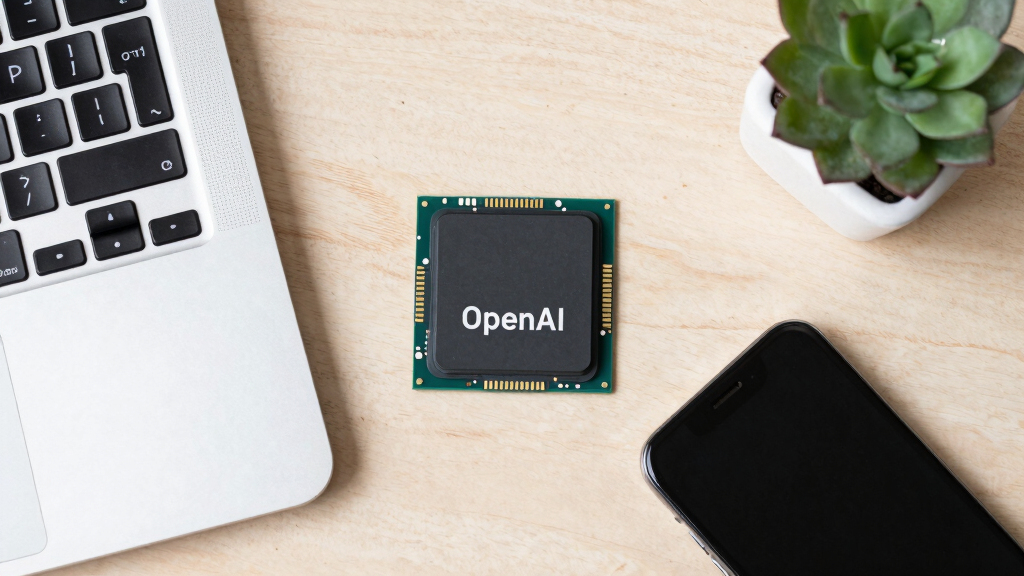
OpenAI has introduced Jalapeño, its first custom inference chip, created in partnership with Broadcom. Early testing shows significant performance-per-watt improvements, potentially reducing inference costs.
OpenAI has unveiled Jalapeño, its first custom-designed inference processor, developed in collaboration with Broadcom, marking a significant step in its efforts to optimize AI infrastructure for efficiency and cost savings.
The new chip, named Jalapeño, was designed specifically for running pre-trained AI models in real-time, focusing on inference workloads. OpenAI’s development of Jalapeño indicates the chip offers substantially better performance-per-watt than current leading alternatives, which could lower operational costs for deploying AI models.
While the chip is still undergoing testing, OpenAI emphasized that Jalapeño is tailored for inference, the process of executing AI models in response to user inputs, rather than training, which remains reliant on Nvidia hardware. The company highlighted that optimizing inference performance could significantly impact the economics of AI deployment, especially in data centers supporting products like Codex and other models.
Implications for AI Infrastructure and Cost Efficiency
The introduction of Jalapeño represents a strategic move for OpenAI to reduce dependence on external hardware providers like Nvidia. By developing purpose-built chips, OpenAI aims to enhance the speed, reliability, and affordability of AI inference, which is critical for scaling AI applications and improving user experiences. This development could influence industry trends toward custom silicon for AI workloads, potentially reshaping the hardware landscape.
As an affiliate, we earn on qualifying purchases.
OpenAI’s Hardware Strategy and Industry Trends
OpenAI’s move to develop its own inference chip follows industry patterns where companies like Google and Amazon have built custom silicon, known as AI accelerators, to improve machine learning performance. The partnership with Broadcom was announced in October, with rumors suggesting OpenAI’s interest in reducing reliance on Nvidia’s GPUs for inference tasks. The new chip, Jalapeño, is part of OpenAI’s broader effort to optimize its entire AI stack, from hardware to deployment systems.
“OpenAI’s development of Jalapeño signifies a strategic shift toward in-house hardware for inference, which could lower costs and improve performance.”
— an anonymous researcher
As an affiliate, we earn on qualifying purchases.
Performance and Deployment Details Still Unclear
While early results are promising, it is not yet confirmed how Jalapeño will perform in large-scale deployment or whether it will fully replace Nvidia hardware for inference. Details about production timelines, cost reductions, and integration into OpenAI’s existing infrastructure remain to be clarified as testing continues.
As an affiliate, we earn on qualifying purchases.
Upcoming Testing and Potential Industry Impact
OpenAI plans to continue testing Jalapeño in real-world scenarios and may announce broader deployment timelines in the coming months. The success of this chip could influence other AI companies to pursue similar in-house hardware development, potentially shifting industry hardware strategies.
As an affiliate, we earn on qualifying purchases.
Key Questions
What is Jalapeño and what is its purpose?
Jalapeño is OpenAI’s first custom inference chip, designed to run pre-trained AI models more efficiently in real-time, aiming to reduce operational costs and improve performance.
How does Jalapeño compare to Nvidia GPUs?
Early testing suggests Jalapeño offers significantly better performance-per-watt than current state-of-the-art alternatives, though full performance data in large-scale deployment is still pending.
Why is OpenAI developing its own hardware?
OpenAI aims to reduce dependence on external hardware providers like Nvidia, optimize its AI infrastructure, and lower inference costs, which are critical for scaling AI services.
When will Jalapeño be widely available?
OpenAI has not yet announced a specific deployment timeline. The chip is currently in testing, with broader rollout expected after further validation.
Could this influence the AI hardware industry?
Yes, if Jalapeño proves successful, it could encourage other AI companies to develop custom chips, potentially reshaping industry hardware strategies for AI inference.
Source: TechCrunch
Fall Picks
fall essentials
As an affiliate, we earn on qualifying purchases.