
TL;DR

Get business pricing on tech for your team
- Business-only prices and quantity discounts
- Tax-exempt purchasing
- Multiple users, one account, clear invoices
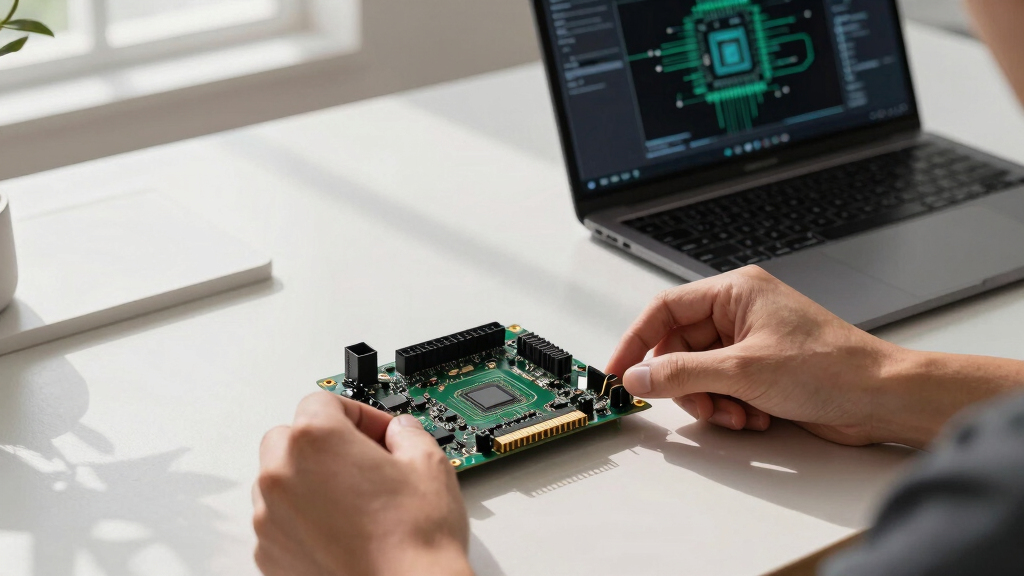
OpenAI and Broadcom have revealed their first jointly developed chip, aiming to enhance AI processing capabilities. The development is confirmed and marks a notable industry milestone.
OpenAI and Broadcom have jointly announced the release of their first custom-designed chip, marking a significant milestone in AI hardware development. The collaboration aims to improve AI processing performance and efficiency, with the chip now available for testing and integration. This development is confirmed by official statements from both companies and represents a notable industry advancement.
The chip, developed through a partnership between OpenAI and Broadcom, is designed to optimize artificial intelligence workloads, particularly large-scale machine learning tasks. Both companies have stated that the chip is now in the testing phase, with plans for broader deployment in the near future. The collaboration was announced publicly through press releases from both organizations, emphasizing their joint effort to push AI hardware capabilities forward.
While specific technical specifications of the chip have not been fully disclosed, sources indicate it features custom architecture tailored for deep learning applications, with a focus on energy efficiency and high throughput. The companies did not specify the commercial release timeline, but insiders suggest initial pilot programs could begin within the next quarter. This partnership underscores a strategic move by OpenAI to gain more control over its hardware infrastructure, while Broadcom aims to expand its presence in AI-specific chip markets.
Why This Collaboration Marks a Hardware Innovation Milestone
This joint chip development signifies a major step in AI hardware engineering, demonstrating how leading AI organizations are moving beyond software to control their own processing hardware. For OpenAI, it represents a move toward more tailored infrastructure that could improve AI model training and deployment. For Broadcom, it opens new opportunities in a rapidly growing segment of AI-optimized chips. The collaboration could influence industry standards and accelerate AI hardware innovation, potentially impacting the broader technology ecosystem.
As an affiliate, we earn on qualifying purchases.
Industry Shift Toward Custom AI Chips
The tech industry has seen a growing trend of companies developing custom chips to meet the unique demands of AI workloads. Major players like Google, Meta, and now OpenAI are investing in specialized hardware to improve performance and reduce costs. Broadcom has historically supplied chips for various applications, but this partnership with OpenAI marks a strategic pivot toward AI-specific hardware development. The move follows broader industry efforts to overcome limitations of general-purpose processors in handling large-scale AI models efficiently.
Prior to this announcement, OpenAI relied on third-party hardware providers, including NVIDIA, for training and deploying models. The collaboration with Broadcom indicates a shift toward internalized hardware solutions, which could influence future AI infrastructure strategies across the industry.
“The chip represents a significant step in customizing hardware specifically for AI workloads, with promising early performance results.”
— an anonymous source familiar with the project
As an affiliate, we earn on qualifying purchases.
Unresolved Details About Chip Capabilities and Deployment
Specific technical specifications of the chip, including processing power, energy efficiency metrics, and compatibility details, have not been publicly disclosed. It is also unclear when the chip will see widespread commercial deployment, as testing phases are still underway. The long-term performance and potential industry impact remain to be seen as further tests and evaluations are conducted.
machine learning hardware accelerators
As an affiliate, we earn on qualifying purchases.
As an affiliate, we earn on qualifying purchases.
Next Steps in Testing and Industry Adoption
Both companies are expected to continue testing the chip in pilot projects over the coming months. If successful, broader deployment could occur within the next quarter, with potential partnerships or licensing agreements expanding its use. Industry analysts will be watching for technical disclosures and real-world performance data, which could influence future AI hardware development strategies.
As an affiliate, we earn on qualifying purchases.
Key Questions
What makes this chip different from existing AI processors?
The chip is specifically designed for AI workloads, with custom architecture aimed at improving performance and energy efficiency for large-scale machine learning tasks. Exact technical details have not been disclosed yet.
When will the chip be available for commercial use?
It is currently in testing phases, with initial pilot programs expected to start within the next quarter. A broader commercial release has not been officially scheduled.
Why is this collaboration significant for the industry?
It marks a move toward AI organizations developing their own hardware solutions, potentially setting new standards for AI processing and influencing industry trends.
Will this affect OpenAI’s reliance on third-party hardware providers?
Yes, developing their own chip could reduce dependence on external suppliers like NVIDIA, allowing for more tailored and potentially cost-effective infrastructure.
What are the potential risks or challenges associated with this chip?
Technical performance, scalability, and integration challenges remain uncertain until further testing and real-world deployment are completed.
Source: The Information
Fall Picks
fall essentials
As an affiliate, we earn on qualifying purchases.