TL;DR
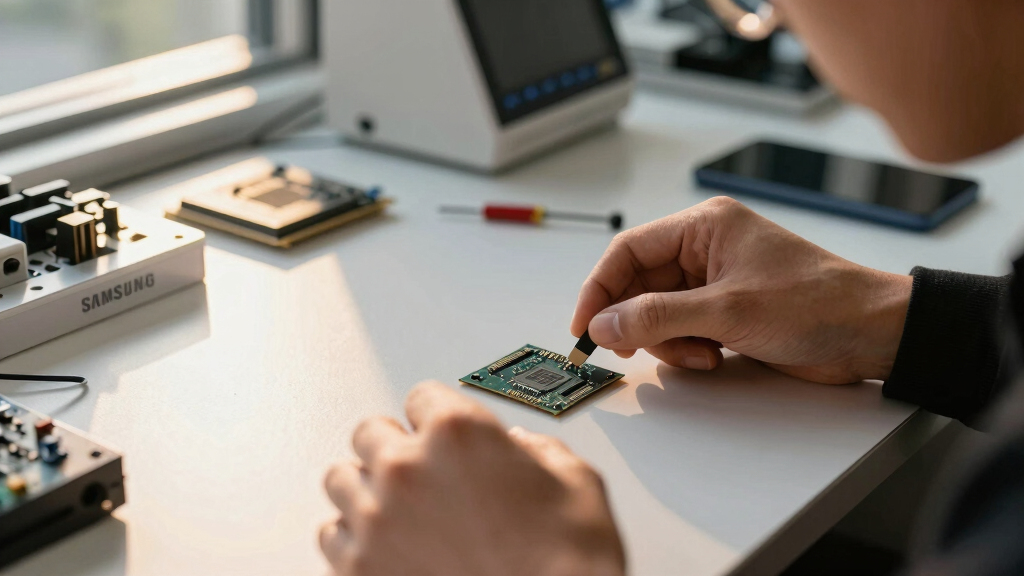
South Korea has announced a $576 billion investment to develop advanced AI chips, enlisting Samsung and SK Hynix. The move aims to secure the country’s position as a global leader in semiconductor technology.
South Korea has announced a $576 billion initiative to develop advanced AI chips, involving partnerships with Samsung and SK Hynix. This move aims to establish the country as a dominant force in the global semiconductor industry, particularly in AI hardware.
The South Korean government revealed the plan on March 2024, allocating significant funding to boost domestic AI-chip manufacturing capabilities. The initiative involves collaboration with Samsung Electronics and SK Hynix, two of the world’s leading memory and semiconductor firms. The investment aims to accelerate research, develop cutting-edge AI-specific chips, and reduce reliance on foreign suppliers.
Officials stated that the program is part of South Korea’s broader strategy to lead in next-generation technology sectors. The government has committed to providing incentives, infrastructure support, and regulatory reforms to facilitate rapid development. The total investment of $576 billion is among the largest national tech initiatives globally, reflecting Seoul’s ambition to dominate the AI hardware market.
Implications for Global Tech Leadership
This initiative underscores South Korea’s ambition to cement its position as a leader in AI hardware manufacturing. By investing heavily in AI-chip development, the country aims to challenge existing global leaders, notably the US and China. The partnership with Samsung and SK Hynix, both key players in the semiconductor industry, suggests a strategic move to control critical supply chains and technological standards. If successful, South Korea could significantly influence the future landscape of AI technology and chip design, impacting global markets and innovation trajectories.
As an affiliate, we earn on qualifying purchases.
South Korea’s Semiconductor Industry and Global Competition
South Korea has long been a major player in the global semiconductor market, with Samsung and SK Hynix ranking among the top memory chip producers worldwide. The country’s tech sector has benefited from government support and a robust manufacturing ecosystem. However, recent geopolitical tensions and supply chain disruptions have heightened the urgency for self-reliance and innovation in AI-specific chips. Previous efforts to expand domestic chip production have laid the groundwork, but this new $576 billion plan marks an unprecedented scale of investment aimed explicitly at AI hardware.
Globally, the US and China are also heavily investing in AI chip technology, making this Korean initiative a strategic move to maintain competitive parity and technological sovereignty. The announcement aligns with broader national policies to foster advanced tech industries and reduce dependence on foreign suppliers.
“This ambitious plan will position South Korea at the forefront of AI chip innovation, securing our future in the digital economy.”
— South Korean Minister of Science and ICT

AI Systems Performance Engineering: Optimizing Model Training and Inference Workloads with GPUs, CUDA, and PyTorch
As an affiliate, we earn on qualifying purchases.
As an affiliate, we earn on qualifying purchases.
Details on Implementation and Timeline Still Emerging
Specific details regarding the implementation timeline, distribution of funds, and concrete project milestones remain unclear. It is also uncertain how quickly the collaboration with Samsung and SK Hynix will translate into tangible product developments, and whether additional international partnerships will be involved.

The Semiconductor Manufacturing Business: A Comprehensive Guide
As an affiliate, we earn on qualifying purchases.
As an affiliate, we earn on qualifying purchases.
Next Steps Include Project Frameworks and Investment Phases
The government is expected to release detailed frameworks outlining project phases, funding allocations, and partnership arrangements in the coming months. Industry stakeholders anticipate formal agreements with Samsung and SK Hynix, alongside the initiation of pilot projects aimed at developing AI-specific chips. Monitoring the progress of these initiatives will be crucial to assessing South Korea’s ability to meet its ambitious goals.
As an affiliate, we earn on qualifying purchases.
Key Questions
What is the main goal of South Korea’s AI-chip initiative?
The primary goal is to develop advanced AI-specific semiconductor chips to secure a leading position in the global AI hardware market and reduce dependence on foreign suppliers.
How much funding has South Korea committed to this project?
The government has announced a total investment of $576 billion for the initiative.
Which companies are involved in this project?
Major partners include Samsung Electronics and SK Hynix, two of the world’s leading semiconductor firms.
Why is this initiative significant globally?
It signals South Korea’s intent to compete with the US and China in AI hardware, potentially reshaping global supply chains and technological leadership in AI chips.
When will the first products from this initiative be available?
Specific timelines are not yet announced; detailed project milestones are expected in the coming months.
Source: google-trends