
TL;DR
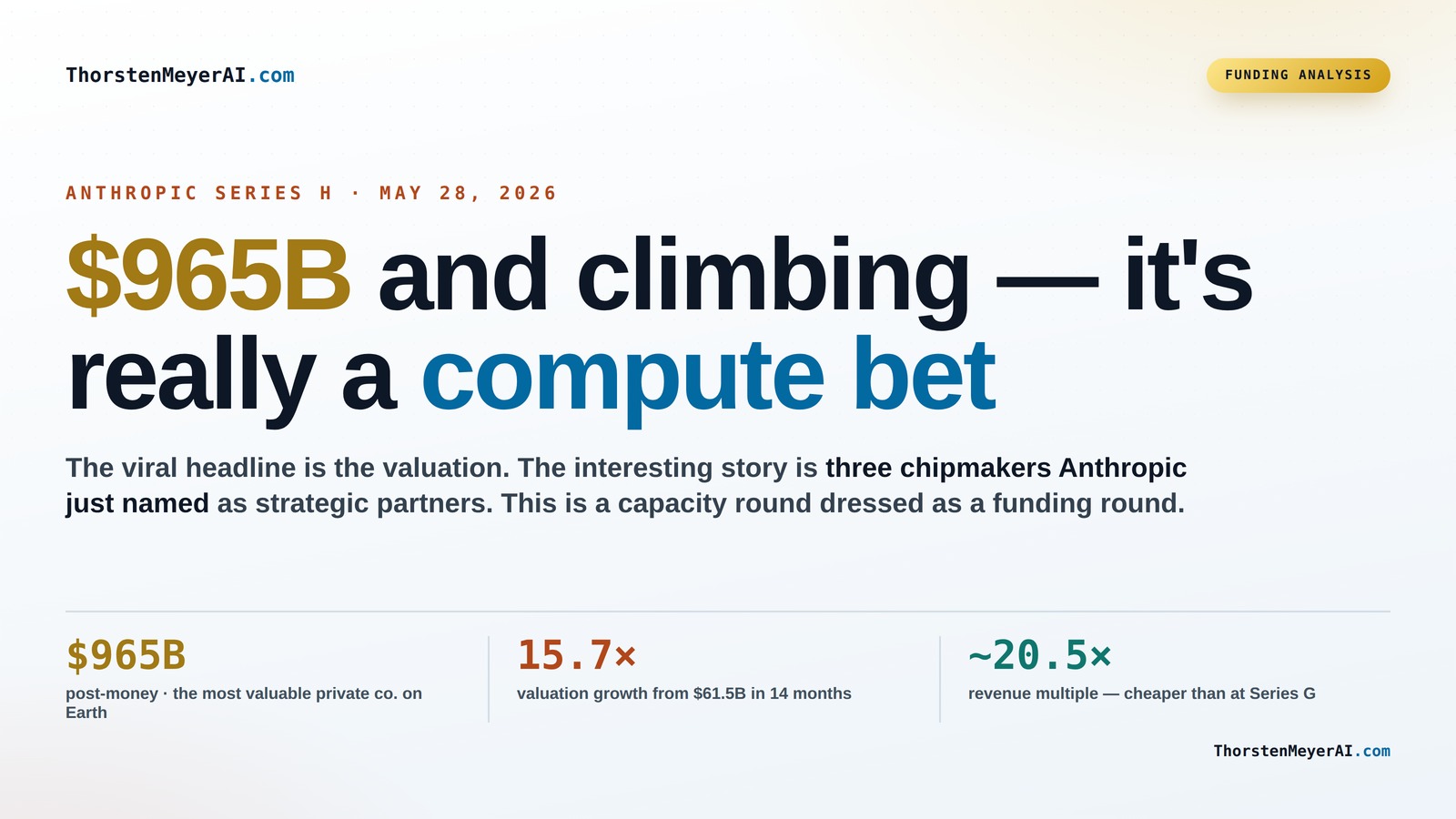
Anthropic’s $65 billion Series H isn’t just about raising money — it’s a strategic move to secure AI’s critical compute infrastructure. With revenue skyrocketing and chipmakers on board, this deal shows that the biggest AI companies are now investing in capacity as much as innovation.
Forget the headlines about a $965 billion valuation — this isn’t just hype. Anthropic’s latest funding round signals something deeper: a massive push to dominate AI infrastructure. It’s about chips, cloud capacity, and power — the real fuels behind the next wave of AI growth.
This isn’t your typical startup raise. It’s a strategic capacity investment, designed to secure the raw compute needed to scale Claude and other models far beyond today’s limits. If you want to understand where AI’s headed, this is the story to watch.
$965B and climbing — it’s really a compute bet
The viral headline is the valuation. The interesting story is in the press release’s middle paragraphs — and in three chipmakers Anthropic just named as strategic partners. This is a capacity round dressed as a funding round.
The numbers nobody can quite parse in sequence
Read together they describe a trajectory with no precedent in enterprise software. Read individually, each looks like a typo.
From $61.5B to $965B in fourteen months
Salesforce took roughly two decades to reach revenue numbers Anthropic just blew past. The sequence below is the part most coverage skips — it’s not the size, it’s the shape.
Anthropic’s valuation ladder · Mar 2025 → May 2026
Five rounds, fourteen months. Bar height is the valuation; the climb itself is the story. Tap any milestone for context.
The multiple actually got cheaper
Bubbles look like multiples expanding while revenue lags. Anthropic’s pattern is the inverse — the valuation tripled, but revenue grew faster, and the multiple compressed.
Revenue-to-valuation multiple · Series G → Series H
Same company, three months apart. The denominator (revenue) is outrunning the numerator (valuation) — exactly the opposite of what a bubble narrative predicts.
10+ gigawatts and three chipmakers
When you name Micron, Samsung & SK hynix alongside your equity backers, you’re saying the binding constraint isn’t demand or model quality — it’s the physical supply of memory chips. The Series H is a capacity round.
Compute commitments backing Anthropic’s capacity bet
$200B+ in announced compute spend across multi-year contracts. The $65B Series H raise has to be read against that bill, not against operating losses.
A genuinely durable bet — or a structural exposure?
Both readings can be true at once. The answer arrives over the next 18–24 months as the gigawatts come online and either fill with paying demand or don’t.
Revenue growth has no precedent in B2B software ($1B → $47B in 17 months). The multiple is compressing, not expanding. Claude is the only frontier model on all 3 major clouds. Enterprise AI spend share went from ~10% to >65% in a year. Compute commitments are tied to specific contracts with capacity dates.
20× revenue is not cheap by any historical software-investing standard. Revenue is reported gross of cloud-reseller pass-throughs, which inflates the top line. Profitability is 2 years out. Amodei’s own warning: a 12-month delay in AI progress “would make him bankrupt” — the compute commitments are a structural exposure to demand persistence.
The valuation race — and the IPO context
Anthropic shipped Opus 4.8 the same morning as Series H — not a coincidence. One week after OpenAI filed confidentially for IPO. The late-2026 frame is set: two frontier AI companies racing to public markets, each pitching durability.
Key Takeaways
- Anthropic’s $65 billion Series H is primarily a capacity investment, not just a valuation boost.
- The company’s revenue growth has outpaced its valuation, shrinking its revenue multiple and signaling scalable success.
- Securing chips and cloud capacity from giants like Amazon and Samsung is the core strategic move.
- This deal marks a shift: the race for AI dominance is now about raw compute power, not just model innovation.
- Future AI growth depends heavily on hardware supply chains and infrastructure partnerships.
As an affiliate, we earn on qualifying purchases.
Why the $965 billion valuation is just the start of the real story
Anthropic’s valuation soared from $61.5 billion in March 2025 to nearly a trillion in just over a year. But that huge jump isn’t driven by revenue alone. It’s about the infrastructure behind the scenes.
Think of it like buying a fleet of jets — the real value isn’t just in the planes, but in the runways, maintenance, and fuel supply. Here, the fuel is compute — chips, memory, and cloud capacity.
Strikingly, revenue growth has outpaced valuation growth recently. From $9 billion at the end of 2025 to over $47 billion in May 2026, revenue is exploding — and so is the need for raw compute power.
This rapid increase in valuation relative to revenue indicates that investors see the infrastructure as the true competitive advantage. It’s a recognition that in AI, hardware and capacity are becoming the bottleneck — the scarce resources that will determine who leads. The implication is that future valuation will hinge less on current earnings and more on control of these critical assets, which can exponentially accelerate AI development and deployment.

high performance AI compute cloud services
As an affiliate, we earn on qualifying purchases.
As an affiliate, we earn on qualifying purchases.
How Anthropic’s compute commitments dwarf traditional funding rounds
Here’s the real eye-opener: the round includes over $10 billion in commitments for cloud and chip capacity, with $5 billion from Amazon alone. Plus, partnerships with Micron, Samsung, and SK hynix mean the chips are being locked in at a scale never seen before.
To put it simply, Anthropic isn’t just raising money — it’s buying the hardware needed to train and run models at a scale that could reshape AI’s future. This is the biggest capacity investment in AI history.
Imagine ordering enough chips to run millions of ChatGPTs simultaneously. That’s what this deal is about.
The strategic importance of this commitment goes beyond mere capacity. Securing hardware supply chains ensures that Anthropic can avoid the bottlenecks and shortages that have slowed AI progress in the past. It also signals a shift in industry power: those who control the hardware inputs will have a decisive advantage in the AI race, influencing not just who develops the best models, but who can deploy them at scale and speed.

As an affiliate, we earn on qualifying purchases.
The surprising math: valuation gets cheaper as revenue grows faster
At Series G, Anthropic was valued at $380 billion with $14 billion in revenue, roughly 27× revenue. Today, at nearly $1 trillion valuation, revenue hits $47 billion — making the multiple about 20.5×.
This means the company’s valuation has tripled, but its revenue has skyrocketed even faster. The multiple has actually shrunk, showing a more efficient growth pattern than many expect in tech bubbles.
In other words, Anthropic’s rapid revenue growth is pulling down its valuation multiple — a sign that investors see real, scalable value behind the hype.
This trend suggests that the market is beginning to value AI companies more on their ability to generate revenue at scale rather than speculative future potential. It reflects a maturing industry where operational efficiency and capacity deployment are becoming key indicators of success. The implication is that future valuations will likely depend on actual revenue growth driven by expanded capacity, not just hype or early-stage innovation.

data center cooling systems for AI
As an affiliate, we earn on qualifying purchases.
As an affiliate, we earn on qualifying purchases.
Why this isn’t just another VC funding — it’s a capacity race
The core of this round isn’t just money for product or talent. It’s about securing the raw compute capacity needed to keep up with demand and push AI models further.
With over $15 billion from hyperscalers like Amazon, Microsoft, and Google, this round is a clear signal: AI’s future hinges on access to chips and cloud power, not just clever algorithms.
For example, if you’ve ever tried to run a large AI model, you know that hardware shortages slow progress. Anthropic is buying its way past that bottleneck.
The strategic importance of this capacity race is profound. It underscores a shift where hardware supply chains become a critical element of competitive advantage. Companies that secure sufficient compute resources will have the ability to innovate faster, scale more reliably, and ultimately dominate the AI ecosystem. This focus on infrastructure also involves complex tradeoffs — such as the high costs of hardware procurement versus the long-term benefits of capacity control, and the risk of over-investing if demand doesn’t meet expectations. Nonetheless, the industry is clearly moving toward a model where hardware access is as vital as the software itself.

What does this mean for AI giants like OpenAI and Google?
Anthropic’s focus on infrastructure puts pressure on other AI labs. If capacity is the bottleneck, then the companies with the most chips and cloud access will lead. This isn’t just about clever models anymore — it’s about raw power.
Compared to OpenAI’s valuation — around 30× revenue — Anthropic’s 20.5× is lower, which signals that investors see it as more scalable, or at least less overhyped.
In practical terms, expect more partnerships with chipmakers, more capacity deals, and a race to secure hardware supply chains.
This shift could lead to a reordering of industry dominance, where hardware control and capacity investments become the new competitive frontiers. The tradeoff for AI giants is balancing the risk of heavy capital expenditure against the strategic advantage of securing long-term hardware supply. Those who succeed in locking in hardware early will likely have a significant edge in deploying and scaling advanced AI models, potentially reshaping the competitive landscape for years to come.

Where is all this capacity going? Scaling Claude and safety research
The funds aren’t just for flashy models. Anthropic plans to expand Claude’s capabilities, making it faster, safer, and more interpretable.
Picture a Claude that can handle millions of customer queries seamlessly, with safety features that prevent hallucinations and bias. To do that, you need massive compute — which is exactly what this round secures.
It’s a balancing act: grow fast, but also invest heavily in safety — a priority highlighted by Anthropic’s focus on interpretability research.
The implications are significant: as models grow larger and more integrated into real-world applications, the need for robust safety and interpretability becomes critical. The capacity secured through this funding not only enables scaling but also ensures that AI development aligns with safety standards, reducing risks associated with unchecked AI behavior. This strategic focus on safety and scalability reflects a recognition that sustainable AI growth depends on both raw power and responsible deployment.
The infrastructure race: chips, storage, and power
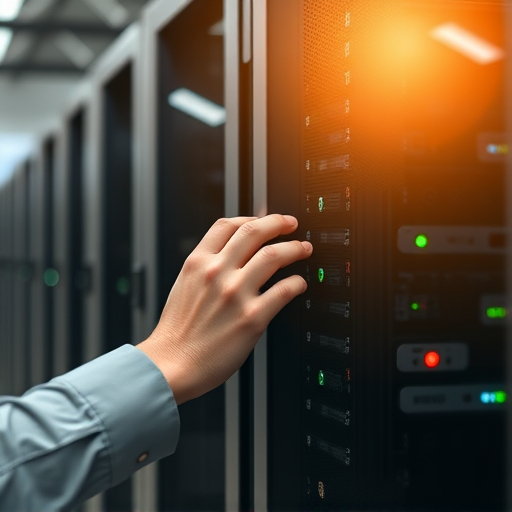
Memory, storage, and power are now strategic bottlenecks for AI. The chips used in training large models are expensive and in high demand.
Imagine trying to fill a stadium with thousands of servers powered by the latest memory modules from Micron or Samsung. That’s the scale Anthropic is aiming for.
Supply chain constraints mean that securing these components isn’t just smart — it’s essential to stay competitive.
The implications are profound: as demand for AI compute surges, supply chain resilience and strategic sourcing become as vital as the technology itself. Companies that can secure long-term hardware partnerships will have a critical advantage, enabling them to innovate continuously without being hamstrung by shortages. Conversely, over-reliance on limited suppliers or geopolitical factors could introduce risks, making capacity planning and diversified sourcing key considerations for industry leaders.
What does this mean for the AI infrastructure market?
| Aspect | Impact of Anthropic’s Round |
|---|---|
| Chip demand | Massive increase, locking in supply from Micron, Samsung, SK hynix |
| Cloud capacity | Over $10B committed, ensuring rapid scaling |
| Model growth | More compute means faster, safer, larger models |
These developments are reshaping the entire infrastructure market, prompting chipmakers and cloud providers to accelerate capacity expansion plans. The strategic importance of capacity investments could lead to a consolidation of supply chains, increased bargaining power for hardware suppliers, and a race to develop even more efficient, cost-effective hardware solutions. The tradeoffs include balancing short-term costs against long-term strategic positioning, as well as managing geopolitical risks associated with critical hardware sourcing.

What should you watch for next?
Expect more capacity deals, partnerships with chipmakers, and a focus on hardware supply chains. The race isn’t just about AI models anymore — it’s about who controls the chips and cloud power.
Look for hints about IPO plans or further capacity investments. The real game is in hardware, not just software.
The strategic importance of this shift suggests that the companies that can secure and optimize their hardware infrastructure early will set the pace for AI innovation in the coming years. Balancing investment costs, geopolitical considerations, and technological advancements will be crucial as the industry moves toward a hardware-centric competitive model.
Frequently Asked Questions
Why is Anthropic valued at nearly a trillion dollars?
Because its valuation reflects not just revenue, but the massive compute capacity it is securing. This infrastructure is seen as the real driver behind AI’s next leap, making it worth more than just its current earnings.Is this round mainly about hardware, or is there more to it?
While the valuation suggests hype, the core purpose is to buy chips, cloud capacity, and storage. These are the bottlenecks that will determine how fast and large AI can grow for years to come.Will this change how AI companies compete?
Absolutely. Control over hardware supply chains and compute capacity is becoming the new battleground, shifting power toward those who secure the chips and cloud resources first.Is Anthropic planning an IPO soon?
There’s no official word yet, but the focus on infrastructure and the massive valuation suggest they’re building a foundation for long-term growth — possibly aiming for an IPO once capacity and safety are fully scaled.Conclusion
What’s really happening here? Anthropic has turned the spotlight from models to infrastructure. It’s investing in the chips, storage, and power needed to run the AI of tomorrow.
If you want to see where AI’s headed, follow the hardware. The next frontier isn’t just smarter algorithms — it’s bigger, faster, and more reliable compute capacity.