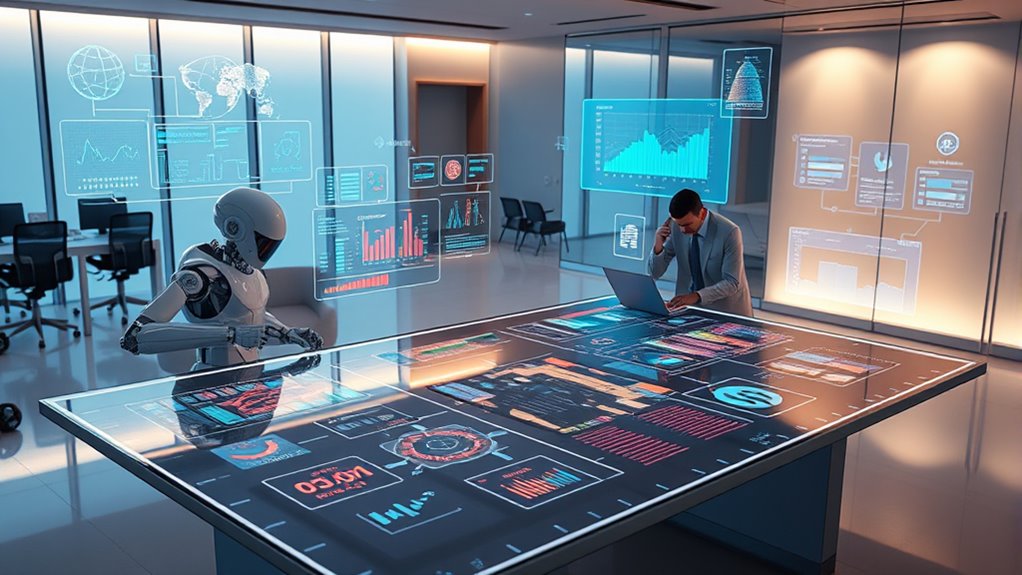

AI project managers use algorithms to plan and organize your workday efficiently. They analyze data to optimize workflows, predict bottlenecks, and automate routine tasks like scheduling and reporting. These systems provide real-time insights into team progress and help resolve issues proactively. By continuously learning and adapting, they enhance collaboration and decision-making. If you’re curious about how AI can transform your daily work routine, there’s more to discover ahead.
Key Takeaways
- AI project managers analyze data to optimize workflows and predict potential bottlenecks before they occur.
- They coordinate team tasks and updates, providing real-time insights into progress and priorities.
- Routine tasks like scheduling and reporting are automated, freeing resources for strategic decision-making.
- Visual data analysis tools enhance project monitoring, helping identify issues through clear visual cues.
- AI-driven algorithms adapt to changing project dynamics, streamlining processes and improving overall efficiency.

As artificial intelligence continues to evolve, AI project managers are emerging as vital tools for streamlining project oversight and decision-making. These intelligent systems help you navigate complex tasks by optimizing processes and boosting efficiency. One of their key strengths lies in algorithm optimization, where they analyze vast amounts of data to improve workflows, allocate resources more effectively, and predict potential bottlenecks before they arise. By continuously refining algorithms, AI project managers adapt to changing project dynamics, ensuring that every task is executed in the most efficient way possible. This dynamic optimization not only accelerates project timelines but also reduces costs, making your workday smoother and more predictable.
AI project managers optimize workflows, predict bottlenecks, and adapt dynamically to improve efficiency and reduce costs.
At the same time, AI project managers foster enhanced team collaboration. They serve as central hubs that coordinate tasks, share updates, and synchronize efforts across diverse teams. Instead of relying solely on manual communication and static schedules, you get real-time insights into your team’s progress, dependencies, and priorities. This transparency allows you to address issues proactively, assign tasks based on individual strengths, and keep everyone aligned with project goals. AI systems can also facilitate seamless communication channels, ensuring that team members stay connected regardless of their locations. As a result, collaboration becomes more fluid, reducing misunderstandings and increasing overall productivity.
Furthermore, these AI-driven tools automate routine tasks like scheduling meetings, sending reminders, and compiling reports. This automation frees up your time so you can focus on strategic decision-making and problem-solving. With AI handling the mundane, you gain a clearer picture of project health and can make informed choices faster. The algorithms behind these systems learn from your inputs and past decisions, becoming smarter and more tailored to your project needs over time. This continuous learning cycle enables more accurate forecasts, better risk management, and an overall increase in project success rates.
Another advantage is that AI project managers leverage color accuracy and visual data analysis to enhance project monitoring and reporting, providing clearer insights into project performance and potential issues. In essence, AI project managers act as intelligent assistants that enhance your ability to manage complex projects efficiently. They optimize algorithms to streamline workflows and foster team collaboration by providing real-time updates and facilitating communication. By automating repetitive tasks and learning from your management style, these systems help you stay ahead of deadlines and adapt swiftly to changing circumstances. As you integrate AI project managers into your workflow, you’ll find that your workday becomes more organized, your decisions more data-driven, and your team more unified. Ultimately, they’re not just tools—they’re strategic partners that elevate your project management capabilities to new heights.
Frequently Asked Questions
How Do AI Project Managers Handle Unexpected Project Changes?
When unexpected project changes occur, AI project managers handle them by implementing adaptive workflows and making real-time adjustments. You’re guided by algorithms that quickly analyze the new situation, prioritize tasks, and reallocate resources efficiently. This dynamic approach minimizes delays and keeps the project on track. With constant monitoring and flexible planning, you can respond swiftly to unforeseen issues, ensuring project success despite unexpected changes.
Can AI Project Managers Replace Human Decision-Making Entirely?
AI decision making can’t replace human oversight entirely. While AI can handle data-driven tasks quickly, you still need human judgment for complex, ethical, or unpredictable situations. Humans bring intuition, experience, and moral considerations that algorithms can’t replicate. Relying solely on AI decision making risks missing nuances or context. So, you should view AI as a powerful tool that enhances your decision-making, but never as a complete substitute for human oversight.
What Are the Ethical Considerations of Using AI in Project Management?
You need to take into account privacy concerns and bias mitigation when using AI in project management. AI can inadvertently expose sensitive data or reinforce biases, so ensure proper data handling and fairness measures are in place. As you rely on AI tools, stay vigilant about ethical implications, and prioritize transparency and accountability to build trust with your team and stakeholders. Balancing efficiency with ethical responsibility safeguards your project’s integrity and fairness.
How Secure Is Sensitive Project Data With AI Project Management Tools?
Your sensitive project data is protected like a vault in a fortress, thanks to advanced data encryption and strict access controls. These AI tools guard your information against cyber threats, unauthorized access, and leaks, making it almost impenetrable. While no system is entirely foolproof, these security measures markedly reduce risks, giving you peace of mind that your most critical data stays safe and confidential amid the AI-driven project management chaos.
What Skills Are Needed for Teams to Work Effectively With AI Project Managers?
To work effectively with AI project managers, you need strong collaborative communication skills and technical literacy. You should be able to clearly articulate your ideas and understand the AI tools’ capabilities and limitations. Being open to learning new technologies helps you adapt quickly. By fostering teamwork and understanding how AI algorithms support project goals, you ensure smoother collaboration and more successful outcomes in your projects.
Conclusion
As AI project managers become more common, you’ll find your workday more streamlined—statistics show that tasks can be completed 30% faster with algorithm-driven planning. Embracing this technology means trusting smarter schedules and efficient resource allocation. While some worry about losing control, remember that AI enhances your decision-making rather than replaces it. By integrating these tools, you’ll stay ahead in a competitive landscape, turning complex projects into manageable, organized workflows. The future of work is here—are you ready?