
TL;DR

Get business pricing on tech for your team
- Business-only prices and quantity discounts
- Tax-exempt purchasing
- Multiple users, one account, clear invoices
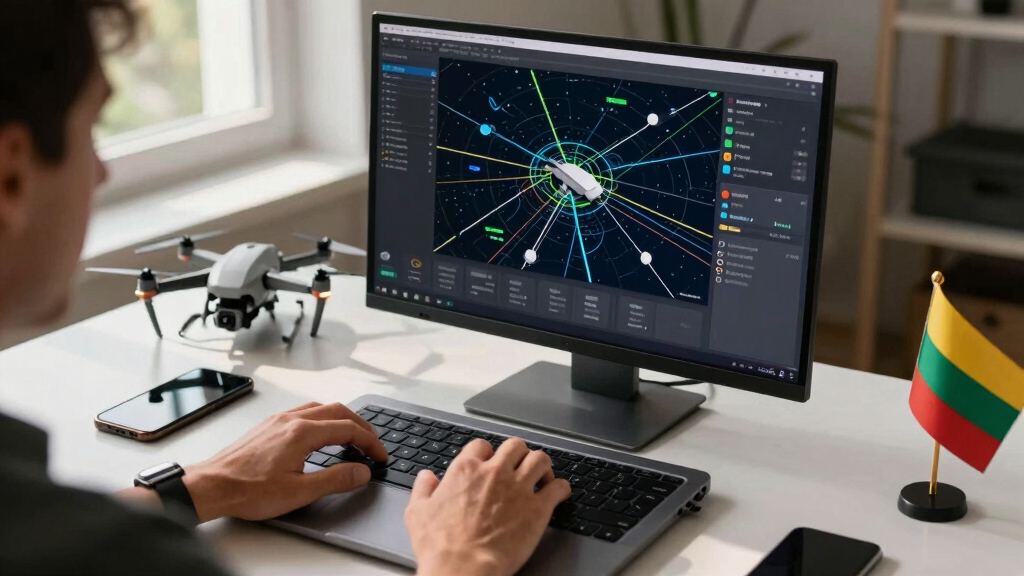
A Lithuanian startup has initiated an open-source drone detection network that leverages volunteers’ smartphones to identify Shahed-type drones in real time. The project aims to build a large civic monitoring system across the Baltic region, with future plans to incorporate surveillance cameras and telecom towers.
A Lithuanian startup has launched an open-source network that uses volunteers’ smartphones to detect Shahed-type drones, marking a significant step in civilian-led drone monitoring efforts in the Baltic region.
The initiative, led by the Mainline startup and supported by local security and technology partners, involves volunteers connecting unused Android smartphones near windows. The devices run an app that continuously analyzes ambient sounds for low-frequency signatures characteristic of Shahed drone engines. When multiple devices detect the same acoustic signature, the system can estimate the drone’s location, providing a real-time map of drone activity.
The project currently involves about 20 specialists and aims to recruit 10,000 active users across Lithuania, the Baltic states, and Poland. Future plans include integrating audio from residents’ surveillance cameras and potentially installing sensors on telecommunications towers through partnerships with mobile network operators. The team emphasizes privacy, aiming to identify drones with minimal data collection.
Potential Impact on Regional Drone Security
This open-source network introduces a community-driven approach to drone detection, potentially enhancing security in the Baltic region by providing real-time, civilian-sourced intelligence. If successful, it could serve as a model for other areas facing drone-related threats, especially in conflict or sensitive zones. Additionally, the project demonstrates how civilian participation and open technology can complement official security measures, fostering resilience and community engagement.
As an affiliate, we earn on qualifying purchases.
Background of Civilian Drone Monitoring Initiatives
Recent years have seen increased concern over the use of drones, particularly Shahed-type models, in regional conflicts and security threats. Governments and security agencies have explored various detection methods, including radar and surveillance cameras. However, civilian-led, open-source solutions like this Lithuanian project represent a novel approach, leveraging widespread smartphone adoption and community participation. The initiative aligns with broader trends toward civic resilience and decentralized security efforts in the Baltic region and beyond.
“Our goal is to connect these sensors into a common network that would provide an additional layer of security for society and strengthen the country’s resilience.”
— an anonymous researcher
As an affiliate, we earn on qualifying purchases.
Unconfirmed Aspects of System Effectiveness and Privacy
It is not yet clear how accurately the system can detect and locate drones in diverse environments or how effectively it can differentiate drone sounds from other low-frequency noises. Additionally, while privacy is emphasized, the specifics of data handling and user anonymity remain to be clarified as the project develops.
civilian drone monitoring system
As an affiliate, we earn on qualifying purchases.
As an affiliate, we earn on qualifying purchases.
Upcoming Deployment and Expansion Plans
The team plans to expand participation to reach 10,000 active users, increase geographic coverage across the Baltic states and Poland, and incorporate additional sensors like surveillance cameras and telecom towers. They also aim to establish partnerships with mobile network operators to enhance detection capabilities and refine the system’s accuracy through ongoing testing and user feedback.
As an affiliate, we earn on qualifying purchases.
Key Questions
How does the drone detection system work?
The system relies on volunteers’ smartphones running an app that analyzes ambient sounds for low-frequency signatures characteristic of Shahed drones. When multiple devices detect the same sound, the system estimates the drone’s location and displays it on a real-time map.
Is user privacy protected in this system?
Yes, the developers emphasize that privacy remains a priority, aiming to identify drones with minimal data collection and ensuring that personal information is not compromised.
Can this system detect all drone types?
The current focus is on Shahed-type drones, which have distinctive acoustic signatures. Its effectiveness against other drone models has not yet been confirmed.
Will the system be available outside Lithuania?
The project aims to expand across the Baltic region and Poland, with plans to involve more participants and integrate additional sensors in the future.
What are the technical challenges of this approach?
Challenges include accurately distinguishing drone sounds from ambient noise, ensuring reliable detection in various environments, and maintaining user privacy while collecting useful data.
Source: Hacker News
Halloween Picks
halloween
As an affiliate, we earn on qualifying purchases.