📊 Full opportunity report: A Beginner's Guide To IEP Negotiation Rehearsal Simulators on IdeaNavigator AI — validation score, market gap, and execution plan.

Get business pricing on tech for your team
- Business-only prices and quantity discounts
- Tax-exempt purchasing
- Multiple users, one account, clear invoices
TL;DR
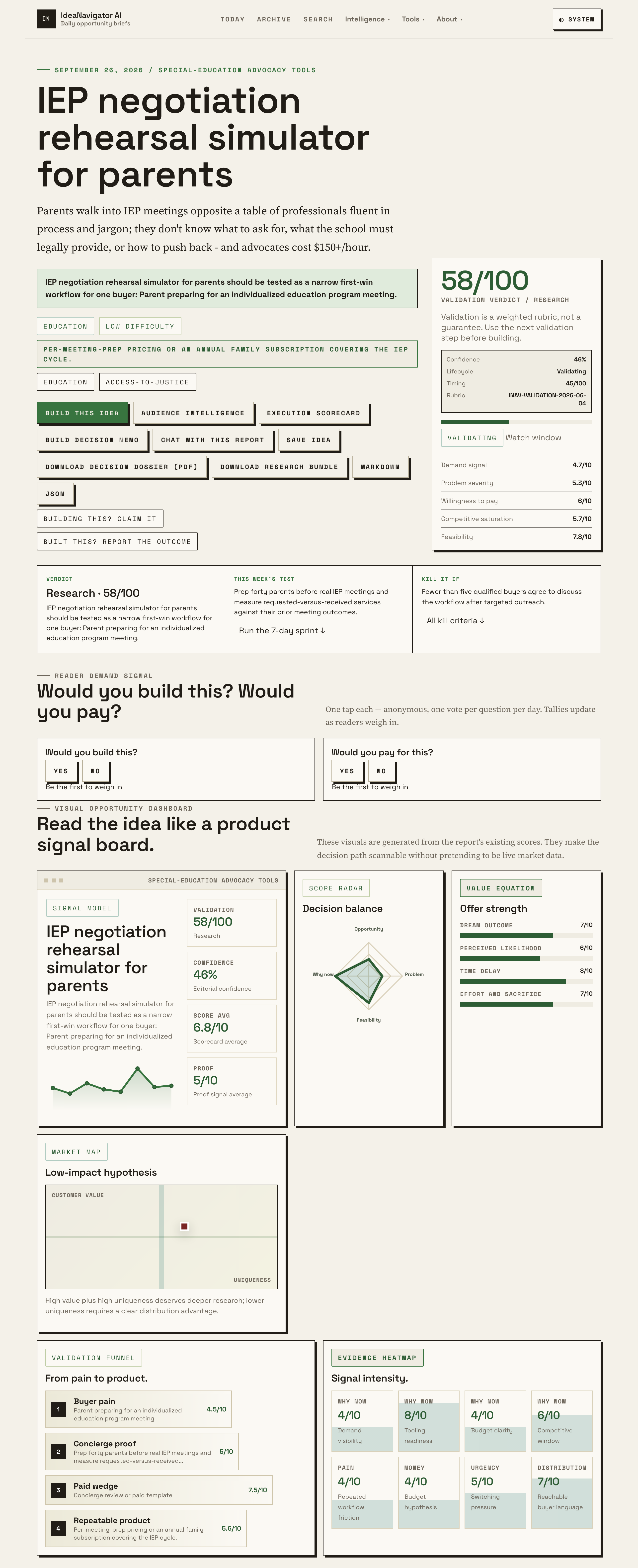
A proposal outlines an IEP meeting rehearsal simulator for parents that would explain documents, help prepare service requests and role-play school discussions. The concept has not been validated; a suggested pilot would prepare 40 parents and compare services requested and received with their prior meeting outcomes.
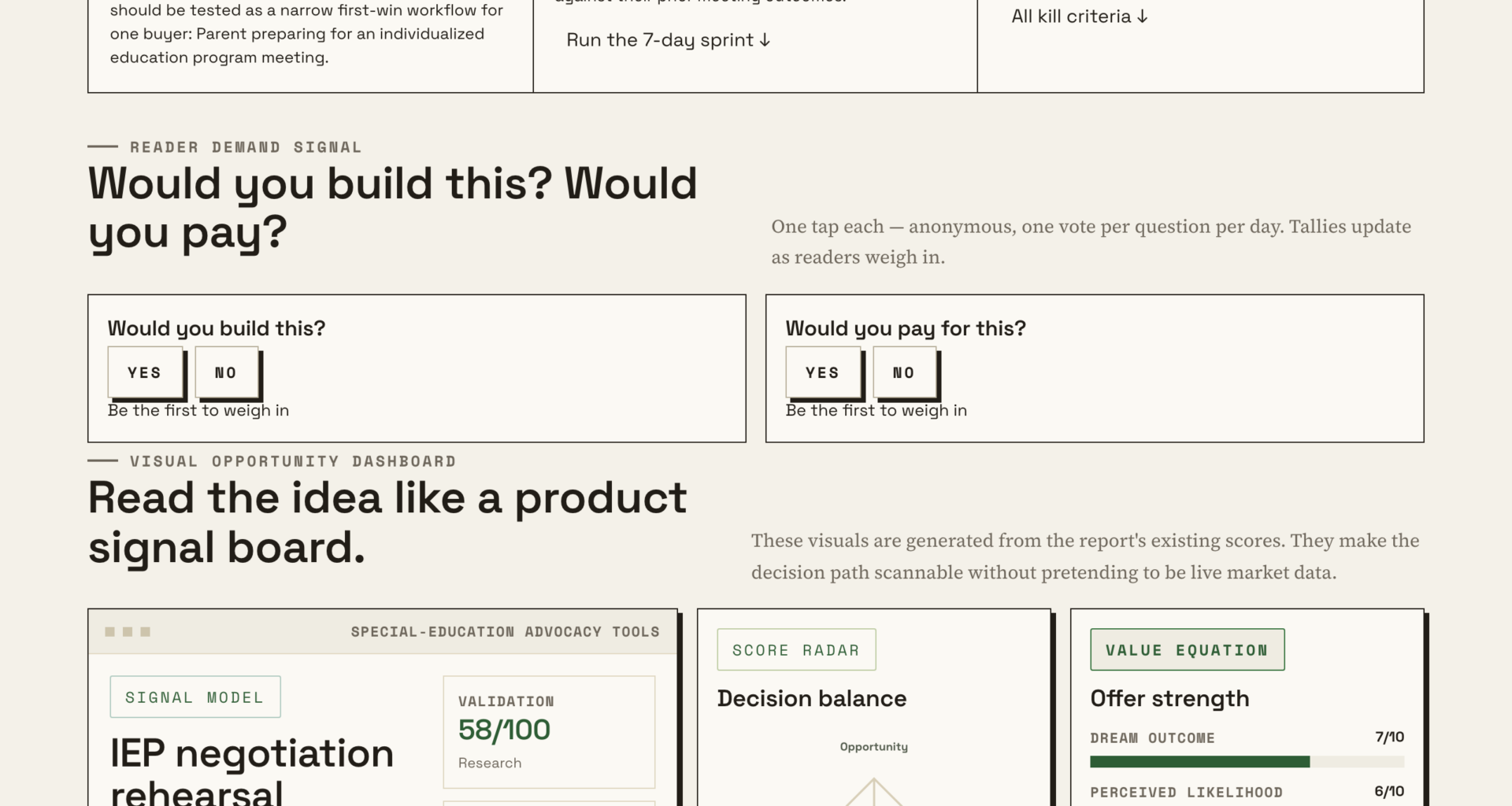
IdeaNavigator AI has proposed an IEP meeting rehearsal simulator for parents, combining plain-language explanations of education plans with practice conversations that include realistic school pushback. The concept is framed as an early product opportunity, and no pilot results or evidence of improved services are reported.
The proposed tool would serve a specific user: a parent preparing for an individualized education program (IEP) meeting. Families would upload a current IEP and evaluation reports. The simulator would then explain the documents in plain language, produce a list of possible requests with legal grounding, and let the parent rehearse a meeting through role-play.
The role-play is intended to include pushback from school representatives, giving parents a chance to practice stating and defending their positions. The proposal also describes two possible payment models: a fee for preparation for an individual meeting or an annual subscription covering a family’s IEP cycle. Neither pricing nor a finalized product is reported.
For validation, the proposal suggests preparing 40 parents before real IEP meetings and comparing the services they request with those they receive. It also proposes comparing those outcomes with each parent’s prior meeting results. No participants have been recruited and no findings are provided.
Preparing Parents for IEP Meetings
IEP meetings can shape the educational services and supports a student receives. A preparation tool could give parents a way to organize questions and practice explaining their requests before speaking with school staff. The proposal describes a gap between parents and professionals who are more familiar with meeting procedures and specialized language.
The concept also targets the cost of outside help: it cites advocacy services costing $150 or more per hour. That figure is part of the proposal, not a reported survey of prices. If a tool could provide useful preparation at a lower cost, it might widen access to support, though its accuracy and practical value have not been demonstrated.
The proposed comparison of requested and received services could offer an initial measure of whether preparation changes meeting outcomes. By itself, however, that measure would not establish that the simulator caused any difference. Student needs, school decisions and other forms of support may also affect what services are agreed upon.
A Narrow Product Proposal
The idea is positioned as a single-workflow product, rather than a general education assistant: help a parent prepare for one IEP meeting. Its proposed steps are document review, explanation of entitlements, drafting a request list and rehearsal through role-play.
The proposal argues that language models can now simulate a realistic meeting and that rising special-education identification rates, alongside tighter district resources, make the timing favorable. These are rationales offered for the idea; no data, dates or independent evidence are included to substantiate the market claims or the simulator’s ability to provide reliable legal explanations.
The suggested 40-parent pilot would be an early test of demand and possible outcomes, not proof that the product works across districts or student circumstances. The proposal does not report whether the tool exists as a working prototype.
Accuracy and Pilot Results
No pilot findings are available, and the proposal does not establish whether the simulator has been built or tested. It is also unclear how it would verify legal explanations across different state rules, district practices and individual student needs.
The plan does not specify how outcomes would be measured, how prior meeting results would be documented, or whether a comparison group would be used. It also gives no detail on privacy protections for uploaded evaluations and education records, which can contain sensitive information. The proposal’s claims about language-model readiness, service costs and market conditions remain unverified here.
Testing Before Wider Adoption
The next step described is to recruit 40 parents with upcoming IEP meetings, prepare them with the simulator and track what services they request and receive. The proposal also calls for comparing those results with participants’ earlier meetings. No schedule, recruitment process or release date is provided.
Any assessment would need to examine more than whether parents make requests: it would need to check the accuracy of legal guidance, usefulness of role-play, handling of sensitive documents and whether reported outcomes can reasonably be linked to preparation. Until such testing is reported, the simulator remains a proposed product concept.
Key Questions
What is the proposed IEP simulator?
It is a proposed preparation tool that would review a parent’s IEP and evaluation reports, explain them in plain language, help form requests and provide meeting role-play.
Has the simulator been tested?
No test results are reported. The proposal suggests a future pilot involving 40 parents.
Would it provide legal advice?
The concept would connect suggested requests to legal grounding, but the proposal does not explain how legal accuracy would be checked or define the tool’s limits.
How might families pay for it?
Two options are proposed: paying for preparation for one meeting or subscribing annually for support across an IEP cycle. No prices are listed.
Source: IdeaNavigator AI
Fall Picks
fall essentials
As an affiliate, we earn on qualifying purchases.