
TL;DR
A new tool called claude-real-video allows any large language model to analyze videos locally by extracting meaningful frames, transcribing audio, and creating comprehensive data packages. It differs from existing solutions by focusing on scene change detection and deduplication, enabling more efficient and accurate video understanding.
Claude-real-video is a new tool that enables any large language model (LLM) to analyze videos locally by extracting key frames, transcribing audio, and preparing data for further processing. Unlike existing solutions that rely on sampling frames at fixed intervals or uploading videos to cloud services, this tool performs scene change detection and frame deduplication on the user’s machine, providing a more meaningful and efficient data set for LLMs. This development makes it possible for LLMs to ‘watch’ videos in a way that preserves important visual changes and audio context, all without uploading sensitive content to external servers.
The tool, called claude-real-video, leverages ffmpeg and Whisper for frame extraction and audio transcription, respectively. It fetches videos from URLs or local files, detects scene changes, and samples only the frames that matter, such as scene transitions or significant visual shifts. It also removes near-duplicate frames, reducing data volume and focusing on meaningful content. The tool creates a structured output folder containing selected frames, a transcript, and a manifest file summarizing the video’s key elements. This package can then be fed into any LLM, including Claude, ChatGPT, or Gemini, to enable detailed video understanding.
According to the creator, claude-real-video is more intelligent than simple frame sampling methods, which often over-sample static scenes or miss fast cuts. It also supports audio transcription via Whisper, providing models with both visual and auditory context. The tool is designed to run locally, ensuring user privacy and reducing costs associated with cloud processing. It requires ffmpeg and Whisper to be installed and configured properly.
Potential for Enhanced Video Analysis by LLMs
This development could significantly advance how large language models interpret videos, enabling more accurate, context-aware analysis without relying on cloud services. It opens possibilities for privacy-sensitive applications like legal review, medical diagnostics, or proprietary content analysis, where data cannot be uploaded externally. By extracting only the most relevant visual and audio information, the tool makes real-time or batch video understanding more feasible for a broad range of AI applications.
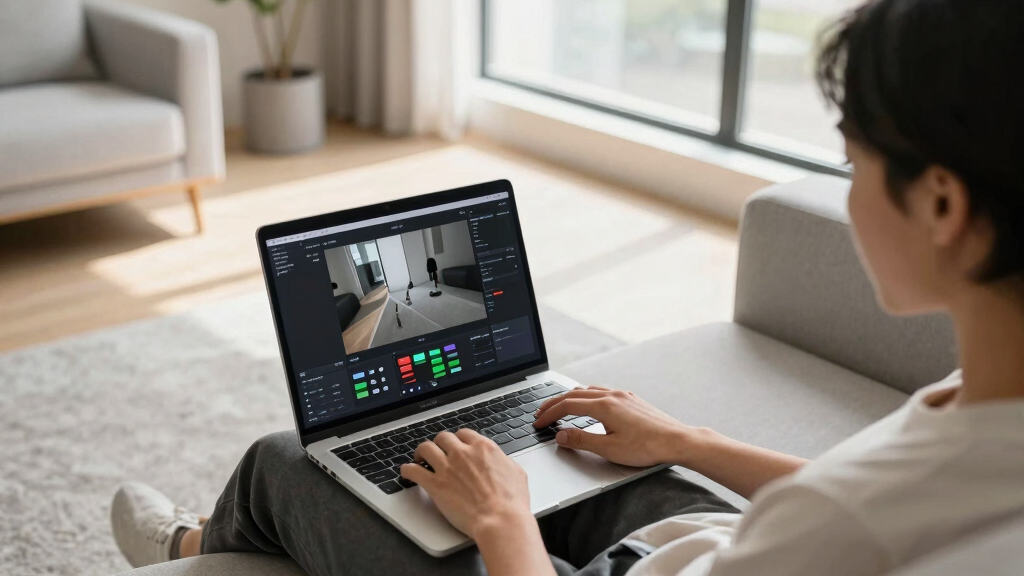
video analysis software with scene change detection
As an affiliate, we earn on qualifying purchases.
As an affiliate, we earn on qualifying purchases.
Limitations of Current Video Processing Methods
Existing AI video tools, including those integrated into models like Gemini, typically sample frames at fixed intervals (e.g., one per second), which can miss fast cuts or over-represent static scenes. Many tools require uploading videos to cloud servers, raising privacy concerns and increasing operational costs. Some models, like Claude, do not natively process videos at all, relying instead on transcripts or static images. Claimed advances, such as Gemini’s frame sampling, are limited by fixed sampling rates and do not adapt to scene changes. The new tool, claude-real-video, addresses these issues by performing scene-change detection and deduplication locally, providing a more meaningful data set for analysis.
“Claude-real-video intelligently detects scene changes and filters out near-duplicate frames, enabling LLMs to ‘watch’ videos more effectively.”
— an anonymous researcher
local video transcription tool
As an affiliate, we earn on qualifying purchases.
As an affiliate, we earn on qualifying purchases.
Unclear Aspects of Model Integration and Limitations
It is not yet clear how seamlessly different LLMs can integrate with the output from claude-real-video or how well models like Claude, ChatGPT, or Gemini can interpret the structured data. The effectiveness of scene detection and deduplication in highly complex or fast-paced videos remains to be fully tested. Additionally, the performance in languages other than English, or in videos with heavy background noise or music, is still uncertain. Further testing and user feedback are needed to determine the full capabilities and limitations of this approach.
privacy-focused video processing software
As an affiliate, we earn on qualifying purchases.
As an affiliate, we earn on qualifying purchases.
Expected Developments and Broader Adoption
Future steps include widespread testing across different video types, refinement of scene detection sensitivity, and integration into existing AI workflows. Developers may also improve compatibility with various LLMs and expand support for multi-language audio and subtitles. As the tool matures, it could become a standard component for privacy-conscious AI video analysis, with potential commercial and research applications expanding rapidly. Open-source communities and AI labs are likely to experiment with and adapt the tool for diverse use cases.
ffmpeg and Whisper compatible video extractor
As an affiliate, we earn on qualifying purchases.
As an affiliate, we earn on qualifying purchases.
Key Questions
Can claude-real-video process videos from any platform?
Yes, it can process videos from URLs like YouTube, Instagram, TikTok, or local files, provided the user has the right to access the content.
Does the tool require uploading videos to the cloud?
No, claude-real-video runs locally on the user’s machine, ensuring privacy and reducing cloud costs.
What are the technical requirements to run claude-real-video?
It requires Python 3.10+, ffmpeg, ffprobe, and Whisper for audio transcription. Installation instructions are provided in the documentation.
How does this improve over simple frame sampling methods?
It detects scene changes, filters out static or duplicate frames, and focuses on meaningful visual shifts, providing richer context for AI analysis.
Is this tool ready for commercial use?
It is currently available for experimentation and research; further testing and development are needed before widespread deployment.
Source: Hacker News