
📊 Full opportunity report: Use A Lab And Symptom Tracker To Follow Your TRT Care on IdeaNavigator AI — validation score, market gap, and execution plan.

Get business pricing on tech for your team
- Business-only prices and quantity discounts
- Tax-exempt purchasing
- Multiple users, one account, clear invoices
TL;DR
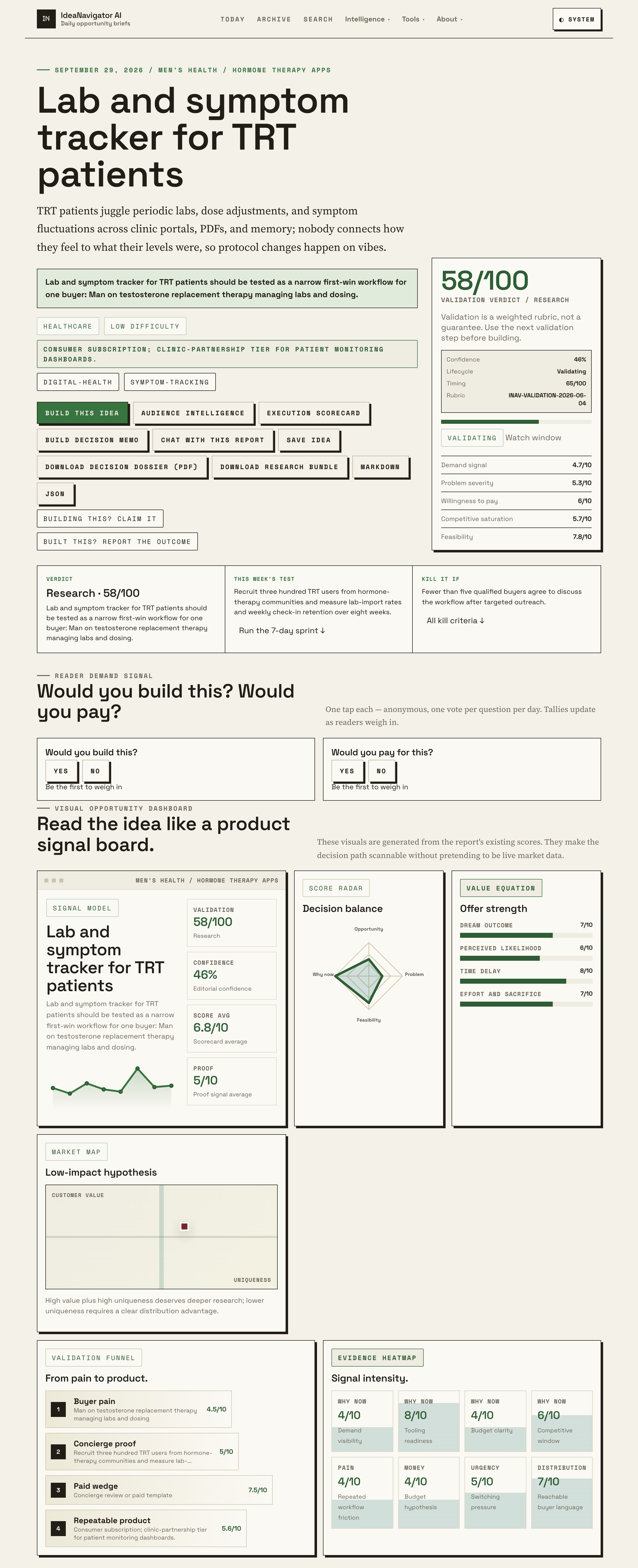
IdeaNavigator AI has published a proposal for a tool that would connect TRT patients’ lab results, dose changes and symptom check-ins. The concept has not been reported as a launched product or tested service; its suggested next step is an eight-week pilot with 300 users.
IdeaNavigator AI has proposed an eight-week test of a lab and symptom tracker for men on testosterone replacement therapy (TRT), outlining an app that would connect imported lab results with dose changes and daily symptom reports. The proposal describes a product opportunity and a validation plan; it does not establish that an app has launched, that clinics have adopted it or that the approach improves care.
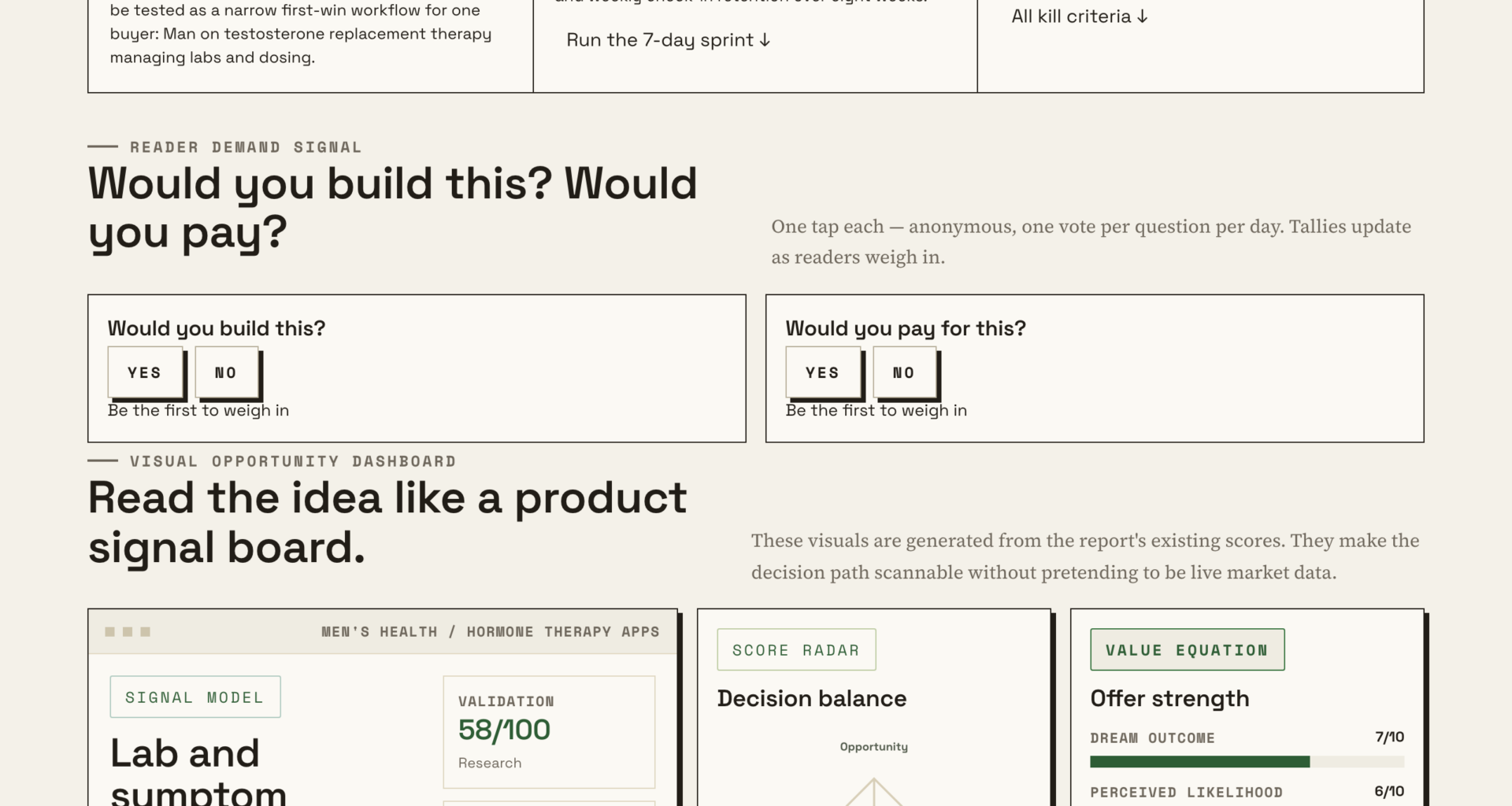
The proposed minimum viable product would let users import lab PDFs, chart hormone results over time and record dose changes alongside daily symptoms. It would also produce summaries for clinic visits and flag results that move outside target ranges. The proposal does not specify which lab markers, target ranges or clinical guidelines the product would use.
IdeaNavigator AI suggests a consumer subscription and a separate clinic-partnership tier with patient-monitoring dashboards as possible business models. To test demand and regular use, it proposes recruiting 300 TRT users from hormone-therapy communities and tracking lab-import rates and weekly check-in retention for eight weeks. No recruitment, pricing, retention results or commercial commitments are reported.
A Record for TRT Clinic Visits
The idea addresses a practical record-keeping problem described in the proposal: patients may have lab results, dose instructions and symptom notes spread across clinic portals, PDFs and personal memory. Putting those records in one timeline could give patients and clinicians a clearer account of what changed and when, if the information is accurate and used in care discussions.
That potential is not evidence that the app would improve treatment decisions. The proposal does not report clinical testing, clinician review, patient outcomes or safeguards for interpreting results. Any value would depend on whether users keep the record current and whether clinicians find its summaries useful, while decisions about dosing and abnormal results remain matters for qualified care teams.
Fragmented Records Motivate Proposal
TRT can involve recurring laboratory monitoring and adjustments to treatment, while patients may report changes in symptoms between appointments. The proposal frames care as fragmented across providers and digital records, but it supplies no prescription or telehealth market figures to quantify the size or growth of that population.
The proposed tracker is positioned within men’s health and hormone-therapy apps. Its suggested pilot focuses on two early measures—whether participants import lab results and whether they continue weekly check-ins—rather than demonstrating improved health outcomes. Those measures could show whether the workflow is usable, but would not by themselves establish clinical effectiveness.
Clinical and Market Evidence Missing
The proposal does not identify a developer, product name, launch date, participating clinic or confirmed pilot. It also gives no evidence that 300 users have been recruited or that the proposed tracking features have been evaluated.
Key design questions remain open, including how target ranges would be set, how the app would handle missing or inconsistent lab data, and whether clinic dashboards would be reviewed by clinicians. The proposal also offers no details on data privacy, security, regulatory status, subscription pricing or the clinical standards behind alerts. Its claim that prescriptions and telehealth clinics have surged is not accompanied by figures or a comparison period.
Pilot Measures Would Test Use
The next step described is to recruit 300 TRT users and observe lab imports and weekly check-in retention for eight weeks. Those measures would indicate whether participants use the core tracking workflow; the proposal does not set out thresholds for success or say when a pilot would begin.
Further reporting would be needed to establish whether a product is built, whether clinics participate and how clinicians would review its summaries or flags. Any claims about effects on care would require evidence beyond app engagement, including an appropriate evaluation of clinical outcomes.
Source: IdeaNavigator AI
Key Questions
Has a TRT tracking app launched?
The proposal describes an app concept and minimum viable product. It does not report a launched app or identify a developer.
What would the proposed tracker record?
It would connect imported lab PDFs and hormone results with dose changes and daily symptom check-ins, then prepare trend summaries and flag values outside target ranges.
Has the proposed 300-person pilot started?
No start date or recruitment results are provided. The 300 participants and eight-week tracking period are proposed as a validation plan.
Would the app recommend TRT dose changes?
The proposal mentions charting dose changes and flagging lab values, but does not say the app would recommend doses. It provides no clinical protocols or evidence supporting treatment guidance.
Source: IdeaNavigator AI
Fall Picks
fall essentials
As an affiliate, we earn on qualifying purchases.