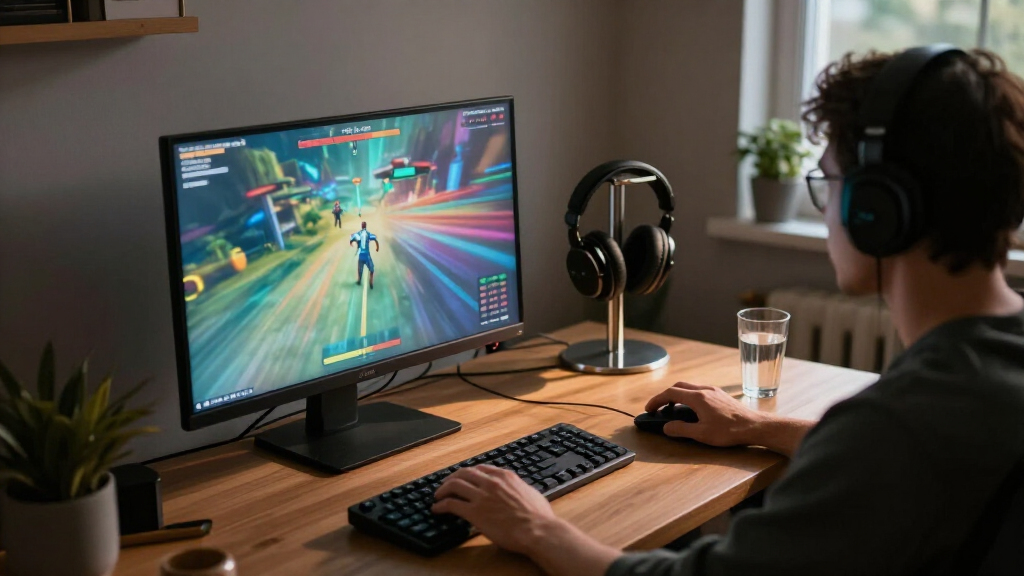

🔍 Read the full analysis: 10 Best High Refresh Gaming Monitors For Fluid Gameplay In 2026 on ThorstenMeyerAI.com

Get business pricing on tech for your team
- Business-only prices and quantity discounts
- Tax-exempt purchasing
- Multiple users, one account, clear invoices
TL;DR
ThorstenMeyerAI.com published a 10-monitor buying guide on Sept. 29, 2026, comparing models from compact Full HD screens to ultrawides. Its recommendations are based on listed specifications; the guide does not report firsthand performance testing, and the best fit depends on a player’s hardware, games and desk setup.
The guide puts the 24.5-inch ASUS TUF VG259QM5A first, citing its Full HD resolution and 240Hz refresh rate as a practical combination for fast play, a category also covered in this OLED gaming monitor roundup. It names the CRUA 27-inch 540Hz model for competitive players seeking a higher refresh ceiling, while noting that its Full HD resolution may be less appealing to buyers who prioritize fine detail or a wider view.
For wider formats, the article includes the SANSUI 34-inch UWQHD 240Hz monitor and a Kado two-monitor bundle with two 34-inch ultrawide screens rated at 165Hz. Other listed options include the KTC H32C5, SANSUI 27-inch and 32-inch Full HD models, the CRUA 45-inch DQHD ultrawide, Samsung Odyssey G55C and Dell SE2426HG. The Samsung is a 32-inch QHD display with a pronounced 1000R curve; the Dell is a compact 23.8-inch Full HD model rated at 240Hz.
The 10 picks
- 1
 CRUA 45-Inch DQHD 185Hz Ultrawide Curved Gaming MonitorView on Amazon →
- 2
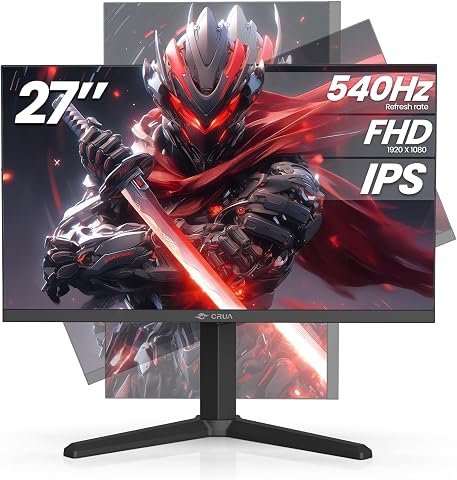 CRUA 27-Inch FHD 540Hz IPS Gaming MonitorView on Amazon →
- 3
 Kado 2-Pack 34-Inch Curved Ultrawide Monitor with 1500R Curvature, 165Hz, 1ms…View on Amazon →
- 4
 SANSUI 34-Inch Curved UWQHD 240Hz Gaming MonitorView on Amazon →
- 5
 KTC 32 Inch 280Hz 240Hz Curved Gaming Monitor, FHD PC Monitor 1080P, H32C5View on Amazon →
- 6
 Samsung 32" Odyssey G55C Series QHD Curved Gaming MonitorView on Amazon →
- 7
 SANSUI 32 Inch Curved Gaming Monitor 240Hz FHD 1080PView on Amazon →
- 8
 ASUS TUF Gaming VG259QM5A 25-Inch 1080p 240Hz G-SYNC Gaming MonitorView on Amazon →
- 9
 SANSUI 27 Inch Curved Gaming Monitor 240Hz FHD 1080PView on Amazon →
- 10
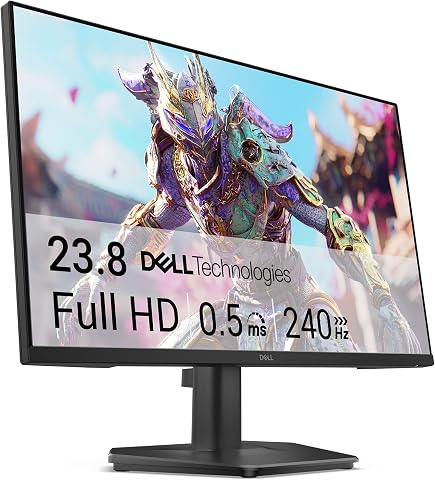 Dell 24 240Hz Gaming Monitor – SE2426HG – 23.8-inch FHD (1920×1080) 240Hz Dis…View on Amazon →
1. ASUS TUF VG259QM5A for compact speed
The ASUS TUF VG259QM5A combines a 24.5-inch Full HD screen with a 240Hz refresh rate. The guide favors it as a focused competitive setup, where a smaller display and high refresh rate may suit players who value quick scanning. ASUS lists a Fast IPS panel and adaptive-sync features; actual experience will depend on settings, hardware and the games played.
Products Worth Considering

LG UltraGear 45GX950A-B 45-Inch 5K2K Curved OLED Gaming Monitor

Samsung 37-inch Odyssey G7 4K UHD Curved Gaming Monitor

Samsung Odyssey G55C 32-Inch QHD 1000R Curved Gaming Monitor
As an affiliate, we earn on qualifying purchases.
2. SANSUI 34-inch UWQHD for wide play
The SANSUI 34-inch UWQHD offers a 3440-by-1440 resolution and a 21:9 format at 240Hz. The wider display can provide more game view or room for other windows, but it has more pixels to render than Full HD. Game support for ultrawide formats varies, so the format is a specific compatibility and graphics-load choice.
3. Kado dual ultrawide bundle for workspace
The Kado two-monitor bundle pairs two 34-inch curved ultrawides, each listed at 165Hz. The guide presents it for people who want game space alongside chat or tools. Two displays need more desk width, and their bezels create a division that a single ultrawide does not have.
4. KTC H32C5 for a large Full HD screen
The KTC H32C5 is a 31.5-inch curved Full HD display with a listed 240Hz native refresh rate and support up to 280Hz. Its size offers a larger image, but Full HD spreads the same resolution across more screen area than on the ASUS. Buyers sitting close may prefer a higher-resolution option.
5. SANSUI 27-inch for curved Full HD
The SANSUI 27-inch curved monitor is listed with Full HD resolution and refresh rates up to 240Hz. It sits between compact 24-inch displays and larger curved screens in size. The guide positions it for a mid-size setup; it does not provide independent testing results to establish how it performs in particular games.
6. CRUA 27-inch for a 540Hz ceiling
The CRUA 27-inch 540Hz monitor targets competitive players who can make use of very high frame rates. Its Full HD resolution keeps the pixel workload below that of QHD and ultrawide displays, but the guide cautions that a 540Hz rating alone does not guarantee a visible benefit. The PC and game must produce enough frames to take advantage of the refresh rate.
7. CRUA 45-inch DQHD for immersion
The CRUA 45-inch DQHD is a 5120-by-1440 ultrawide rated at 185Hz. Its 32:9 format emphasizes broad views and screen space. That scale can be attractive for supported games, but it calls for a large desk and substantially more graphics work than a standard Full HD display.
8. SANSUI 32-inch for large Full HD play
The SANSUI 32-inch curved model combines Full HD resolution with a 240Hz refresh rate. The guide notes its 1500R curve and FreeSync support. At 32 inches, its resolution is a tradeoff: buyers looking for sharper text or game detail may favor a QHD panel instead.
9. Samsung Odyssey G55C for QHD detail
The Samsung Odyssey G55C offers QHD resolution on a 32-inch screen with a 1000R curve and a 165Hz refresh rate, alongside features explored in a roundup of OLED gaming monitors with AI features. It prioritizes resolution and curvature over the highest refresh rates in this group. Its tighter curve may suit centered viewing, while desk depth and preferred seating position remain practical factors.
10. Dell SE2426HG for a smaller desk
The Dell SE2426HG is a 23.8-inch Full HD display with a listed 240Hz refresh rate. Its compact format can fit a smaller setup while retaining the refresh rate of larger options in the list. The guide reports conflicting response-time figures in product information, so buyers should check Dell’s current specifications rather than rely on one number.
The Frame Rate Must Match
The comparison matters because a monitor’s headline refresh rate is only one part of the experience. A 540Hz display needs very high frame rates from the PC and game to use its full capacity, while higher-resolution and ultrawide monitors require more graphics work than Full HD. Choosing around actual hardware and typical games can prevent paying for speed or screen area a setup cannot use comfortably.
Screen size also changes how resolution looks. The guide flags that Full HD on 31.5- or 32-inch screens may appear less crisp at close range than QHD. Those are tradeoffs drawn from specifications and display format; the article does not establish comparative image quality through controlled testing.
How the Ten Picks Were Ranked
The guide says it ranked the monitors by native refresh rate, resolution, screen size and format, with attention to how demanding a display may be for a gaming setup. It gives compact Full HD models and large QHD or ultrawide displays different roles, rather than ordering them by refresh-rate number alone.
The published page identifies itself as AI-assisted and says its comparison uses listed specifications without assuming unlisted features or firsthand performance. That makes it a specification-based buying guide, not a report of lab testing or a newly announced product launch.
Performance Depends on Each Setup
The guide does not establish real-world image quality, motion clarity or value for money through firsthand or controlled testing. It also does not provide a common test setup or pricing comparison in the supplied material. The Dell’s conflicting listed response-time figures remain unresolved there.
Whether ultrawide games display correctly, whether a system can sustain very high frame rates, and how comfortable a curved monitor feels depend on the game and user setup. Buyers should check current manufacturer specifications and game compatibility before purchasing.
Check Specs Before Buying
Readers comparing these models should verify the current price, availability, refresh-rate mode and connectivity on the manufacturer or retailer listing. They should also check their PC’s performance in the games they play and measure desk space, including the stand. The guide gives no later testing milestone or follow-up announcement; its immediate value is as a specification-based shortlist for matching monitor formats to different gaming priorities.
Key Questions
Which monitor does the guide rank first?
It ranks the ASUS TUF Gaming VG259QM5A first, citing its 24.5-inch Full HD screen and 240Hz refresh rate as a balanced compact option.
Does 540Hz automatically make a monitor the best choice?
No. The guide says the CRUA 540Hz model is aimed at competitive play, but the PC and game need to produce very high frame rates to make full use of that refresh rate.
Which pick has the largest screen?
The CRUA 45-inch DQHD ultrawide is the largest single monitor listed in the guide. The Kado option is a bundle of two 34-inch monitors.
Why might someone choose QHD over Full HD?
QHD provides more resolution, which may look sharper on a large display. The guide identifies the Samsung Odyssey G55C as a 32-inch QHD option, while noting its refresh rate is lower than the fastest models in the list.
Source: ThorstenMeyerAI.com