
Gamma is my best overall pick among these seven guides for readers who want AI to shape a presentation quickly, while Canva offers the broadest visual toolkit and PowerPoint suits familiar office workflows. The options differ in how much they automate slide creation, how much design control they leave to you, and whether they support a full content workflow beyond presentations. Since this roundup covers books and guides rather than software subscriptions, the comparison focuses on the workflows and tools each title teaches. Choose based on whether you need speed, flexible visual assets, or established presentation controls. Read on for the full breakdown and a guide to matching the right approach to your work.

Get business pricing on tech for your team
- Business-only prices and quantity discounts
- Tax-exempt purchasing
- Multiple users, one account, clear invoices
Key Takeaways
- Gamma leads for AI-first slide creation: Two guides focus on Gamma, making it the clearest fit for readers who want to build presentations from prompts and structured content.
- Canva has the widest creative scope: Three titles cover Canva, with an emphasis on visual assets and publishing as well as presentation work; that breadth suits people making more than slides.
- PowerPoint is the familiar-workflow choice: Its guide pairs presentation craft with AI features, which may suit teams already organized around Microsoft tools.
- Claude is the conversational alternative: Its guide covers presentations alongside prototypes and other visual assets, so it fits readers who want to explore ideas through dialogue.
- The titles are learning resources, not software products: Their value depends on how well their instructions match your workflow and current tool versions, so check scope and edition details before choosing.
| Getting Started with Gamma: Create Stunning Presentations with AI |  | Best for Gamma Beginners | Subject: Getting started with Gamma | Primary focus: Creating presentations with AI | Intended level: Beginner-oriented, based on the title and description | VIEW LATEST PRICE | See Our Full Breakdown |
| Canva for Business and AI Tools: From Zero to Professional Visual Assets |  | Best for Business Branding | Subject: Canva for business and AI tools | Named platform: Canva | Presentation coverage: Presentations | VIEW LATEST PRICE | See Our Full Breakdown |
| Gamma AI for Business: A Practical Manual |  | Best for Business Workflows | Subject: Gamma AI for business | Named platform: Gamma | Presentation coverage: Business presentations | VIEW LATEST PRICE | See Our Full Breakdown |
| Designing with Claude AI: Build Prototypes, Presentations, and Visual Assets Through Conversational AI Workflows |  | Best for Conversational Workflows | Subject: Designing with Claude AI | Named platform: Claude AI | Workflow approach: Conversational AI workflows | VIEW LATEST PRICE | See Our Full Breakdown |
| Canva AI Mastery: Beginner-to-Expert Guide (2026 Edition) |  | Best for Broad Canva AI Coverage | Edition: 2026 | Skill level: Beginner to expert | Named platform: Canva | VIEW LATEST PRICE | See Our Full Breakdown |
| Canva AI: Idea to Impact — A Beginner’s Guide to Creating and Publishing Professional Content | 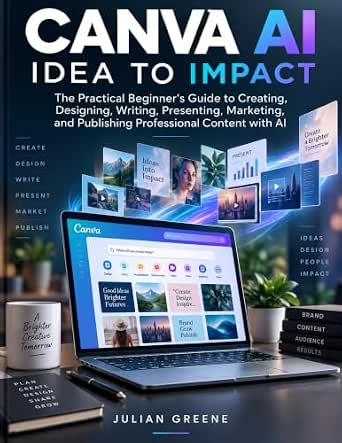 | Best for Beginners Building a Full Content Workflow | Format: Beginner’s guide | Platform: Canva AI | Primary focus: Creating and publishing professional content | VIEW LATEST PRICE | See Our Full Breakdown |
| Microsoft PowerPoint Mastery: Build Professional Presentations with Best Practices, Tips, and AI-Powered Tools |  | Best for PowerPoint Users Learning AI-Assisted Presentation Practice | Platform: Microsoft PowerPoint | Primary focus: Building professional presentations | AI coverage: AI-powered tools | VIEW LATEST PRICE | See Our Full Breakdown |
| AI presentation software | Format | Named platform | Presentation coverage | Subject |
|---|---|---|---|---|
| Getting Started with Gamma: Cr | Not specified in the provided product data | Gamma | AI-assisted presentation creation | Getting started with Gamma |
| Canva for Business and AI Tool | Not specified in the provided product data | Canva | Presentations | Canva for business and AI tools |
| Gamma AI for Business: A Pract | Not specified in the provided product data | Gamma | Business presentations | Gamma AI for business |
| Designing with Claude AI: Buil | Not specified in the provided product data | Claude AI | Presentation creation | Designing with Claude AI |
| Canva AI Mastery: Beginner-to- | Not specified in the provided product data | Canva | AI presentations | — |
| Canva AI: Idea to Impact | Beginner’s guide | — | — | — |
| Microsoft PowerPoint Mastery: | — | — | — | — |
More Details on Our Top Picks
Getting Started with Gamma: Create Stunning Presentations with AI
This guide is the most direct starting point here for someone who wants to make presentations with Gamma AI rather than survey several design platforms. Its introductory focus gives it a narrower purpose than Gamma AI for Business: A Practical Manual, which also covers documents, workflows, and communication. That narrower scope may suit a first-time Gamma user who wants to focus on presentation creation, but the listing offers no chapter outline, format, or examples to show how far the instructions go. Compared with the broader Canva guides in this roundup, it is less useful for readers who need branding templates or a wider range of visual assets. I’d choose it for a focused introduction, while treating the missing content details as a reason to check the book’s listing carefully before buying.
Pros:- Focuses specifically on creating presentations with AI
- Introduces Gamma rather than covering unrelated design platforms
- A narrow subject may be easier for new Gamma users to approach
Cons:- No chapter outline or examples are provided to show the depth of instruction
- The description does not specify format or other book details
- Does not indicate coverage of broader business workflows or branding tools
Best for: First-time Gamma users who want a focused introduction to creating AI-assisted presentations.
Not ideal for: Readers comparing several presentation platforms or seeking a detailed, verified syllabus, since the available description gives no chapter or format information.
- Subject:Getting started with Gamma
- Primary focus:Creating presentations with AI
- Intended level:Beginner-oriented, based on the title and description
- Named platform:Gamma
- Presentation coverage:AI-assisted presentation creation
- Format:Not specified in the provided product data
Our verdict“Choose this for a Gamma-focused introduction to AI presentation creation, not for broad business or multi-tool training.”
Canva for Business and AI Tools: From Zero to Professional Visual Assets
This guide earns its place by putting AI presentations inside a business visual-assets workflow, alongside branding tools and business templates. That makes it a better fit than Getting Started with Gamma for readers who want presentation guidance connected to a wider set of Canva business materials. The tradeoff is breadth: the available description does not establish how much space the book gives to presentations versus branding, templates, or other AI features. It also names Canva’s AI tools without specifying which ones or how their workflows are taught. I’d favor this over the Gamma-specific books when consistency across business assets matters more than a deep focus on one presentation tool; readers seeking a presentation-only manual may find its business scope less direct.
Pros:- Connects presentations with branding tools and business templates
- Introduces Canva AI features for more efficient content creation
- Addresses business visual assets beyond slide decks
Cons:- The description does not clarify how deeply presentations are covered
- Specific AI tools and workflows are not identified
- No format, chapter details, or examples are provided
Best for: Small-business owners and solo marketers who want presentation guidance alongside Canva branding tools and business templates.
Not ideal for: Readers seeking an in-depth, presentation-only Gamma or Canva manual, because the described scope also includes branding and other visual assets.
- Subject:Canva for business and AI tools
- Named platform:Canva
- Presentation coverage:Presentations
- Other topics:Branding tools and business templates
- AI coverage:Canva AI features for content creation
- Format:Not specified in the provided product data
Our verdict“Pick this if you want Canva presentation guidance as part of a broader business-branding toolkit.”
Gamma AI for Business: A Practical Manual
Unlike Getting Started with Gamma, which is framed as an introduction to presentation creation, this manual positions Gamma AI as part of a larger business workflow. Its described coverage includes presentations, documents, workflows, and communication, making it the more relevant pick for a professional who expects AI-assisted slides to connect with everyday business materials. That wider remit is also the main compromise: the product data does not say how detailed the presentation instruction is or whether the book includes examples, step-by-step exercises, or a chapter plan. Compared with Canva for Business and AI Tools, it is centered on Gamma rather than branding templates and a broader visual-assets toolkit. I’d choose it for business-oriented Gamma coverage, while readers who only need an initial presentation tutorial may prefer the more narrowly framed introduction.
Pros:- Connects Gamma AI presentations with business documents and communication
- Covers workflows beyond slide creation
- Has a broader business focus than the introductory Gamma guide
Cons:- No chapter outline or examples are provided
- The depth of presentation-specific instruction is unclear
- Format and other practical details are not specified
Best for: Business professionals who want to explore Gamma AI for presentations as well as documents, workflows, and communication.
Not ideal for: New users seeking a clearly outlined, presentation-only tutorial, since the available description does not specify instructional depth or format.
- Subject:Gamma AI for business
- Named platform:Gamma
- Presentation coverage:Business presentations
- Additional topics:Documents, workflows, and communication
- Positioning:Practical manual
- Format:Not specified in the provided product data
Our verdict“Choose this for a business-wide view of Gamma AI, rather than a narrowly focused first lesson in presentation creation.”
Designing with Claude AI: Build Prototypes, Presentations, and Visual Assets Through Conversational AI Workflows
This guide is the lineup’s distinct choice for readers interested in using conversational AI workflows to create presentations, prototypes, and visual assets. That makes it a different kind of resource from Gamma AI for Business: A Practical Manual: the latter centers on Gamma and business communication, while this title centers on Claude and a broader design process. The inclusion of prototypes may appeal to people preparing product concepts or explaining an idea visually, not just assembling slides. The tradeoff for presentation buyers is that presentations are only one part of the described scope, and the listing gives no detail about the actual workflow steps, examples, or format. I’d pick this when the conversational approach and prototype work matter alongside slides; for focused Gamma or Canva presentation instruction, the platform-specific guides are a closer match.
Pros:- Covers presentation creation through conversational AI workflows
- Includes prototype creation as well as visual assets
- Offers a different approach from the Gamma- and Canva-focused guides
Cons:- Presentations share the scope with prototypes and other visual assets
- The actual workflow steps and examples are not described
- Format and instructional depth are unspecified
Best for: Product creators and consultants who want to use Claude conversational workflows for presentations alongside prototypes and visual assets.
Not ideal for: Readers who need detailed instructions for a dedicated presentation platform such as Gamma or Canva, since this guide centers on Claude workflows.
- Subject:Designing with Claude AI
- Named platform:Claude AI
- Workflow approach:Conversational AI workflows
- Presentation coverage:Presentation creation
- Additional topics:Prototypes and visual assets
- Format:Not specified in the provided product data
Our verdict“Choose this if you want Claude-based conversational design workflows for slides and prototypes, not a dedicated slide-tool manual.”
Canva AI Mastery: Beginner-to-Expert Guide (2026 Edition)
This is the broadest Canva AI choice in the group, with named coverage of Magic Write, Magic Design, AI image generation, video, and presentations. That range gives it a different role from Canva for Business and AI Tools, whose description emphasizes branding and business templates: this guide is framed around Canva AI tools from beginner through expert, with income-generating applications also included. For presentation buyers, the advantage is seeing slide creation alongside related content tools; the tradeoff is that presentations are one topic among several, not the sole focus. The 2026 edition and stated skill range help define its intended audience, but the available data provides no chapter plan or format details. I’d choose it for broad Canva AI learning, while a reader wanting a focused Gamma presentation manual should look elsewhere.
Pros:- Names a wide range of Canva AI tools, including presentation features
- States a beginner-to-expert audience
- Includes potential applications for income-generating work
- Identifies a 2026 edition
Cons:- Presentation instruction is one part of a wide toolset
- No chapter outline or examples are provided
- The format and depth of individual tool tutorials are unclear
Best for: Canva users from beginner to advanced who want presentation features taught alongside writing, design, image, and video tools.
Not ideal for: Buyers who want a presentation-only guide or verified details about the book’s lessons and format, which are not supplied in the product data.
- Edition:2026
- Skill level:Beginner to expert
- Named platform:Canva
- AI topics:Magic Write and Magic Design
- Visual generation topics:AI image generation and AI video
- Presentation coverage:AI presentations
- Additional application:Income-generating work
- Format:Not specified in the provided product data
Our verdict“Choose this for broad Canva AI learning across presentations and other content tools, rather than narrowly focused slide instruction.”
Canva AI: Idea to Impact — A Beginner’s Guide to Creating and Publishing Professional Content
This guide suits beginners who want to use Canva AI beyond slide creation. Its scope spans ideation, writing, design, presenting, marketing, and publishing, so readers can follow a broader path from an initial concept to finished content. Compared with Getting Started with Gamma, which is specifically framed around making AI presentations, this book takes a wider Canva-centered approach; that breadth may help someone producing several kinds of business content, but it gives presentation-only learners less focused instruction. The practical, beginner-oriented framing is a useful entry point for people unfamiliar with Canva AI workflows. The tradeoff is that the description does not specify particular AI tools, presentation techniques, or advanced methods, so experienced Canva users may find the guidance too introductory.
Pros:- Covers a content workflow spanning ideation, writing, design, presenting, marketing, and publishing.
- Designed for readers who are new to Canva AI.
- Focuses on practical steps for turning ideas into finished content.
- Connects presentation creation with other common content tasks.
Cons:- Its broad content scope may leave less room for presentation-specific instruction than a dedicated PowerPoint guide.
- The product description does not identify specific AI tools or advanced presentation methods.
- Beginner-level framing may offer limited value to readers already comfortable with Canva.
Best for: Beginners who want a guided Canva AI workflow for creating presentations alongside written, visual, and marketing content.
Not ideal for: Experienced Canva users or buyers seeking a presentation-only manual with detailed coverage of specific AI features and advanced slide techniques.
- Format:Beginner’s guide
- Platform:Canva AI
- Primary focus:Creating and publishing professional content
- Content workflow:Idea development, writing, design, presentation, marketing, and publishing
- Intended audience:Beginners
- Approach:Practical workflow from idea to finished content
Our verdict“Choose this guide if you are new to Canva AI and want to create presentations as part of a wider content workflow, rather than study slides alone.”
Microsoft PowerPoint Mastery: Build Professional Presentations with Best Practices, Tips, and AI-Powered Tools
This guide is the most directly PowerPoint-focused option in this pair, combining presentation best practices with practical tips and AI-powered tools. That makes it a better fit than Canva AI: Idea to Impact for readers whose work already happens in PowerPoint and who want guidance centered on building professional slides there. Its emphasis on best practices may help readers improve the presentation as a whole, rather than treating AI output as the finished product. The tradeoff is that the description does not name particular AI features, explain how deeply they are covered, or mention workflows for other platforms. Buyers looking for a broad, beginner-oriented Canva content guide—or a clearly specified, tool-by-tool AI tutorial—may prefer a different pick.
Pros:- Keeps the focus on creating presentations in Microsoft PowerPoint.
- Pairs AI-powered tools with presentation best practices.
- Includes practical tips aimed at building professional presentations.
Cons:- The description does not identify which AI tools or features the guide covers.
- Its stated focus is PowerPoint rather than cross-platform presentation workflows.
- The scope and depth of its instruction are not specified.
Best for: PowerPoint users who want presentation guidance, practical slide-making tips, and an introduction to AI-powered tools within their existing workflow.
Not ideal for: Readers who need a cross-platform presentation guide, a broad Canva AI content workflow, or detailed coverage of named AI features.
- Platform:Microsoft PowerPoint
- Primary focus:Building professional presentations
- AI coverage:AI-powered tools
- Additional coverage:Presentation best practices
- Additional coverage:Practical tips
- Intended outcome:Professional presentations
Our verdict“Choose this guide if you build slides in PowerPoint and want AI tools presented alongside practical presentation fundamentals.”

How We Picked
I compared these seven titles by how directly they help a reader create effective presentations with AI, how clearly they explain the workflow, and how much useful control they leave to the person making the slides. I also looked at breadth: some guides concentrate on slide creation, while others extend into business assets, publishing, prototypes, or established presentation practices. That distinction matters because extra coverage can help a multipurpose creator but add little for someone who only needs a deck.
Gamma ranks first because the two Gamma guides give this roundup its strongest focused path into AI-led presentation creation. Canva follows for its wider visual and publishing reach, while PowerPoint earns a place for readers who value conventional slide workflows and Microsoft AI features. Claude serves a more exploratory, conversational use case. The ranking reflects fit and focus, not independent software testing; these are books and guides, and their advice may vary by edition and tool updates.
| AI presentation software | Subject | Named platform | Presentation coverage | Format |
|---|---|---|---|---|
| Getting Started with Gamma: Cr | Getting started with Gamma | Gamma | AI-assisted presentation creation | Not specified in the provided product data |
| Canva for Business and AI Tool | Canva for business and AI tools | Canva | Presentations | Not specified in the provided product data |
| Gamma AI for Business: A Pract | Gamma AI for business | Gamma | Business presentations | Not specified in the provided product data |
| Designing with Claude AI: Buil | Designing with Claude AI | Claude AI | Presentation creation | Not specified in the provided product data |
| Canva AI Mastery: Beginner-to- | — | Canva | AI presentations | Not specified in the provided product data |
| Canva AI: Idea to Impact | — | — | — | Beginner’s guide |
| Microsoft PowerPoint Mastery: | — | — | — | — |
Factors to Consider When Choosing AI Presentation Software
Before choosing a learning resource, decide what you want AI to take off your hands and where you want to keep control. The best workflow depends on the presentation’s audience, how often you revise it, and what tools your team already uses.
Decide How Much of the Deck AI Should Create
Some workflows use AI to turn a prompt into a full first draft; others use it for outlines, wording, or visual suggestions. A fast draft helps when you have a clear brief and a short deadline, but a vague prompt can produce a deck that looks complete before its argument is sound. Decide which parts you want to delegate: structure, copy, imagery, layout, or all four. Then check whether the guide explains how to revise generated slides, not only how to produce them. If you need to defend every claim, keep research and fact checking in your own process. A useful resource should make the handoff between AI output and human judgment clear.
Match the Workflow to Your Existing Tools
Switching presentation platforms can affect templates, collaboration, file sharing, and how colleagues edit your work. A new AI-first tool may speed up a solo draft but create friction if your organization expects editable PowerPoint files or established templates. Before committing to a workflow, find out what export formats it supports and whether those preserve layout and fonts. Also check how team members can comment or co-edit. A guide that teaches a familiar platform may save more time than one with stronger automation if your team already has a mature process. Consider the whole path from draft to delivered file, not just the first prompt.
Separate Visual Polish From Clear Communication
AI can make slides look consistent while leaving the message crowded, repetitive, or unsupported. Start with the decision or takeaway your audience needs, then use design tools to make that point easier to grasp. A resource focused on graphics and templates can help with visual variety, but it cannot replace a sound narrative. Check whether the instructions cover hierarchy, readable text, chart choices, and pacing between slides. Be cautious of adding decorative images just because a tool can generate them. The strongest workflow makes each visual serve the explanation.
Check the Guide’s Edition and Tool Coverage
AI presentation features change quickly, and a book’s examples may reflect a previous interface or feature set. Check its publication or edition details and whether the methods depend on features available in your account or region. Look for principles that remain useful even when menus change, such as prompt structure, storyboarding, and revision. A narrow guide can be valuable if it explains one workflow well; a broad guide is more useful when you create multiple kinds of content. Avoid choosing by title alone: inspect the contents or sample pages to see whether it covers the tasks you actually perform. This small check can prevent a mismatch between the guide and your current setup.
Plan for Review, Accuracy, and Accessibility
Generated slides can contain incorrect claims, awkward phrasing, or visuals that make information harder to interpret. Build a review pass into your workflow for facts, citations, spelling, contrast, and text size. If your presentation supports a decision, verify figures against their original sources and keep those sources easy to find. For a team or public audience, consider whether the deck works when projected, viewed on a small screen, or read with assistive technology. These checks take time, but skipping them can cost more than any minutes saved during drafting. Choose guidance that treats final review as part of creation.
Frequently Asked Questions
Should I choose a Gamma guide or a Canva guide if I mainly need slide decks?
Choose based on whether you want a focused presentation workflow or a broader design environment. The Gamma titles center more directly on AI-assisted deck creation, while the Canva titles also cover visual assets and publishing. If your work mostly ends with a slide deck, a focused Gamma resource may be easier to follow. If you regularly make presentations alongside other branded content, Canva’s broader coverage may serve more tasks. Check the guide’s contents for the specific creation and editing steps you need.
Can I use AI presentation software without giving up control of my slides?
Yes, but control depends on how you use the tool and what its editor allows. Treat AI output as a draft: keep the parts that support your message, rewrite weak claims, and adjust layouts that obscure the point. Before adopting a platform, confirm that you can edit individual elements and export in a format your collaborators can revise. A workflow that starts with AI and ends with a deliberate human review usually preserves more control than accepting a generated deck as finished. The guides in this roundup vary in how much they emphasize that balance.
Will a guide published in 2026 still help me in 2027?
It can, especially if it teaches durable skills such as planning a narrative, writing useful prompts, and reviewing slide hierarchy. Interface instructions and feature names may change, so treat step-by-step screenshots as time-sensitive. Check the publication details and compare the book’s scope with the current version of the software you plan to use. Prefer guidance that explains why a step works, since that is easier to adapt after an update. For current feature availability, consult the software maker’s documentation as well.
Is an AI-first presentation tool a good fit for a team that shares PowerPoint files?
It may be, but file handoff should be part of your decision. Check whether the tool exports editable PowerPoint files and whether common elements such as fonts, charts, and layouts survive conversion. Try a representative deck before moving a team workflow, since export quality can vary by content and template. If colleagues make extensive edits in PowerPoint, a resource focused on PowerPoint’s own workflow may reduce friction. An AI-first tool can still help with drafting, even if the final review and collaboration happen elsewhere.
What should I learn first if I have never made an AI-generated presentation?
Begin with a simple brief: audience, purpose, key message, and the action you want readers to take. Ask for an outline before asking for a complete deck, then correct the sequence before spending time on design. Learn how to revise generated content and check sources before exploring advanced visual features. A beginner-focused Canva guide may help if you also need support with visual assets, while a Gamma guide offers a more direct route into AI-led slides. Whichever path you choose, practice on a low-stakes presentation first so you can learn the editing process.
Conclusion
Gamma is my best overall recommendation for readers who want focused guidance on AI-led presentation creation, and its two titles give it the strongest presence in this roundup. Canva is my best value in versatility for people who need slide design alongside other visual content, while PowerPoint is my premium workflow pick for teams built around Microsoft presentation files. For beginners who want broader creative support, I’d start with a Canva guide; for a direct introduction to AI-generated decks, choose a Gamma guide. Claude suits specific needs when conversational prompting across presentations, prototypes, and visual assets matters. Compare each guide’s edition and contents against your actual workflow, then choose the one that will help you move from a rough idea to a reviewed, shareable deck.