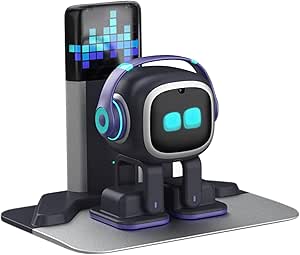
Looking for the best desktop companion robots in 2026 means choosing between two very different experiences: expressive character-driven bots like the Eilik line, which trade cloud intelligence for charm and battery life, and AI-powered companions like the LOOI AI Desktop Companion, which lean on voice interaction, visual recognition, and ongoing memory. My top overall pick is the LOOI because it blends genuine conversational ability with practical desk features like 10W wireless charging. If personality and animation matter more than raw smarts, the EnergiE Lab Eilik is the standout character bot, while the Anki Vector remains the pick for autonomous roaming behavior on a budget. The main tradeoff in this category is that cloud-connected models offer richer conversation but depend on servers and subscriptions, while offline character bots feel more reliable but repeat themselves over time. Read on for the full ranked breakdown, who each robot is for, and which ones to skip entirely.

Get business pricing on tech for your team
- Business-only prices and quantity discounts
- Tax-exempt purchasing
- Multiple users, one account, clear invoices
Key Takeaways
- The LOOI takes the top spot because it is the only robot in this lineup that pairs real conversational AI (memory, visual recognition, voice) with a genuinely useful desk feature — 10W wireless charging — making it the least likely to end up in a drawer.
- The Eilik family (EnergiE Lab Eilik, Eilik DQ, and the touch-responsive Eilik) dominates the personality segment; the differences between them are mostly cosmetic and animation-driven, so buyers should pick based on design preference, not capability.
- Cloud-dependent models like the two EMOPET EMO variants and the AIPI Lite offer the richest chat experience but carry real risk: if the service shuts down or requires fees, the hardware loses most of its appeal. The Anki Vector is the cautionary example, kept alive only by community firmware.
- Plush-style options like the PanniOhye and the AI Companion Robot Plush trade desk presence and screen-based expressiveness for comfort and portability — they suit younger users or gifting, not serious desktop use.
- Budget models in the $30–60 range (ciciglow, Oiumhru, OVAQUIXI) all deliver similar basic voice chat on tiny screens; none matched the responsiveness or animation quality of the mid-tier picks, which is where this category’s real value sits.




More Details on Our Top Picks
PanniOhye HH1801YM Interactive AI Robot Companion
Most desktop companions lean either cute or clever, and the PanniOhye HH1801YM sits in the middle — which is exactly why it makes sense for teen buyers aged 14 and up who want one device to do a bit of everything. Its smart chat and storytelling give it more conversational range than the expression-driven OVAQUIXI, while its memory function aims to personalize interactions in a way simpler novelty robots can’t. At 9.6 ounces and under six inches tall, it’s genuinely portable — closer to a pocket pet than a fixture like EMO with its charging dock. The tradeoff is vagueness: learning support and personalization are described broadly, and no battery life or charge time is specified, so you’re buying on promise rather than documented endurance. Compared with the plush AI companion below, it trades softness and multilingual cloud chat for a more traditional robot form factor.
Pros:- Combines smart chat, storytelling, and a learning helper in one device
- Memory function is designed to personalize interactions over time
- Compact and light enough to move between desks, shelves, and bags
- Charges over standard USB-C with the included cable
Cons:- Battery life and charging time are not specified by the manufacturer
- Learning support and personalization features are described only in broad terms
Best for: Teenagers 14+ who want a single compact robot that blends chat, stories, and homework help
Not ideal for: Buyers who need documented battery life or clearly specified AI capabilities before committing
- Brand:PanniOhye
- Model:HH1801YM
- Features:Memory, voice recognition, storytelling, learning helper, smart chat
- Age range:14+
- Dimensions:4.3 x 2.5 x 5.5 inches
- Weight:9.6 ounces
- Included components:AI robot, manual, USB-C charging cable
Our verdict“A reasonable all-rounder for teens, as long as you accept some uncertainty about battery endurance and how deep its AI features actually go.”
AI Companion Robot Plush with Cloud Memory and Real-Time Chat
If every other robot here is a gadget, this one is a comfort object with a brain. The plush format changes the whole relationship — you hold it, and it talks back in real time through whichever AI engine you prefer, with ChatGPT, DeepSeek, and Gemini all supported. That model flexibility outclasses the PanniOhye’s fixed feature set, and cloud-based memory means conversations build on each other rather than starting cold. Privacy-minded buyers get a genuine win too: no camera and no GPS, unlike EMO, which relies on a built-in camera for part of its interaction. The catch is dependency. Real-time chat needs 2.4 GHz Wi-Fi and app setup, and offline you’re limited to touch-triggered prerecorded lines — a much flatter experience than the always-on expressiveness of the OVAQUIXI. A 12-month warranty softens the risk.
Pros:- Lets you switch between ChatGPT, DeepSeek, and Gemini as conversation engines
- Cloud memory adapts to prior interactions for continuity
- No built-in camera or GPS for privacy-conscious buyers
- Touch-activated prerecorded lines keep some play available offline
Cons:- Real-time conversations require 2.4 GHz Wi-Fi and app-based setup
- Cloud features are entirely dependent on internet access
- Offline mode is limited to prerecorded phrases
Best for: Buyers who want a huggable, multilingual conversationalist — especially those who value camera-free privacy
Not ideal for: Households with unreliable Wi-Fi, since cloud chat and memory stop working without internet access
- Connectivity:2.4 GHz Wi-Fi
- AI models:ChatGPT, DeepSeek, and Gemini
- Memory:Cloud-based conversational memory
- Offline features:Touch-activated prerecorded lines and Easter eggs
- Languages:Multilingual conversations
- Camera / GPS:None built in
- Warranty:12 months
Our verdict“The pick for anyone whose ideal desk companion is soft to hold but sharp to talk to — provided your Wi-Fi is dependable.”
OVAQUIXI Interactive Desktop Robot Companion with Emotion Recognition, 2.01-Inch Screen, Black
Where the plush companion wins on conversation, the OVAQUIXI wins on visible personality. Its 2.01-inch screen animates more than 70 expressions, and it reacts physically to taps, tilts, and shakes — the kind of tactile responsiveness that makes a desk robot feel alive rather than like a speaker with legs. Compared to the PanniOhye, it trades storytelling depth for instant, glanceable charm: you get music playback, hands-free calls, and a 3W speaker that fills a desk zone easily. Placement is flexible thanks to a magnetic base and adhesive mounting for smooth surfaces, and the built-in 1000 mAh battery means no dock cluttering your workspace, unlike EMO’s mandatory charging station. Two caveats: the advertised car mount isn’t included, and some of the product documentation is muddled, so expect a short learning curve figuring out lesser features on your own.
Pros:- Over 70 animated expressions give it visible, varied personality
- Responds to taps, tilts, and shakes for tactile interaction
- Doubles as a music player and hands-free call speaker
- Magnetic base plus adhesive allows mounting on smooth surfaces
Cons:- The car mount referenced in some materials is not included
- Product text is incomplete or unclear in places, requiring trial and error
Best for: Desk-dwellers who want maximum visual character and tactile play without a charging dock
Not ideal for: Buyers who prioritize deep conversation or clean, complete documentation over personality animations
- Brand:OVAQUIXI
- Material:ABS
- Dimensions:2.52 x 2.48 x 2.17 in
- Screen:2.01 in, 240 x 296 resolution
- Battery:Built-in 1000 mAh lithium-ion
- Speaker:36 mm, 3 W
- Weight:5.82 oz
- Included accessories:Charging cable, double-sided tape, instruction manual
Our verdict“The strongest choice if what you want from a desk robot is expressiveness and touch-driven charm rather than heavyweight AI conversation.”
EMOPET EMO Interactive Desk Robot with Charging Station
EMO earns the top spot because it’s the most complete package in this batch: voice commands, a built-in camera and sensor array, ChatGPT-powered conversation, dancing, app-based games, and — the detail that separates it from everything else here — autonomous docking. When the battery runs low, EMO finds its own way back to the charging station, which no other pick in this lineup can do. The camera gives it awareness of people and movement that the camera-free plush companion simply can’t match, and its game library makes it more of an ongoing entertainment system than the OVAQUIXI’s expression-focused approach. The tradeoffs are real, though. Its most interesting conversations require a network connection, and some basics — like volume control — are buried behind the app rather than a physical button or voice request. It also demands more desk real estate than pocket-sized options like the AIPI Lite.
Pros:- Automatically locates and returns to its charging station
- Built-in camera and sensors enable awareness of people and movement
- ChatGPT-powered conversations plus dancing and app-based games
- Responds to both touch and voice commands
Cons:- Complex conversations require a network connection
- The companion app is required just to adjust volume
- Robot plus dock takes up more desk space than compact alternatives
Best for: Buyers who want the most self-sufficient, feature-rich desk companion and don’t mind app-dependent controls
Not ideal for: Minimalists and privacy-focused buyers — it needs a camera-enabled setup, network access, and the app for everyday adjustments
- Brand:EMOPET
- Model:EMO GO HOME
- Included components:Robot, charging station
- Connectivity:Network connection; EMO app
- Features:Voice commands, ChatGPT conversations, dancing, games, automatic charging
- Dimensions:11 x 8.5 x 2.95 inches
- Recommended age:15 years and up
Our verdict“If you want one desktop robot that does the most and takes care of its own charging, EMO is the pick — just accept the app dependency.”
AIPI Lite AI Robot Companion with Custom Characters and Knowledge Base Support, Blue
The AIPI Lite is the odd one out, and deliberately so. At 23 grams and 0.3 inches thick, it’s less a robot pet and more a programmable AI companion — think of it as the maker’s alternative to EMO. Its signature capability is the knowledge base feature: paste or upload your own reference material, and it answers questions grounded in your documents, something none of the other picks attempt. You can build custom AI characters with configurable personalities and memory, and the free tier is generous — 20 agents and unlimited conversations. But this is a kit-like proposition. The battery, USB-C cable, and power adapter are all sold separately, so out-of-the-box costs and setup effort exceed anything like the OVAQUIXI, which works from the charge it ships with. Voice cloning and other advanced features sit behind paid plans, and it won’t join public Wi-Fi networks with login pages.
Pros:- Custom AI characters with configurable personalities and memory
- Answers questions using your own uploaded or pasted reference material
- Free tier includes 20 AI agents and unlimited conversations
- Extremely compact and lightweight at 23 grams
Cons:- Battery, USB-C cable, and power adapter are not included
- Voice cloning and advanced features require optional paid plans
- Cannot connect to public Wi-Fi networks that use login pages
Best for: Hobbyists and productivity-focused users who want to build custom AI personas and query their own documents
Not ideal for: Anyone wanting a plug-and-play pet — it arrives without battery, cable, or adapter and requires configuration
- Brand:YONBO
- Model:XY006PL01
- Color:Blue
- Weight:23 g
- Dimensions:2.18 x 1.87 x 0.3 inches
- Material:Plastic
- Connectivity:2.4 GHz Wi-Fi (password-protected)
- Included components:AIPI Lite device, manual
Our verdict“A niche but compelling choice for tinkerers who’d rather program a companion than pet one — expect extra purchases and setup time.”
ciciglow AI Desktop Robot Companion with Voice Chat, Yellow
For buyers who want a voice-chat companion without a premium price, this yellow ciciglow bot covers the basics well. Its support for 37 languages is broader than anything else in this lineup — the umissfun Emotional Companion handles only three — which makes it a fit for multilingual households. The expressive LED eyes give it personality during conversation, though it lacks the camera and autonomous movement that make the Anki Vector feel alive on a desk. Tradeoffs are real: 200 minutes of runtime means frequent charging, and the 2.4GHz Wi-Fi requirement can frustrate owners of newer dual-band routers. Compared with LOOI, there’s no memory, no visual recognition, and no practical extras like reminders — this is conversation and companionship, nothing more. That simplicity is exactly the point at this tier.
Pros:- Voice interaction with support for 37 languages
- Expressive LED eyes add personality to conversations
- Fully cordless with a built-in rechargeable battery
- Simple setup makes it approachable for first-time robot owners
Cons:- Limited 200-minute runtime between charges
- Requires a 2.4GHz Wi-Fi network for setup
- No camera, memory, or autonomous movement
Best for: Multilingual users and first-time buyers who want simple voice chat without paying for cameras or AI subscriptions
Not ideal for: Anyone wanting long cordless sessions or advanced features like memory and visual recognition
- Brand:ciciglow
- Type:AI chat robot
- Color:Yellow
- Material:ABS
- Battery capacity:1000mAh rechargeable lithium
- Usage time:Up to 200 minutes
- Charging time:120 minutes
- Language support:37 languages
- Connectivity:2.4GHz Wi-Fi required
Our verdict“A straightforward pick for multilingual buyers who want affordable voice companionship and nothing fancier.”
Anki Vector Autonomous AI Robot
Vector remains the closest thing to a self-directed desk pet in this roundup. Unlike the stationary ciciglow or umissfun devices, Vector actually drives around your desk, avoiding obstacles, finding its charger, and greeting you by face. That autonomy is what separates it from conversation-only bots like EMO, which mostly waits to be engaged. The HD camera and facial recognition create a genuine sense of being recognized rather than merely heard. The catch is the paywall: ChatGPT-powered conversation requires an active subscription, so the richest feature is an ongoing cost rather than a one-time purchase. Setup also demands a 2.4 GHz network. If you want a robot that behaves like a creature with its own agenda, nothing else here matches it — but budget-minded buyers should compare against LOOI’s subscription-free feature set first.
Pros:- Autonomous navigation with obstacle detection
- Facial recognition makes greetings feel personal
- Expressive animations give it genuine personality
- Multilingual support including Spanish, French, German, and Chinese
Cons:- ChatGPT conversation requires an active subscription
- Requires a 2.4 GHz Wi-Fi network
- Small physical footprint limits where it can roam compared to larger desk setups
Best for: Robot enthusiasts who want a companion that moves, explores, and recognizes them without being prompted
Not ideal for: Buyers unwilling to pay an ongoing subscription for ChatGPT features or those on 5GHz-only networks
- Connectivity:2.4 GHz Wi-Fi
- Camera:HD camera
- Navigation:Autonomous with obstacle detection
- Recognition:Facial recognition
- Language support:Spanish, French, German, Chinese, and more
- AI conversation:ChatGPT (requires active subscription)
Our verdict“The pick for anyone who values a robot that acts on its own over one that just answers questions.”
umissfun Emotional AI Companion Device – Desktop Robot with Voice Understanding, Personality Design, and Long-Term Memory (Gray)
This is the only device in the lineup built around long-term relational memory rather than novelty. Where LOOI offers short- and long-term memory as one feature among many, umissfun makes personality that adapts over time the entire product. The 8-inch HD screen and stereo speakers also let family members send photos and voice messages — something screenless rivals like Vector and EMO simply cannot do, which makes it a natural choice for elderly relatives or long-distance partners. Privacy controls are a thoughtful inclusion for a device this personal. The tradeoff: this is a newer product with a limited track record, so long-term reliability is less proven than Anki’s or Living AI’s hardware. It’s also strictly a companion — if you want games, dancing, or autonomous movement, EMO is the better fit.
Pros:- Long-term conversational memory builds a genuinely personalized relationship
- 8-inch HD screen and stereo speakers for photo and voice message playback
- Supports Chinese, English, and Japanese
- Privacy controls keep personal data under user control
Cons:- Short market track record makes long-term reliability uncertain
- Lacks games, movement, and the playful features of rivals like EMO
Best for: Families gifting an elderly relative or partner a companion that remembers them and displays photos and voice messages
Not ideal for: Buyers who want a functional assistant with games and mobility, or who prefer hardware with a long reliability track record
- Screen:8-inch HD display
- Audio:Stereo speakers
- Languages supported:Chinese, English, Japanese
- Memory:Long-term conversational memory
- Color:Gray
- Weight:4.02 pounds
- Manufacturer:SmartApe Tech Limited
Our verdict“The strongest choice when the goal is meaningful, persistent companionship — especially as a gift across generations.”
EMOPET EMO AI Desk Robot Companion with ChatGPT, Voice Commands & Dancing
EMO earns its place by being the most entertaining personality here. Powered by ChatGPT without Vector’s subscription wall, it handles more complex conversations while also dancing to music, playing app-based games, and reacting to touch through multiple sensors. Its signature trick — simulating moods and even getting ‘sick’ when weather changes — gives it a pet-like quality that the ciciglow’s static LED expressions can’t match. Compared with the umissfun, it trades emotional depth and a photo screen for sheer playfulness, which is why it suits teens and families rather than elderly companionship. The main frustration is packaging: this edition ships without a charging station, unlike the alternate EMOPET EMO bundle elsewhere in this guide, so factor that in before buying. Recommended for ages 15 and up, it’s a desk toy with surprising conversational substance.
Pros:- ChatGPT-powered conversation without a subscription requirement
- Multiple sensors respond to touch, gestures, and voice commands
- Dancing, games, and life event tracking via the EMOPET app
- Mood simulation makes it feel like a living pet
Cons:- Charging station not included in this edition
- No screen, so it can’t display photos or messages like the umissfun
Best for: Teens and adults who want a genuinely playful desk pet with real conversational ability and games
Not ideal for: Younger children under 15, or buyers who need the charging station included out of the box
- Brand:EMOPET
- Model:EMO
- AI engine:ChatGPT
- Manufacturer:Living AI
- Edition:Without charging station
- Recommended age:15 years and up
- Included components:Adapter, EMO robot, skateboard, smart light, user manual
Our verdict“The most fun-per-dollar choice for players who want games and personality, provided they can live without the charging dock.”
LOOI AI Desktop Companion Robot with Voice Interaction, Visual Recognition, Memory, and 10W Wireless Charging
LOOI is the most complete package in this batch: voice conversation backed by both ChatGPT and Gemini, a face-tracking camera, visual and gesture recognition, and both short- and long-term memory. Where Vector charges a subscription for AI chat and EMO skips memory entirely, LOOI bundles nearly everything into one device. It also doubles as a 10W wireless charging pad for your phone — a practical touch no other pick here offers — alongside reminders, weather, a standby clock, and games. The tradeoffs are language and logistics: English is the only supported language, making the 37-language ciciglow the better call for multilingual households, and wireless charging requires a separate 9V/2A or higher adapter. Its autonomous behaviors can also be quirky and unpredictable. Still, for English-speaking buyers wanting one robot that does it all, this is the most versatile option.
Pros:- Supports both ChatGPT and Gemini for voice interaction
- Face-tracking camera with visual recognition and gesture responses
- Short- and long-term memory for continuity across sessions
- Doubles as a 10W wireless phone charger with reminders, weather, and clock features
Cons:- English-only language support
- Wireless charging requires a separate 9V/2A or higher adapter
- Autonomous behavior can be unpredictable
Best for: English-speaking professionals who want one robot combining AI chat, camera features, memory, and desk utility
Not ideal for: Non-English speakers, or buyers who don’t already own a compatible 9V/2A power adapter
- Color:Space Black
- Voice interaction:ChatGPT and Gemini
- Language support:English only
- Wireless charging:10W
- Power adapter requirement:9V/2A or higher (not included)
- Camera:Face-tracking
- Features:Reminders, weather, standby clock, games, visual recognition, memory
Our verdict“The best single-device pick for English speakers who want conversation, camera smarts, and desk practicality in one package.”
ENERGIZE LAB Eilik Desktop Companion Robot
Eilik stands out as the most purely character-driven option in this lineup. Where robots like the umissfun Emotional AI Companion lean on voice understanding and memory, Eilik skips conversation almost entirely and wins you over with touch-responsive reactions and expressive animations — poke it, shake it, or move it and it responds with visible personality. It works straight out of the box with no app pairing marathon, which makes it friendlier to set up than the Wi-Fi-dependent Oiumhru AI Robot.
The tradeoff is that its emotional range comes at the cost of utility. There are no reminders, calendar hooks, or assistant features like the Loona Deskmate offers — this is a desk pet, not a productivity tool. Its best trick, multi-robot interaction, only shines if you buy a second Eilik, and the AI Station and Panxer accessories are sold separately.
Pros:- Expressive, touch-responsive animations that feel genuinely alive
- Ready to use out of the box with no complicated setup
- Multiple Eilik robots can interact with each other
- Updates can add new animations, games, and experiences over time
Cons:- Best features (AI Station, Panxer accessories) are sold separately
- No voice assistant, reminders, or productivity functions
Best for: Buyers who want a charming, zero-setup desk pet with personality-first interactions rather than voice assistant features
Not ideal for: Anyone expecting conversation, reminders, or smart-home integration — Eilik communicates through animation, not speech
- Brand:ENERGIZE LAB
- Model:Eilik
- Type:Desktop companion robot
- Interaction:Touch-responsive reactions and animations
- Setup:Ready to use out of the box
- Multi-robot interaction:Two or more Eilik robots can interact
- Optional accessories:AI Station and Panxer (sold separately)
Our verdict“This pick makes the most sense for buyers who value personality and playfulness over smart features and don’t mind paying extra for accessories later.”
Eilik DQ (Desert Quester) Desktop Companion Robot
Eilik DQ is the collector’s edition of the Eilik formula. Compared with the standard ENERGIZE LAB Eilik, it trades the neutral look for a desert explorer theme that includes four pieces of explorer gear, an exclusive startup animation, and a dedicated Antmeow Boss monster shooting mission — content the base model simply doesn’t have. That makes it a better first Eilik if theme and built-in game matter to you.
The catch mirrors the original: DQ’s social features are designed to pull you deeper into the ecosystem. It interacts with other Eilik characters, the AI Station, and Panxer, all sold separately, so the full experience costs well beyond the robot itself. Buyers who want a single, self-contained companion — like the EMOPET EMO with its included charging station — may find the upsell path frustrating.
Pros:- Works out of the box with no setup required
- Exclusive explorer design with four included gear pieces
- Unique Antmeow Boss monster shooting mission
- Interacts with other Eilik characters for expanded play
Cons:- Additional characters and accessories sold separately for the full experience
- Largely the same core interactions as the cheaper standard Eilik
Best for: Eilik fans and collectors who want exclusive themed content, gear, and a built-in mission not available on the standard model
Not ideal for: Buyers who want a complete experience in one purchase — the ecosystem of extra characters and accessories adds cost
- Character:Desert Quester (DQ)
- Setup:None required
- Interaction:Touch-based
- Included accessories:4 pieces of explorer gear
- Special feature:Antmeow Boss monster shooting mission
- Compatibility:Other Eilik characters, AI Station, Panxer
Our verdict“This model is better suited to collectors and Eilik enthusiasts who will appreciate the exclusive theme and game, not buyers seeking maximum function per dollar.”
Oiumhru AI Interactive Desktop Robot
The Oiumhru AI Robot takes a different approach from the Eilik family: instead of animations, it delivers bilingual conversation, study guidance, stories, and riddles, making it closer in spirit to the ciciglow AI Desktop Robot but with a broader learning focus. At just 5.12 inches tall with flexible joints, it fits on even the most crowded desk, and the seven-color eye lights that sync to music give it personality without a screen.
Its practical strengths are real: USB-C charging and up to 120 minutes of runtime beat desk companions that live tethered to a dock. But connectivity is the weak point — connected features require Wi-Fi or 2.4 GHz network support, and there’s no offline fallback for conversations the way the Anki Vector handles local processing. Compared with the AIPI Lite, it also lacks deep customization or a knowledge base.
Pros:- Bilingual conversation plus study help, stories, riddles, and news
- Music-synced seven-color eye lights and customizable roles
- Rechargeable battery with up to 120 minutes of cordless use
- Compact footprint with rotatable joints for posing
Cons:- Connected features require Wi-Fi or 2.4 GHz network support
- Build and conversation depth feel entry-level compared to premium picks
Best for: Budget-conscious buyers, especially those with young children, who want a compact bilingual tutor and storyteller rather than a pure desk pet
Not ideal for: Homes without reliable Wi-Fi, or buyers who want sophisticated AI conversations — this is entry-level functionality
- Brand:Oiumhru
- Type:Interactive AI robot
- Material:ABS plastic
- Dimensions:3.74 × 2.17 × 5.12 in
- Battery life:Up to 120 minutes
- Charging:USB Type-C
- Connectivity:Wi-Fi and 2.4 GHz network support
Our verdict“A sensible low-cost choice for families wanting an educational talking companion, as long as Wi-Fi is available and expectations stay modest.”
Eilik Desktop Companion Robot with Expressive Animations and Touch-Responsive Play
This listing is the standard Eilik in its most essential form, and that’s exactly its value case. It delivers the same touch-responsive play and expressive animations as the Eilik DQ without the themed gear and exclusive mission — so if you don’t care about the collector angle, this is the smarter entry point into the Eilik ecosystem. Like the original ENERGIZE LAB Eilik, it supports multi-robot interaction, so a pair of them can play together.
Compared with feature-heavy rivals like the LOOI AI Desktop Companion, it’s deliberately simple: no voice recognition, no visual awareness, no charging pad doing double duty. That simplicity is a feature for some buyers and a limitation for others. And as with every Eilik, the AI Station and Panxer accessories are sold separately, which stretches the total cost if you want the expanded experience.
Pros:- Expressive animations and playful touch reactions
- Ready to use out of the box
- Can interact with other Eilik robots
- Cheapest path into the Eilik character ecosystem
Cons:- AI Station and Panxer accessories sold separately
- No themed extras or exclusive content compared to the DQ edition
Best for: Buyers who want the core Eilik experience — expressive reactions and zero setup — at the most straightforward entry point
Not ideal for: Anyone who wants voice interaction or an all-in-one bundle with accessories included
- Product type:Desktop companion robot
- Interaction:Touch-responsive reactions and animations
- Setup:Ready to use out of the box
- Multi-robot interaction:Two or more Eilik robots can interact
- Optional accessories:AI Station and Panxer (sold separately)
Our verdict“The right choice if you want Eilik’s personality without paying for the collector edition, provided you accept that extras come at added cost.”
Loona Deskmate AI Desktop Companion with 165W GaN Charging
Loona Deskmate is the only entry in this lineup that treats your desk as a workplace rather than a playground. Unlike the Eilik family’s animation-first approach, Loona offers context-aware interaction without a wake word, plus connections to email, calendar, and productivity tools — closer to a smart assistant with a face. It also earns its desk space with a 165W GaN charging hub featuring three USB-C ports, one USB-A, and 15W Qi2 wireless charging, something no other robot here doubles as.
But the dependency is hard to ignore: it requires an iPhone 12 or later running iOS 16+, and that phone isn’t included. That’s a steeper barrier than standalone picks like the EMOPET EMO or Anki Vector, which run on their own hardware. On the upside, privacy-sensitive perception is processed on the iPhone rather than in the cloud, which will matter to security-conscious buyers.
Pros:- Context-aware interaction with no wake word required
- Connects to supported email, calendar, and productivity tools
- 165W GaN charging with 3 USB-C, 1 USB-A, and 15W Qi2 wireless charging
- Privacy-sensitive perception processed on the iPhone, not the cloud
Cons:- Requires an iPhone 12 or later with iOS 16+, sold separately
- Premium positioning makes it overkill if you only want a fun desk pet
Best for: iPhone-owning professionals who want an AI companion that doubles as a serious charging station and manages their workday
Not ideal for: Android users or anyone without a compatible iPhone — the robot simply won’t function as intended
- Brand:Loona
- Material:Aluminum
- Charging:165W GaN
- Ports:3 USB-C, 1 USB-A
- Wireless charging:15W Qi2
- Dimensions:4.45 × 4.17 × 4.45 in
- Weight:0.88 kg
- Compatibility:iPhone 12 or later with iOS 16+
- Recommended age:14 years and up
Our verdict“This pick makes the most sense for Apple-centric professionals who want productivity help and a high-wattage charging hub in one aluminum package.”

How We Picked
I ranked these fifteen robots against four buyer-focused criteria. Personality depth came first: a companion robot lives or dies by whether its expressions, reactions, and conversation feel alive after week two, not just on unboxing day. Intelligence and memory came second — models that remember you, recognize faces, or connect to large language models ranked higher than ones that cycle through scripted responses. Desk practicality was the third filter: battery life, charging method, footprint, and whether the robot does anything useful besides entertainment. Finally, I weighed longevity risk, meaning how dependent each robot is on a company’s cloud servers staying online.
The ranking logic follows directly from those weights. Robots that combine conversational depth with offline charm and useful extras (LOOI, Loona, the Eilik family) sit at the top. Mid-tier picks like the EMOPET EMO variants and AIPI Lite earn their places on intelligence alone, despite cloud dependence. Budget models rank lower not because they are cheap, but because their interaction loops are shallow enough to wear out quickly — the single most common disappointment in this category.
Factors to Consider When Choosing Best Desktop Companion Robots
Before picking a desktop companion robot, it helps to understand what actually separates a robot you will enjoy for months from one that gathers dust after a week — and most of it comes down to matching the product type to your expectations.Cloud AI vs. Offline Character: The Decision That Matters Most
The single biggest fork in this category is between cloud-connected AI robots and offline character bots. Cloud models pull their conversational ability from remote servers, which means richer chat, evolving answers, and memory — but also a hard dependency on the manufacturer staying in business. Offline character bots like the Eilik family run everything locally: their animations, touch responses, and moods keep working forever, but their behavior is ultimately finite and you may notice repetition after a few months. A common mistake is assuming a cloud robot will behave the same the day the servers change or a subscription appears; several robots in this class have already gone through service disruptions. If you are buying for a child or as a gift, offline bots are the safer long-term bet. If you want genuine conversation and accept some risk, cloud models deliver an experience local hardware simply cannot match.
Battery Life and Charging Habits
Most desktop companion robots run somewhere between one and four hours of active interaction per charge, which sounds fine until you realize these devices are meant to be present on your desk all day. Robots that dock automatically, like the Vector and the EMOPET EMO with its charging station, stay alive without your attention, and that difference alone decides whether a robot feels like a companion or a gadget you constantly babysit. Models that add value while docked — the LOOI doubles as a 10W wireless charger, and the Loona integrates a 165W GaN charging station — earn their desk space even when idle. Pay attention to charging method too: pogo-pin docks are more forgiving than micro-USB ports on a fidgety little robot. If you plan to interact in short bursts throughout the day, battery life matters less than auto-docking. If you want the robot watching your desk during long work sessions, dock behavior should be a deciding factor.
Interaction Depth: What You Will Actually Do With It
Be honest about the interaction loop you will enjoy, because this category spans wildly different experiences. Some robots are conversation-first (EMOPET EMO, AIPI Lite, umissfun), built around voice chat, questions, and long-term memory of what you tell them. Others are reaction-first (the Eilik family), with limited speech but rich touch responses, moods, and animations that react when you poke, move, or ignore them. A third group adds autonomy — the Vector roams its space, finds its own charger, and reacts to its environment without prompting. Buyers frequently overestimate how much they will talk to a small robot and underestimate how much they enjoy ambient personality; many people end up preferring a reactive bot that acknowledges them over one that demands conversation. Match the interaction style to your personality, not to the spec sheet.
Who Is Actually Using It
The same robot can be a hit with a ten-year-old and a disappointment for a home-office adult. Plush-based models like the AI Companion Robot Plush with cloud memory are clearly aimed at kids: soft, portable, and forgiving of rough handling. Screen-faced bots with emotion recognition suit teens and casual users who want visible personality without setup friction. Adults working at a desk all day tend to get the most from models that respect their attention — quiet reactions, useful dock functions, and conversation on demand rather than constant interruption. Also consider shared households: robots with multi-user memory and face recognition handle families better than single-profile models. And if this is a gift, lean toward offline character bots, since they cannot be broken by a service outage the recipient has no control over.
Budget Tiers and Where the Value Sits
This category has a clear value curve, and knowing it prevents the most common wasted purchase. The budget tier delivers small screens, basic voice chat, and short-lived novelty — fine as a stocking stuffer, frustrating as a daily companion. The mid tier, where the Eilik and EMOPET EMO sit, is where polish jumps noticeably: better animations, smoother voice recognition, and app ecosystems that add updates over time. The premium tier (LOOI, Loona) adds real AI integration, cameras, and desk utility like fast charging, which justifies the price only if you will use those features daily. My advice: do not buy premium for a first robot unless you already know you enjoy the category, and do not buy budget expecting it to replace the experience you saw in a demo video of a premium model. Paying more in this category buys longevity of interest, not just build quality.
Privacy and Camera Considerations
Several of these robots carry cameras and microphones and are designed to watch your desk, recognize your face, and process your voice — sometimes on remote servers. Before buying any vision-capable model like the Loona, Vector, or LOOI, check where audio and image processing happens and whether you can disable the camera. A robot with visual recognition sitting on a work desk can see documents, screens, and visitors, which matters in offices or homes with confidentiality concerns. Offline character bots without cameras sidestep the issue entirely, which is part of why they remain popular for children’s rooms. Also look at whether the companion app requires an account and what data it collects during setup. Privacy will not be the deciding factor for most buyers, but it is the one people regret ignoring.
Frequently Asked Questions
Are cloud-based companion robots a risk if the company shuts down?
Yes, and it is the biggest structural risk in this category. Cloud-dependent robots like the EMOPET EMO variants and the AIPI Lite rely on remote servers for their conversational intelligence, and if those servers go offline — or a subscription is introduced — the hardware can lose most of its personality overnight. The Anki Vector is the live example: its original cloud features died with the company, and only community-developed firmware kept it usable. Offline character bots like the Eilik family do not carry this risk because everything runs on the device. If you are buying for long-term use or as a gift, weight this heavily; if you want cutting-edge conversation and accept a shorter guaranteed lifespan, cloud models still deliver the richer experience today.
What is the difference between the various Eilik robots in this lineup?
The three Eilik entries — the EnergiE Lab Eilik, the Eilik DQ (Desert Quester), and the touch-responsive Eilik — share the same core platform of expressive animations, touch sensors, and mood-based reactions, with differences that are mostly skin-deep. The DQ variant is largely a themed edition with a distinct visual identity and some exclusive animation packs, while the touch-responsive model emphasizes the poke-and-react play loop. Capability-wise, none of them offers real voice conversation or cloud AI; their appeal is personality, portability, and reliability. My guidance is to pick based on which design you enjoy looking at, since you will be seeing it on your desk daily. If you want an Eilik that also talks, none of the three will satisfy — look at the LOOI or EMOPET EMO instead.
Can a desktop companion robot actually be useful, or is it just a toy?
For most models, it is honest entertainment — but two in this lineup break that mold. The LOOI doubles as a 10W wireless charging pad, so it earns permanent desk space by keeping your phone topped up, and the Loona integrates a 165W GaN charging station that can power a laptop. Some AI-connected models can also answer questions, set timers, or serve as a voice interface for general knowledge, which gives them light assistant utility. Beyond that, the practical value is ambient: reminders to take breaks, a presence that reacts when you walk away, and simple enjoyment. Buyers expecting smart-speaker-level assistant functionality will be disappointed in anything here; buyers wanting a desk companion with a few practical perks have real options.
Which of these robots is best for a child?
For younger children, the plush-style options — the AI Companion Robot Plush with cloud memory — are the safest fit because they are soft, durable, and forgiving of drops and hugs. For ages roughly eight and up, the Eilik family is the strongest pick: no small fragile parts beyond the device itself, no dependency on conversational patience, and animations that kids find genuinely funny. The Vector also works well for curious kids because its autonomous roaming feels magical, though its cloud history means capabilities may be limited. I would steer children away from premium AI models like the LOOI, not because they are inappropriate, but because their value lies in conversation depth kids may not use. Also check app requirements — some AI robots need an adult-managed account for setup.
Do these robots remember you over time, and does it matter?
Memory is one of the strongest predictors of long-term satisfaction here, because a robot that learns your name, habits, and preferences keeps feeling alive months in. The umissfun Emotional AI Companion makes long-term memory its headline feature, the LOOI builds persistent memory alongside visual recognition, and the AIPI Lite supports a custom knowledge base you can shape yourself. Offline character bots fake memory through mood systems — an Eilik that gets grumpy when ignored feels responsive without actually remembering anything. Whether it matters depends on you: if you will chat daily, real memory prevents the robot from feeling like a reset loop. If you mostly want ambient personality, mood-based pseudo-memory is plenty, and you get it without any cloud risk.
Conclusion
After comparing all fifteen, the right choice comes down to what kind of companionship you actually want. Best overall goes to the LOOI AI Desktop Companion — it is the only robot here that combines genuine AI conversation, memory, and visual recognition with practical desk utility via wireless charging, giving it the best odds of staying relevant on your desk a year from now. Best premium is the Loona Deskmate, whose 165W GaN charging station and mobility make it the most capable all-in-one desk hub if budget is no concern. Best value belongs to the EnergiE Lab Eilik, which delivers the most personality per dollar in the lineup with no cloud dependency to worry about. Best for beginners is any of the Eilik variants — start with whichever design you like best — because offline charm means nothing to configure and nothing to break. For specific needs: conversation lovers should choose the EMOPET EMO with ChatGPT or the umissfun for its long-term memory, autonomy fans will enjoy the Anki Vector, gift-givers and parents should grab the AI Companion Robot Plush, and tinkerers who want to shape a robot’s knowledge themselves will get the most from the AIPI Lite. Whatever you pick, the deciding factor is honesty about your own usage — personality-first buyers and conversation-first buyers end up happy with very different robots.
Fall Picks
fall essentials
As an affiliate, we earn on qualifying purchases.