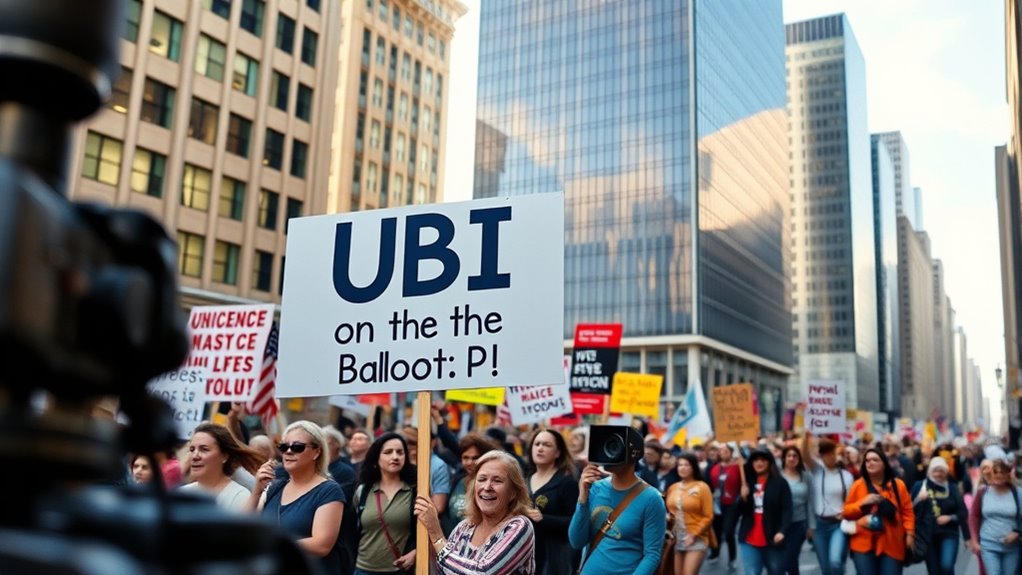

More states are putting UBI proposals on ballots, making it look like basic income is becoming more politically feasible. Voters are actively deciding on UBI policies through direct votes, showing increased public interest and engagement. While opinions differ—some see UBI as a way to address economic insecurity, others worry about costs and incentives—these ballot efforts suggest UBI is gaining ground. To understand how this trend might reshape economic policies, keep exploring the evolving landscape.

Get business pricing on tech for your team
- Business-only prices and quantity discounts
- Tax-exempt purchasing
- Multiple users, one account, clear invoices
Key Takeaways
- More states are using ballot initiatives to directly gauge public support for UBI policies.
- Public opinion on UBI varies, influencing election outcomes and political feasibility.
- The trend toward direct democracy indicates growing political openness to considering UBI as a social solution.
- Economic and fiscal concerns remain central, affecting the likelihood of UBI passing on ballots.
- Successful ballot measures could pave the way for broader political acceptance of UBI programs nationwide.
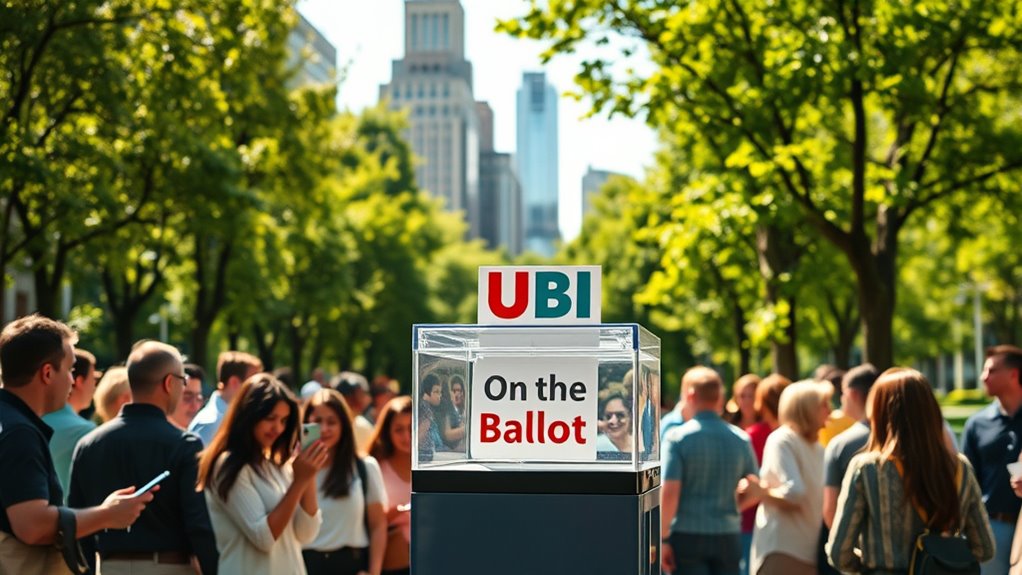
As more states consider implementing Universal Basic Income (UBI), voters are being asked to decide its future directly on the ballot. This shift toward direct democracy reflects growing interest in UBI as a potential solution to economic insecurity and automation’s impact on jobs. But before you cast your vote, it’s important to understand the broader debate surrounding fiscal sustainability and public opinion. While advocates see UBI as a way to simplify welfare and ensure a basic standard of living, skeptics worry about how governments will pay for it and whether it’s a sustainable long-term policy.
Fiscal sustainability is a key concern in these ballot initiatives. Implementing UBI requires significant government spending, and many question whether it’s financially feasible. If a state funds UBI through taxes or reallocates existing budgets, the sustainability of such programs depends on economic growth and efficient resource management. You should consider whether the proposed funding methods are realistic and whether they could strain public finances. Some opponents argue that UBI might lead to increased taxes or cuts in other essential services, raising questions about long-term fiscal health. Supporters counter that UBI could streamline social programs, reduce administrative costs, and foster economic stability, but ultimately, the success of these initiatives hinges on whether voters and policymakers believe they can be maintained without jeopardizing the state’s financial future. Additionally, understanding how cost-effective project models influence fiscal planning can provide insights into the potential long-term viability of UBI.
Public opinion plays a significant role in shaping UBI policies on the ballot. In many cases, polls show that voters are divided, with some seeing UBI as a way to combat inequality and promote economic security, while others fear it could discourage work or increase taxes. As you consider your vote, think about how UBI aligns with your values and economic outlook. Are you convinced that it will create a more equitable society without overburdening taxpayers? Or do you worry that it might lead to unintended economic consequences? The way voters perceive UBI influences not just election outcomes but also the political feasibility of passing such measures. Politicians often gauge public opinion carefully, knowing that support or opposition can determine whether UBI initiatives succeed or fail.
Ultimately, these ballot debates reveal a society grappling with fundamental questions about economic security, government responsibility, and fiscal responsibility. Your vote will reflect your view on whether UBI is a practical solution worth pursuing or a financial risk to be avoided. As more states put UBI on the ballot, the question isn’t just about individual benefits but about the long-term sustainability of a system that guarantees a basic income. The outcome will shape how governments address economic insecurity in the future and whether UBI becomes a viable policy backed by public support.
Universal Basic Income UBI brochure
As an affiliate, we earn on qualifying purchases.
As an affiliate, we earn on qualifying purchases.
Frequently Asked Questions
How Do Different Political Parties View Universal Basic Income?
Different political parties have varied views on universal basic income. You’ll find that party alignment shapes their stance, with some conservatives questioning its policy implications for work incentives, while progressives tend to support UBI as a way to reduce inequality. These differing perspectives influence how each party approaches UBI, with debates centered on whether it’s a practical solution or an unintended consequence of policy choices.
What Are the Main Arguments Against Implementing UBI via Ballot Measures?
You might find that opponents argue public opinion isn’t fully behind UBI, fearing it could be unpopular or misunderstood. They also raise economic concerns, questioning whether funding it is sustainable and if it might increase inflation or reduce work incentives. These worries make opponents skeptical, believing that ballot measures could face too much resistance or unintended consequences, hindering efforts to implement basic income widely through direct democratic processes.
How Might UBI Impact Existing Welfare and Social Programs?
You might see UBI reduce welfare overlap and program redundancy by providing a simple, universal income that supplements or replaces multiple targeted social programs. This could streamline support systems, making them more efficient and easier to access. However, it could also challenge existing welfare structures, potentially leading to shifts in funding or eligibility rules. Overall, UBI has the potential to reshape how social safety nets function, promoting simplicity but sparking debates on coverage and fairness.
What Historical Precedents Exist for UBI Initiatives on Ballots?
While there are no direct precedents for widespread UBI initiatives on ballots, you can look at campaign strategies and ballot measure trends for clues. Historically, experiments like Alaska’s Permanent Fund Dividend, which distributes state oil revenues, set a precedent for direct cash transfers. These efforts influence how you approach UBI debates, showing that innovative campaigns can shape public opinion and pave the way for future ballot measures.
How Do Voter Demographics Influence UBI Ballot Initiatives?
You should understand that voter demographics heavily influence UBI ballot initiatives. Demographic trends, such as age, income, and education levels, shape public opinion and support. Younger voters, more engaged in social issues, tend to favor UBI, while older or conservative voters may oppose it. Increased voter engagement can sway outcomes, especially if outreach targets demographics most supportive of basic income, making initiatives more feasible and reflective of community needs.
As an affiliate, we earn on qualifying purchases.
Conclusion
As you consider the growing momentum for UBI, remember that 70% of Americans support some form of guaranteed income, showing it’s more than just a policy idea—it’s a movement. With more states introducing pilot programs and ballot measures, basic income is becoming increasingly politically feasible. If this trend continues, you could see UBI becoming a reality sooner than you think, transforming how society addresses economic insecurity for millions.
As an affiliate, we earn on qualifying purchases.
public opinion survey tools for UBI
As an affiliate, we earn on qualifying purchases.
As an affiliate, we earn on qualifying purchases.
Fall Picks
fall essentials
As an affiliate, we earn on qualifying purchases.




![Claude Code Reads AGENTS.md Only When Telemetry Is On [Fixed]](https://deepintellica.com/wp-content/uploads/2026/09/claude-code-reads-agents-md-only-when-telemetry-is-on-fixed-featured-260x140.jpg)