

Many believe it’s too late to change careers or adapt to AI, but that’s just a myth. You can reinvent yourself at any age with the right mindset, continuous learning, and access to online resources. Your existing skills are valuable, and new technology creates opportunities instead of eliminating jobs. Staying adaptable and open to growth puts you ahead. Keep exploring; you’ll discover that your career transformation is more achievable than you think.

Get business pricing on tech for your team
- Business-only prices and quantity discounts
- Tax-exempt purchasing
- Multiple users, one account, clear invoices
Key Takeaways
- It’s a common misconception that career changes are too risky or only for the highly skilled, but many successfully reinvent themselves at any age.
- Automation and AI create new opportunities, making continuous learning essential rather than a threat to current jobs.
- Existing skills remain valuable; combining them with new training can open doors to emerging roles and industries.
- Accessible online courses and mentorship programs make retraining feasible and affordable for most people.
- A proactive mindset and lifelong learning are key to adapting to technological changes, proving it’s never too late to switch careers.
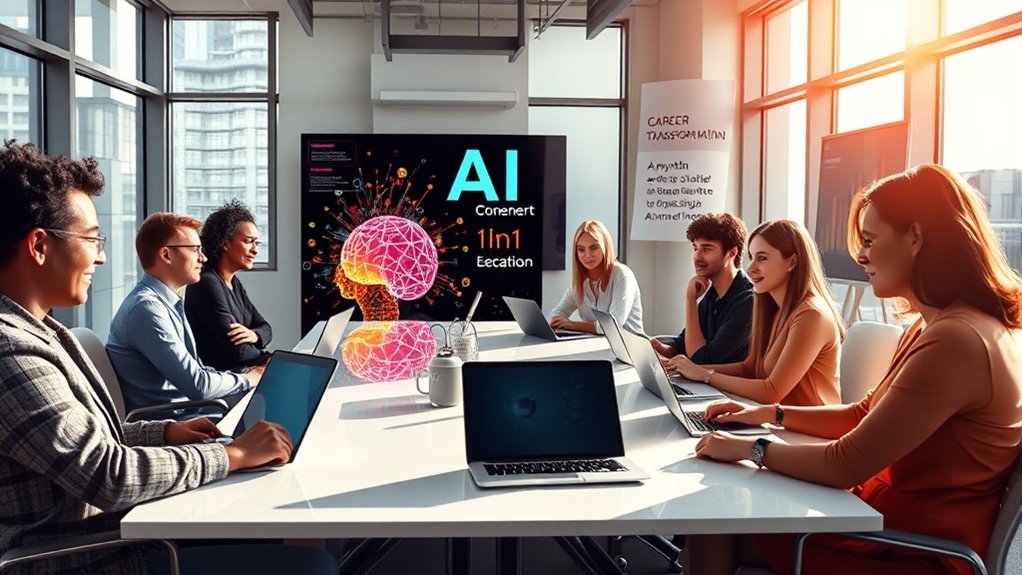
Many people believe that switching careers is too risky or only for those with special skills, but these myths often hold you back from pursuing your true passions. One common fear is automation fears, where you worry that AI and automation will make your current skills obsolete. While it’s true that technology is transforming industries rapidly, this shouldn’t be a reason to stay put. Instead, view automation as an opportunity to adapt and grow. The fear of skill obsolescence is natural, but it’s also a motivator to learn new abilities. You don’t need to master everything overnight; small, continuous efforts can help you stay relevant. For example, if you’re in a field susceptible to automation, consider acquiring complementary skills that add value and make you indispensable. Many industries evolve, and the most successful professionals embrace change rather than resist it.
Embrace change and continuous learning to stay relevant in an evolving, automation-driven workforce.
The misconception that your skills are no longer useful can be overwhelming, but it’s often unfounded. Think about how technology has created new roles and opportunities rather than just eliminating old ones. For instance, customer service roles have shifted from solely in-person interactions to include digital communication and AI chatbots. Your experience still matters; it’s just a matter of supplementing it with new skills that align with current trends. Whether it’s learning data analysis, digital marketing, or project management, these skills can help you pivot confidently. Keep in mind that many people successfully transition careers well into their later years, proving that it’s never too late to reinvent yourself. Additionally, understanding technological evolution can help you better navigate career shifts.
You might also believe that changing careers is too complicated or requires extensive retraining. While some transitions do require effort, they’re often more achievable than you think. Online courses, workshops, and mentorship programs make acquiring new skills accessible and affordable. Plus, your existing experience provides a solid foundation; you just need to build on it. Employers value adaptability and a willingness to learn, especially as AI and automation reshape workplaces. Instead of fearing skill obsolescence, see it as a chance to refresh your expertise and bring new perspectives to your work.
Ultimately, the idea that it’s too late to change careers because of automation fears or skill obsolescence is a myth. The key lies in your mindset. Embrace lifelong learning, stay curious, and be proactive about your development. The workforce is evolving, but so are you. By staying adaptable, you position yourself for success in an AI-driven world. Remember, your career path isn’t set in stone; it’s a journey that can continue at any age with the right attitude and effort.
As an affiliate, we earn on qualifying purchases.
Frequently Asked Questions
Can Older Professionals Successfully Transition Into Ai-Related Careers?
Yes, you can successfully shift into AI-related careers. Your experience fosters intergenerational collaboration, bringing valuable insights to the tech field. Embrace lifelong learning strategies like online courses and workshops to stay current. Your adaptability and willingness to learn are key. Age is just a number; with dedication, you can leverage your skills and contribute meaningfully to AI innovation, proving that it’s never too late to make this career shift.
What Skills Are Most Valuable for Career Changers in AI Fields?
You need strong analytical skills, programming knowledge, and understanding of data science to succeed in AI. Shiftable skills like problem-solving, critical thinking, and adaptability are invaluable as you navigate emerging technologies. Stay curious, continuously learn, and embrace new tools and concepts. By developing a blend of technical expertise and soft skills, you position yourself for success, making your career progression into AI both achievable and rewarding.
How Long Does It Typically Take to Switch to an Ai-Focused Role?
Switching to an AI-focused role usually takes a few months to a year, depending on your current skills and commitment. You should plan for a significant time investment, especially if you’re completing certification programs or gaining new technical knowledge. Consistent study, hands-on projects, and relevant certifications accelerate your transition, making you more competitive in the AI field. Stay dedicated, and you’ll find the shift more achievable than you might think.
Are There Specific Industries More Receptive to Career Pivots Into AI?
Did you know that 85% of industries are actively embracing AI integration? Industries like healthcare, finance, and retail are especially receptive to career pivots into AI because of their rapid industry adaptation and tech integration. These sectors prioritize innovation, making them more open to professionals like you who want to leverage AI skills. So, if you’re considering a switch, these fields offer promising opportunities to grow your career.
What Resources Are Best for Reskilling in AI at Any Age?
You can reskill in AI using online courses and mentorship programs tailored for your learning pace. Platforms like Coursera, Udacity, and edX offer accessible, all-encompassing courses for all ages. Pair these with mentorship programs to gain personalized guidance, industry insights, and practical advice. This combination helps you stay current, build confidence, and shift seamlessly into AI roles, proving it’s never too late to adapt and thrive.
AI and automation training programs
As an affiliate, we earn on qualifying purchases.
As an affiliate, we earn on qualifying purchases.
Conclusion
Don’t let myths hold you back from switching careers, especially with AI transforming industries. Remember, over 60% of adults have changed careers at least once, proving it’s never too late. Embrace the opportunity to learn new skills and adapt—your future is still in your hands. With the right mindset and effort, you can thrive in the evolving job landscape. The key is believing in your ability to grow and change.
digital skills training for adults
As an affiliate, we earn on qualifying purchases.
As an affiliate, we earn on qualifying purchases.
mentorship programs for career transition
As an affiliate, we earn on qualifying purchases.
As an affiliate, we earn on qualifying purchases.
Fall Picks
fall essentials
As an affiliate, we earn on qualifying purchases.