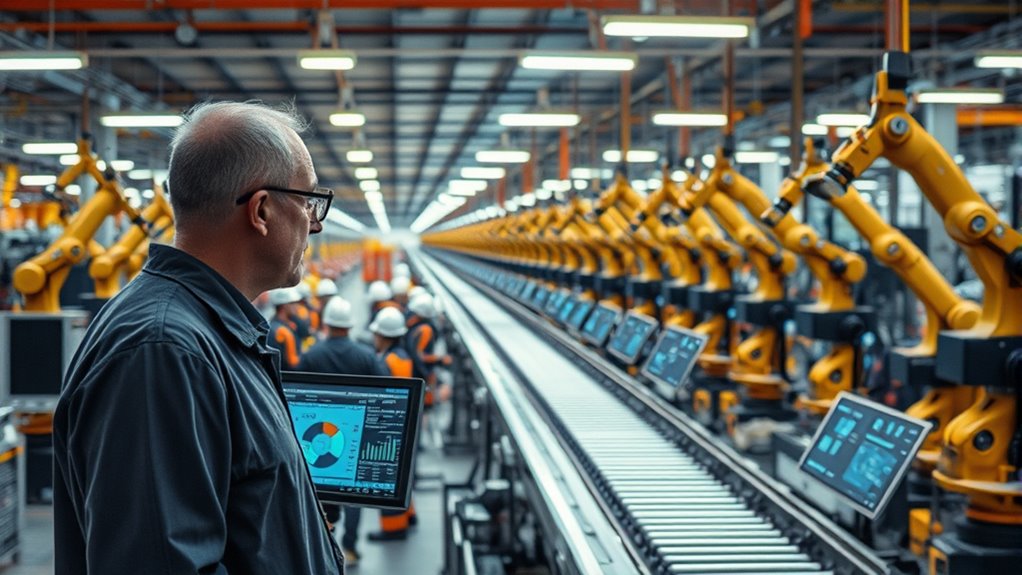

Fear of widespread job loss due to automation is often exaggerated. While technology does change the workforce, it also creates new opportunities and pushes society to address ethical and social issues like inequality and job quality. Automation’s impact isn’t just about losing jobs but shaping economies and societies more broadly. If you want to understand how these changes can work for everyone, explore the deeper implications behind the headlines.
Key Takeaways
- Experts suggest fears of widespread job loss due to automation are often exaggerated; technology also creates new roles.
- Automation impacts job quality and societal issues like inequality and ethics more than just employment numbers.
- Responsible AI ethics and policy can ensure automation benefits are shared broadly, mitigating fears of deep economic divides.
- Historically, technological advances displaced jobs but also spurred new industries and opportunities.
- Effective regulation, retraining, and ethical standards can shape automation as a tool for inclusive growth rather than societal division.
Despite widespread fears that automation will wipe out countless jobs, many experts argue that these worries are overblown. While it’s true that machines and artificial intelligence are changing the workforce landscape, the fear of mass unemployment often overlooks the nuanced realities of how technology impacts economies and societies. Instead of focusing solely on job loss, it’s important to consider how automation influences broader issues like AI ethics and economic inequality. These factors shape not just the number of jobs but also their quality, accessibility, and distribution.
AI ethics play a vital role in guiding how automation is integrated into workplaces. As AI systems become more capable, questions about fairness, transparency, and accountability grow more urgent. If we neglect these concerns, automation risks amplifying existing biases or creating new forms of discrimination, which can deepen economic divides. For example, without proper oversight, AI might favor certain groups over others, exacerbating economic inequality. But with a proactive approach to AI ethics, you can help ensure automation benefits everyone, not just a select few. This involves designing systems that promote fairness, protect workers’ rights, and foster inclusive growth.
AI ethics ensure automation promotes fairness, transparency, and inclusive growth, preventing biases and discrimination in the workplace.
Economic inequality is often cited as a major consequence of automation. However, automation can also serve as a tool for reducing disparities if managed wisely. Historically, technological advances have displaced some jobs, but they’ve also created new opportunities and industries. The challenge is ensuring that the benefits of automation are accessible to all, not just the wealthy or highly skilled. Governments, businesses, and workers need to collaborate on strategies like reskilling programs, education, and social safety nets to ensure that economic gains are broadly shared. When you view automation through this lens, it becomes less about inevitable job destruction and more about shaping a future where technology acts as an equalizer rather than a divider.
You might worry that automation will deepen economic inequality, but the truth is that it depends on how we respond. If you advocate for policies that prioritize AI ethics and equitable growth, you can help steer automation toward positive societal outcomes. This means supporting initiatives that promote transparency in AI decision-making, investing in workforce retraining, and ensuring that economic rewards are distributed fairly. Additionally, integrating Natural Language Processing (NLP) into customer service can improve efficiency and customer satisfaction, demonstrating how automation can create new roles and enhance existing ones. Automation, in itself, isn’t inherently good or bad; it’s how society manages and directs technological change that determines whether it becomes a force for progress or a source of division. So, instead of fearing the end of jobs, focus on shaping policies and ethical standards that make automation work for everyone.
Frequently Asked Questions
How Might Automation Impact Creative Professions?
Automation, through AI collaboration, can enhance your creative professions by streamlining repetitive tasks and opening new opportunities for innovation. You might find that your creative resilience grows as AI tools support your ideas, allowing you to focus on originality and unique expression. Embracing these changes helps you stay adaptable, turning automation into a partner rather than a threat, and ultimately enriching your creative work rather than replacing it.
What Sectors Are Most Vulnerable to Automation?
You should know that around 30% of manufacturing jobs and 25% of retail employment could be automated within the next decade. These sectors are most vulnerable because repetitive tasks and customer service roles can easily be replaced by machines and AI. As technology advances, you’ll find manufacturing and retail jobs facing significant changes, but new opportunities may also emerge in tech-driven roles and service sectors that adapt quickly.
Could Automation Lead to New Job Categories?
Automation could definitely lead to new job categories, shaping future job evolution. You’ll find opportunities in automation and entrepreneurship as technology creates demand for roles like AI specialists, data analysts, and robot maintenance experts. Embracing these changes, you can innovate and adapt, turning automation’s challenges into new career paths. By staying proactive, you’ll help drive the future of work and turn technological shifts into growth opportunities.
How Do Different Countries View Automation Risks?
Imagine countries as travelers on a journey, each with different maps. Some see automation as a storm to avoid, reflecting their cultural perceptions that emphasize job security and cautious policy responses. Others view it as a breeze, welcoming innovation with proactive policies. These varying views influence how nations prepare for automation, shaping their strategies and attitudes toward job risks, either guarding against or embracing technological change.
What Policies Can Mitigate Automation-Related Job Losses?
You can implement policies like Universal Basic Income to provide financial security as jobs change, and invest in Workforce Reskilling programs to help workers move into new roles. Supporting lifelong learning ensures your workforce stays adaptable, reducing disruption. Encouraging collaboration between government, businesses, and educational institutions fosters innovation and resilience, ultimately easing the impact of automation on employment and safeguarding economic stability for your community.
Conclusion
As you stand at the crossroads of this automation storm, remember that every rising tide—the machines—can lift or drown. While fears of job loss swirl like dark clouds, hope is the steady lighthouse guiding you through. Embrace change as the dawn’s first light, illuminating new paths and opportunities. The future isn’t a shadow cast by automation, but a canvas waiting for your creativity to paint a brighter tomorrow.