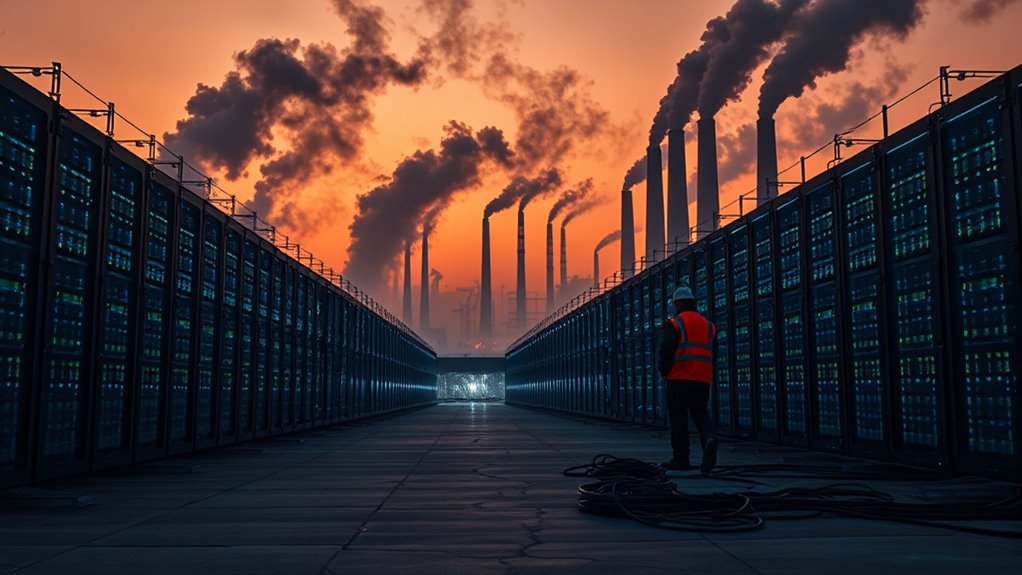

AI automation offers significant emission reductions by optimizing sectors like food, energy, and transportation, but it also has a hidden carbon cost. Data centers powering AI are growing rapidly, consuming vast amounts of energy—especially from non-renewable sources—and producing substantial emissions from large models. While AI can cut emissions overall, the environmental impact hinges on energy choices and infrastructure. To understand the full picture and how to balance AI progress with climate goals, keep exploring this complex relationship.

Get business pricing on tech for your team
- Business-only prices and quantity discounts
- Tax-exempt purchasing
- Multiple users, one account, clear invoices
Key Takeaways
- AI automation significantly reduces emissions in sectors like food, energy, and mobility but can increase footprints if powered by non-renewable energy.
- Large AI models consume hundreds of tons of CO₂ during training, contributing substantially to carbon emissions.
- Data centers powering AI infrastructure account for a growing share of global electricity use, often relying on fossil fuels.
- Scaling AI requires expanding renewable energy capacity, which faces infrastructure and grid challenges, impacting its carbon footprint.
- Effective impact tracking demands standardized metrics to assess AI’s full environmental costs, including hardware lifecycle and energy sources.
energy-efficient data center cooling systems
As an affiliate, we earn on qualifying purchases.
As an affiliate, we earn on qualifying purchases.
The Promising Potential of AI in Cutting Global Emissions

AI holds notable promise for reducing global emissions, with estimates suggesting it could cut between 3.2 and 5.4 billion tonnes annually by 2035. You can leverage AI to target major sectors like food, energy, and mobility, where it can significantly lower emissions. In agriculture, AI optimizes resource use, reducing emissions by up to 1.6 billion tonnes CO₂e yearly. In energy, it enhances grid efficiency and integrates renewables, saving around 1.8 billion tonnes annually. For transportation, AI improves logistics and promotes cleaner mobility, cutting another 0.5 to 0.6 billion tonnes. These reductions outweigh emissions from AI activities themselves. Overall, AI’s transformative potential can reshape economies into more sustainable, inclusive systems, making it a powerful tool in the fight against climate change. Additionally, advancements in projector technology can improve the visualization and dissemination of environmental data, supporting broader climate initiatives.
As an affiliate, we earn on qualifying purchases.
The Growing Energy Appetite of Data Centers and AI Infrastructure

Have you noticed how the surge in digital technology is dramatically increasing the energy demands of data centers and AI infrastructure? As AI workloads grow, so does the energy needed to run these facilities. Data center electricity use has tripled in the U.S. over the past decade, with GPU servers alone jumping from under 2 TWh in 2017 to over 40 TWh in 2023. Globally, data center power demand is expected to increase by 50% by 2027, reaching 84 gigawatts, with AI accounting for over a quarter of that. This surge is pushing U.S. total power consumption toward record highs in 2025 and 2026. As more of our digital activities rely on these infrastructures, their energy appetite continues to grow, raising concerns about environmental impact and sustainability. Additionally, creativity in technology is often driven by innovative solutions that can help improve energy efficiency and reduce environmental impact.
AI training energy consumption monitor
As an affiliate, we earn on qualifying purchases.
As an affiliate, we earn on qualifying purchases.
Quantifying Ai’S Carbon Footprint: Emissions From Generative Models

Understanding the carbon footprint of generative models requires examining how much energy they consume during training and inference. Training large models like GPT-3 uses about 1,287 MWh, emitting roughly 502 tons of CO2. BLOOM, with cleaner energy, used just 433 MWh and emitted 25 tons. A single AI-generated image can consume energy comparable to half a smartphone charge, but this varies widely. For example:
| Model Type | Energy Use per Inference | Carbon Emissions per 1,000 Inferences |
|---|---|---|
| High-Intensity Image Model | High | Emissions equivalent to driving 4.1 miles |
| Low-Intensity Text Model | Low | 6,833 times less carbon than image models |
| Average Model | Moderate | Varies depending on energy source |
Your AI interactions, especially with image models, markedly contribute to overall emissions. The environmental impact of AI is compounded by the rapid growth in model size and usage, which can significantly escalate carbon emissions over time. Additionally, the energy efficiency of different filter technologies used in AI hardware can influence total energy consumption and environmental costs.
As an affiliate, we earn on qualifying purchases.
The Disparity Between Renewable Energy Adoption and AI’s Energy Demands
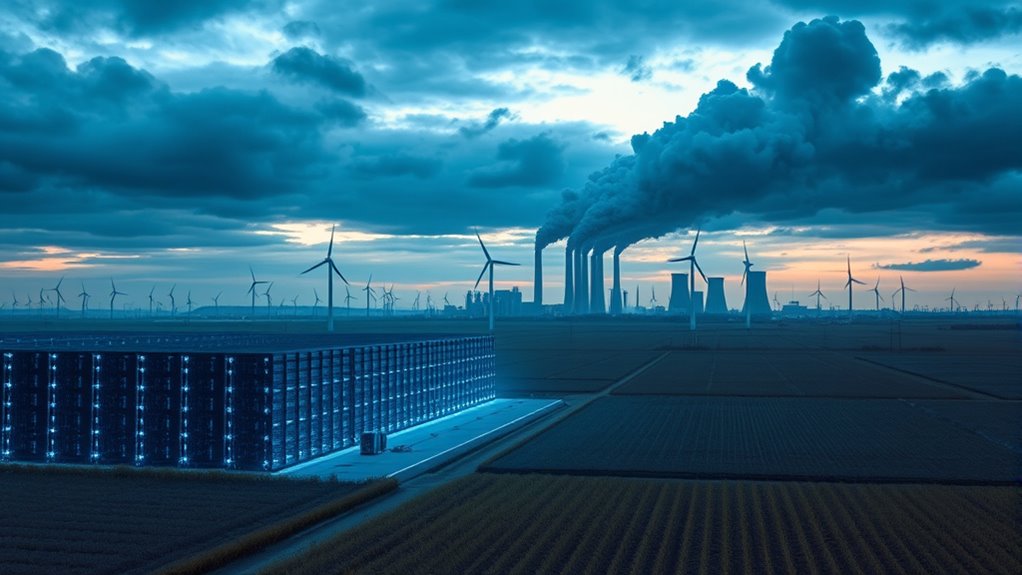
You might assume renewable energy can easily meet AI’s growing power needs, but the reality is more complex. As data centers demand exponentially more electricity, renewable capacity struggles to keep pace due to infrastructure, regulatory, and grid challenges. This mismatch means AI’s energy consumption often depends on fossil fuels or a mixed grid, limiting its environmental benefits. Additionally, juice cleanses demonstrate how nutrient-rich but short-term solutions may not address underlying sustainability issues.
Renewable Energy Shortfalls
As AI technology advances rapidly, its growing energy demands are starting to outpace current renewable energy capacities. Although renewable sources like solar and wind are expanding—solar capacity alone added nearly 40GW in 2024—their overall share remains limited. Solar dominates new installations, but wind growth has slowed considerably, and grid connection bottlenecks hinder further expansion. Despite global renewable capacity reaching 4.4 TW, this still struggles to meet surging electricity needs from data centers, electric vehicles, and AI systems. Investment potential is massive, yet supply chain issues and permitting constraints slow deployment. As demand for clean energy rises, existing shortfalls threaten to create a gap between renewable supply and the energy required to power tomorrow’s AI-driven world. Effective fraud prevention tools in transaction processing are also crucial to ensure secure and trustworthy digital infrastructure supporting these developments.
Growing Energy Consumption
The rapid growth of AI technology is driving a surge in energy consumption that current renewable energy sources struggle to meet. Data centers, the backbone of AI operations, are forecasted to more than double their power demand from 35 gigawatts in 2024 to 78 gigawatts by 2035. The average hourly electricity demand for these centers will nearly triply from 16 to 49 gigawatt-hours. Training a single AI model like GPT-4 consumed about 30 megawatts, highlighting AI’s enormous energy needs. Globally, data centers used around 500 TWh in 2023 and could reach 1,500 TWh by 2030, making them one of the top energy consumers. This rapid growth outpaces the current pace of renewable energy adoption, deepening the energy supply gap. Additionally, the significant energy consumption of Data centers emphasizes the need for more efficient cooling and power management solutions to reduce their environmental impact.
Sectoral Impacts: How AI Optimization Can Both Reduce and Increase Emissions

AI has the power to cut emissions in sectors like food, energy, and transportation through smarter management and optimization. But it can also boost emissions if data centers and industrial processes grow unchecked. Understanding these contrasting impacts helps you see how AI’s role in sustainability depends on deliberate implementation. Incorporating energy-efficient solutions can further enhance AI’s positive effects on reducing emissions, emphasizing the importance of mindful deployment.
Emission Reductions in Food
How can AI optimization both cut and increase emissions in the food sector? AI can reduce emissions through precision agriculture, optimized irrigation, resource management, carbon footprint analysis, and supply chain improvements. These tools minimize chemical use, water waste, and supply chain inefficiencies, leading to lower emissions. Furthermore, AI systems require substantial energy input, which can contribute to higher emissions if powered by non-renewable sources. Additionally, AI-driven practices might encourage intensive farming or resource use if not carefully managed. The potential for increased energy consumption from data centers and sensor networks can offset some of the emission reductions achieved by AI. Implementation of renewable energy sources in powering these systems is crucial to maximize environmental benefits. Key impacts include: – Reducing food waste and supply chain inefficiencies – Enhancing resource management like soil and water use – Improving carbon footprint calculations for better decisions – Supporting regulatory compliance through data insights – Potentially increasing energy use in data processing and monitoring systems
Energy Use in Mobility
Optimizing mobility with AI can substantially cut emissions by streamlining vehicle routes, reducing congestion, and maximizing energy efficiency. AI algorithms analyze real-time traffic, vehicle availability, and charging station locations to optimize electric vehicle (EV) routing, decreasing unnecessary driving and idle time. Fleet operators improve vehicle utilization, lowering operational costs and emissions. AI-driven routing also reduces wear and tear, leading to fewer maintenance-related emissions. Additionally, personalized mobility solutions promote sustainable travel modes and efficient charging strategies, boosting EV adoption. Intelligent energy management systems dynamically optimize charging based on grid demand and renewable energy availability, minimizing waste. Smart grids with AI enhance energy control, cutting electricity use and CO2 emissions appreciably. Vehicle-to-grid tech further lowers emissions, combining ecological benefits with cost savings. Incorporating Mazda Tuning techniques into electric vehicle development can further improve performance and sustainability by optimizing component efficiency and vehicle dynamics.
Industry-Wide Sustainability Challenges
While AI-driven improvements in mobility can substantially cut emissions by streamlining routes and boosting energy efficiency, these benefits are not uniform across all sectors. In fact, AI’s impact can increase emissions in some industries due to high energy demands. For example:
- The tech sector’s emissions have surged 150% from 2020 to 2023, driven by AI and data infrastructure.
- Data centers now consume 12% more electricity annually, outpacing global energy growth.
- Large AI model training generates hundreds of tons of CO2 per session.
- Sector disparities exist: AI reduces emissions in food and energy but raises them in tech.
- Many companies are investing in renewables and more efficient data centers to address these challenges.
- Global data center energy consumption now accounts for a significant and growing share of worldwide electricity use, highlighting the need for sustainable digital infrastructure.
- Efforts to improve energy efficiency in digital infrastructure are crucial to mitigate these environmental impacts.
Challenges in Tracking and Reporting AI-Related Environmental Impact

Tracking and reporting the environmental impact of AI poses significant challenges due to the lack of standardized metrics and the complexity of AI operations. You face difficulties in accurately measuring energy use and emissions because there are no consistent frameworks or benchmarks. The complexity of training, inference, and data processing adds layers of uncertainty, making it hard to pinpoint exact impacts. Variability in compute power and regional differences in energy sources further complicate assessments. Limited access to detailed data, especially from external AI services, hampers precise estimation. Additionally, tracking the full environmental footprint involves considering hardware lifecycle impacts, like e-waste. Standardized metrics are essential for meaningful comparisons and accountability. Without transparency or standardized reporting, comparing AI systems’ sustainability remains difficult, leaving organizations struggling to assess and improve their environmental performance effectively.
Innovations and Strategies for Sustainable AI Deployment

Innovations in sustainable AI deployment are transforming how organizations minimize environmental impact while maintaining performance. You can now leverage renewable energy for data centers, like Microsoft, which aims to be carbon-negative by 2030. Energy-efficient hardware and cooling systems help reduce power consumption. AI tools monitor and optimize energy use across operations, making processes smarter and greener. Collaborative research focuses on decreasing AI’s environmental footprint during training and deployment. Additionally, carbon-aware computing adapts workloads based on renewable energy availability, maximizing sustainable energy use. Recent advancements in AI hardware efficiency also contribute significantly to reducing overall energy consumption during intensive processing tasks.
Key strategies include:
- Using carbon emission metrics like CCI in decision-making
- Ensuring transparent emissions reporting
- Sourcing renewable energy commitments
- Improving efficiency at every AI stage
- Embedding sustainability metrics into governance practices

Advancing AI technology offers tremendous opportunities, but it also poses significant environmental challenges that demand careful management. You face the task of balancing innovation with sustainability, as data centers’ energy use and emissions surge—projected to reach 3.4% of global emissions by 2030. Cooling AI infrastructure may require more freshwater than some countries use annually, while energy demands could quadruple. Nearly half of this energy might come from fossil fuels, limiting climate benefits. As you expand AI, you risk regulatory scrutiny, higher costs, and reputational damage if environmental impacts aren’t addressed. To navigate this future responsibly, you must adopt sustainability metrics, optimize hardware efficiency, and prioritize renewable energy sources. Only through deliberate, eco-conscious strategies can AI growth benefit society without compromising the planet.
Frequently Asked Questions
How Accurate Are Current AI Emissions Reporting Methods?
You might wonder how accurate AI emissions reporting is today. While AI can analyze large data sets, its accuracy depends heavily on data quality and standardization. It’s great at detecting anomalies, automating processes, and integrating diverse sources, but incomplete or outdated data can lead to gaps. Human oversight remains essential to validate results, making AI a helpful tool rather than a fully reliable solution on its own.
What Policies Can Ensure Sustainable AI Energy Use?
You can promote sustainable AI energy use by setting clear standards, requiring transparency, and creating incentives. Enforce energy efficiency rules, push for renewable sourcing, and support green innovations. Reward responsible practices with subsidies, invest in smarter grids, and encourage partnerships. Prioritize research into low-energy hardware, and implement demand management. Together, these policies help balance AI growth with environmental responsibility, making sustainability an integral part of AI’s future.
How Can AI Developers Minimize Its Carbon Footprint?
You can minimize AI’s carbon footprint by optimizing model architecture for efficiency, like using smaller models and embedding energy-saving features in hardware. Shift intensive tasks to regions powered by renewable energy, and prioritize low-energy AI applications. Leverage AI to improve energy management across industries, and incorporate sustainable practices into your development process. These steps help reduce emissions while maintaining AI performance, making your projects more environmentally responsible.
Are There Scalable Solutions for Renewable Energy in AI Infrastructure?
Imagine building a green highway for AI infrastructure—that’s what scalable renewable energy solutions offer. You can harness large-scale solar farms, wind energy agreements, and on-site generation like solar panels and turbines. These methods work together to create a resilient, eco-friendly power grid. By optimizing energy storage and geographic placement, you guarantee AI systems run efficiently without draining the planet’s resources, making sustainability a scalable reality.
How Does Ai’s Environmental Impact Compare to Traditional Industries?
You might think AI’s environmental impact is small, but it actually rivals traditional industries like Japan’s energy consumption by 2030. The energy used by data centers is growing rapidly, leading to significant carbon emissions and air pollution. As AI expands, it will require more energy, increasing its footprint. By adopting renewable energy and efficiency tech, you can help reduce its impact and support sustainable AI development.
Conclusion
As you forge ahead with AI, remember it’s a double-edged sword—a powerful engine that can both fuel progress and burn through resources. Like a wildfire, its footprint can spread unseen if unchecked. To truly harness AI’s promise without choking the planet, you must steer its flames wisely, balancing innovation with responsibility. Only then can you guarantee that your pursuit of progress doesn’t leave the Earth smoldering in its wake.
Halloween Picks
halloween
As an affiliate, we earn on qualifying purchases.