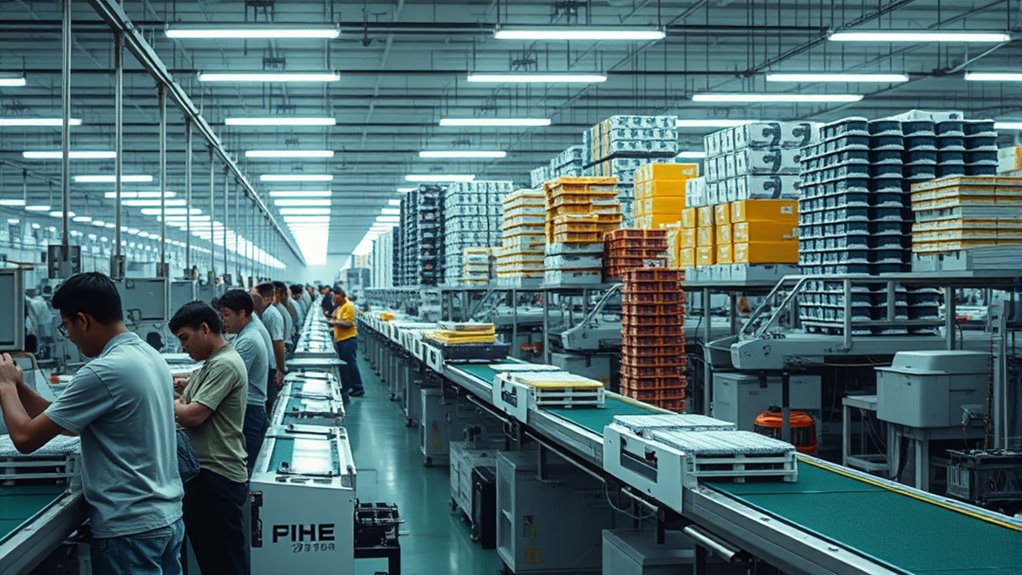

When cheap goods keep prices low thanks to globalization and efficient supply chains, wages often lag behind inflation, especially in low-wage sectors. This creates a disconnect where your purchasing power shrinks even as consumer prices stay stable or rise slowly. Idle wages mean workers struggle to keep up with rising costs, fueling economic inequality. To understand how this mismatch affects your finances and what lies ahead, you’ll find out more.

Get business pricing on tech for your team
- Business-only prices and quantity discounts
- Tax-exempt purchasing
- Multiple users, one account, clear invoices
Key Takeaways
- Post-pandemic inflation often outpaces wage growth, reducing real income despite cheaper goods, especially when wages remain idle.
- Supply chain disruptions inflate costs, while stagnant or slow-growing wages fail to keep pace, exacerbating consumer affordability issues.
- Global competition and cost-cutting strategies keep goods prices low, but wage stagnation limits workers’ ability to benefit from lower prices.
- Sectoral disparities lead to uneven wage and price dynamics, with low-wage workers facing rising costs amid limited wage increases.
- Long-term structural shifts and policy responses influence the balance between cheap goods and idle wages, shaping inflation’s future trajectory.
As an affiliate, we earn on qualifying purchases.
The Post-Pandemic Inflation Surge and Its Roots

The post-pandemic inflation surge can be traced to a combination of factors that emerged as economies reopened and demand rebounded. You experienced a sharp rise in prices, peaking at 9.0% in June 2022, driven by increased consumer spending and disrupted supply chains. As logistics improved, inflation started to decline, reaching 2.4% by March 2025, near pre-pandemic levels. However, energy costs remained volatile—gasoline and fuel oil decreased, but natural gas prices kept rising. You also saw industry-specific shifts, like higher auto and food prices, especially for eggs and beef. A tight labor market and elevated inflation expectations further fueled price increases. These factors combined created a surge that temporarily pushed prices higher, setting the stage for ongoing adjustments as markets stabilized. Additionally, the influence of AI-driven tools in marketing and operations has impacted pricing strategies across sectors.
As an affiliate, we earn on qualifying purchases.
The Role of Globalization in Keeping Goods Cheap
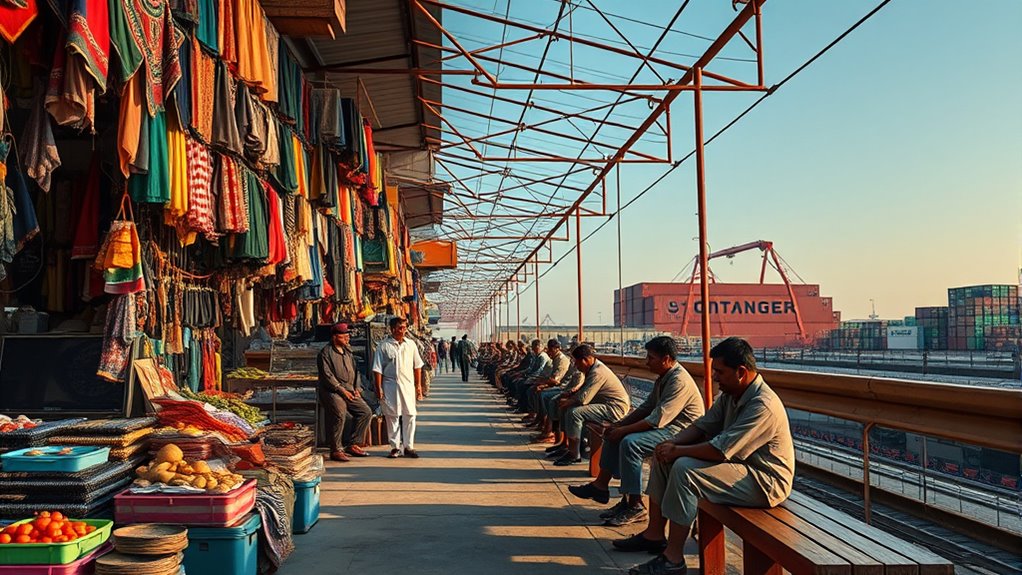
Globalization drives down consumer prices by fostering intense competition among companies worldwide. You benefit from lower prices as firms endeavor to outdo each other, often by producing goods more cheaply. Companies achieve economies of scale by manufacturing in large quantities, which further reduces costs. They also relocate production to countries with cheaper labor, keeping expenses low and prices attractive. Additionally, global supply chains allow sourcing raw materials and components from various nations, cutting costs even more. Trade agreements help reduce tariffs and trade barriers, making imported goods cheaper for you. These factors collectively create a competitive environment that keeps consumer prices down, enabling you to access a wide variety of affordable goods. This dynamic fuels affordability but also influences labor and economic shifts across the globe. Understanding cost reduction strategies reveals how businesses adapt to maintain their competitive edge in a globalized economy.
As an affiliate, we earn on qualifying purchases.
Wage Growth Lagging Behind Price Increases

As prices rise faster than wages, your real purchasing power shrinks, making it harder to afford essentials. Wage growth often lags behind inflation because of slow adjustments in the labor market and economic factors. This widening gap reduces your income’s value and can deepen economic inequality over time. Recent data from June 2025 shows that wages slightly outpaced inflation, but the overall trend still indicates that wages are struggling to keep up with rising prices. Additionally, factors like labor market dynamics and economic policies influence the pace at which wages respond to inflation.
Wage-Price Gap Widens
Despite recent wage increases, the gap between wages and inflation continues to widen, putting many workers at a disadvantage. While nominal wages rose from $686 to $1,225 between 2006 and 2025—a 78.7% increase—real wages only grew 11.9% after inflation. From February 2024 to 2025, wages grew 3.4%, slightly outpacing 2.7% inflation, but the overall purchasing power remains limited. The table below highlights these trends:
| Time Period | Nominal Wage Growth | Inflation Rate | Real Wage Growth |
|---|---|---|---|
| 2006–2025 | 78.7% | Varies | 11.9% |
| Feb 2024–Feb 2025 | 3.4% | 2.7% | 0.58% |
| Pre-Pandemic | Sluggish | Rising | Limited |
| Post-Pandemic | Modest | Cooling | Slow recovery |
The widening gap erodes workers’ purchasing power, deepening economic challenges, especially as wage-price gap continues to expand in many sectors.
Slow Wage Adjustments
Wage growth has been slowing down, making it harder for you to keep pace with rising prices. Despite recent gains, median wages for those staying in the same job increased by just 4.6% in late 2024, outpacing inflation at around 2.5%. While wages are still above pre-pandemic levels, growth has weakened, especially among higher-wage earners. Lower-wage workers have experienced stronger growth compared to previous periods, but overall, employers are offering fewer large wage hikes. Factors like a tight labor market and productivity trends influence these shifts. As wages lag behind inflation, your purchasing power gradually declines, especially if wage increases don’t keep up. Employers are balancing wage offers with economic pressures, which impacts your ability to fully benefit from a strong labor market. Wages are still growing faster than inflation, supporting positive real earnings for many workers. Additionally, digital literacy plays a role in understanding economic changes and making informed financial decisions.
Real Income Declines
While wage growth has slowed, inflation continues to outpace what you earn, shrinking your purchasing power. In May 2025, real disposable income fell by 0.7%, as rising prices outstripped wages. This decline reduces your savings, with the personal savings rate dropping to 4.5%. Consumer prices increased, especially with tariffs adding 2.1%, further eroding your buying power. The table below highlights key impacts:
| Factor | Effect | Example |
|---|---|---|
| Inflation | Decreases real income | 1% inflation cuts income by 0.5-0.67% |
| Wage Growth | Slight monthly increase | 0.4% wage rise but still lagging |
| Savings Rate | Declines as income shrinks | Savings drop to 4.5% |
| Economic Impact | Reduced spending and growth | Consumer spending down 0.1% |
Real income levels continue to decline, impacting consumer confidence and spending habits, which could slow down overall economic recovery. Persistent declines threaten your financial stability and overall economic health.
financial planning books for inflation
As an affiliate, we earn on qualifying purchases.
As an affiliate, we earn on qualifying purchases.
Sectoral Divergences: When Wages and Prices Do Not Align

Sectoral divergences in wages and prices reveal how different parts of the economy respond unevenly to inflationary pressures. In low-wage sectors like accommodation and food services, wages have grown faster due to tight labor markets and policy boosts, yet price increases often outpace these gains. Meanwhile, high-wage sectors such as finance and IT experience significant real wage declines, widening the disconnection between wages and rising costs. Regional policies, like California’s $20 minimum wage, further shape disparities. Wage compression from the pandemic persists, with lower-wage workers seeing some gains, but overall, wage growth remains uneven across sectors. This misalignment creates tensions, as some workers struggle with stagnant wages while prices continue climbing, especially in sectors where wage increases lag behind inflation. Furthermore, recent data show that labour force participation among certain demographics remains below pre-pandemic levels, indicating ongoing structural challenges that influence wage-price dynamics. Additionally, sector-specific productivity variations can amplify these disparities, complicating efforts to align wages with inflation.
The Impact of Idle Wages on Consumer Purchasing Power

When wages stay idle while prices rise, your real income shrinks, making it harder to buy what you need. Sector wage disparities can widen this gap, leaving some workers more affected than others. Plus, global goods prices influence the value of your money, impacting your purchasing power even further. Matching frictions on the product market can also delay the adjustment of supply and demand, exacerbating the decline in real income during inflationary periods. Incorporating advanced sound recording techniques can help producers create more compelling content to better capitalize on market opportunities.
Erosion of Real Income
The rise in inflation since 2021 has considerably diminished your household’s purchasing power, making it harder to afford everyday essentials. As prices soar, your wages haven’t kept pace, causing a significant gap between income and costs. Although wages are slowly recovering, they still lag behind inflation, reducing your real income. You’re forced to cut back on non-essential spending, switch to cheaper alternatives, and prioritize essentials. Savings shrink as disposable income declines, leaving little room for financial cushion. Governments and policymakers are trying to address this by increasing wages and controlling inflation, but the overall impact remains. This erosion of real income means your ability to enjoy discretionary items diminishes, and financial stress becomes a persistent challenge. Consumer confidence is declining, further constraining spending and compounding economic pressures. Additionally, the disconnect between wage growth and inflation can undermine long-term economic stability, affecting overall household financial health.
Sector Wage Disparities
Wage disparities across different industries directly impact your ability to spend, especially when wages in certain sectors stay stagnant or grow slowly. Higher-paying sectors like finance and technology may boost income, but others, like construction, lag behind. Occupational segregation often keeps women underrepresented in lucrative fields, widening gaps. Legal efforts like pay transparency help narrow disparities, but regional differences persist. Larger wage gaps reduce consumer purchasing power, limiting demand for goods and services. Wage gaps across sectors can lead to uneven economic growth and inequality. Additionally, the pay gap often reflects broader societal inequalities, further impacting economic stability. Here’s a quick glance at sector wage disparities:
| Sector | Wage Gap Level | Impact on Spending |
|---|---|---|
| Finance | High | Strong consumer purchasing power |
| Technology | High | Increased spending potential |
| Construction | Moderate | Limited consumer demand |
| Retail | Low | Steady, but constrained |
| Hospitality | Low | Resilient but modest |
These disparities shape your spending habits and economic stability.
Global Goods Prices
Sector wage disparities influence your ability to spend, but global goods prices also play a significant role in shaping your purchasing power. As global trade grows—by $300 billion in early 2025—prices for traded goods increase, affecting what you pay. Rising tariffs and supply chain disruptions drive costs higher, forcing manufacturers and retailers to adjust prices strategically. Food prices are expected to rise by 2.9%, with sugar and sweets increasing even more. Meanwhile, some foods like vegetables may become cheaper, but overall, inflation pressures persist. U.S. imports grow by nearly 3%, but trade tensions and slowing global growth threaten stability. These factors combine to make goods more expensive, reducing your ability to buy, especially as wages remain idle and less responsive to inflation. Additionally, global trade growth can influence supply chain dynamics and production costs, further impacting prices.
Supply Chain Disruptions and Cost-Push Inflation
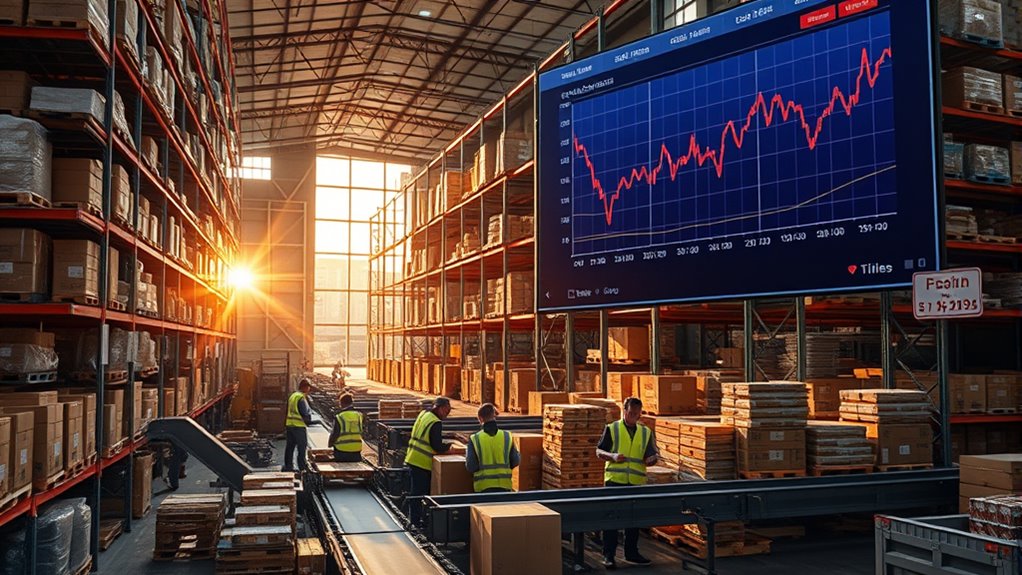
Supply chain disruptions directly drive cost-push inflation by increasing the prices of raw materials, components, and transportation. In 2025, these disruptions cause an $184 billion annual economic loss, still considerably impacting growth. They account for about 60% of recent inflation increases, adding roughly $1,200 annually to your household expenses. Companies face revenue losses of 6–10% due to supply constraints, especially in food, fuel, and semiconductors. Higher tariffs and resource shortages, like U.S.-Canada lumber tariffs, push material costs well above pre-pandemic levels. Disruptions persist longer upstream, with input goods experiencing more severe delays. Sector variability remains high, with energy and ICT sectors most affected. These ongoing supply chain issues keep costs elevated, applying persistent pressure on prices and profit margins across industries. Market Volatility continues to complicate supply chain planning, leading to further unpredictability and cost increases.
Policy Measures and Their Effectiveness in a Post-Labor Market

Policy measures play a pivotal role in shaping the post-pandemic economy, especially as labor market dynamics evolve amid persistent inflation. The Federal Reserve’s tools, like adjusting the federal funds rate and using forward guidance, aim to control inflation, while rapid policy tightening seeks to cool overheated demand. Fiscal policies, such as the CARES Act and ARPA, injected significant stimulus, boosting demand and fueling inflation. These policies interact, often amplifying demand shocks. While monetary policy influences growth through asset prices and financing conditions, its impact on inflation can be slow. During this period, policymakers face the challenge of balancing inflation control with supporting employment, especially as labor market conditions—like worker mobility and underemployment—affect price pressures. Sectoral and demand-driven factors complicate the policy landscape, requiring nuanced responses. Effective policy responses require agility amid evolving post-pandemic economic challenges.
Long-Term Challenges for Wage-Price Dynamics

Understanding the long-term challenges for wage-price dynamics requires recognizing how structural shifts influence both wage growth and inflation. Over recent years, low-wage workers experienced rapid real wage growth of about 15.3%, reversing decades of stagnation. This suggests a shift in wage inequality, with mid- and low-wage groups catching up to higher earners. Yet, the overall long-term trend since 1979 still shows persistent inequality, as recent gains aren’t enough to close the extensive historical stagnation. Wage-price interactions also pose challenges; initial inflation and wage increases often stabilize, preventing sustained real wage growth. Factors like productivity, labor bargaining power, and sector-specific trends shape long-term wage dynamics. These structural limits make consistent wage-price acceleration difficult, complicating efforts to sustain meaningful wage growth amid inflationary pressures. Recent wage gains have surpassed historical average growth rates, highlighting the complexity of achieving sustained wage increases in an environment of ongoing economic and structural constraints.

Exploring the future of inflation requires careful attention to both emerging risks and promising opportunities. You need to understand how volatile energy prices, global supply chain disruptions, and policy uncertainty could push inflation higher. Conversely, investing in technology, diversifying supply chains, and renegotiating tariffs offer pathways to mitigate inflation’s impact. Consumer resilience and inflation-resistant assets can also cushion economic shocks.
| Risks | Opportunities | Market Indicators |
|---|---|---|
| Energy price fluctuations | Technology-driven efficiency | Equity markets near highs |
| Supply chain disruptions | Diversified supply chains | Interest rate decisions |
| Policy uncertainty | Inflation-resistant investments | Commodity price trends |
Frequently Asked Questions
How Do Global Supply Chain Issues Influence Domestic Inflation Trends?
You see that global supply chain issues raise costs for businesses, making it more expensive to produce and deliver goods. These higher costs often get passed on to you through increased prices at stores, fueling domestic inflation. Disruptions like port congestion, tariffs, and geopolitical tensions slow down supply and raise shipping expenses. Consequently, you experience rising prices, and inflation accelerates as manufacturers and retailers try to cover their increased costs.
Why Do Wages Often Lag Behind Rising Consumer Prices?
You might wonder why wages often lag behind rising prices. It’s because employers hesitate to increase wages immediately, fearing higher costs could hurt profits. Also, wages depend on productivity, bargaining power, and economic conditions, which don’t always keep pace with inflation. Supply chain disruptions and market uncertainties further delay wage adjustments. As a result, workers see their purchasing power decline even when prices go up quickly.
What Role Do Inflation Expectations Play in Wage and Price Dynamics?
You should recognize that inflation expectations directly influence both wages and prices. When you expect inflation to rise, workers like you push for higher wages to keep up, and firms adjust prices accordingly. This creates a feedback loop, especially in tight labor markets. Central banks play a pivotal role by managing these expectations through policies, helping prevent runaway inflation and stabilizing the economy.
How Does Sectoral Disparity Affect Overall Inflation Measurement?
Imagine trying to weigh a bouncing ball and a drifting feather on the same scale—you’ll get a skewed picture. That’s what sectoral disparity does to inflation measurement; it muddies the waters. You might think overall inflation is steady, but behind the scenes, volatile sectors are dancing wildly. This misleads policymakers, making it harder to craft targeted responses, and risks overlooking the true economic story happening in different sectors.
Can Structural Labor Market Changes Alter Traditional Inflation Relationships?
You might wonder if structural labor market changes can shift traditional inflation relationships. They definitely can. These shifts impact how wage growth, labor market tightness, and sector-specific dynamics influence inflation. For example, sector disparities and reallocation shocks can cause the Phillips curve to shift, altering how unemployment relates to inflation. Recognizing these changes helps you better understand inflation trends and craft more effective policies to manage them.
Conclusion
As you navigate this complex inflation landscape, remember that when cheap goods meet idle wages, your purchasing power can feel like it’s slipping through your fingers. The coincidence of stagnant wages amid rising prices isn’t just a market quirk—it’s a sign to stay informed and adaptable. By understanding these trends, you can better anticipate shifts and seize opportunities, turning the seemingly coincidental challenges into strategic advantages for your financial future.
Halloween Picks
halloween
As an affiliate, we earn on qualifying purchases.