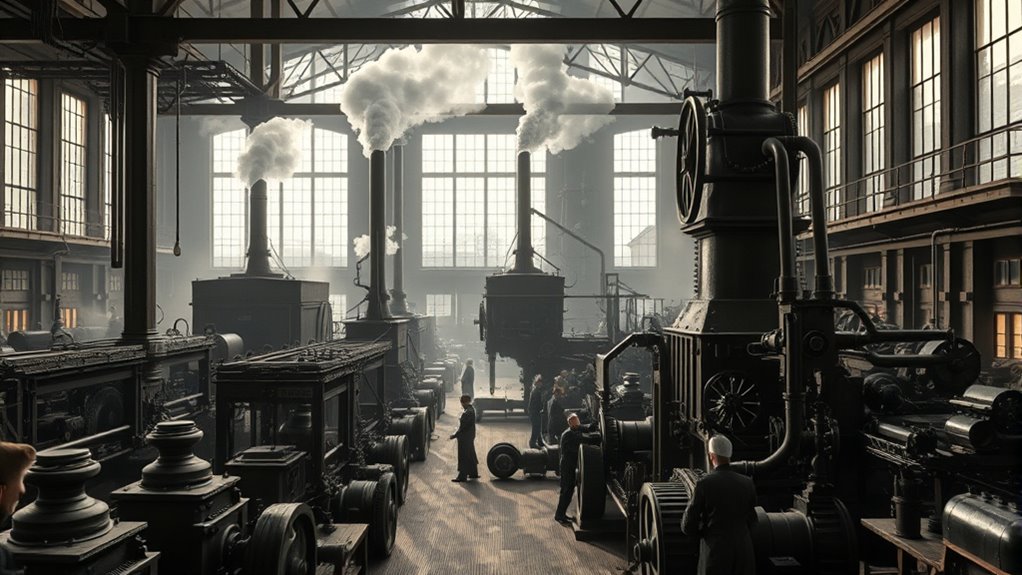

The Industrial Revolution shows that technological breakthroughs can drastically reshape economies, societies, and power structures. As AI advances, expect shifts in job markets, increased industrial productivity, and new industries emerging, just like in the past. Urbanization and wealth distribution will also evolve, requiring adaptive policies. If you stay informed, you’ll better understand how lessons from history can help navigate the complex progression to an AI-driven future.
Key Takeaways
- The Industrial Revolution shows technological innovation can drastically reshape economies, a pattern likely to recur with AI advancements.
- Rapid economic shifts may deepen income inequality and social stratification, necessitating proactive policy responses.
- Workforce disruptions from automation highlight the importance of reskilling and lifelong learning in the AI era.
- Infrastructure development and global trade expansion during industrialization offer lessons for managing AI-driven economic integration.
- Embracing technological change requires balancing innovation with social equity to ensure sustainable economic transitions.
Technological Breakthroughs and Their Economic Effects
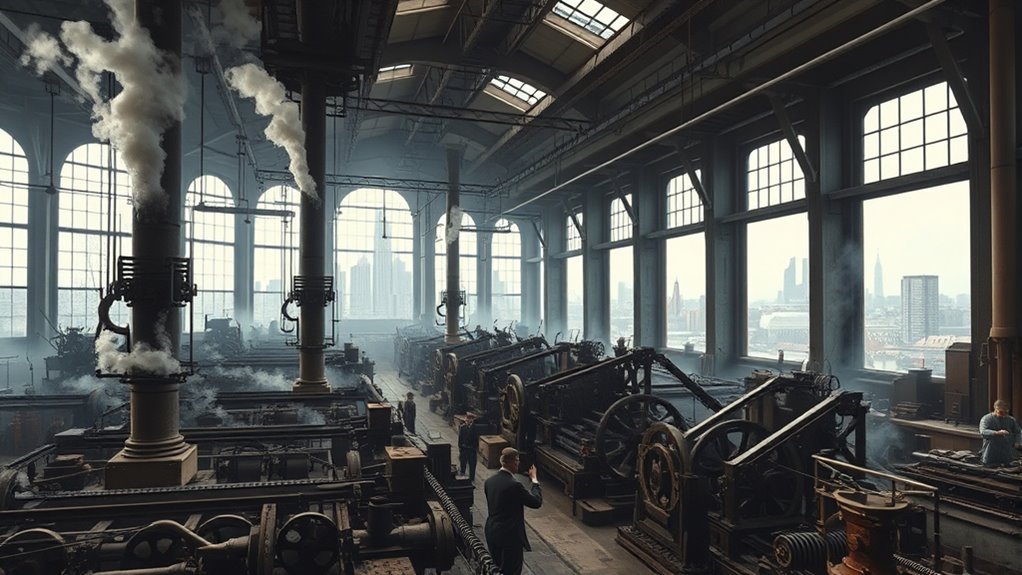
Technological breakthroughs have fundamentally transformed economies by increasing efficiency and enabling new industries. The steam engine provided a reliable power source, boosting industrial growth by making production faster and more efficient. The Bessemer process revolutionized steel manufacturing, lowering costs and speeding up infrastructure development. The telegraph changed long-distance communication, allowing businesses and governments to exchange information rapidly. Railways opened up transportation over long distances, fueling trade and economic expansion. Factories centralized production, appreciably increasing productivity. These innovations led to a rise in GDP, diversified industries, and a surge in global trade. Modern banking systems emerged to support capital accumulation and investment, fostering economic growth. The development of financial institutions also facilitated the mobilization of capital, which was crucial for funding large-scale industrial projects. Additionally, technological innovation in communication played a key role in coordinating complex economic activities across regions. The industrial revolution not only transformed manufacturing but also reshaped the entire economic landscape, setting the stage for the modern digital economy. The introduction of labor-saving devices further enhanced productivity and altered labor markets. Furthermore, the rapid pace of technological change has led to new challenges, such as data privacy challenges, which require ongoing adaptation from industries and regulators. Overall, these breakthroughs created a foundation for sustained industrial and economic development, shaping the modern economic landscape. Furthermore, understanding personality compatibility can be essential for fostering effective collaboration in evolving industries.
Shifts in Social Structures and Workforce Dynamics
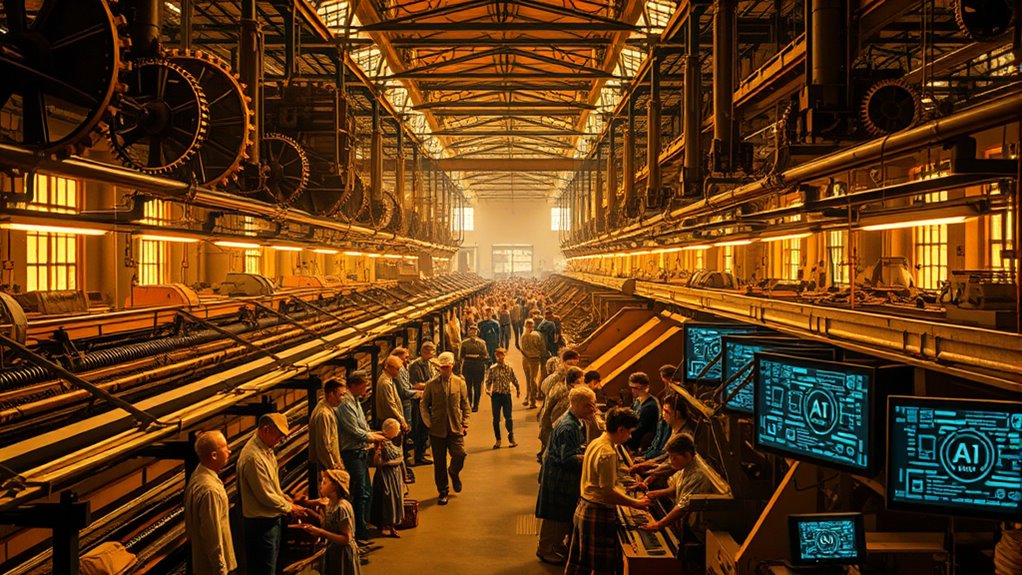
As cities grow rapidly, you see how migration reshapes social hierarchies and introduces new class divisions. The workforce evolves with more women and children working in factories, changing family roles and skills needed. These shifts create both opportunities and tensions that redefine how society is structured and how people work. Urban population growth from 6 million in 1750 to 21 million in 1851 also contributed to increased demand for labor and altered living conditions, influencing social dynamics further. Additionally, the industrialization process played a critical role in transforming economic and social landscapes during this period, with innovations like airless paint sprayers exemplifying technological progress and its impact on labor practices. This era also saw the rise of technological innovation as a key driver of economic change, paralleling the rapid developments seen in cybersecurity methods. The emergence of self-watering planters and other sustainable gardening technologies reflects similar patterns of innovation reshaping industries and daily life. Furthermore, the integration of AI-driven automation into various sectors has started to influence workforce demands and operational efficiencies.
Urbanization and Population Growth
Have you ever wondered how the Industrial Revolution transformed social structures and workforce dynamics through rapid urbanization? It dramatically shifted populations into cities, fueling factory work and creating dense, often crowded neighborhoods. This migration led to several key changes:
- Urban centers grew into sprawling megalopolises, with infrastructure struggling to keep pace.
- Living conditions deteriorated, as slums and unsanitary housing became common in industrial cities.
- The workforce diversified, with women and children entering factories, altering family roles.
- Population numbers surged due to falling death rates and sustained high birth rates, causing explosive growth. Urban migration also contributed to the development of new social classes and economic opportunities, further reshaping urban society. Additionally, the rapid population growth increased the demand for payment solutions, which evolved to support the needs of expanding urban economies. This period also saw the rise of new technologies and innovations that transformed how cities managed urban infrastructure, facilitating the growth of modern urban life and encouraging technological progress to address these challenges. Moreover, the expansion of urban populations created a need for public services, prompting reforms and innovations in city governance and resource management. The emergence of public health initiatives further helped to improve living conditions in rapidly growing cities.
New Class Divisions Formed
The Industrial Revolution dramatically reshaped social structures by creating new class divisions centered around wealth and industrial capital. You’d notice a surge in wealth for factory owners and entrepreneurs, forming a super-wealthy elite distinct from traditional aristocrats. This new upper class gained influence through investments in luxury goods, mansions, and cultural institutions, shifting power away from landowners. Meanwhile, the middle class expanded and diversified, including merchants, managers, and professionals who accessed education and property, reinforcing social mobility. The working class emerged as a distinct group dependent on wages, often facing poor conditions and economic insecurity. Income inequality widened, making class boundaries more rigid. You’d see social status increasingly tied to industrial wealth rather than birthright, fundamentally transforming societal hierarchies and cultural identities. Additionally, the growth of urban centers facilitated the rise of a working-class that was more visible and organized, which contributed to shifting political and social dynamics during the period. The rise of industrial capitalism also played a significant role in redefining economic power structures and social relationships. Furthermore, the development of new technologies and production methods accelerated social change, fostering a technological transformation that impacted every aspect of daily life. This period also saw the expansion of labor movements, which became crucial in advocating for workers’ rights and better working conditions, further reshaping the social landscape.
Workforce Skills Evolved
Shifts in workforce dynamics have fundamentally changed how people work and how societies are organized. As industries evolved, you had to upskill and reskill to keep pace with technological advances. You learned to operate and maintain new machinery, developing technical expertise. Today, roles like data scientists highlight the rise of specialized, data-driven tasks. Continuous learning became essential to adapt quickly and stay relevant. Additionally, collaboration with AI now emphasizes the importance of human skills that complement machine capabilities, requiring ongoing education. These changes led to:
- The creation of entirely new occupational categories.
- Greater job specialization and task-focused roles.
- The need for lifelong learning and adaptability.
- A workforce that constantly evolves alongside emerging technologies, shaping social and economic structures.
Urbanization and Infrastructure Development
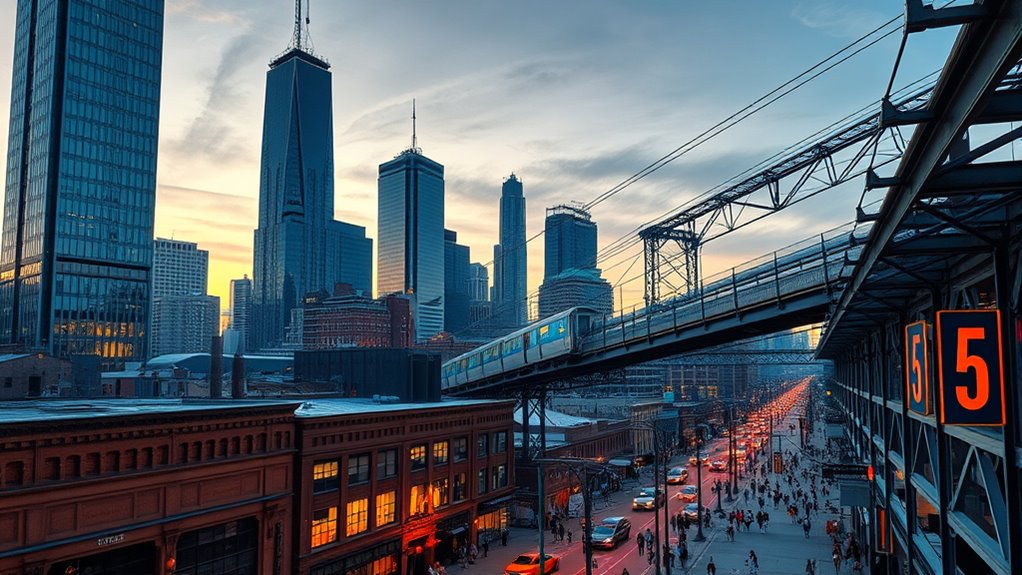
Urbanization accelerates as societies invest in infrastructure that supports growing populations and economic activity. During the Industrial Revolution, cities like Manchester and Bradford expanded rapidly due to textile industries, driven by transportation developments like railroads. Infrastructure improvements, including urban planning, facilitated trade, boosted productivity, and attracted workers, fueling demographic shifts. Additionally, the rise of professional voice actors and the emphasis on quality recordings contributed to the evolving entertainment industry. However, rapid growth also caused social issues such as overcrowding, pollution, and inequality. To visualize this, consider the following ideas:
| Infrastructure Focus | Impact |
|---|---|
| Transportation Systems | Enabled movement and trade, spurring urban growth |
| Urban Planning | Managed expansion, improved living conditions |
| Economic Development | Supported industries, increased productivity |
Furthermore, the rapid expansion of urban areas during this period was also characterized by a significant increase in urban population density, which posed both opportunities and challenges for city management.
Changes in Wealth Distribution and Economic Power
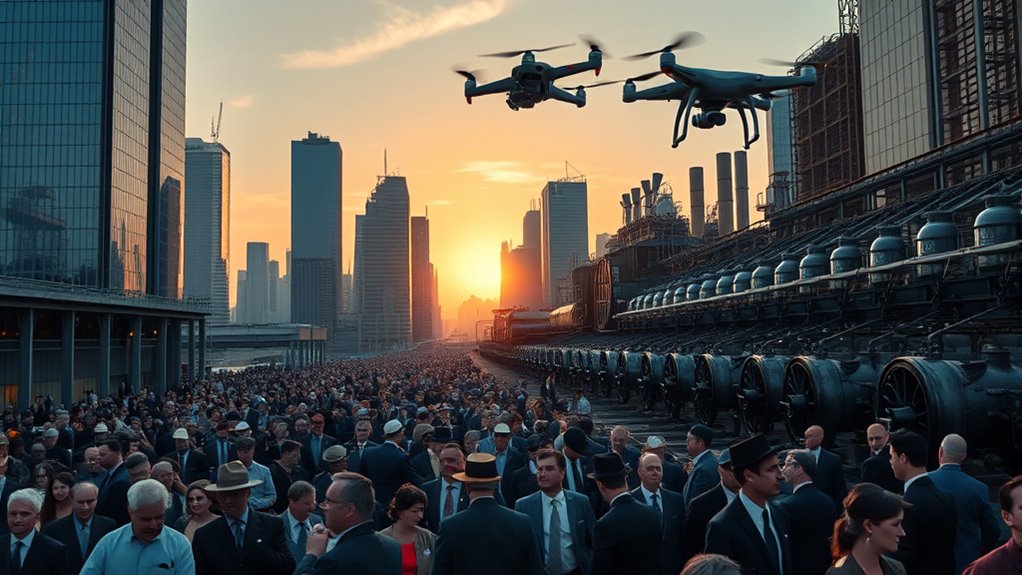
As industrialization progresses, you’ll notice wealth becomes more concentrated among the already wealthy, shifting economic power away from traditional landowners. This change favors industrialists and capitalists who benefit from higher returns and economies of scale. Consequently, power dynamics evolve, reshaping social classes and regional influence in the process. Additionally, the emergence of vetting processes ensures that only certain products and services are deemed safe and effective, further influencing economic structures and consumer behavior. As the market becomes more regulated and professional standards are established, economic disparities can either widen or narrow depending on the implementation of these standards.
Wealth Concentration Shifts
The Industrial Revolution dramatically increased wealth concentration among the top percentiles, transforming the distribution of economic power. You can see this in how the top 1% wealth share rose by about 28 percentage points, consolidating wealth at the top. Several mechanisms drove this shift:
- Wealth transfer within dynastic families perpetuated concentration across generations.
- Economies of scale in industrial sectors amplified returns for large capital owners.
- Technological advances boosted capital income relative to labor, favoring the already wealthy.
- Lack of redistribution policies allowed wealth to compound, widening disparities over time.
As a result, wealth became increasingly concentrated among those with initial capital, driving a stark divide between ownership and labor, and solidifying economic power at the top.
Power Dynamics Evolve
How did the shift from land-based wealth to industrial and urban sources reshape economic power? You see, as manufacturing, trade, and services replaced land as the main sources of wealth, power shifted toward urban elites and industrialists. Cities grew rapidly, drawing people from rural areas, and the middle class emerged—urban professionals, merchants, and skilled workers gained influence. Factory jobs offered steady wages and new opportunities, boosting labor’s bargaining power. Investment shifted from land to capital markets, giving financiers and entrepreneurs more control. Income disparities increased between industrial workers and rural farmers, fueling a new urban-rural divide. Power no longer rested solely with landholders; industrialists and urban professionals became the new elite, transforming the landscape of economic influence and social hierarchy.
Emergence of New Industries and Market Expansion
Have you ever wondered how technological innovations have driven the expansion of markets and the birth of new industries? Throughout history, each wave of innovation creates fresh opportunities.
- The Industrial Revolution sparked mechanized manufacturing, boosting productivity and enabling mass production.
- Digital advancements like computers and CAD/CAM systems revolutionized design and production processes.
- Industry 4.0’s smart technologies, IoT, AI, and big data, optimize automation and enhance decision-making.
- Robotics and automation cut labor costs while increasing output, paving the way for new industries like renewable energy.
These changes expand global markets, improve trade networks, and diversify economies. As industries evolve, they release new growth avenues and reshape economic landscapes, setting the stage for future innovations driven by AI and advanced technologies.
Challenges of Job Displacement and Skill Gaps
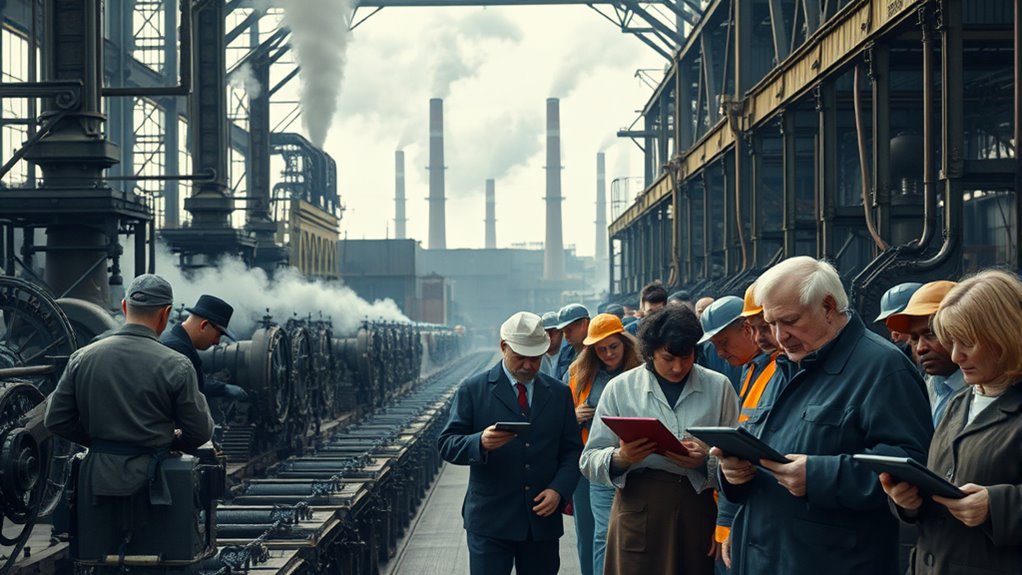
Technological advances often bring significant job displacement, but understanding its full impact requires examining how these shifts reshape the workforce over time. You’ll see that displacement isn’t uniform; some sectors suffer more, especially agriculture and manufacturing, where automation reduces manual jobs. Displaced workers often end up in lower-paid roles, and many move internally or migrate to find new opportunities. Older workers struggle more to adapt, while younger ones adjust faster. Automation creates a hollowed-out middle skill layer, with fewer middle-skill jobs available. High-skill roles grow, but low-skill work increases in some sectors. Displaced workers face long-term wage penalties, career disruptions, and health issues, with limited chances to return to previous industries. These patterns reveal ongoing challenges in managing job displacement and bridging skill gaps.
Policy Responses and Regulatory Adaptations
You need to ensure how legal frameworks can adapt to rapid AI advancements without stifling innovation. Promoting fair workforce policies is essential to ensure that economic benefits are shared broadly and risks are managed responsibly. Striking this balance requires proactive policy responses that are flexible and inclusive.
Crafting Adaptive Legal Frameworks
Crafting adaptive legal frameworks for AI requires balancing innovation with effective regulation, especially as the technological landscape evolves rapidly. You must navigate diverse policies and standards that vary globally and locally. To do so effectively, consider these key approaches:
- Develop flexible regulations, like the EU’s risk-based AI Act, which classifies systems by potential harm.
- Harmonize standards across borders, leveraging guidelines such as NIST’s frameworks and ISO standards.
- Address privacy concerns proactively by integrating laws like GDPR, CCPA, and China’s PIPL into AI development.
- Foster collaboration among governments, industries, and international bodies to create cohesive, adaptable policies that promote innovation while safeguarding fundamental rights.
Balancing these elements helps you craft legal frameworks responsive to rapid technological change.
Promoting Fair Workforce Policies
Coordinating workforce policies across different levels of government is vital to ensuring a fair and efficient response to AI-driven changes in the labor market. Fragmented policies risk regulatory arbitrage and inconsistencies, so federal and state efforts must align. Recent initiatives, like executive orders and strategic plans, emphasize workforce training, reskilling, and early intervention for vulnerable workers. These policies help reduce displacement and social disruption by supporting affected communities. Promoting diversity and inclusion guarantees fair access to new opportunities, while flexible policies accommodate AI’s evolving capabilities. Employers also play an indispensable role by implementing transparent risk management and impact assessments. By fostering interagency collaboration and unified frameworks, you can create a balanced approach that safeguards worker rights while encouraging innovation.
Global Trade and Competitive Landscapes
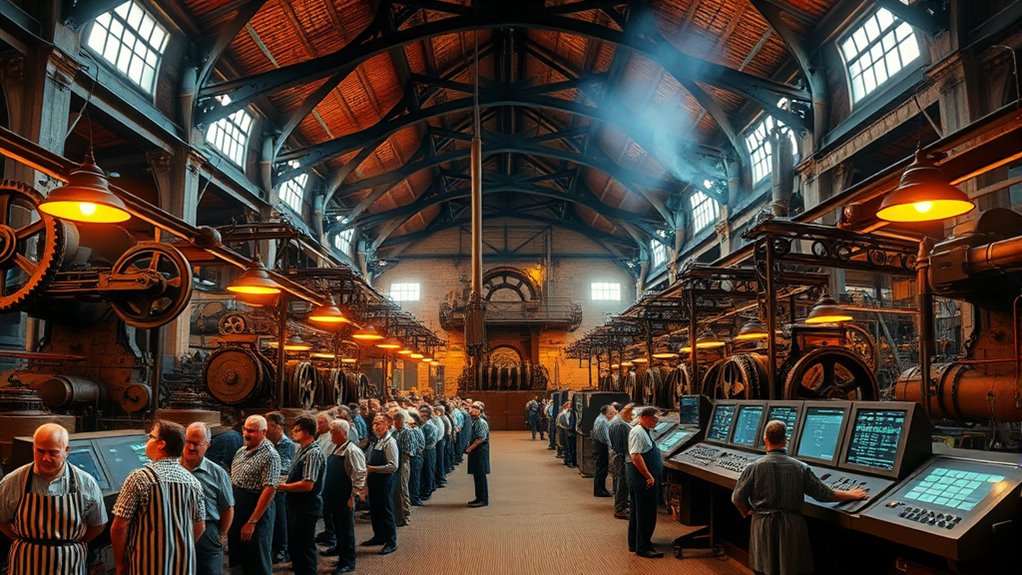
The global trade landscape has been shaped by historic shifts driven by technological innovations, geopolitical changes, and evolving economic policies. During the Industrial Revolution, trade expanded rapidly, with the trade-to-output ratio rising from under 10% to over 20%. Britain emerged as the dominant exporter of industrial goods, especially textiles, while its naval power secured crucial trade routes. Technological advances like steamships, railways, and the telegraph drastically lowered costs and increased connectivity. European powers expanded influence through shipping, while regions like North America and Asia specialized in key raw materials and manufacturing. This era fostered global interdependence, linking economies through material flows and trade networks. These shifts laid the foundation for a more interconnected, competitive global trade landscape that continues to evolve today.
Lessons Learned From Past Economic Transformations
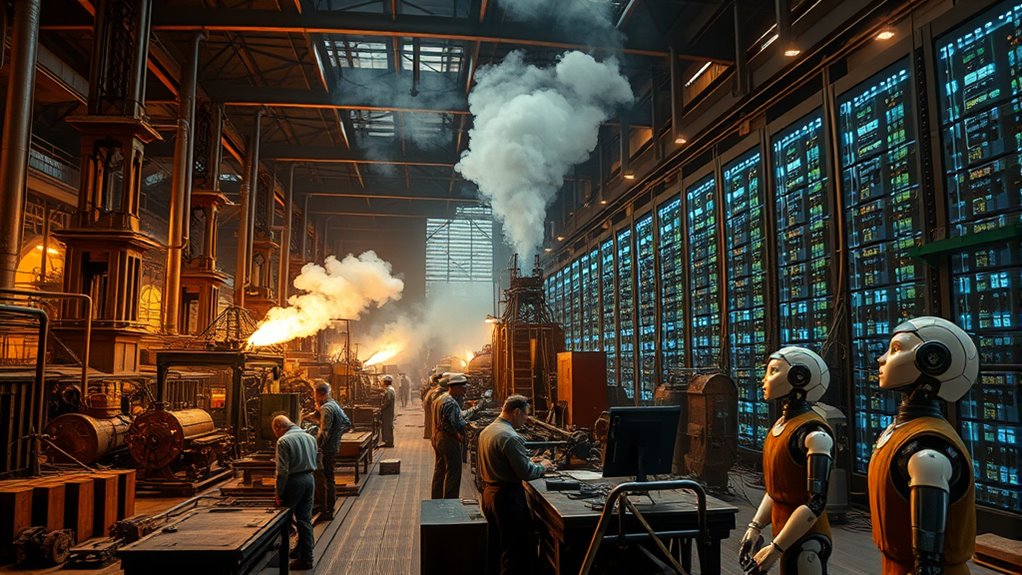
Historical economic shifts offer valuable lessons for today’s changing landscape. You need strong leadership, as seen in Mrs. Thatcher’s Britain, to steer transformation. Macroeconomic stability played a key role in Poland’s transition, with price liberalization and tight monetary policies. France’s shift from agriculture to manufacturing highlights the importance of sectoral diversification driven by government plans. Rwanda’s focus on rebuilding institutions showcases the power of institutional reforms. South Korea’s rapid industrialization emphasizes the role of innovation and technology.
| Key Factor | Example |
|---|---|
| Leadership | Thatcher’s Britain |
| Stability | Poland’s stabilization |
| Innovation | South Korea’s tech growth |
Learning from these, investing in education, fostering export strategies, and building resilient institutions remain essential.
Preparing for a Sustainable and Inclusive Future
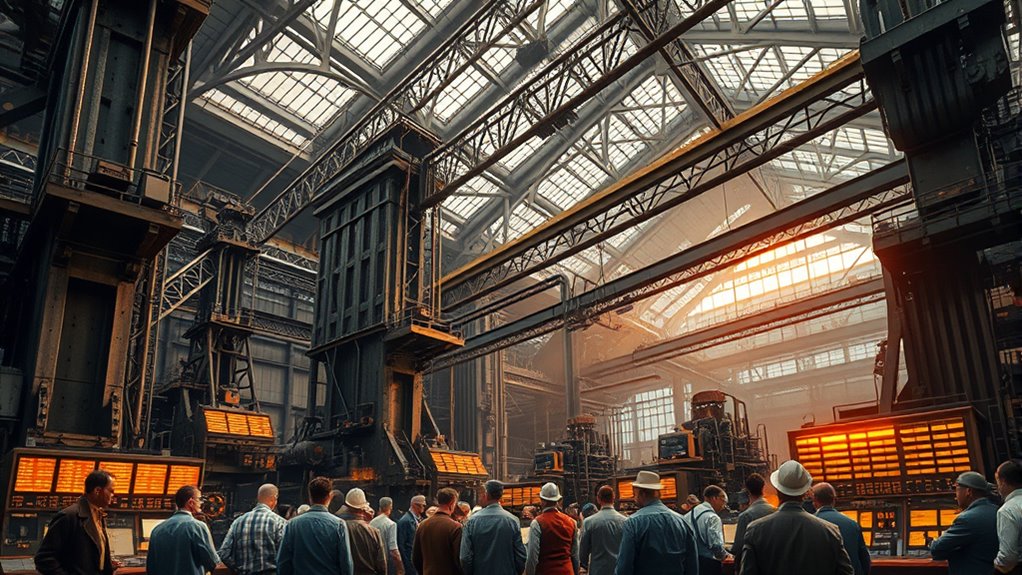
Preparing for a sustainable and inclusive future requires proactive strategies that align economic growth with environmental and social goals. You must focus on targeted actions to bridge financing gaps, promote fair employment, and harness technology responsibly. Consider these key steps:
- Invest in innovative financing mechanisms to meet the rising needs of developing countries.
- Develop resilient employment policies that ensure decent work and reduce inequalities amid automation and AI.
- Promote digital inclusivity, leveraging technology to improve monitoring and reporting of sustainability progress.
- Foster multi-stakeholder governance with transparent policies that incentivize green practices and involve marginalized groups.
Frequently Asked Questions
How Can Societies Ensure Equitable Wealth Distribution During Ai-Driven Economic Changes?
To guarantee equitable wealth distribution during AI-driven changes, you need to focus on inclusive policies and education. Invest in skill training so workers can adapt, and promote access to AI technology for all. Support universal basic income discussions and implement structural reforms to prevent wealth gaps from widening. By fostering global cooperation and encouraging innovations that benefit everyone, you can help create a fairer economy amid rapid technological advances.
What Strategies Can Minimize Job Losses Caused by AI Automation?
To minimize job losses caused by AI automation, you should focus on reskilling and upskilling workers through large-scale training programs that emphasize digital literacy and soft skills. Encourage companies to redesign jobs for human-AI collaboration and promote sectors less prone to automation. Additionally, support policies like income safety nets and job transition services to help displaced workers adapt smoothly. Continuous learning and adaptive workforce strategies are key.
How Will AI Influence Global Economic Power Dynamics?
You’ll see AI shift global economic power as countries race for technological dominance. Nations investing heavily in AI research will strengthen their industries and influence, reshaping trade and security. By integrating AI into manufacturing, finance, and defense, they’ll gain strategic advantages. You’ll notice emerging markets and established powers competing for leadership, with AI becoming central to diplomacy, security, and economic resilience, ultimately redefining how countries leverage their strengths on the world stage.
What Lessons From the Industrial Revolution Are Most Applicable Today?
You should recognize that technological change, like the Industrial Revolution, brings both opportunities and challenges. As new innovations emerge, they create jobs in some sectors while displacing others. Urbanization and skills development become essential, and social reforms often follow. Embrace continuous learning and adaptability, understanding that economic shifts require policies and resilience to guarantee benefits are shared broadly, just as they did during industrialization.
How Can Policymakers Foster Innovation While Protecting Vulnerable Workers?
You can foster innovation and protect vulnerable workers by implementing policies that encourage gradual AI adoption, ensuring workers have access to reskilling programs, and strengthening social safety nets. Promote public-private partnerships to expand training infrastructure and include AI literacy in education. Enforce labor standards, transparency, and fair hiring practices, safeguarding workers’ rights. Supporting inclusive innovation ecosystems and providing equitable access to digital tools also helps balance progress with worker protection.
Conclusion
As you reflect on history’s lessons, you realize that every major shift, like the Industrial Revolution, reshaped society in unexpected ways. Just as past innovations sparked new industries and challenges, the AI era promises both opportunity and disruption. By staying adaptable and informed, you can navigate these changes, ensuring progress benefits everyone. In this dance of progress and caution, the future’s rhythm depends on your choices now, shaping a sustainable, inclusive world.